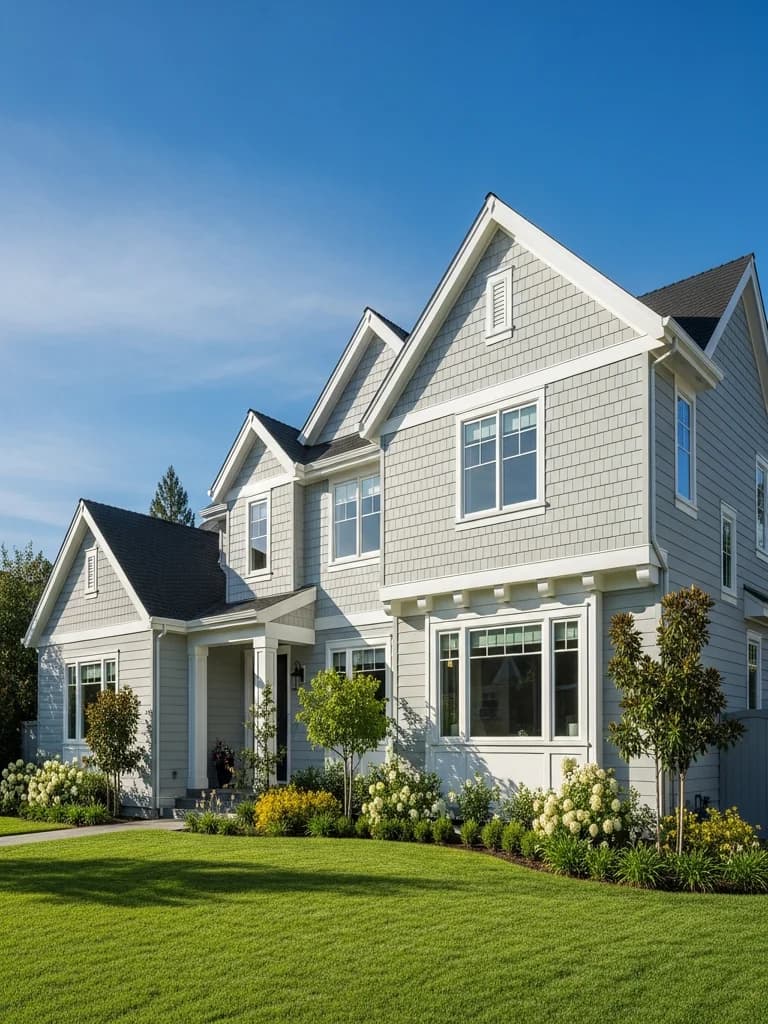
Siding in Durham
Durham is a small unincorporated farm community on the valley floor just south of Chico, where orchard land and open acreage set the conditions for a re-side as much as the houses do. The stock runs to ranch homes on larger lots, older farmhouses, rural-residential parcels, and the working outbuildings — shops, barns, pump houses, equipment sheds — that come with almond and walnut ground. What ties it together is sun: long, hard valley summers with very little shade on open agricultural sites.
A Durham re-side is heat-first and exposure-first. Without the tree cover and tight lot lines of a town neighborhood, these walls bake from sunup to sundown, so we scope from how open the parcel is, not from a one-size town default.
Open-acreage sun load is the controlling stressor
A house in a shaded Chico neighborhood gets relief that a Durham home surrounded by low orchard rows and bare ground does not. Out here the south and west elevations take direct valley sun all day, and reflected glare off dirt roads, harvested ground, and metal outbuildings adds to it. That sustained load is what chalks economy cladding, fades finishes, and cups original hardboard on Durham homes faster than the same product would weather in town. We treat finish durability and heat-aware detailing as the core of the spec — conservative color on full-sun walls, fade-rated coatings, and gapping that lets boards move through the daily swing rather than splitting against it.
Farmhouses and ranch homes get scoped differently
Durham's older farmhouses near the town center want period-credible lap and trim that keep the home reading as it should on a rural lane, with careful substrate repair where decades of repainting and settling have taken a toll. The postwar and newer ranch homes on acreage are a different job: long, simple wall runs that reward a clean, low-maintenance lap program built to take open sun. We scope from the individual home and its setting rather than applying one citywide approach across very different vintages.
Outbuildings, shops, and barns belong in the conversation
A Durham property is rarely just the house. Most parcels carry a shop, a pump house, equipment storage, or an older barn, and those structures weather under the same brutal valley sun while usually getting even less attention than the home. Owners often want the main house re-sided in fiber cement or engineered lap and an adjacent shop or outbuilding clad to match or in a simpler durable program, so the whole property reads as one maintained place rather than a nice house beside fading sheds. We can fold those structures into the scope, sequence them around the main re-side, and spec each for the use it actually sees — climate-controlled shop versus open equipment shed get different details. Bringing the outbuildings into the plan up front avoids a second mobilization later and keeps a working agricultural property looking intentional. It also lets us standardize trim and color so the cluster of buildings on the parcel holds together visually.
Dust, irrigation overspray, and rural-edge detailing
Life on Durham's agricultural edge puts loads on cladding that a town wall never sees. Wind-driven dust off harvested fields and dirt access roads works into open joints; irrigation and sprinkler overspray hits lower courses on a regular cycle; and equipment, livestock, and ranch traffic scuff and gouge walls near doors and corners. We spec for that reality with tight, sealed butt joints that keep dust and moisture out of the wall, impact-resistant trim at high-contact entries, and clearance at grade and at hardscape so the base of the wall is not sitting in splash or debris. On parcels with regular irrigation we pay particular attention to the lower courses and to flashing where the wall meets porches, slabs, and attached structures. The aim is cladding that still looks tight and maintained after years of rural use, not just on the day the staging comes down.
Why this matters in Durham
- Specified for Sacramento Valley conditions
- James Hardie fiber cement as the recommended system
- Correctly detailed weather-resistive barrier and flashing
- Installed by a crew with 20 years combined experience
Recommended systems for Durham
- James Hardie fiber cement
- engineered wood
- factory finishes
Fiber Cement Siding for Durham homes
The full fiber cement siding approach — materials, weather-resistive detailing, and the manufacturer standards we install to — is covered on the main service page, then specified for Durham's conditions on this one.
Our Durham process
- Step 1
Consultation
We listen to your goals and assess your home on site — exposure, substrate, and architecture.
- Step 2
Design & Proposal
A clear written proposal with the right system specified for your climate and a transparent scope.
- Step 3
Expert Installation
Trained crews install to manufacturer best practices with careful weather-management detailing.
- Step 4
Walkthrough & Support
A final walkthrough, full cleanup, and a clear written record of the scope completed — work we stand behind.
FAQ
Siding in Durham — FAQ
Without shade or tight lot lines, Durham homes take direct valley sun all day plus reflected glare off open ground, dirt roads, and metal buildings. That sustained heat and UV chalks and fades economy cladding sooner, worst on south and west walls.
Yes. We routinely fold a shop, pump house, or equipment building into the scope, sequenced around the main re-side, and spec each structure for the use it sees so the whole property reads as one maintained place.
Durham sits on the open valley floor and is not a high wildfire-exposure area, so a re-side here is driven by heat, UV, dust, and irrigation rather than fire hardening. Foothill urgency that applies near the Sierra edge does not apply to a Durham valley parcel.
Regular sprinkler and irrigation contact loads the lower courses and any joint near grade, working moisture and dust into the wall over time. We detail base clearance, sealed joints, and flashing at slabs and porches to keep that splash zone protected.
Most single-family Durham homes run one to two and a half weeks depending on size, stories, and any dry rot found once cladding is off; adding outbuildings extends that. Timeline is confirmed after the on-site assessment.
Keep Exploring
More for Durham homeowners
Helpful Exterior Guides