16 min read · Pillar Guide
James Hardie fiber cement is the most-specified cladding in the West, and for the majority of California homes it's our default recommendation — but the brand on the box decides far less than most homeowners assume. What actually determines whether a Hardie exterior lasts 30-plus years or fails its warranty early is three things: choosing the region-correct product line, choosing a factory finish over field paint, and installing the whole wall assembly to Hardie's published standards. Hardie's real advantages are climate-specific HZ10 boards engineered for hot, dry Western conditions, a baked-on ColorPlus finish with a long fade warranty, and a complete trim system that makes correct detailing achievable. This guide walks the entire decision — material, finish, profile, clearances, warranty, regional nuance, cost-versus-value, and what separates a good bid from a dangerous one — so you can specify and buy a Hardie exterior that actually performs. If you'd rather skip to a scoped number for your house, you can get a free on-site estimate and we'll spec the assembly honestly.
Why fiber cement, and why Hardie specifically
Fiber cement is non-combustible (Class A), dimensionally stable, pest- and rot-resistant, and long-lived — the right category for nearly every California climate and the only sound choice on fire-exposed parcels. Within that category, Hardie's edge is a region-specific product line, a factory-finish program with a long fade warranty, and a full trim/accessory system that makes correct detailing achievable rather than improvised. Generic fiber cement siding can match Hardie's physics, but only when it's detailed to the same standard and backed by an equivalent finish ecosystem — which most low-cost lines aren't. The honest framing: you are not paying a premium for a logo, you are paying for a coordinated system that, installed correctly, removes the maintenance and fire-risk headaches of wood and the dating, melt-prone failures of vinyl. That system thinking is the throughline of this entire guide.
HZ10: engineered for the West
Hardie manufactures climate-specific boards, and the distinction is not marketing. The HZ10 line is formulated for hot, dry Western conditions — high UV, big day-night temperature swings, low humidity — while HZ5 is engineered for the freeze-thaw and humidity of colder, wetter regions. Installing the wrong regional product is not a cosmetic shortcut; it's a condition of both performance and warranty coverage. Across the Central Valley, the Sacramento region, and most of the foothills we specify HZ10 by default, with higher-elevation Sierra and Tahoe projects evaluated against freeze exposure. If you want to understand exactly where the line falls, our HZ10 vs HZ5 guide walks the threshold. The practical rule: confirm in writing that your installer is ordering the correct regional substrate, because nobody can tell HZ10 from HZ5 by looking at an installed wall, and the warranty hinges on it. Our James Hardie siding installation is spec'd to the regional product as a baseline.
ColorPlus vs. field paint
ColorPlus is a factory-baked, multi-coat finish applied under controlled conditions and backed by a long fade-and-peel warranty. Field-painting raw Hardie forfeits that advantage and starts a repaint cycle far sooner — and under relentless California UV, that difference is dramatic. On a south- or west-facing elevation, a baked finish can hold its color for well over a decade while field paint on the same wall is fading and chalking in a fraction of that time. The factory finish is also thinner and more uniform than a brush or spray coat, so it doesn't bridge the crisp shadow lines that make Hardie look architectural. For most California homes, ColorPlus is one of the single strongest reasons to choose Hardie at all. If you're weighing palettes, our best Hardie colors for California guide covers fade-stable tones. Where a project genuinely needs a custom color outside the ColorPlus range, that's a real trade-off to discuss — not a default — and our exterior painting team can advise on the long-term repaint math.
Profiles and the Architectural Collection
HardiePlank lap, HardiePanel with batten, HardieShingle, and the Architectural Collection panels each change a home's entire character, and profile choice should follow the architecture rather than habit. A Craftsman or cottage reads right with shingle texture and period-correct exposures; a modern home wants clean, wide reveals and crisp panel joints; a farmhouse leans on board-and-batten verticals. Mixed-profile elevations — shingle in the gables over lap on the body, say — are some of the most powerful designs Hardie enables, but they demand disciplined trim and reveal planning so transitions read intentional, not patched. Reveal width, corner treatment, and trim depth are design decisions that should be made on paper before tear-off, not improvised on a ladder. Getting this right is where a contractor's design eye earns its keep. The comparison table above maps each product line to its typical use; bring it to your design conversation so you and your estimator are speaking the same language about look and cost.
Installation is the whole game
The single biggest predictor of a Hardie exterior's life is install discipline, full stop. That means correct fastener type and placement (blind-nailed into framing at Hardie's prescribed spacing, heads driven flush — not overdriven or proud), the specified gapping at butt joints and at openings, kickout and step flashing at every roof-wall intersection, a continuous weather-resistive barrier behind the boards, and Hardie's published clearances to grade, roofs, decks, and paths. Most of the failures we find on tear-off are not bad Hardie — they're good Hardie installed over a non-compliant assembly. Caulk smeared where flashing belonged, fasteners blown through with a framing gun, no kickout at a critical valley: these are the quiet defects that surface as interior water damage years later. This is why we treat the brand as the easy part and the assembly as the real work. When you compare bids, you are really comparing how seriously each exterior contractor takes these details.
Clearances and ground contact (the #1 failure)
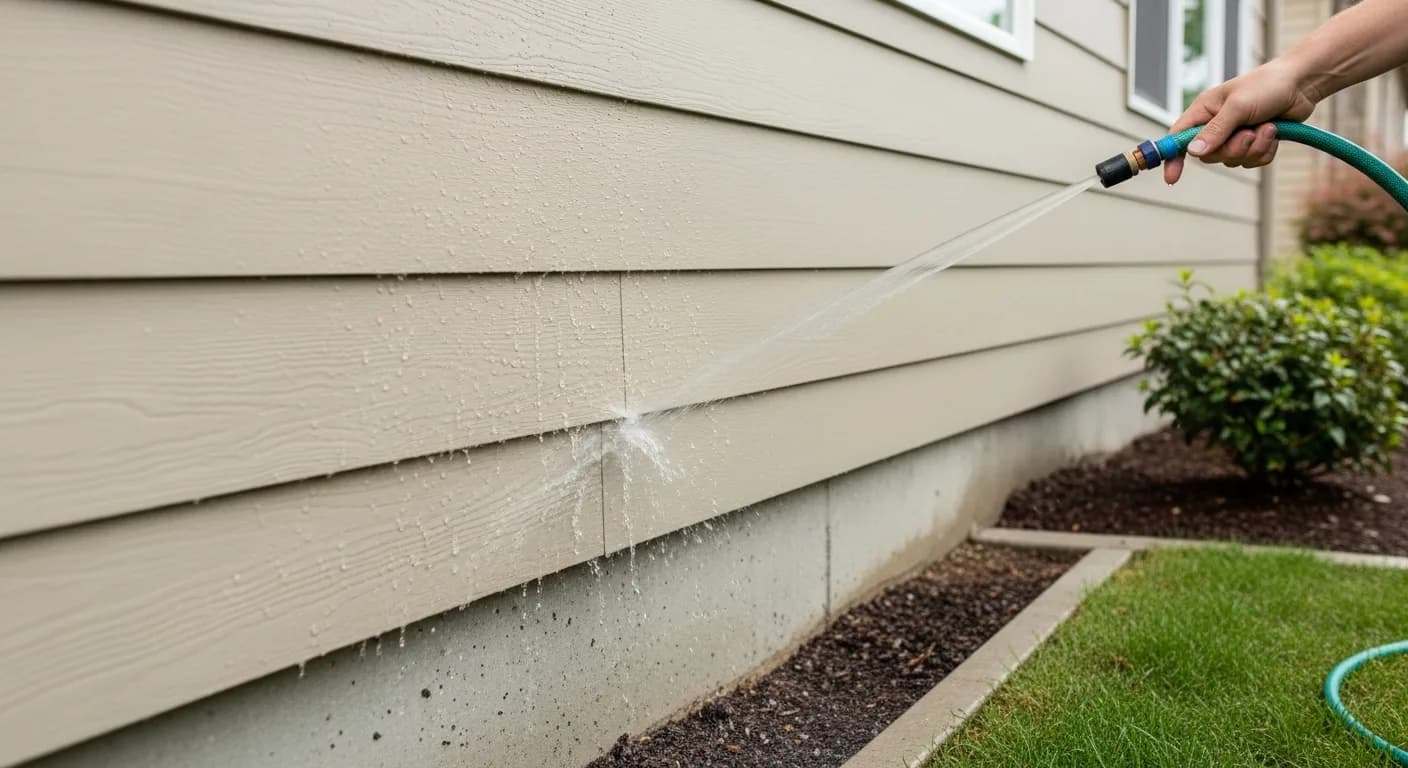
If you remember one thing from this guide, make it clearances. Hardie wicks moisture and degrades when it's held in contact with soil, paving, roofing, or standing water, so insufficient ground and roof clearance is the most common cause of premature bottom-course failure we see in California — and it voids the warranty. Hardie's published guidance calls for roughly six inches to grade and one to two inches to roofs, decks, and hardscape, with flashing and a clean drainage path so water leaves the wall rather than ponding against it. These are not finish niceties; they're structural requirements. A landscaper who later berms soil up against a freshly clad wall can quietly undo a correct install, so it's worth documenting clearances at handoff. Our weather-resistant exteriors approach builds these clearances and drainage details in from the start, and if you're already seeing soft or swollen bottom courses, our siding repair and dry rot repair crews can diagnose whether it's a clearance failure or something behind the board.
Pre-construction prep: what the wall behind the board needs
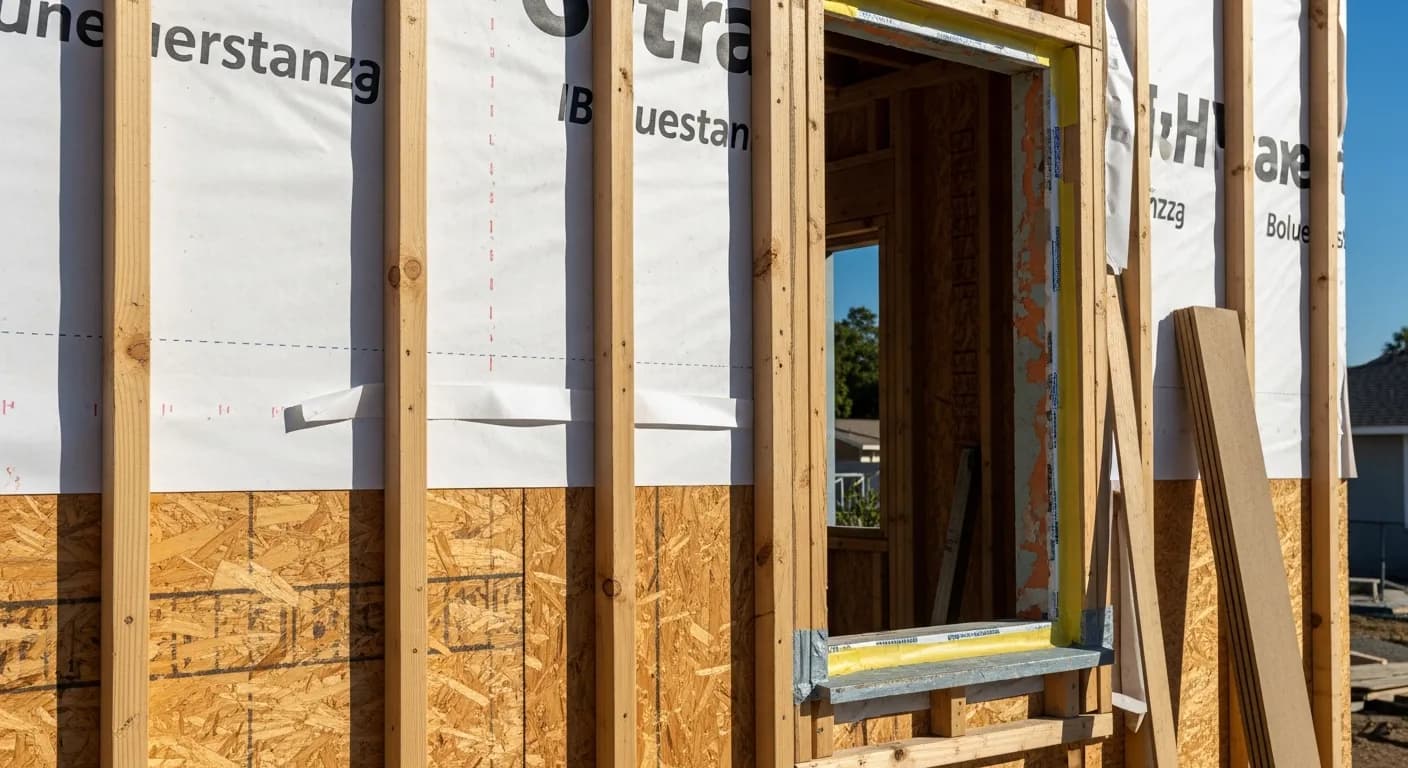
Fiber cement is only as durable as the assembly carrying it, so the work that decides the outcome happens before a single plank goes up. Start with a continuous water-resistive barrier lapped shingle-style over the sheathing and integrated with flashings at every penetration. In California's mixed coastal and foothill humidity, a rainscreen gap — created with furring strips or a drainage mat — lets the back of the board dry and sharply reduces moisture-driven failures. Fasteners must hit framing or be rated for the substrate, and blind-nailing into studs at Hardie's spacing keeps heads hidden and planks flat. Crucially, this is the moment to find and fix hidden rot at corners, band joists, and around old windows, because damage is far cheaper to repair with the wall open than after new siding hides it. Prep is also where you reconcile the look you want against the budget, so it pairs naturally with our California siding cost breakdown. Skipping prep to save a day is the most common reason an excellent product underperforms — verify any installer's standing through the Contractors State License Board before this stage begins.
Joints, flashing, and sealant: where walls actually leak
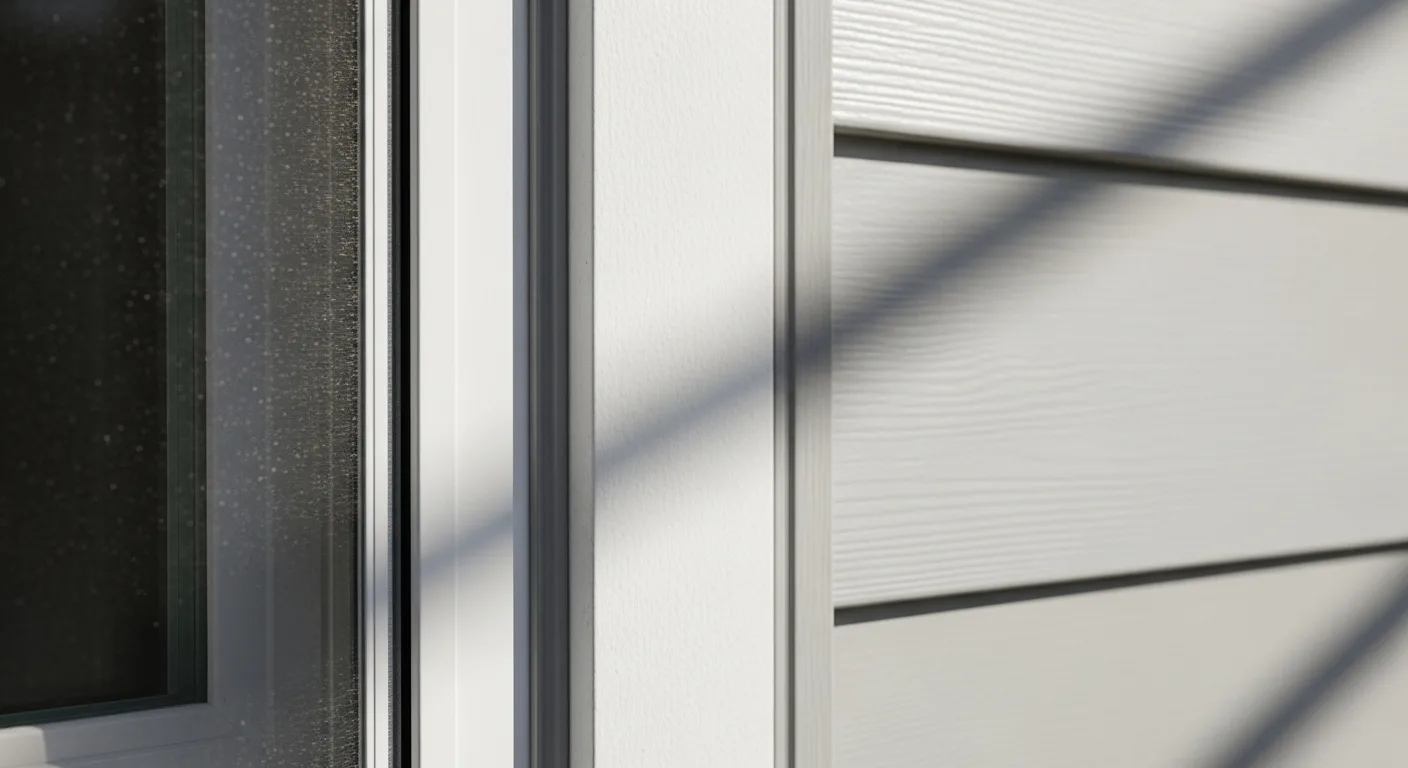
Most Hardie callbacks trace not to the planks but to the joints between them and everything they meet. Hardie's published method favors a joint flashing behind butt joints rather than relying on caulk alone, because sealant is a maintenance item while flashing is permanent. Where caulk is appropriate, use a high-quality elastomeric exterior sealant rated for the joint's movement class — not a cheap painter's caulk that hardens and cracks within a season — and at trim returns back it with a backer rod so the bead can flex without tearing. Around openings the sequence is everything: sill pan flashing first, then head flashing lapping over the trim, with sealant only as a secondary defense. Plan to inspect and refresh sealant at penetrations every few years; it's the one recurring task that protects an otherwise low-maintenance exterior, and our dedicated best caulk for Hardie siding guide covers product choice. Done right, the joint strategy is what turns a 30-year product into a 30-year wall — and it's the detail most homeowners never think to ask about until water shows up inside.
Warranty: what's actually covered, and what voids it
Hardie's substrate and ColorPlus finish warranties are genuinely strong, but they are conditional — on installation to published specs and on use of the correct regional product. The substrate warranty covers the board against rot, cracking, and similar substrate failures for a long term; the ColorPlus finish carries its own multi-year fade-and-peel coverage. What gets claims denied is predictable: wrong regional product, clearances ignored, fasteners overdriven, field paint over ColorPlus, or no documentation of how the wall was built. A homeowner's real protection isn't the paper certificate — it's a contractor who installs to standard and documents the barrier, flashing, fastening, and clearances in writing so a claim, if ever needed, is provable. Keep that documentation with your home records; on resale it reassures appraisers and buyers, and many warranty terms are transferable. We'll tell you honestly what's covered and what isn't, and we scope every job to keep the warranty intact rather than quietly assuming nobody will ever check the assembly.
Matching Hardie to California's microclimates
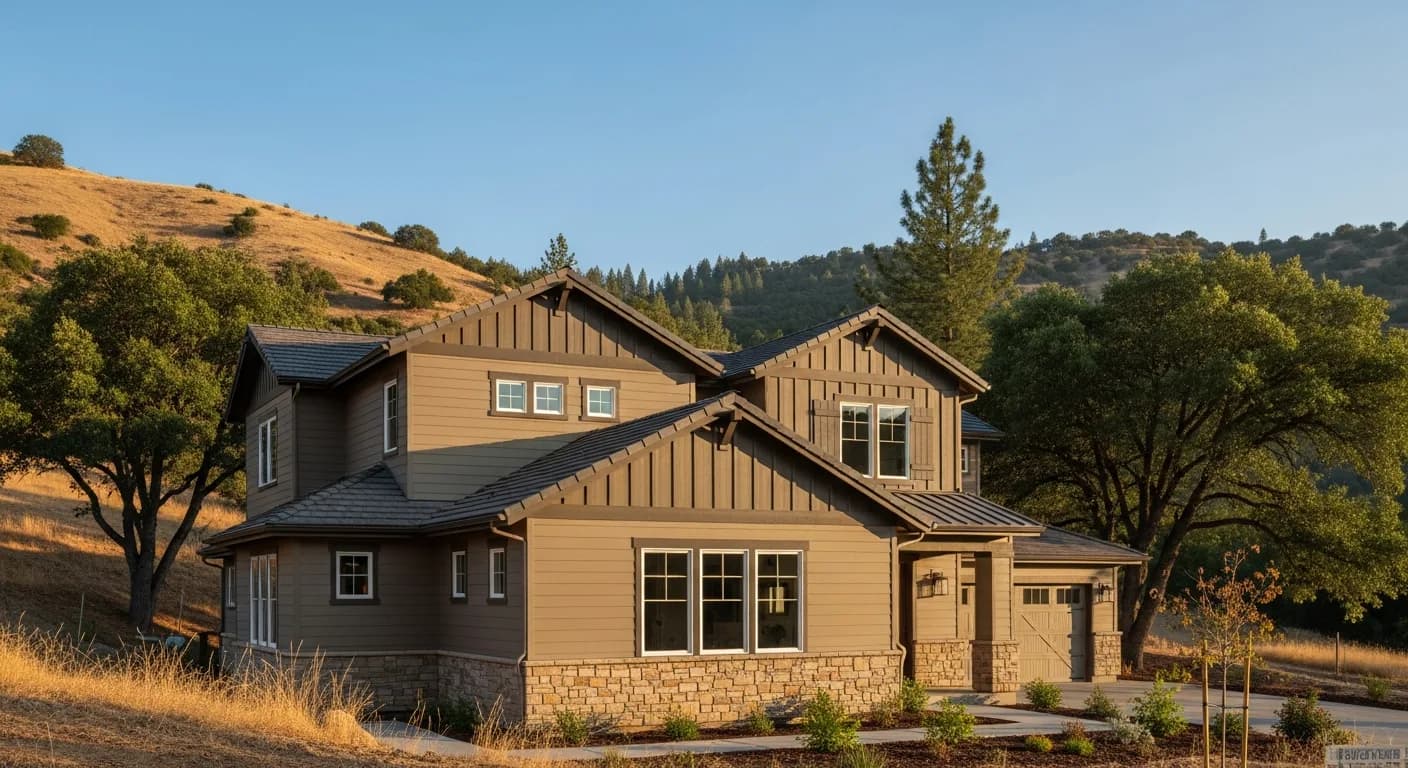
California isn't one climate, and the right Hardie specification shifts as you move across it. On the coast and in fog-belt neighborhoods, salt air and persistent damp argue for generous rainscreen ventilation, corrosion-resistant fasteners, and a finish schedule that anticipates wash-downs. In the Central Valley, intense UV and triple-digit summers make a factory finish's fade performance more valuable than in milder zones, and lighter colors stay cooler on south and west walls. In the Sierra foothills and mountain corridors, freeze-thaw cycling and wildfire exposure both come into play — which is exactly where non-combustible cladding earns its keep. Check your parcel's wildfire hazard against CAL FIRE maps before finalizing materials, and on fire-exposed lots treat Hardie as the baseline within a hardened envelope rather than the whole solution; our fire-resistant siding approach details the rest. None of this changes the brand you buy — it changes the assembly, fasteners, and finish you specify around it, which is why a good estimator treats your address as a design input, not a formality.
Hardie vs. the alternatives, honestly
Versus engineered wood like LP SmartSide: Hardie is non-combustible and holds factory color longer, while LP is lighter, warmer in grain, and a reasonable choice only in genuinely low-fire areas. Our LP SmartSide siding page and the deeper Hardie vs LP SmartSide guide lay out where each wins. Versus vinyl: similar upfront convenience, but vinyl can warp, fade, and — critically — is combustible, making it a poor fit for fire-aware California; the Hardie vs vinyl deep comparison covers the gap. Versus generic fiber cement: nearly identical physics, but a different warranty, finish, and trim ecosystem, which is where Hardie's value concentrates. The honest position is that Hardie isn't automatically right for every home — it's right for most California homes, and especially for any parcel with meaningful fire exposure. We'll tell you on site if your situation is one of the exceptions where another material genuinely competes.
Cost-versus-value and how to move forward
Fiber cement consistently posts one of the strongest cost-recouped figures of any exterior remodel, and in California the appeal goes beyond the recouped percentage: a Class A non-combustible exterior can ease insurance underwriting and buyer concerns in fire-aware markets, which increasingly decides offers in foothill and wildland-interface neighborhoods. The value math improves when the install is correct — an inspector who finds proper clearances, flashing, and a transferable factory finish has nothing to flag — and it collapses when a cheap install ignored ground clearance or skipped joint flashing, turning a premium material into a negotiation liability. The honest takeaway runs through this whole guide: Hardie protects value best when it's specified, installed, and maintained as a complete system, not treated as a one-line product upgrade. To understand the real ranges for your house before committing, see our California siding cost breakdown — and when you're ready for a scoped, written number, get a free on-site estimate. We scope on site, your written estimate governs, and we'll tell you honestly what the wall behind your siding actually needs.
James Hardie product lines by use
| Product | Form | Typical use | Notes |
|---|---|---|---|
| HardiePlank | Lap siding | Most homes; traditional & modern | Most common profile |
| HardieShingle | Shingle/shake look | Craftsman, cottage, accents | Period-sympathetic texture |
| HardiePanel | Vertical panel | Board-and-batten, modern | Pair with battens for farmhouse |
| Architectural Collection | Textured panels | Contemporary/custom | Design-forward elevations |
| ColorPlus Technology | Factory finish | Any profile | Baked finish; long finish warranty |
| HZ10 substrate | Climate engineering | Hot, dry Western CA | Formulated for the West |
Key takeaways
- Hardie is the West's default fiber cement, but install discipline outranks the brand every time
- Specify the region-correct HZ10 product line in California — it's a warranty condition, not a preference
- Factory ColorPlus dramatically outlasts field paint under California UV and saves a repaint cycle
- Insufficient ground/roof clearance is the #1 premature-failure cause and voids the warranty
- Choose profiles to fit the architecture, not by default, and plan reveals and trim on paper first
- The whole-wall assembly — barrier, flashing, fasteners, clearances — decides the 30-year outcome
- On fire and mountain parcels, Hardie is the baseline within a hardened envelope, not the entire system
- Get clearances, flashing, and fastening documented in writing; it protects both warranty and resale
FAQ
Quick Answers
In heat- and fire-exposed California areas, usually yes — it's non-combustible and holds factory color far longer than engineered wood. In genuinely low-fire areas, engineered wood like LP SmartSide can be a reasonable warmer-grain alternative. The linked Hardie-vs-LP guide compares them honestly so you can decide based on your parcel's fire exposure and look.
The HZ10 regional line, formulated for hot, dry Western conditions like the Valley and foothills. Using the correct regional product is a condition of both performance and warranty, and you can't tell it from HZ5 once it's on the wall. Confirm in writing that your installer is ordering HZ10.
ColorPlus, in nearly every case. The factory-baked finish resists California UV far better, carries a long fade-and-peel warranty, and keeps the crisp shadow lines field paint can bridge. Field-painting starts a repaint cycle much sooner and forfeits the finish warranty advantage.
Insufficient clearance to grade, roofs, decks, or paving. Hardie wicks moisture at ground contact, which causes premature bottom-course failure and voids the warranty — it's the single most common defect we find on tear-off. Hardie's guidance calls for roughly six inches to grade and one to two inches to roofs and hardscape.
It's strong but conditional on installation to Hardie's published specs and use of the correct regional product. In practice your real protection is a contractor who installs to standard and documents the barrier, flashing, fastening, and clearances. The paper warranty is only as good as the assembly behind it, and most denials trace to install shortcuts.
A correctly detailed Hardie system commonly performs 30-plus years structurally, and ColorPlus finishes carry long fade warranties. Sun-facing elevations may want a finish refresh later depending on color and exposure, but the substrate itself is built to outlast the finish. Clearances and flashing are what get it to the full lifespan.
Restrained, fade-stable ColorPlus tones — warm whites, soft and slate grays, and sages — read well across California architecture and hold value at resale. Lighter colors also run cooler on south and west walls in the Valley heat. See the linked best-Hardie-colors guide for specific palettes.
No — it's the non-combustible baseline, not a complete solution. On fire-exposed parcels it must be paired with hardened vents, eaves, decks, and correct clearances to make a genuinely defensible envelope. Check your parcel against CAL FIRE hazard maps and see our fire-resistant exteriors approach for the full system.
Hardie's published guidance calls for roughly six inches between the bottom course and grade, and one to two inches to roofs, decks, and paving, with flashing and a drainage path. Anything less lets the board wick moisture and fail early. Watch for landscaping that later berms soil against the wall and quietly undoes a correct install.
Sometimes, but it depends on the condition of the wall behind it — overcladding only makes sense when the substrate, barrier, and flashing are sound or can be made sound. Often a full tear-off is the honest call because it lets you fix hidden rot and install a proper rainscreen. We scope this on site rather than assuming, since the wall behind the board decides everything.
Sources
Authoritative references
External links to government, code, and manufacturer sources. Sierra Siding is not affiliated with these organizations; references are provided for verification.