Why homeowners choose this with Sierra Siding
- A straight repair-or-replace verdict in writing, so you spend on the work that actually solves the problem
- Color- and profile-matched fiber cement, engineered-wood, and vinyl board replacement that reads as one wall, not a patch
- The moisture source behind the damage found and closed, not just the visible board swapped out
- Flashing, weather-resistive barrier, and caulk joints rebuilt to current detail where the failure started
- Clean trim, sealant, and paint finish that blends the repair into the surrounding elevation
- A single accountable contractor for the diagnosis, the carpentry, and the finish — one scope of responsibility from first cut to final paint
How we approach a siding repair
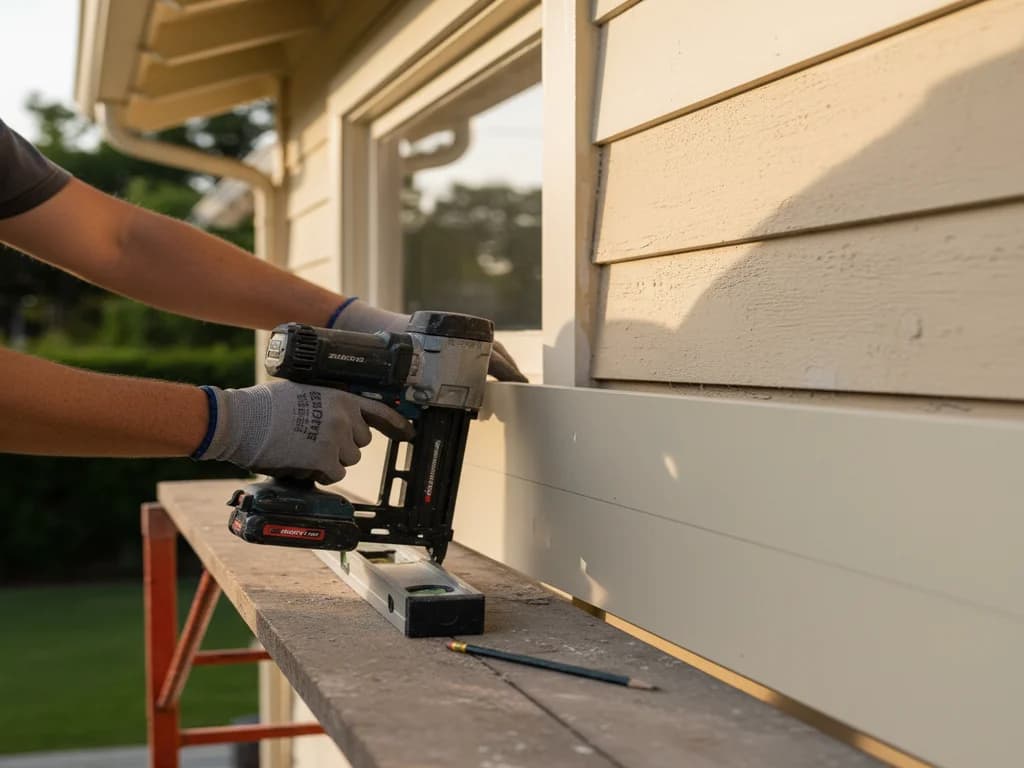
We start by treating the damaged board as evidence, not the whole job. On site we trace the source — impact, woodpecker activity, a cracked board, a flashing failure, ground contact, or moisture migrating from somewhere upslope of the visible damage. Then we open only what we need to open to confirm the assembly behind it is sound. Where it is, we cut back to solid material, replace boards to match profile and exposure, re-detail the flashing and sealant around the repair, and finish with trim and color-matched paint. The goal is a wall that reads as one surface. A patch that looks like a patch is a repair we did not finish.
What our repair scope includes — and what cheap bids skip
Our written scope covers source diagnosis, board replacement, flashing and weather-resistive barrier repair in the work zone, sealant at penetrations, and a blended paint finish. The corners cheap bids cut are almost always the hidden ones: they swap the cracked board without checking the barrier behind it, caulk over a flashing failure instead of correcting the lap, or skip priming the cut edges of fiber cement. Those repairs look fine on day one and fail again within a season or two. We price the assembly, not just the board you can see, and the written estimate spells out exactly what is and is not part of the work so there are no surprises at the walkthrough.
Materials and detailing matched to your climate
Northern California is several climates, and a repair that ignores yours will not last. In the Sacramento Valley we prioritize boards and finishes that hold up to sustained heat and UV, and we prime every cut edge before install. In the foothills and Tahoe we detail for freeze-thaw and wind-driven precipitation, keeping clearances and drainage paths open so water cannot pool and refreeze behind the repair. Near the Bay we specify materials and sealants that tolerate prolonged marine moisture and keep the wall breathing. We match the existing fiber cement, engineered-wood, or vinyl profile where it is still in production and tell you honestly when a discontinued profile limits the blend.
From estimate to walkthrough
We come out, assess the damage, probe for hidden moisture, and give you a written recommendation — repair or replace — before you commit to anything. If repair is the right call, the estimate lists the boards, flashing, sealant, and finish work in plain language. On the work day one accountable contractor owns demolition, carpentry, flashing, install, and paint under a single scope, so responsibility for the finished repair never gets split or passed off. We protect landscaping and clean the site as we go. At the end we walk the repair with you, point out exactly what was done and why, and confirm the finished area blends with the surrounding wall before we call it complete.
Why homeowners hire Sierra Siding for repairs
Plenty of crews will quote a repair sight-unseen and swap a board. Fewer will tell you when a repair is the wrong move. Our team brings 20 years of combined exterior experience, and the most valuable thing we offer on a repair call is an honest verdict: isolated damage we can fix cleanly, or a systemic problem where patching just delays a bigger failure and wastes your money. We do the diagnosis the same way whether the answer is a small repair or a recommendation to wait and plan a re-side. That is the reputation we want — the contractor who told you the truth about your wall.
Honest objection-handling
The most common worry is that a repair will be obvious — a mismatched square on an otherwise uniform wall. We are upfront about this: on current-production profiles with reasonable weathering we can usually blend a repair so it disappears, but on a heavily faded or discontinued profile a perfect color match may not be possible, and we will show you what to expect before we start rather than after. The second worry is paying for a repair that fails again. That is exactly why we insist on finding the moisture source first. If the underlying assembly is failing in more than one place, we will tell you straight that repair is not the economical choice.
Repair patterns by service area — where the failures cluster
Twenty years of exterior work across Northern California has produced a map of where specific repair patterns show up, and we scope from that pattern-recognition rather than a generic checklist. In the Placer foothill belt — Auburn, Loomis, Meadow Vista, Colfax, Newcastle, Penryn, Applegate, Weimar, Foresthill — the pattern is freeze-thaw driving water behind drip edges and cabin-construction homes concealing decades of substrate damage behind aging wood, which is why our /dry-rot-repair page names this exact belt. In the Tahoe basin — Truckee, South Lake Tahoe, Kings Beach, Tahoe City, Serene Lakes — repair calls concentrate at the snow-contact zone (bottom two feet of wall), roof-to-wall kickout flashings that failed under repeated meltwater, and deck-ledger connections. In the valley cities (Sacramento, Roseville, Rocklin, Elk Grove, Folsom, Modesto, Stockton, Yuba City) the pattern is heat-and-UV cladding failure on south and west elevations — chalked hardboard, cupped T1-11, and swollen butt joints. Along the coast (Santa Cruz, Aptos, Monterey, Carmel, Pacific Grove, Stinson Beach) it is chloride corrosion of fasteners and flashing before the cladding itself gives out. And in the wine country and North Bay (Santa Rosa, Napa, Healdsburg, Mill Valley, San Rafael) it is a mix of post-fire hardening retrofits and North Bay moisture rotting canopy-shaded north walls. We match the repair spec to the pattern the parcel actually shows.
The utility, permit, and code framework behind a repair
Even a targeted repair coordinates with the same authorities a full re-side would — a detail our city hubs enumerate in full. Repairs that involve opening the wall assembly, altering flashing at penetrations, or replacing more than roughly ten percent of an elevation may require a permit through the local jurisdiction (city building department for incorporated cities, county Community Development for unincorporated communities like Cameron Park, Meadow Vista, Auburn's outlying areas, or Alta Sierra). Repairs on parcels in California's 2025 Local Responsibility Area Fire Hazard Severity Zone (Moderate/High/Very High) — most of the foothill, Tahoe, and wildland-adjacent territory we work in — may fall under the 2025 California Wildland-Urban Interface Code, which took effect January 1, 2026 when Chapter 7A was deleted from the Building Code. Practically, that means a foothill repair that swaps out combustible T1-11 for like-material may not comply with current code even where it matches the original. We flag those items at the estimate stage rather than at the wall, and we route utility-adjacent work through the correct provider (SMUD, Roseville Electric, PG&E, Liberty Utilities in Tahoe, PCWA / NID / EID for water) so the repair doesn't stall on a locate call.
FAQ
Common Questions
In most cases, yes — for current-production fiber cement, engineered-wood, and vinyl profiles we match the profile, exposure, and color so the area reads as one wall. Discontinued profiles or heavily weathered finishes are harder to blend. We will show you what's realistically achievable before we start, not after.
We do an on-site assessment, probe for hidden moisture, and check the condition of the barrier and flashing behind the damage. Isolated damage over a sound assembly is a genuine repair. Widespread cupping, paint failure across whole elevations, or rot in more than one location is systemic, and we'll tell you straight when patching would just delay a bigger failure.
Both — and the cause is the part that matters. The visible board is rarely the whole story, so we trace the moisture path or impact source and close it as part of the scope. Swapping a board without correcting a flashing failure or a compromised barrier behind it just sets up the next failure.
Source diagnosis, board replacement matched to your profile, flashing and weather-resistive barrier repair in the work zone, sealant at penetrations, and a blended paint finish — each listed in plain language. The estimate also notes what is not included, so there are no surprises at the walkthrough. Your written estimate governs the job.
Our work focuses on lap, panel, shingle, and trim systems — fiber cement, engineered wood, and vinyl. For stucco-only repair we are not the right call and will say so. For stucco-to-siding conversions, where the goal is to remove the stucco and re-side, we are the right call.
Most isolated repairs are short jobs — often a single work day once materials are confirmed and any color match is sourced. Timing depends on whether your profile is in current production and on the extent of any hidden moisture we find during the assessment. We'll give you a realistic schedule with the written estimate rather than a guess on the phone.
Keep Exploring
Related services, guides & areas
Helpful Exterior Guides