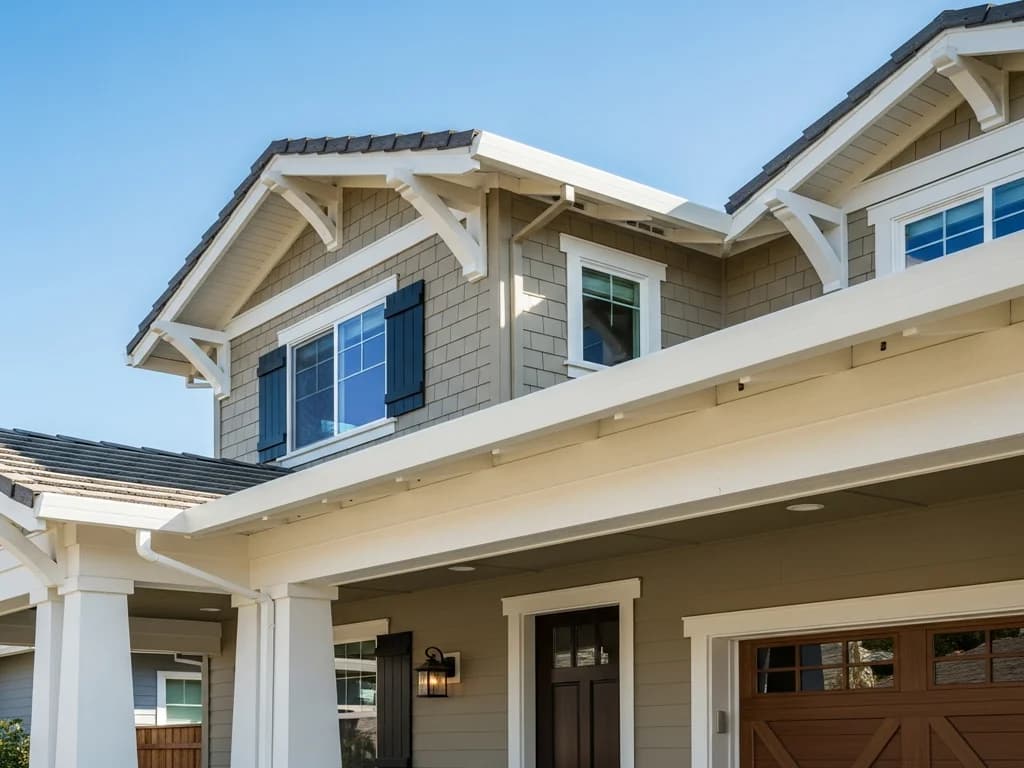
Why homeowners choose this with Sierra Siding
- Rafter tails and the roof edge sealed against rot, woodpeckers, rodents, and wasps
- Attic ventilation rebalanced so heat and moisture actually leave the assembly
- Crisp, continuous trim lines that make the whole roofline read as finished
- Vented soffit detailing that supports ember-resistant hardening in fire country
- Low-maintenance fascia and soffit materials matched to your wall system and gutters
- A dry, vented eave that protects the siding, insulation, and framing you already paid for
How we install soffit and fascia as a system
We don't face-nail new boards over hidden damage and call it done. We pull the failed fascia, inspect the rafter tails and sub-fascia behind it, and replace any rotted wood before new trim goes up. Fascia is set straight and level so your gutters hang and drain correctly, then we close the eave with the right soffit panel and confirm clear airflow into the attic. Joints are sealed, transitions to the wall are flashed, and everything is primed and finished to shed water. Because soffit, fascia, gutter line, and roof edge all interact, we detail them together rather than treating the fascia as a standalone board. The result is a roofline that drains, breathes, and resists the next decade of weather.
What our scope includes, and what cheap bids leave out
A low bid usually means new fascia screwed over old rot, painted-over soft spots, and no attention to ventilation. Our written estimate spells out what we open up, what we replace versus patch, the soffit venting plan, and how we tie into your gutters and roof edge. We include removing failed material, treating or replacing damaged rafter tails and sub-fascia, proper flashing, sealing, and finish. We tell you honestly when damage runs deeper than the surface and what that changes. If a section is sound, we say so instead of selling a full tear-off. Scope transparency up front is how you compare bids fairly and avoid the callback where the rot was simply hidden, not fixed.
Materials we specify and why, matched to NorCal climate
The right material depends on where you live. In the Sacramento Valley heat we favor stable, low-maintenance options that won't cup or split through long hot summers. In the foothills and Tahoe we lean toward fiber-cement or other durable trim that holds up to freeze-thaw, snow load at the eave, and UV at altitude, and we pay close attention to vented soffit that resists ember intrusion in wildfire-exposed areas. Near the coast and Delta we prioritize moisture resistance and corrosion-aware fasteners. We'll walk the options with you, weigh upfront cost against maintenance, and recommend what actually fits your exposure rather than defaulting to whatever is cheapest to install.
Ventilation done right, not just trim that looks good
Soffit and fascia are not only cosmetic. Balanced intake at the soffit working with exhaust at the ridge is what keeps an attic dry, cooler in summer, and lower-risk for ice damming in mountain climates. Many older or low-bid eaves have blocked, painted-over, or simply missing intake vents, which traps heat and moisture and shortens the life of the roof and framing above. When we close the eave we confirm the net free ventilation area makes sense for your attic, clear or add intake as needed, and avoid the common mistake of sealing the eave up tight for a clean look while starving the attic of airflow.
Our process from estimate to walkthrough
We start on site, because eaves hide their problems. We probe for soft fascia, check the soffit for staining and pest entry, look at the existing ventilation, and note how the roof edge and gutters interact. You get a written estimate that defines the scope, materials, and venting approach, and that estimate governs the work. During installation we protect landscaping, contain debris, and keep the job tidy day to day. At completion we walk the roofline with you, point out what we replaced and why, confirm the venting and drainage, and make sure the finish meets the look you wanted. Nothing is buried under new trim without you understanding what was behind it.
Why homeowners hire Sierra Siding for the roofline
Soffit and fascia is the quiet work that prevents expensive failures later, and it rewards a crew that cares about what happens behind the board. Our team brings 20 years combined experience across valley, foothill, Tahoe, and coastal exposures, so we recognize the failure patterns specific to each. We treat the eave as part of the whole exterior assembly with the siding, flashing, and gutters, which is why our repairs tend to stay fixed instead of returning as the next leak. You get an honest assessment, a scope you can actually read, climate-appropriate materials, and a roofline that protects the structure and finishes the house cleanly.
Ember-resistant eaves — the WUI-code detail that decides survival
In fire-exposed markets the eave is where wildfires actually breach a house — post-fire investigations across California consistently identify open or under-detailed soffit venting as a primary entry path for wind-driven embers. Under the standalone 2025 California Wildland-Urban Interface Code that took effect January 1, 2026 (when Chapter 7A was deleted from the Building Code), soffit and fascia on parcels designated Moderate or higher under California's 2025 Local Responsibility Area Fire Hazard Severity Zone map must meet ember-resistant standards: closed non-combustible soffits (or vented with WUI-listed ember-resistant screening), non-combustible fascia, and detailing that prevents ember accumulation in the eave cavity. That framework applies across essentially every project we run in the Placer foothill belt (Auburn, Loomis, Meadow Vista, Colfax, Newcastle, Penryn, Applegate, Weimar, Foresthill), the Tahoe basin (Truckee, South Lake Tahoe, Kings Beach, Tahoe City, Serene Lakes, Homewood, Northstar), Nevada County Gold Country (Grass Valley, Nevada City, Alta Sierra, Cedar Ridge, Chicago Park), El Dorado foothills (Cameron Park, Placerville, Pollock Pines, Camino, Georgetown, Coloma, Somerset, Grizzly Flats), the North Bay wildland edge (Santa Rosa hillsides, Napa hillsides, Healdsburg estates, Mill Valley, Kentfield, Ross, Novato hillside), and any wildfire-adjacent parcels in the Bay foothill fringe (Los Gatos, Saratoga, Cupertino western edge). Our California siding code and fire-zone reference walks the WUI framework in full.
The service-area utility and permit map behind an eave rebuild
Fascia rebuilds interact with gutters, downspouts, and often the siding termination at the eave — which means coordinating with the same authority framework the city hubs enumerate. Permits go through the city building department for incorporated cities and through the county Community Development agency for unincorporated communities (Cameron Park, Meadow Vista, Auburn's outlying areas, Alta Sierra, Kentfield, Aptos, Live Oak, Pebble Beach). Water and sewer coordination generally isn't triggered by an eave rebuild alone, but any electric routing near the drop or meter at the fascia line goes through the parcel's utility (SMUD, Roseville Electric, PG&E, Liberty Utilities on the Tahoe side, CPAU, MID, REU, Healdsburg Electric, Lodi Electric). And on wildfire-designated parcels, WUI-listed ember-resistant venting must be documented in the permit submittal alongside the rest of the assembly. We flag these items at the estimate stage rather than at the wall.
FAQ
Common Questions
Often we can replace only the failed runs if the rest of the fascia and soffit are sound. We scope it on site by probing for soft spots and checking the rafter tails behind the trim. If a section is fine, we tell you so rather than selling a full tear-off, and your written estimate spells out exactly what is replaced versus left in place.
Common signs are peeling or bubbling paint on the fascia, soft or stained soffit panels, gutters pulling away or sagging, and visible gaps where birds, rodents, or wasps get in. Water stains in the attic near the eaves are another tell. We inspect for the cause, not just the visible damage, since surface symptoms usually point to trapped moisture or hidden rot behind the board.
It can, when ventilation is part of the plan. We confirm the soffit provides real intake airflow that works with your roof's exhaust, and we clear or add venting where it's blocked or missing. A clean-looking sealed eave that starves the attic actually causes problems, so we balance the look with proper net free ventilation area for your attic.
Soffit vents can be an ember-entry path, which is why detailing matters in wildfire-exposed areas. We use ventilation approaches and materials suited to fire-conscious hardening so the eave still breathes without becoming an easy opening for embers. We'll discuss the options for your exposure and coordinate the eave with the rest of the exterior assembly.
Yes. Fascia is what your gutters mount to, so we set it straight and level and make sure the roof-edge and gutter line work together for drainage. If gutters have to come down to do the work right, we plan for that in the estimate and rehang them properly, rather than working around a sagging system that caused the rot in the first place.
We match the material to your home's exposure and existing wall system, ranging from durable fiber-cement and other low-maintenance trim to options chosen for valley heat, foothill freeze-thaw, or coastal moisture. We weigh upfront cost against long-term maintenance and recommend what fits your situation. The specific spec is confirmed in your written estimate after we see the eave.
Keep Exploring
Related services, guides & areas
Helpful Exterior Guides
Resources
- Weatherproofing a Tahoe Mountain Exterior
- Siding Types for California Homes
- The Sacramento Homeowner's Siding Guide
- What Soffit and Fascia Replacement Costs in Sacramento
- What Soffit and Fascia Replacement Costs in Roseville
- What Soffit and Fascia Replacement Costs in Santa Rosa
- What Soffit and Fascia Replacement Costs in Folsom
- What Soffit and Fascia Replacement Costs in Auburn
- What Soffit and Fascia Replacement Costs in Napa