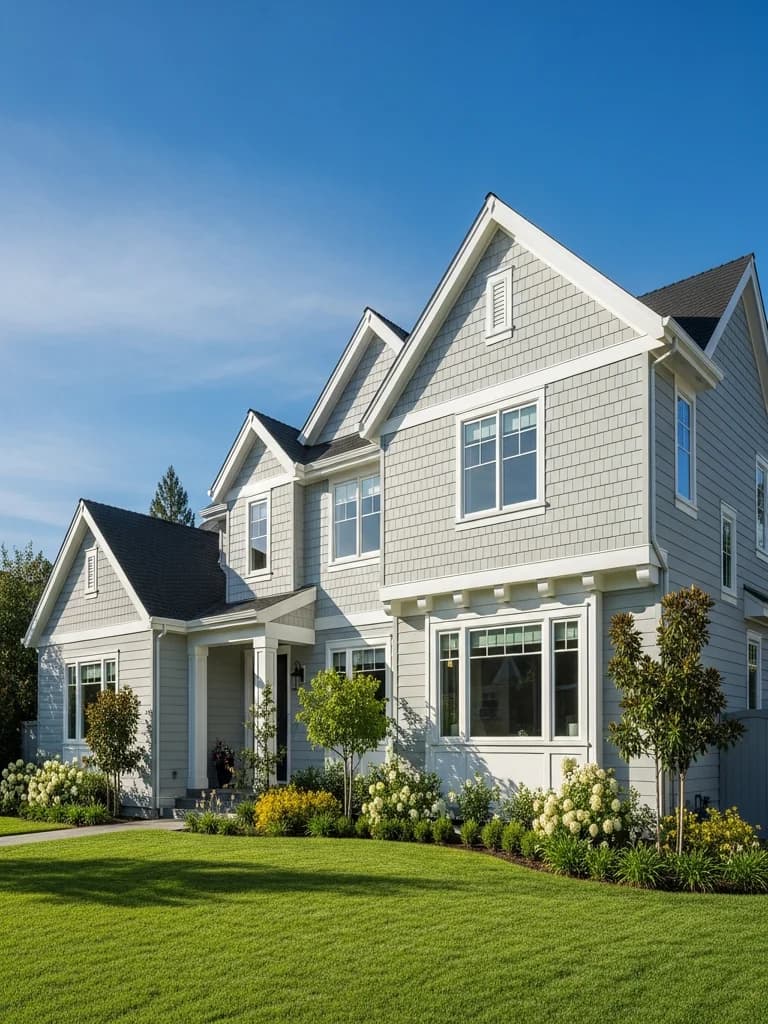
Siding in Stockton
A Stockton re-side is shaped by two forces that rarely sit together: punishing Central Valley heat and UV through the long summer, and the humid, damp air the San Joaquin Delta pushes across the city's west and north edges. That combination ages cladding differently than a dry inland town or a marine coastal one. Stockton's housing runs the full spread, from the wood-trimmed bungalows of Magnolia and Victory Park to the Miracle Mile blocks, sprawling postwar tracts, and the master-planned Brookside and Spanos Park developments north of the Calaveras.
So a Stockton siding job gets scoped to which neighborhood and which exposure it sits in, not to a single citywide template.
Heat above, Delta damp at the edges
Stockton's controlling stressor is the pairing of valley sun and Delta moisture. South- and west-facing walls bake through triple-digit afternoons while the same home's north and west sides catch the humid air drifting in off the Deep Water Channel and the sloughs. Original wood lap and aging hardboard chalk and check from the UV, then take on moisture along the bottom courses where the damp lingers. We re-clad in dimensionally stable, factory-finished fiber cement, correct the substrate and drainage plane underneath, and detail the lower courses and end-cuts for the moisture the west side of the city actually sees.
Magnolia, Victory Park, and the Miracle Mile: character first
The older neighborhoods ringing downtown carry real architectural vocabulary. Magnolia and Victory Park hold craftsman and period-revival homes with narrow lap exposures, deep trim, and porch detailing, and the Miracle Mile blocks behind them are the same era. A re-side here is as much a profile-matching exercise as a material one. We replicate the original reveal, corner boards, and water-table detail in fiber cement so the upgrade reads period-correct from the sidewalk rather than flattening a 1920s facade into a generic modern wall. Many of these homes also hide layered repaintings and mismatched earlier patches, which we sort out at tear-off before the new course goes up.
Postwar tracts and the Brookside and Spanos Park master plans
North and west Stockton tell a different siding story. The postwar tracts that fill out much of the city went up fast in matching phases, so a single failing elevation usually signals the same sun-and-damp breakdown repeating down the block on near-identical floor plans. The master-planned communities like Brookside and Spanos Park, built around the lakes and golf frontage north of the Calaveras, often sit under architectural-review rules governing color, profile, and material. We plan around that approval step early, matching the established streetscape while upgrading to a heat- and moisture-stable product. On both, we inspect and price by exposure, since the western elevations facing the Delta and the afternoon sun fail years ahead of the sheltered sides.
Downtown and the Deep Water Channel edge
Closer to the channel and the older downtown grid, the moisture load climbs and the housing gets older and more varied. Homes near the waterfront and the sloughs along the city's west side take more sustained humid air, so the drainage plane and ventilation behind the cladding matter more here than on a dry tract lot east of town. We build a wall that can dry: a proper weather-resistive barrier, a vented or drained gap where the assembly warrants it, and sealed transitions where the siding meets the foundation and any below-grade-leaning grade. The point is to stop treating every Stockton address as one exterior, because a downtown-edge home near the water and a baked east-side tract house ask for genuinely different details.
Why this matters in Stockton
- Specified for Central Valley conditions
- James Hardie fiber cement as the recommended system
- Correctly detailed weather-resistive barrier and flashing
- Installed by a crew with 20 years combined experience
Recommended systems for Stockton
- James Hardie fiber cement
- factory finishes
- rigorous weather-management detailing near the Delta
- modern lap and board-and-batten profiles
Fiber Cement Siding for Stockton homes
The full fiber cement siding approach — materials, weather-resistive detailing, and the manufacturer standards we install to — is covered on the main service page, then specified for Stockton's conditions on this one.
Our Stockton process
- Step 1
Consultation
We listen to your goals and assess your home on site — exposure, substrate, and architecture.
- Step 2
Design & Proposal
A clear written proposal with the right system specified for your climate and a transparent scope.
- Step 3
Expert Installation
Trained crews install to manufacturer best practices with careful weather-management detailing.
- Step 4
Walkthrough & Support
A final walkthrough, full cleanup, and a clear written record of the scope completed — work we stand behind.
FAQ
Siding in Stockton — FAQ
The combination of intense valley UV on the sun-facing walls and Delta humidity along the west and north edges. Together they chalk and check cladding from above while damp works the lower courses, so we detail for both rather than one.
Yes — those older neighborhoods need profile and trim matching to keep the period character, while the postwar tracts and master-planned communities are more about uniform exposure-based replacement and, often, HOA color approval.
It depends on which side of the city you're on. West and north Stockton near the channel and sloughs catch real humid air; the drier east side is more of a pure heat-and-UV job. We assess by address.
Yes — a fade-resistant fiber cement re-clad with a refreshed palette substantially updates a sun-worn postwar block on top of the protection it adds.
Keep Exploring
More for Stockton homeowners
More in Stockton
Other exterior services in Stockton
Nearby Service Areas
Siding near Stockton
Back to
San Joaquin County & Stockton
Helpful Exterior Guides