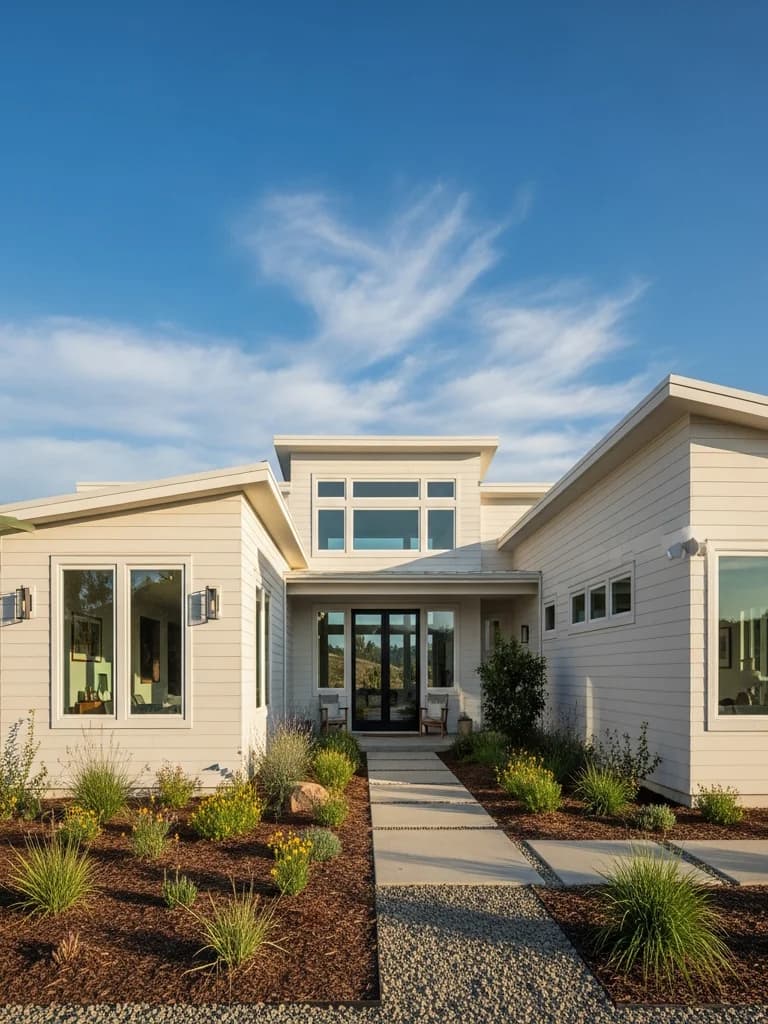
Siding in Manteca
Manteca's re-side work is shaped by how fast the city has grown. Sitting at the Highway 99/120 junction south of Stockton, it pairs postwar neighborhoods near downtown with sprawling newer subdivisions pushing south and east, so a single street can hold a 1960s ranch and a fifteen-year-old tract home next door.
Those two eras fail differently. The older stock is wearing out at the boards, while the master-planned tracts are reaching the age where builder-grade cladding chosen for speed starts giving up under relentless valley sun. Both share Manteca's controlling stressor: hard, dry, UV-heavy summer heat with almost no marine relief.
Valley heat and UV are Manteca's controlling load
Inland on the valley floor, Manteca gets long stretches of triple-digit afternoons with no Delta breeze or coastal fog to soften them. That sun is what ages cladding here first. South and west elevations chalk, fade, and cup years before the shaded sides, and builder-grade paint releases early. A correct Manteca re-side treats the sun side as its own problem: factory-finished fiber cement or an engineered product rated to hold color through thermal cycling, expansion gaps detailed so heat movement doesn't crack the field, and flashing and sealant chosen to stay flexible in that heat rather than baking brittle.
Two housing eras, two re-side stories
Downtown-adjacent and ag-edge Manteca holds older ranch and postwar homes whose original wood or stucco-and-board exteriors are simply at end of life. The bigger volume, though, is the newer growth south and east of town, where master-planned tracts went up fast with thin builder-grade siding and trim. On those homes a re-side is rarely a panel swap. We strip to sheathing, verify the weather-resistive barrier, and correct the window and corner flashing the tract crews rushed, because the original assembly was specced to a builder's budget, not a thirty-year valley service life.
Tight tract setbacks shape access and staging
Manteca's newer subdivisions are platted dense, with narrow side yards between neighboring homes and shared zero-lot-line conditions in some developments. That changes how a re-side runs. Material has to be staged where it won't block a neighbor, scaffolding has to fit setbacks that barely clear an arm's reach, and tear-off debris needs a containment plan when the next house is feet away. Many of these developments also carry HOA architectural review, so color and profile approvals factor into the timeline. We plan access, staging, and approvals before the first board comes off rather than discovering them mid-job.
What a real Manteca re-side scope includes
Because so much of the local stock failed for the same reasons, a genuine scope here goes past the visible boards. We expect to find chalked finishes, split trim at corners, and caulk joints baked open at windows on the tract homes, and swollen or wicking lower courses on the older downtown-edge houses. The work is tear-off, substrate inspection, weather-barrier correction, re-flashing of openings and kick-outs, then re-clad with a UV-stable, heat-tolerant system sized to Manteca's climate. The point is to fix the root causes that ended the first exterior's life, not skin over them and repeat the failure a handful of summers later.
Why this matters in Manteca
- Specified for Central Valley conditions
- James Hardie fiber cement as the recommended system
- Correctly detailed weather-resistive barrier and flashing
- Installed by a crew with 20 years combined experience
Recommended systems for Manteca
- James Hardie fiber cement
- factory finishes
- modern lap and board-and-batten profiles
- durable trim packages
Fiber Cement Siding for Manteca homes
The full fiber cement siding approach — materials, weather-resistive detailing, and the manufacturer standards we install to — is covered on the main service page, then specified for Manteca's conditions on this one.
Our Manteca process
- Step 1
Consultation
We listen to your goals and assess your home on site — exposure, substrate, and architecture.
- Step 2
Design & Proposal
A clear written proposal with the right system specified for your climate and a transparent scope.
- Step 3
Expert Installation
Trained crews install to manufacturer best practices with careful weather-management detailing.
- Step 4
Walkthrough & Support
A final walkthrough, full cleanup, and a clear written record of the scope completed — work we stand behind.
FAQ
Siding in Manteca — FAQ
That's the south or west elevation taking Manteca's full valley sun load with no coastal relief. UV and heat cycling chalk the finish and crack brittle caulk there first; a UV-stable, properly gapped re-side fixes the root cause.
Many are. The master-planned growth south and east of town used builder-grade cladding and trim that often runs out of finish life within a couple of decades under this heat, so a fifteen-to-twenty-year-old Manteca tract home is a common re-side candidate.
Often, yes. Many of the newer Manteca subdivisions carry architectural review covering color and profile. We plan for that approval window before ordering material so it doesn't stall the job.
Generally no — Manteca sits on the valley floor and is not a high wildfire-exposure area. The driving siding concerns here are sun, heat, and UV, not fire. We assess any specific ag-edge parcel on its own merits.
Keep Exploring
More for Manteca homeowners
More in Manteca
Other exterior services in Manteca
Nearby Service Areas
Siding near Manteca
Helpful Exterior Guides