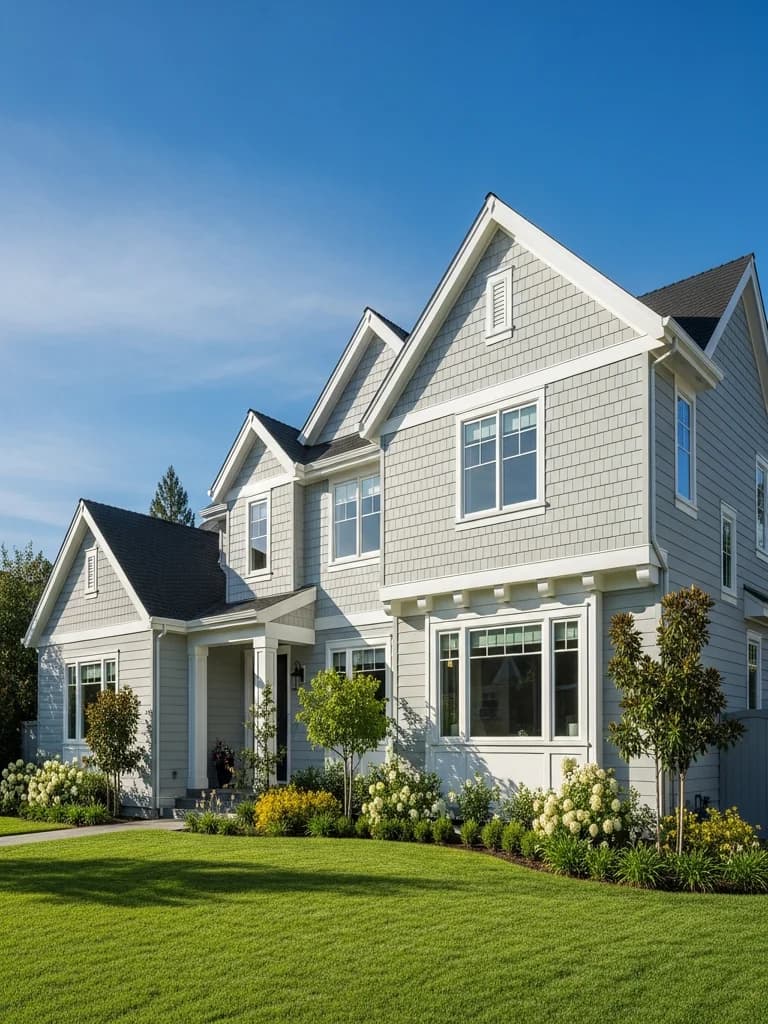
Siding in Tracy
A Tracy re-side is a wind-and-sun job before anything else. The valley city closest to the Altamont Pass, Tracy grew fast on Bay-commuter demand, and its housing is dominated by large 1990s-2010s commuter subdivisions and newer master-planned tracts spreading across open ground toward the gap. Most of that production stock is now reaching re-side age, baked by hard valley sun and worked by the sustained open-field wind that funnels off the pass.
We scope from the parcel and its exposure — downtown bungalow, post-war ranch, or open-edge tract near the Altamont — rather than running one template across the whole city.
Two stressors, not one
Most valley towns answer to heat alone; Tracy answers to heat and wind together. Long, high-UV summers chalk and cup original cladding worst on south and west walls across the city's low-canopy tracts, while the same Altamont gap that turns the turbines on the ridges above drives real, sustained wind across the exposed western and southern edges. A re-side that only solves the sun leaves the fastening and flashing under-built for the wind, so we treat both as primary and detail the assembly accordingly.
Breaking the builder-uniformity look
Tracy's market is its production stock — block after block of repeated 1990s-2010s elevations where every fourth house shares a floor plan and a faded stucco-and-hardboard palette. A re-side here is a chance to break that sameness without fighting the neighborhood: a modern lap-and-batten field, deeper trim returns, and a refreshed factory color lift a tract home off the street while staying within what an HOA approves. We confirm any tract color and profile guidelines before ordering so the upgrade reads as intentional, not nonconforming.
Older downtown and post-war ranch stock
Closer to the historic center, Tracy's older downtown bungalows, period homes, and post-war ranch neighborhoods are a different scope. The framing on these older houses rarely sits as plumb as a tract wall, so trim at windows, porches, and the deeper eaves gets scribed individually rather than run as stock lengths, and demolition often turns up layered original siding or soft spots to correct before new board goes up. Period-sensitive profiles and proportions keep the street character intact while the new cladding ends the scrape-and-repaint cycle these homes have carried for decades.
Why the wind changes the install, not just the material
On the open western and southern lots nearest the pass, wind is the controlling load, and it shows up in how the wall is built rather than what it is made of. We tighten the fastener schedule, hit framing rather than sheathing alone, and pay particular attention to corners, gable ends, and rakes where uplift concentrates. Wind-driven rain pushes water at every lap and penetration, so flashing and the weather-resistive barrier are detailed to drain rather than face-seal, and no wall is left tacked and exposed overnight when a gust-driven shower can roll off the ridges. The interior tracts shielded by surrounding houses get a lighter touch than the open edges.
Why this matters in Tracy
- Specified for Central Valley conditions
- James Hardie fiber cement as the recommended system
- Correctly detailed weather-resistive barrier and flashing
- Installed by a crew with 20 years combined experience
Recommended systems for Tracy
- James Hardie fiber cement
- factory finishes
- wind-aware fastening and detailing
- modern lap and board-and-batten profiles
Fiber Cement Siding for Tracy homes
The full fiber cement siding approach — materials, weather-resistive detailing, and the manufacturer standards we install to — is covered on the main service page, then specified for Tracy's conditions on this one.
Our Tracy process
- Step 1
Consultation
We listen to your goals and assess your home on site — exposure, substrate, and architecture.
- Step 2
Design & Proposal
A clear written proposal with the right system specified for your climate and a transparent scope.
- Step 3
Expert Installation
Trained crews install to manufacturer best practices with careful weather-management detailing.
- Step 4
Walkthrough & Support
A final walkthrough, full cleanup, and a clear written record of the scope completed — work we stand behind.
FAQ
Siding in Tracy — FAQ
Wind. Tracy sits at the mouth of the Altamont Pass, so its open western and southern edges see sustained open-field wind on top of the valley heat — most inland valley towns deal with sun alone, which is why fastening and flashing detailing matter more here.
Yes. A modern lap-and-batten field, deeper trim, and a refreshed factory color break the builder-uniformity look while staying inside approved palettes — we confirm your tract's guidelines before ordering.
South and west elevations take the heaviest afternoon sun and age fastest, and on the open-edge lots near the pass those same walls also catch the brunt of the Altamont wind, so they usually drive the scope.
Yes — older downtown bungalows and period homes, post-war ranch neighborhoods, and the large commuter subdivisions and master-planned tracts toward the Altamont. We scope each to its era and its exposure rather than one template.
Keep Exploring
More for Tracy homeowners
More in Tracy
Other exterior services in Tracy
Nearby Service Areas
Siding near Tracy
Helpful Exterior Guides