
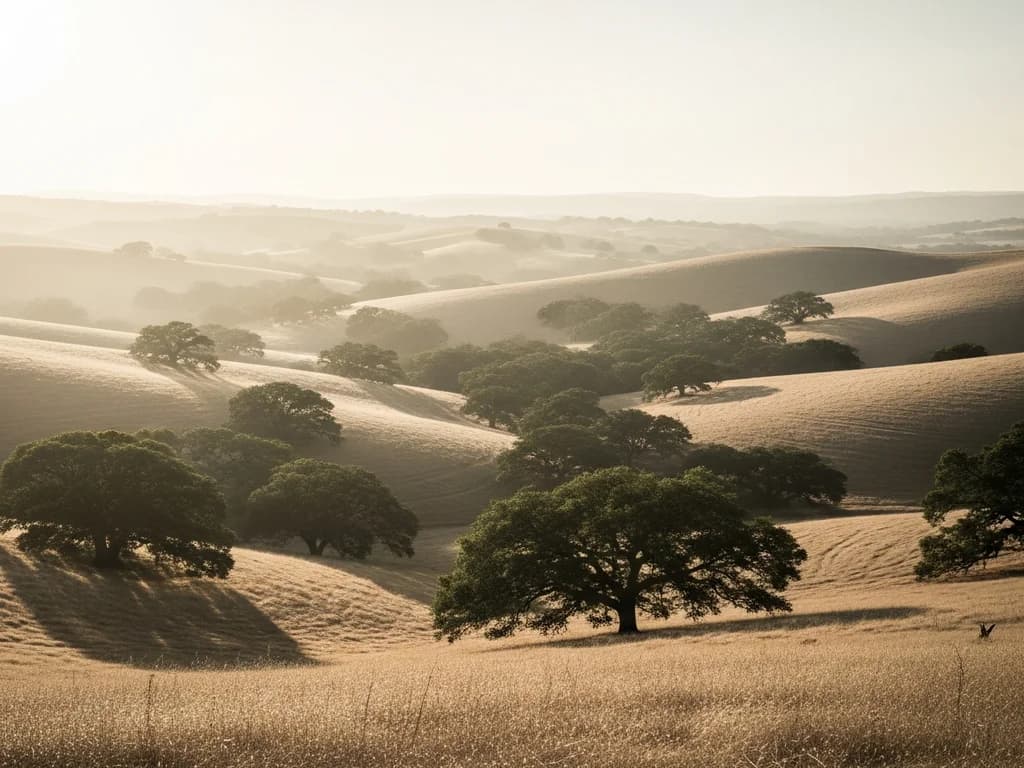
A Central Valley county where heat is the constant
San Joaquin County sits at the top of the San Joaquin Valley, framed by Interstate 5 and Highway 99 and reaching from the Sacramento–San Joaquin Delta in the northwest down through the orchard and row-crop country toward the Stanislaus line. Its housing splits into clear markets: Stockton, the large Delta-edge city with everything from historic neighborhoods to sprawling tracts; Lodi, the Zinfandel wine-appellation town to the north near the Sacramento County line at Galt; the fast-growing Tracy–Manteca commuter belt feeding the Bay Area over the Altamont; and small almond-country towns like Ripon. What unites all of it is the controlling exterior reality of this part of the valley — long, fierce, high-UV summer heat.
Aging cladding meeting one of the valley's hardest climates
Across San Joaquin County a large share of homes are past the service life of their original builder-grade siding. Stockton's older neighborhoods and post-war tracts, Lodi's downtown stock and ranch belts, and the rapidly built Tracy, Manteca, and Ripon subdivisions all carry hardboard, T1-11, stucco-and-siding combinations, or economy materials that the relentless valley sun has chalked, cupped, and faded. The agricultural setting — open vineyards, almond orchards, and row crops with little canopy on newer tracts — leaves exteriors fully exposed through long, bright summers, making a heat-durable re-side both overdue protection and a meaningful curb-appeal and value upgrade countywide.
Utility, permit, and fire authorities across San Joaquin County
San Joaquin County has seven incorporated cities — Stockton (the county seat and by far the county's largest city), Tracy, Manteca, Lodi, Lathrop, Ripon, and Escalon — plus large unincorporated areas including French Camp, Woodbridge, Acampo, Thornton, Linden, Farmington, Clements, and the Delta communities of Terminous, Holt, and the Highway 12 corridor. Each city runs its own community development department; unincorporated permits go through the San Joaquin County Community Development Department. Electric and gas are PG&E throughout, with Modesto Irrigation District (MID) covering some cross-boundary parcels; MID is one of only four California utilities providing both electric and irrigation retail. Water is served by the City of Stockton, City of Lodi, City of Tracy, City of Manteca (with South San Joaquin Irrigation District — SSJID — as the wholesale surface-water source), City of Ripon, City of Lathrop, Cal Water Stockton District, and San Joaquin County groundwater management under the Eastern San Joaquin Groundwater Sustainability Agency framework. Fire response is Cal Fire Tuolumne-Calaveras Unit (TCU) as the primary wildland responder alongside Stockton Fire, Tracy Fire, Manteca Fire, Lodi Fire, Lathrop-Manteca FPD, Ripon Consolidated FPD, and Woodbridge/Clements/Linden FPDs across the outlying communities.
HZ10 climate and the San Joaquin County FHSZ landscape
Every parcel in San Joaquin County is in James Hardie's HZ10 climate zone; installing HZ5 anywhere in the county is a documented warranty misapplication. On the fire side, essentially all of San Joaquin County sits in Low or unmapped FHSZ territory under California's 2025 LRA Fire Hazard Severity Zone map — this is irrigated Central Valley agricultural ground and settled suburban terrain, and wildland fire is not the local threat. Eastern parcels running toward the Sierra Nevada foothill margin (Linden, Farmington, Clements toward Amador County) pick up Moderate designations where annual grassland cures to fast fuel. Delta communities face FEMA flood-hazard framework rather than wildland fire. Chapter 7A moved into the standalone WUI Code on January 1, 2026, but does not typically drive San Joaquin County's spec.
Climate and exterior risk in San Joaquin County
Long, intense, high-UV summers are the controlling exterior factor across San Joaquin County, and this part of the valley runs hotter and brighter than the Sacramento Valley to the north. South- and west-facing elevations age fastest, and original hardboard, T1-11, stucco-and-siding combinations, and economy vinyl typically reach end of life through chalking, cupping, swollen joints, and fading. The Sacramento–San Joaquin Delta reaches the county's northwest around Stockton, where afternoon delta breezes and river-corridor humidity add a moisture consideration to the heat. Most of the county, however, is open, low-canopy agricultural land where unshaded walls take severe sustained UV.
Wildfire exposure in San Joaquin County
San Joaquin County carries low wildfire exposure across the board — Stockton, Lodi, Tracy, Manteca, and Ripon all sit on the open valley floor where vineyards, orchards, row crops, and irrigation, not wildland fuel, surround the homes. There is no foothill or wildland-urban-interface edge inside the county comparable to the foothill towns farther north and east, so ember exposure is not a driving factor in the spec here. Non-combustible fiber cement remains a sound, low-regret choice for its heat performance, but fire hardening is not the reason to choose it in this county; the valley sun is.
Moisture, the Delta, and the San Joaquin River
Snow is not a factor anywhere in San Joaquin County. Moisture is concentrated in the northwest, where Stockton sits at the eastern edge of the Sacramento–San Joaquin Delta and along the San Joaquin River flood plain, feeling delta humidity and afternoon breezes. Homes there, and lower-lying parcels along the river and the county's sloughs and channels, warrant particular care in weather-resistive barrier, flashing, and bottom-course detailing. The cladding material itself does not change for it — fade-resistant fiber cement still leads — but the drainage-plane detailing around it does. Away from the Delta, in Lodi, Tracy, Manteca, and Ripon, moisture is a minor, managed concern behind the heat.
Recommended materials for San Joaquin County
Fade-resistant fiber cement is the default across San Joaquin County for its heat durability and color stability under the valley's punishing UV, and its dimensional stability through large daily and seasonal temperature swings suits the climate better than economy products. Factory-finished systems hold color far longer than field paint on the county's unshaded ag-country and tract elevations. Engineered wood is acceptable on the county's low-fire valley-floor parcels where homeowners want deep wood character, while board-and-batten and mixed-profile designs modernize the region's wine-country, historic, and fast-built production stock effectively. Near the Delta around Stockton, the same materials apply with more rigorous drainage-plane detailing.
FAQ
San Joaquin County — Common Questions
Yes — Stockton, Lodi, Tracy, Manteca, Ripon, and the surrounding San Joaquin County communities. Lodi borders our Sacramento County service area near Galt, so this is an honest extension of our Central Valley coverage south along Highway 99 and Interstate 5.
Re-siding aging builder-grade and original homes in fade-resistant fiber cement, frequently paired with window updates and a modern color program for protection against the valley heat and for resale value.
Generally not — Stockton, Lodi, Tracy, Manteca, and Ripon are low-exposure valley-floor cities surrounded by farmland and orchards rather than wildland. Non-combustible fiber cement is still a sound, low-regret choice, but in this county it is chosen for heat durability, not fire.
Original builder-grade hardboard, T1-11, stucco-and-siding combinations, and economy vinyl were not specified for the northern San Joaquin Valley's sustained UV and heat load. Chalking, cupping, swollen joints, and fading on sun-facing elevations is the typical end-of-life pattern across the county's open, largely unshaded lots.
The cladding material stays the same fade-resistant fiber cement, but homes near the Sacramento–San Joaquin Delta and along the San Joaquin River flood plain get extra attention to weather-resistive barrier, flashing, and bottom-course detailing because of the added river-corridor and delta moisture.
Yes. Lodi's older downtown neighborhoods carry real character, and we choose period-appropriate profiles and trim so durability is upgraded without erasing a home's wine-town identity, while heat-durable factory finishes hold their color through the long valley summers.
A correctly installed fiber cement system commonly performs 30+ years in the northern San Joaquin Valley climate, with factory finishes extending the time before any cosmetic refresh on the county's sun-loaded elevations.
South- and west-facing walls take the heaviest afternoon sun and age fastest, especially on the open, low-canopy lots common across the Tracy, Manteca, and Ripon tracts and the orchard- and vineyard-country parcels with little shade.