16 min read · Pillar Guide
The right siding for a California home is the one matched to your wildfire exposure, microclimate, and architecture — not a single "best" material that wins everywhere. For most California homes, and for every parcel with real wildland exposure, non-combustible fiber cement is the strongest all-around choice; engineered wood (LP SmartSide) is a strong looks-and-feel option in genuinely low-fire areas; vinyl and natural wood serve narrow niches. But the material on the box matters less than the system behind it — the drainage plane, flashing, clearances, and fastening decide whether siding lasts forty years or fails in ten. This guide walks the full decision the way we'd advise you standing in your driveway: how to choose, what each material actually does in California heat, fog, salt, and fire, what a good install looks like, and how to move toward a quote you can trust.
How to choose siding in California (start here)
There is no universal "best" siding in California — there is the right system for your parcel. Work the decision in this order: (1) the wildfire exposure of the lot, because on a fire-exposed parcel that single factor eliminates most combustible options before anything else matters; (2) the dominant climate stress at your address — Central Valley heat and UV, marine fog and salt, alpine snow and freeze-thaw, or wind-driven rain in the Delta and open valley; (3) architectural fit and how long the finish will actually hold its look; and (4) installed cost over a 30-year horizon rather than sticker price. Most homeowners reverse this and shop on price or color first, then discover the material can't meet their fire or climate reality. Every section below maps a material against these four filters so you can see where it genuinely fits — and where it doesn't. If you already know which two materials you're deciding between, the siding comparison hub puts them side by side directly. When you're ready to pressure-test it against your specific elevations, we'll get a free on-site estimate and scope it honestly.
California house siding, style by style
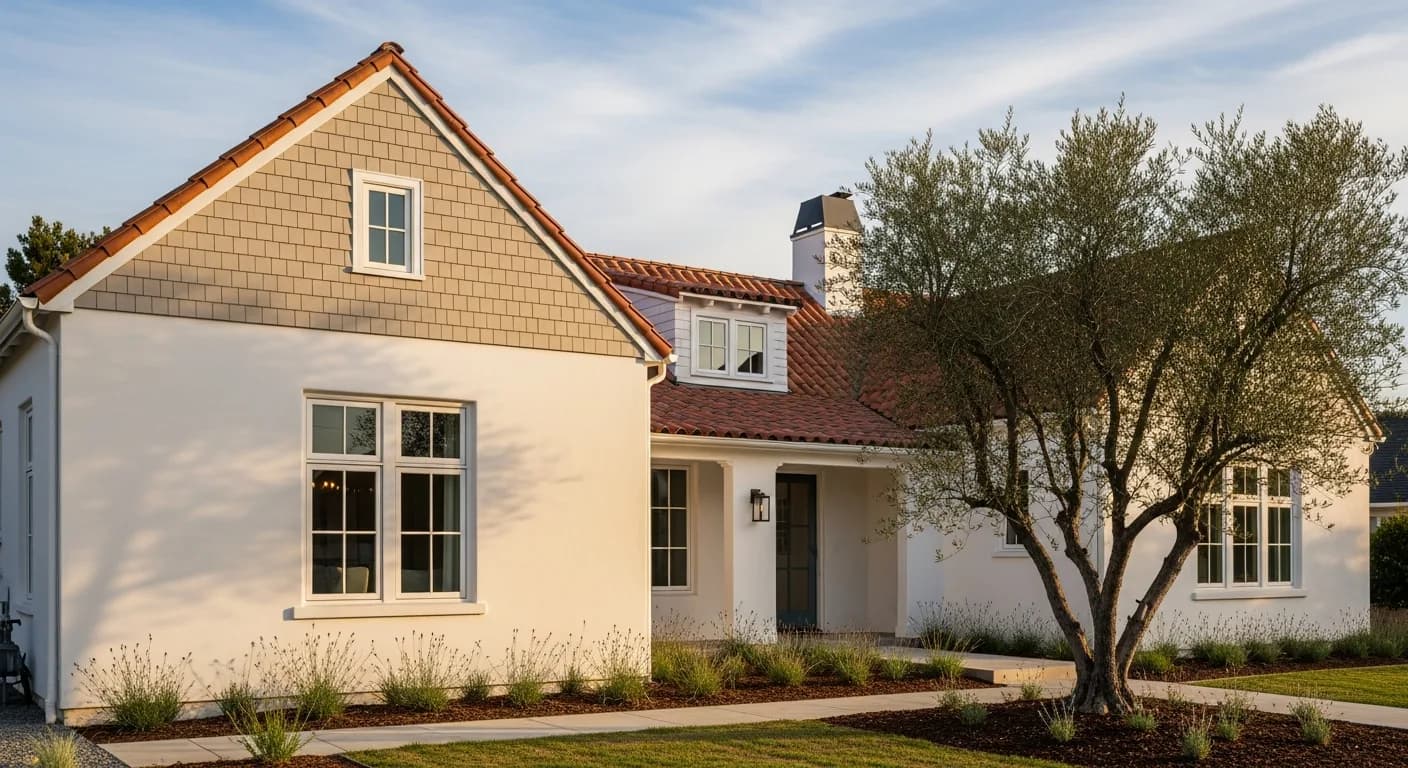
If you're starting from your home's architecture rather than a material, here's how California house siding typically maps. **Ranch and mid-century tract homes** — the backbone of valley neighborhoods — wear horizontal lap best, in fiber cement or engineered wood; wide exposures keep the long, low lines honest. **Craftsman and bungalow** homes call for lap with generous trim, and shingle accents in gables; fiber cement reproduces both without the wood upkeep. **Modern farmhouse** — the dominant re-side look of the last decade — is board-and-batten (vertical panel plus battens) in white or deep contrast colors. **Spanish and Mediterranean** homes are usually stucco, and often should stay stucco — re-siding over good original stucco can be the wrong move; see our stucco decision guide. **Mountain and foothill cabins** lean shingle and board-and-batten, where the fire question decides the material before the style does. **Contemporary and modern** designs use large-format panel with clean reveals. The style points you at a profile; your fire exposure and microclimate still decide the material — which is what the rest of this guide walks through.
Fiber cement: the California default
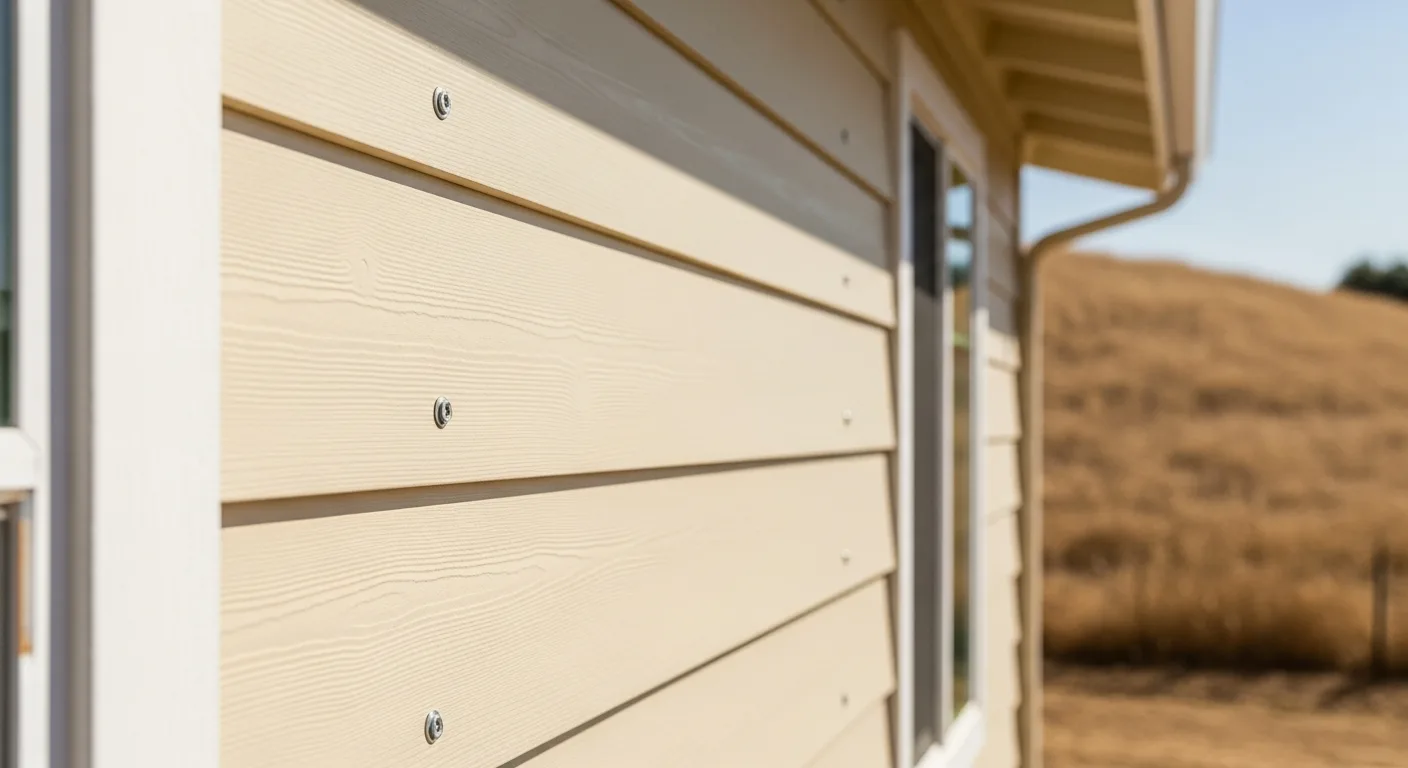
Fiber cement is our default recommendation for the majority of California homes and the only sound cladding on fire-exposed foothill, wine-country, and mountain parcels. It is non-combustible (Class A), dimensionally stable through the state's brutal day-night heat cycling, and genuinely long-lived when detailed correctly. Factory-applied finishes — pigment baked onto the board at the plant — hold up to Central Valley UV far better than field paint, resisting the chalking and fading that plague cheaper coatings. It accepts lap, panel, shingle, and board-and-batten profiles, so it fits everything from a Craftsman bungalow to a modern farmhouse. Its real-world performance, though, is governed less by brand than by gap, fastening, ground clearance, and flashing discipline on install. See our fiber cement siding installation service page for how we detail it, and the fiber cement vs. stucco comparison if you're weighing a re-side.
James Hardie vs. generic fiber cement
James Hardie is the most-specified fiber cement brand in California, and for good reason: its HZ10 product line is formulated for hot, dry Western climates, its ColorPlus baked finish carries a long fade warranty, and its trim and accessory system is complete and well-documented. Generic fiber cement can perform similarly when detailed to the same standard, but the differences show up in warranty terms, finish consistency, color selection, and how thoroughly the trim ecosystem is engineered. For a fire-exposed or high-value home, those manufacturer-backed details are worth paying for; on a tighter budget a quality generic board installed to spec is defensible. We don't claim to be a certified or preferred installer of any brand — we'll tell you honestly what each option costs and why. Our James Hardie siding installation page and the deeper Hardie board complete guide cover the product line in full.
Engineered wood (LP SmartSide)
Engineered wood — most commonly LP SmartSide — offers authentic deep wood grain, lighter weight and faster install than fiber cement, and excellent paint adhesion. The treated-strand product resists decay and termites well in dry and moderate California climates, and many homeowners simply prefer its warmer, more dimensional look over the crisper fiber cement face. The hard limit is that it is combustible. We steer away from it on serious wildfire parcels — foothill, wine-country, and mountain WUI zones — and recommend it only where fire exposure is genuinely low and the wood character is a priority. It also demands disciplined edge sealing and flashing, because exposed cut ends are the vulnerability. Compare the two head-to-head in our LP SmartSide complete guide, or see how we install engineered wood siding.
Vinyl, natural wood, and composite
Vinyl wins on upfront cost and low maintenance, but it offers limited premium aesthetics, and standard panels can distort under sustained intense valley sun — especially dark colors on west elevations. It is also combustible and can melt or ignite, which rules it out on any wildfire-exposed parcel. It's a reasonable budget choice on lower-exposure flat-valley homes and rarely our pick on a premium house. Natural wood delivers unmatched authenticity for period restorations but is rot- and pest-prone, needs frequent sealing or repainting, and is combustible — appropriate only in low-fire areas with an owner committed to upkeep. Composite cladding sits between these, trading some cost for lower maintenance. None of these is wrong everywhere; each is wrong somewhere. We'll tell you which bucket your home falls in rather than upselling the most expensive option.
Stucco and re-siding decisions
Much of California's older housing stock is stucco, and it's worth understanding before you decide to keep it. Stucco is non-combustible — a real advantage in fire country — but its weak points are the substrate and flashing details behind it. Cracks that track building movement and moisture trapped behind a poorly detailed drainage plane are among the most common failures we find on tear-off, and that hidden damage often costs more than the visible crack suggests. Re-siding in fiber cement over a correctly detailed weather-resistive barrier is frequently a durability upgrade, not merely a cosmetic one. That said, stucco repair is sometimes the right and cheaper call when the substrate is sound and the cracking is isolated and cosmetic. We assess what's actually behind the wall before recommending one path over the other. The fiber cement vs. stucco guide walks through both scenarios.
Wildfire exposure changes the answer
On any parcel with genuine wildland exposure, combustible cladding is effectively off the table and the material choice collapses to Class A non-combustible — practically, fiber cement. But the cladding alone is never enough in the wildland-urban interface. The real work moves to the assembly: hardened eaves and soffits, ember-resistant vents, deck-to-wall transitions, and the ground-to-siding zone where embers collect and ignite. The 2025 California Wildland-Urban Interface Code governs materials and construction methods for these exterior wildfire exposures, and following it is increasingly a permit requirement in high-hazard zones, not optional best practice. Review CAL FIRE's home hardening guidance and the code itself at the 2025 California Wildland-Urban Interface Code. For the full hardening picture, our best fire-resistant siding guide and our fire-resistant siding service page go deeper than this section can.
Climate-by-region quick guide
California is not one climate, and the governing stress at your address should shape the spec. Valley heat (Sacramento and the interior): fade-resistant fiber cement with conservative color and finish choices on south and west elevations, where UV is harshest. Marine moisture and fog (Bay, North Bay, coast): any cladding is only as good as its drying-capable drainage plane and corrosion-aware metal — coastal salt attacks cheap fasteners within seasons. Alpine (Tahoe and the high Sierra): non-combustible cladding plus snow-aware clearances and freeze-tolerant flashing that won't crack through the thaw cycle. Wind-driven zones (Delta, open valley): heavy wind-rated fastening schedules and robust flashing at every edge. We match the system to whichever of these governs your specific parcel rather than applying one recipe statewide. Our weather-resistant exterior systems approach is built around exactly this regional matching.
Reading a siding warranty before you sign
A glossy warranty number means little until you read what voids it, and in California the fine print does most of the work. Most fiber cement and engineered wood warranties separate substrate coverage (often 30 to 50 years, prorated) from factory finish coverage (commonly around 15 years), so the board can be "covered" while the color you actually see fades on a much shorter clock. Nearly every manufacturer requires installation to published clearance and fastening specs, which is why a sloppy install can quietly erase the paper you paid for. Coastal homes face an extra trap: some warranties exclude or shorten coverage within a defined distance of salt water unless a marine-grade finish is specified. Ask whether the warranty transfers to the next owner — a transferable 30-year warranty is a real resale asset in a California listing. Finally, confirm who covers labor versus material, because manufacturer warranties almost never pay to remove and reinstall a failed product. That's where your installer's workmanship guarantee matters as much as the brand promise. You can fold these questions into your free on-site estimate.
Color, paint chemistry, and California UV
California sun is the quiet destroyer of siding finishes, and southern and Central Valley exposures get the worst of it. Ultraviolet light breaks down the binders in cheaper coatings, which is why a budget paint job can chalk and fade years before the substrate is anywhere near failing. Factory-baked color — pigment cured onto the board under heat at the plant — holds up far better than a field coat because the cure is uniform and the resin system is engineered for fade resistance. If you choose a primed board painted on site, specify a 100 percent acrylic exterior product rated for high UV, and lean toward lighter and mid-tone colors that reflect rather than absorb heat. Dark charcoals and deep reds look striking on modern facades but run hotter, expand and contract harder across day-night swings, and stress both coating and caulk. South and west walls age fastest, so plan repaint cadence by orientation. James Hardie publishes color collections tuned for this, and pairing lighter cladding with ENERGY STAR rated windows cuts the cooling load the wall fights all summer — our window replacement service covers that side.
What good install looks like (it's the system, not the board)
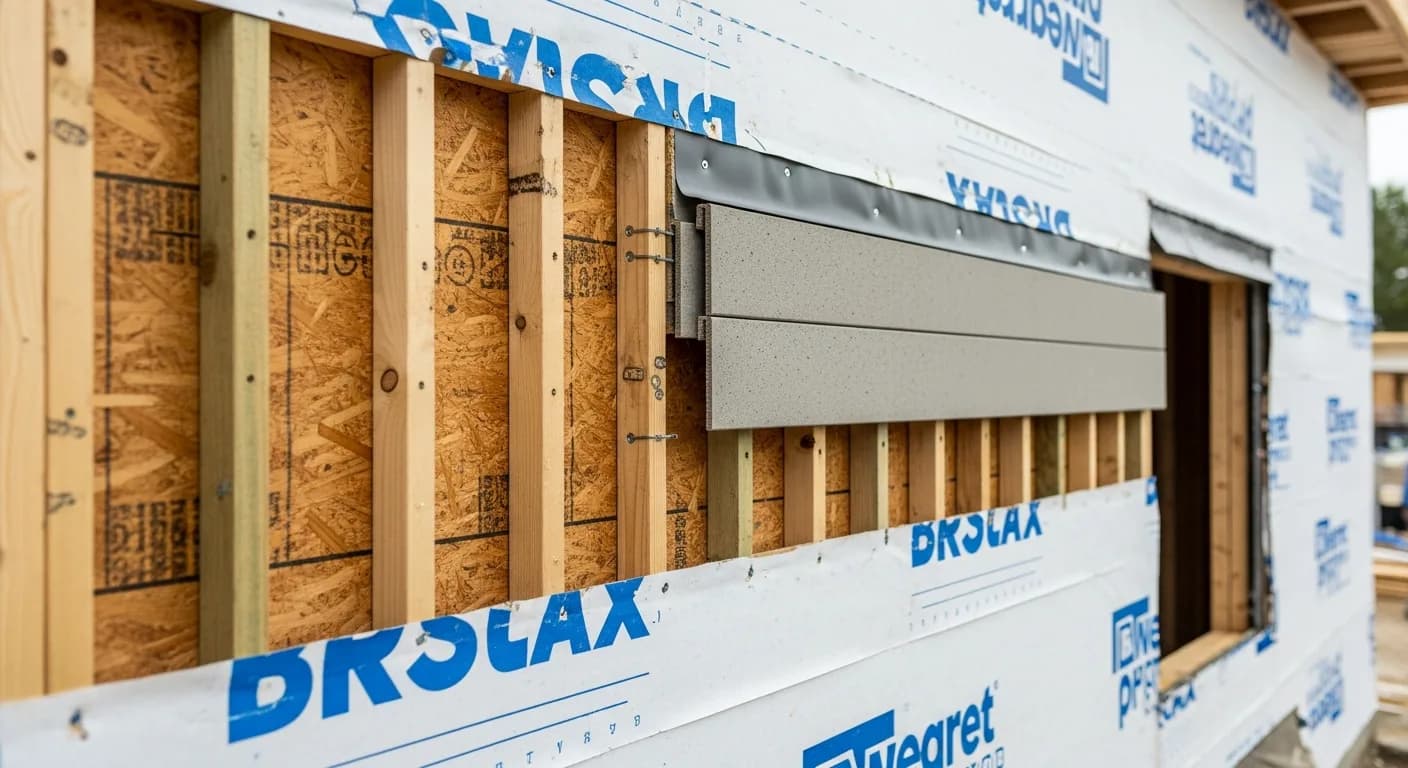
Two identical houses with the same siding can age completely differently based on details you can't see from the curb. First is the rainscreen gap: furring the cladding off the sheathing creates a drainage and drying cavity, which matters enormously in foggy coastal zones and anywhere wind-driven rain hits the wall. Second is flashing at every penetration and transition — windows, doors, decks, and roof-to-wall intersections are where water finds its way behind otherwise sound siding. Clearances protect both warranty and board: most fiber cement specs call for several inches between the bottom course and finished grade, plus defined gaps above roofing and hardscape so the material isn't wicking moisture. Fastener choice belongs here too, because corrosion-prone nails bleed rust down a coastal facade within a few seasons. None of this is exotic, but it's easy to shortcut under schedule pressure, and the failures show up years later as cupping, base-course rot, or paint that won't hold. Verify any contractor's license and bonding through the Contractors State License Board before you hire.
What a good bid looks like (and red flags)
A trustworthy siding bid is specific where a weak one is vague. It names the exact product line and finish — not just "fiber cement" — and spells out the weather-resistive barrier, flashing approach, rainscreen detail if applicable, fastener type, and clearances for your elevations. It addresses tear-off and what happens if rot or trapped moisture is found behind the existing cladding, with a clear change-order process rather than a surprise. It separates material, labor, and the workmanship warranty, and it states a realistic timeline. Red flags: a price that's far below others (someone is skipping flashing, prep, or proper fasteners), pressure to sign same-day, a large up-front deposit demand, no written scope, or a refusal to put fire-detailing in writing on a WUI parcel. We put our scope in writing and the written estimate governs — what's on paper is what we build. Our siding repair and dry rot repair pages explain how we handle hidden damage uncovered mid-project.
Cost vs. lifetime value
The cheapest material is rarely the cheapest exterior over 30 years once repaint cycles, repairs, and early failure are counted. Vinyl's low sticker price looks attractive until heat distortion or a single cracked panel forces a section replacement that's hard to color-match. Natural wood's seal-and-repaint demands add up fast. Fiber cement's higher upfront cost is typically offset by a far longer finish and substrate life in California conditions, fewer repaint cycles, and better resale standing. Engineered wood lands in between — strong value in low-fire areas if the finish is maintained. The honest way to compare is total cost of ownership across the time you'll own the home, not the bid total alone. We discuss realistic ranges qualitatively on site and put numbers in your written estimate; for material-by-material and project-type ranges, our siding cost in California guide breaks it down. When you want firm numbers for your house, request a free on-site estimate.
How to move forward
If you've narrowed the decision, the next step is a real assessment of your specific walls — not a phone quote. We walk every elevation, check the condition behind the existing cladding where possible, factor your parcel's fire exposure and microclimate, and put a specific product, system, and price in writing. From there you can compare apples to apples against other bids using the red-flag checklist above. If you're early and still deciding between materials, the supporting guides on this site go deeper on each path. Whatever you choose, insist the drainage plane, flashing, clearances, and fire detailing be specified in writing, because those — far more than the brand on the box — determine how long your investment lasts. To start, schedule a free on-site estimate and we'll scope it honestly, tell you where you can save, and tell you where cutting corners would cost you later.
California siding materials at a glance
| Material | Combustibility | Moisture behavior | Maintenance | California fit |
|---|---|---|---|---|
| Fiber cement | Non-combustible (Class A) | Stable; doesn't wick/swell | Periodic clean + caulk checks | Strong statewide; default in fire/heat zones |
| Stucco | Non-combustible | Can trap moisture if mis-detailed | Crack repair, repaint | Common; weak point is substrate/flashing detail |
| Engineered wood (e.g. LP) | Combustible | Treated against rot; still wood | Repaint cycle, edge vigilance | Budget/lower-fire; limited in WUI |
| Natural wood | Combustible | Rot/pest prone without upkeep | Frequent seal/repaint | Period-restoration, low-fire only |
| Vinyl | Combustible (melts/ignites) | Doesn't absorb water | Low, but can warp in heat | Low upfront; weak in heat/fire-prone CA |
Key takeaways
- There is no universal "best" siding — match the system to wildfire exposure and microclimate before anything else
- Fiber cement is the strongest all-around California choice and the only sound pick on fire-exposed parcels
- Combustible materials (engineered wood, vinyl, natural wood) are a poor fit for foothill, wine-country, and Tahoe WUI zones
- Factory-baked finishes dramatically outlast field paint under Central Valley UV; south and west walls age fastest
- Stucco often hides trapped-moisture damage — a fiber cement re-side can be a durability upgrade, but repair is sometimes the right call
- Read the warranty's fine print: substrate and finish coverage differ, install spec compliance is required, and labor is rarely included
- A good bid names the exact product, drainage plane, flashing, fasteners, and clearances — vagueness and lowball pricing are red flags
- Judge cost over a 30-year horizon, and remember the drainage plane and flashing matter more than the brand on the box
FAQ
Quick Answers
Fiber cement, installed as a properly detailed weather-managed system, offers the best balance of durability, fire resistance, and finish life across nearly every California climate. Its non-combustibility makes it the clear choice in fire-prone zones, and factory-baked finishes resist the state's harsh UV better than field paint. The install discipline behind it matters as much as the product itself.
Not always, but it's a narrow fit. It's a reasonable budget option on low-exposure flat-valley homes, but it underperforms premium materials in heat and aesthetics and can distort under intense sun. Because it's combustible and can melt or ignite, it's unsuitable for any wildfire-exposed parcel.
It performs well for durability and looks in low-fire areas, with authentic wood grain and good decay resistance when properly sealed. However, it is combustible, so we don't recommend it on foothill, wine-country, or mountain wildfire parcels. Where fire exposure is genuinely low and you want a warm wood look, it's a strong choice.
It depends on what's behind it. Cracking that tracks building movement combined with trapped moisture often makes a fiber cement re-side a durability upgrade, not just a cosmetic fix. Isolated cosmetic cracking over a sound substrate may only need repair. We assess what's actually behind the wall before recommending a path.
A correctly detailed fiber cement system commonly performs 30 years or more structurally. The factory or field finish may want a refresh sooner depending on color, orientation, and exposure, with south- and west-facing walls aging fastest under UV. Maintenance like caulk refresh and keeping grade clear of the base course extends the life of any material.
Less than the install. James Hardie offers strong climate-specific products, a complete trim system, and finish warranties, but any quality fiber cement detailed to the same gap, fastening, and flashing standard performs similarly. The drainage plane and clearances behind the board determine longevity far more than the brand on the box.
Class A non-combustible fiber cement, paired with hardened eaves, ember-resistant vents, deck transitions, and a clear ground-to-siding zone. In the wildland-urban interface the cladding alone is never enough — the 2025 California Wildland-Urban Interface Code and CAL FIRE home-hardening guidance govern the full assembly, and following them is often a permit requirement in high-hazard zones.
Over a 30-year horizon, usually yes. Its finish and substrate life in California conditions typically offset the higher upfront cost compared with the repaint-and-repair cycles cheaper materials demand. It also tends to support resale value better. The honest comparison is total cost of ownership over the time you'll own the home, not the bid total alone.
Choosing the board before the system — picking a material on looks or price without specifying the drainage plane, flashing, clearances, and fire detailing that actually determine how long it lasts. The second biggest is comparing bids only on total price, which rewards the contractor who quietly skipped the prep, flashing, or proper fasteners.
Make every bid specify the same things: the exact product and finish, the weather-resistive barrier, flashing approach, fastener type, clearances, and the workmanship warranty in writing. Be wary of any bid far below the others, same-day pressure, large up-front deposits, or refusal to put fire detailing in writing. A trustworthy contractor's written estimate should govern the work.
Sources
Authoritative references
- James Hardie — official product & installation resources
- 2025 California Wildland-Urban Interface Code (Title 24, Part 7) — exterior walls & wall coverings, §504.5
- CAL FIRE — California Department of Forestry and Fire Protection
External links to government, code, and manufacturer sources. Sierra Siding is not affiliated with these organizations; references are provided for verification.