One county, three exterior climates
Few counties in California present as wide an exterior-performance range as Placer. The western edge — Roseville, Rocklin, Lincoln — sits on the Sacramento Valley floor where the dominant stressor is relentless summer heat and UV. Move thirty minutes east and you are in Auburn, Loomis, and Colfax, where the conversation shifts entirely to wildfire exposure, defensible space, and ember-resistant assemblies. Climb higher still and Tahoe City brings alpine snow load and freeze-thaw. A siding spec that is correct in Roseville can be the wrong spec in Colfax, and we treat that distinction as the starting point of every Placer County project.
A high-value remodel market
Placer is one of the strongest exterior-renovation markets in Northern California: rapidly appreciating master-planned communities in the west, established custom-home neighborhoods in Granite Bay and Loomis, and character homes in historic Auburn. Homeowners here are upgrading aging vinyl and T1-11, modernizing builder-grade stucco-and-siding combinations, and hardening foothill homes ahead of fire season. We work across all of it.
The foothill transition is where specification gets decided
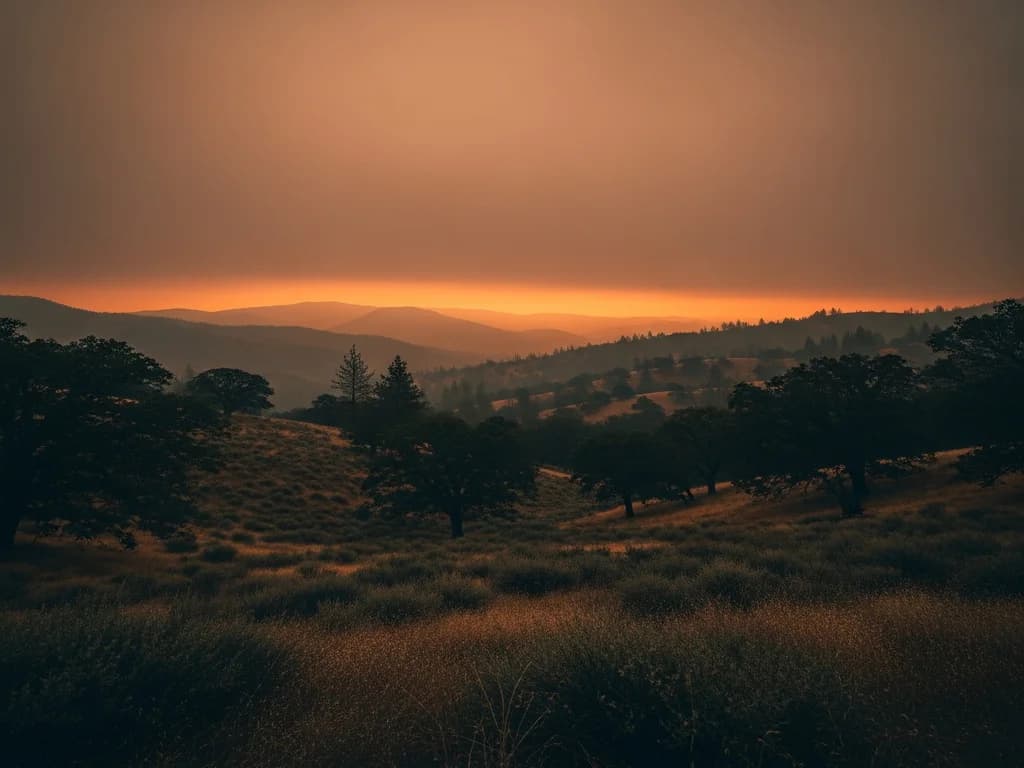
The most consequential line in Placer County is not a city boundary but the point where valley suburb becomes foothill wildland. Homes in Auburn, Loomis, North Auburn, Applegate, and Colfax sit against oak woodland and canyon terrain that carries genuine ember exposure, and many were built before hardening was a design consideration at all. The exterior questions there are different in kind, not degree: not only what cladding, but how eaves and soffits are constructed, how vents are screened, whether a deck is attached to a combustible wall, and what is stored or growing in the first few feet around the structure. Two homes on the same road can carry quite different risk depending on slope, aspect, and vegetation.
Utility, permit, and fire authorities across Placer County
Placer County has six incorporated cities — Roseville, Rocklin, Lincoln, Auburn, Colfax, and Loomis — plus large unincorporated areas including Granite Bay, Newcastle, Applegate, Meadow Vista, Foresthill, Weimar, Alta, Kings Beach, Tahoe Vista, Carnelian Bay, Sunnyside, and Homewood. Each of those cities has its own community development department; unincorporated parcels go through Placer County Community Development / Building Services. Electric is unusually fragmented in the west: Roseville Electric (the customer-owned municipal utility) serves Roseville, PG&E serves the rest of the western valley and the foothills, and Liberty Utilities (Sierra region) serves the California Tahoe basin from Homewood north through Kings Beach; gas is PG&E throughout with propane common on rural acreage. Water is served by dozens of purveyors — Placer County Water Agency (PCWA) across most of the western county, City of Roseville water, City of Lincoln, City of Auburn, City of Colfax, San Juan Water District in the south, Nevada Irrigation District (NID) along the Auburn-Colfax corridor, plus Foresthill PUD, Alta Sierra CSD, Tahoe City PUD (TCPUD), North Tahoe PUD (NTPUD), and dozens of small mutual companies. Fire response varies by corridor: South Placer FPD covers the Roseville-Rocklin western valley alongside Roseville Fire and Rocklin Fire; the foothill belt is Placer Hills Fire, Newcastle Fire, Foresthill FPD, Alta Fire, and CAL FIRE Nevada-Yuba-Placer Unit (NEU); Tahoe basin is North Tahoe FPD and Northstar FPD with CAL FIRE NEU still coordinating the wildland.
HZ climate and the Placer County FHSZ landscape
Placer County spans both HZ climate zones: valley and low-foothill communities (Roseville, Rocklin, Lincoln, Granite Bay, Loomis, Auburn, Newcastle, Applegate, Colfax) are HZ10, while high-Sierra communities (Tahoe City, Kings Beach, Homewood, and the Tahoe basin) are HZ5. Installing the wrong zone product is a documented warranty misapplication. On the fire side, the western valley cities sit in Low FHSZ under California's 2025 LRA Fire Hazard Severity Zone map, while the foothill belt from Newcastle east through Auburn, Meadow Vista, Applegate, and Colfax carries Moderate to Very High designations, and the entire Sierra crest and Tahoe basin is Very High. The 2022 Mosquito Fire (76,788 acres) burned into eastern Placer County; the 2013 American Fire (27,440 acres) burned Foresthill-corridor terrain. On designated hillside parcels the 2025 California Wildland-Urban Interface Code governs the exterior wall. Chapter 7A moved into the standalone WUI Code on January 1, 2026.
Climate and exterior risk in Placer County
Western Placer experiences long, intense summers with sustained UV that fades finishes and drives thermal movement in cladding and trim. The foothill belt adds significant wildfire exposure and larger day-to-night temperature swings. The Sierra crest near Tahoe City introduces heavy snow, prolonged freeze-thaw, and high-altitude UV. Moisture is generally a lower-order concern countywide than heat and fire, but proper drainage-plane detailing still governs long-term performance everywhere. The valley half of the county is fighting a slow, cumulative battle with UV and thermal cycling — the failures show up as chalking, fading, cupped boards, and joints that have gradually worked open on south and west elevations. The foothill and alpine half adds fire on one side and, at the top of the county, months of snow contact and freeze-thaw on the other. It is genuinely one county with three exterior problems.
Wildfire exposure in Placer County
Placer's foothill and Sierra communities — Auburn, Loomis, Colfax, and the corridors toward Tahoe — carry elevated to high wildfire risk, with many parcels in the wildland-urban interface. Western valley cities carry lower but non-zero grassland exposure. For at-risk addresses we specify Class A non-combustible cladding and harden the vulnerable points: eaves, vents, and ground-to-wall transitions. Requirements for parcels in mapped fire severity zones come from the current California WUI provisions in Title 24 Part 7, and whether and how they apply to a given address depends on the jurisdiction and the scope of work — the local building department is the authority, and on some projects a design professional should confirm it. Siding is one component of a hardened envelope, never the whole of it, and we would rather set that expectation early than let a homeowner assume a re-side has solved the problem.
Snow, freeze, and moisture
Snow and freeze-thaw are real considerations only in the county's high-elevation east near Tahoe City, where clearances and mountain-grade flashing are essential. Across the rest of Placer, moisture is managed through standard but rigorously detailed weather-resistive barrier and flashing work rather than through any special material selection. The moisture failures we actually find in this county are almost never material failures — they are missing kick-out flashing where a roof edge meets a wall, reverse-lapped barrier around an opening, siding installed tight to a patio or walkway with no clearance, or irrigation striking a wall daily through a valley summer. All four are detail decisions made during installation, and all four are invisible once the wall is closed up.
Recommended materials for Placer County
Fiber cement is our default recommendation across the county for its combination of heat durability, fade-resistant factory finishes, and Class A non-combustibility — the last point matters increasingly as you move east. Engineered wood is a reasonable choice in lower-fire western neighborhoods where homeowners want deep wood character. In the foothill and alpine belt we steer firmly toward non-combustible systems and fire-aware detailing. Factory-applied finishes are worth the premium across the whole county: they cure under controlled conditions rather than being applied to a hot wall mid-summer, and they hold color markedly better under both valley and altitude UV. Whichever material is selected, the details that actually determine service life are the same everywhere in Placer — correct fastener specification, expansion gaps that accommodate real thermal movement, and clearances held at grade, roof, and deck.
Cities We Serve
Communities Across Placer County
FAQ
Placer County — Common Questions
Yes — from Roseville, Rocklin, and Lincoln on the valley floor through Granite Bay, Loomis, and Auburn in the foothills up to Tahoe City. We tailor the exterior system to each community's climate and fire exposure.
Placer spans valley heat, foothill wildfire, and alpine snow. The correct cladding, finish, and detailing in Roseville is genuinely different from what a Colfax or Tahoe City home needs, so we specify per address rather than countywide.
Usually with vents and the ground-to-wall transition rather than the cladding. Ember entry through unscreened vents and ignition of material stored or growing against the base of a wall are among the most common failure paths, and both cost far less to address than a full re-side. Non-combustible cladding is the more durable investment, but it is often not the highest-value first move on a constrained budget, and we will tell you that even when it means a smaller project.
Look at the south and west elevations, not the street-facing one. Chalking that comes off on your hand, color that has visibly drifted from the sheltered sides, cupped or lifting board ends, and joints that have opened enough to see daylight or sealant failure are the practical indicators. A wall can look acceptable from the kerb while the sun-facing side is well past its service life — that asymmetry is the norm in valley Placer, not the exception.
Not everywhere, but it is strongly advised across the eastern foothill belt — Auburn, Loomis, Colfax — and any parcel near open space or canyon. Western valley homes have lower exposure but still benefit from non-combustible cladding.
Re-siding builder-grade and dated homes in fade-resistant fiber cement, often paired with window updates and a modern color palette, is the most common project in Roseville, Rocklin, and Lincoln.