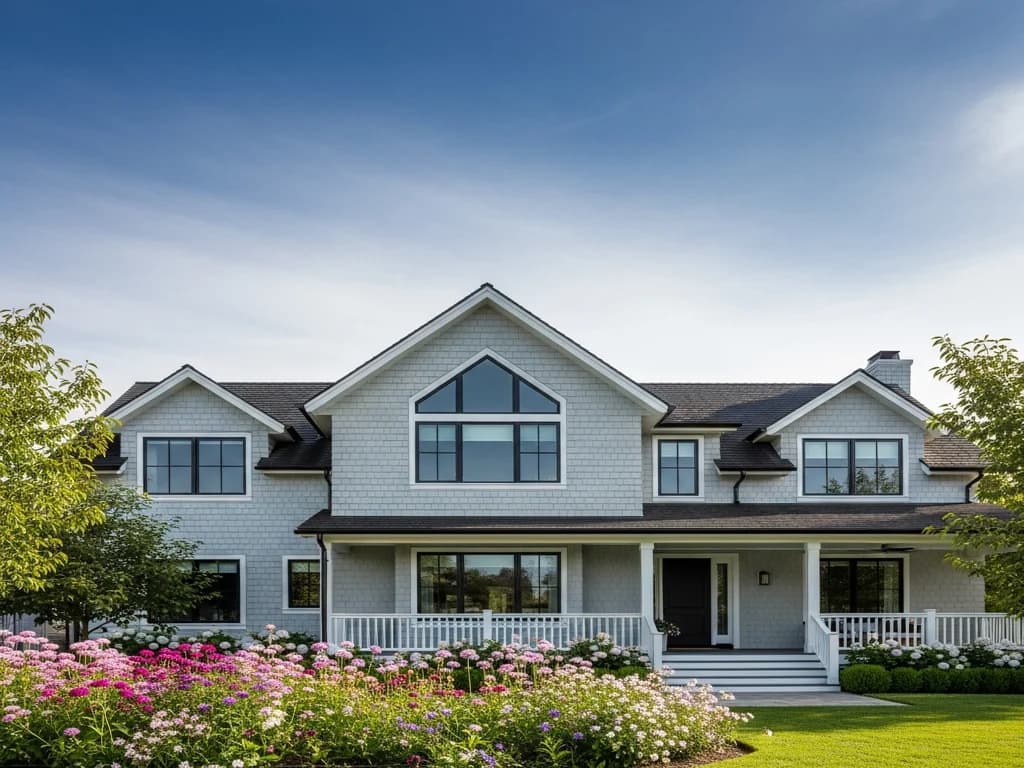
Siding in Kings Beach
Kings Beach sits right on the north shore of Lake Tahoe at roughly 6,200 feet, and a re-side here has to answer two punishing problems in one wall: the deep snow load and freeze-thaw of a real alpine winter, and the genuine wildfire and ember exposure of a home tucked into the forested Tahoe basin. That dual demand is what sets a Kings Beach re-side apart from anything we do down in the Placer foothills — the same cladding has to shed snowmelt and survive freeze cycles while also resisting embers riding up off the slopes.
We scope a Kings Beach re-side for both fronts at once, and we plan around the short building season the lakeshore allows, so the wall comes off and the new envelope goes back on inside the window between snows.
Re-siding for snow load and embers in one wall
On a Kings Beach lot the cladding fights snow drifting against the lower walls, meltwater wicking into seams, and freeze-thaw working at every joint all winter — then faces ember exposure off the basin slopes the rest of the year. We strip combustible wood, T1-11, and old hardboard that so many older cabins still wear, correct the weather barrier for alpine moisture, and re-clad in non-combustible material detailed to drain and dry. The single wall has to do both jobs, so neither the snow detail nor the fire detail gets shortchanged.
Lakeshore cabins, A-frames, and newer mountain homes
Kings Beach stock runs from older lakeshore and near-shore cabins and steep-roofed A-frames built for snow shedding to newer custom mountain homes up the slopes off Highway 28. The cabins frequently need full removal of decades-old combustible siding that has cupped and split under freeze-thaw; the newer homes carry long wall runs, dormers, and tall gable ends that change panel layout and the snow-and-ember detailing. We write the spec to which home it is and how the snow stacks and the slope faces it.
Cladding chosen for alpine moisture and basin fire
At 6,200 feet on a forested shore, the cladding choice is dictated by two stressors at once, and we steer Kings Beach homeowners toward non-combustible or ignition-resistant systems — fiber cement lap, panel-and-batten, and mineral-based boards carrying a Class A rating that won't feed an ember that has lodged against the wall. But the board is only half of it in this climate. Snow piles against the lower courses for months, meltwater finds every unflashed seam, and freeze-thaw pries at joints that drain poorly, so we pair the cladding with a drainage plane, generous ground clearance above where snow stacks, and base flashing that sheds melt instead of holding it. The same lower assembly that keeps snowmelt out also keeps needle litter and embers from packing against the boards. On a Tahoe shore lot the re-side has to be a continuous envelope built for snow and fire together, not look-alike boards bolted over old vulnerabilities.
Building inside the Kings Beach season
A Kings Beach re-side is governed by the calendar as much as the design. The high-elevation building season is short, and an exterior opened up too late risks an early snow on bare sheathing, so we plan tear-off, weather-barrier work, and re-clad as a tight sequence that never leaves the wall exposed into a storm. Many Kings Beach homes are short-term rentals, so we also phase the work around occupancy and the summer rental calendar rather than assuming an empty house. Lakeshore and near-shore lots add staging constraints — narrow streets off Highway 28, tight setbacks toward the water, and limited room for material and scaffold — so we walk each site for the season, the access, and the rental schedule before we set a phasing plan. The goal is a Kings Beach wall closed back up well ahead of the snow, not a job that outruns the season.
Why this matters in Kings Beach
- Specified for Lake Tahoe / Sierra Alpine conditions
- Class A non-combustible fiber cement as the recommended system
- Correctly detailed weather-resistive barrier and flashing
- Installed by a crew with 20 years combined experience
Recommended systems for Kings Beach
- Class A non-combustible fiber cement
- James Hardie fiber cement
- mountain-grade flashing and clearances
- fire-hardened eave and vent detailing
Fiber Cement Siding for Kings Beach homes
The full fiber cement siding approach — materials, weather-resistive detailing, and the manufacturer standards we install to — is covered on the main service page, then specified for Kings Beach's conditions on this one.
Our Kings Beach process
- Step 1
Consultation
We listen to your goals and assess your home on site — exposure, substrate, and architecture.
- Step 2
Design & Proposal
A clear written proposal with the right system specified for your climate and a transparent scope.
- Step 3
Expert Installation
Trained crews install to manufacturer best practices with careful weather-management detailing.
- Step 4
Walkthrough & Support
A final walkthrough, full cleanup, and a clear written record of the scope completed — work we stand behind.
FAQ
Siding in Kings Beach — FAQ
It has to solve two extreme problems in one wall — alpine snow load and freeze-thaw at 6,200 feet, plus genuine ember exposure on the forested Tahoe shore — which the lower-elevation Placer towns never face together.
Usually yes. Decades of freeze-thaw cup and split combustible cladding, and on the basin shore replacing it with non-combustible material upgrades both the snow durability and the ember resistance at once.
Strongly. We sequence tear-off and re-clad tightly so the wall is never open into an early snow, and we phase around the summer rental calendar common on Kings Beach homes.
Often — narrow streets off Highway 28, tight water-side setbacks, and limited staging room shape how we deliver material and set scaffold. We walk the site before planning the work.
Keep Exploring
More for Kings Beach homeowners
More in Kings Beach
Other exterior services in Kings Beach
Nearby Service Areas
Siding near Kings Beach
Helpful Exterior Guides