8 min read · Climate
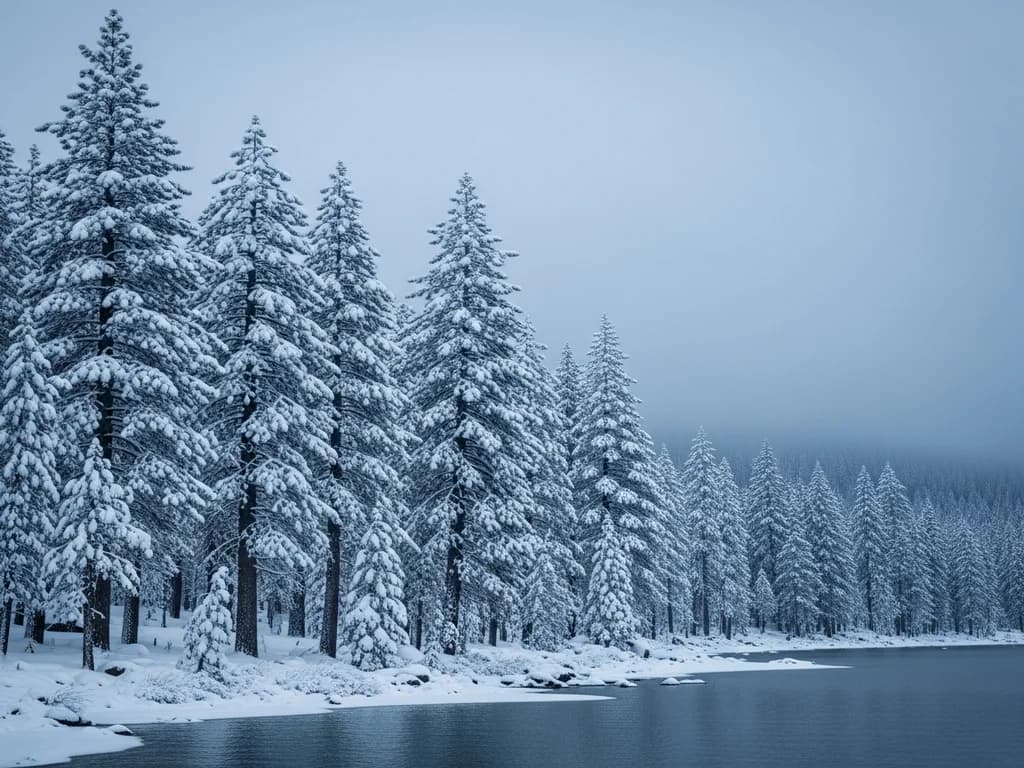
Tahoe and Truckee exteriors face an exposure environment unlike anywhere else in California. Annual snowfall of 200-400+ inches. Ground-level snow piling that can bury the bottom 6-8 feet of a wall for months. 100+ freeze-thaw cycles per winter as temperatures swing across 32°F repeatedly. Ice dam formation at every roof-eave junction. High-altitude UV intensity in summer that exceeds Sacramento's. And on top of all that, most Tahoe parcels sit in California's most fire-prone WUI zones, triggering WUI-code compliance. Every detail of your exterior matters here. Some siding choices that work fine in the valley fail within 8-10 years up here. Here's the practical guide.
Snow load and ground clearance — the rule that decides everything
Tahoe homes need substantially more ground clearance than valley homes. Standard valley spec is 6 inches between grade and siding bottom. Tahoe spec should be 18-24 inches minimum — sometimes 36 inches on north-facing primary elevations or wind-loaded snow zones. Insufficient clearance means siding sits in saturated, refreezing snow pack for months, accelerating substrate damage, finish degradation, and freeze-thaw cracking. This isn't aesthetic; it's the single most important Tahoe detail.
Freeze-thaw durability — fiber cement wins
Tahoe sees 100+ freeze-thaw cycles per winter. Every cycle stresses any moisture trapped in the cladding or substrate. Materials that absorb moisture (wood, some engineered wood without premium factory finish, low-grade fiber cement) crack progressively over years. James Hardie HZ5 product line is specifically engineered for freeze-thaw climates and dimensionally outperforms HZ10 in mountain exposure — this is the right Hardie spec for Tahoe. Untreated wood and standard composite siding both face progressive freeze-thaw degradation.
WUI compliance is mandatory
Most Tahoe parcels are in Cal Fire-designated Fire Hazard Severity Zones (High or Very High). New construction and substantial remodels trigger the 2025 California Wildland-Urban Interface Code. This requires non-combustible cladding (Class A, ASTM E136) in the wall assembly — fiber cement (Hardie) and 3-coat stucco are the practical choices. Wood and standard vinyl are non-starters as exposed Tahoe cladding under the WUI code. The fire spec and snow spec converge: fiber cement is the answer for both.
Ice damming detail at eaves and roof-wall junctions
Ice dams form when snow on the warm roof melts, runs down to the cold eave, refreezes, and backs up under shingles or against the wall at roof-wall junctions. The melt water can then run behind siding. Detailing for ice damming requires: ice-and-water shield extending 24-36 inches up the roof, properly insulated attic to minimize ice formation, robust flashing where roof meets wall, and head-flashing on every window and door. Sub-standard ice damming detail accounts for most Tahoe siding failures.
Roof-edge and gable end detail
Snow slides off pitched Tahoe roofs in massive sheets. A standard valley gable detail (siding tight to roof edge) gets pummeled by sliding snow at gable ends. Mountain detail uses snow guards on the roof, fascia/soffit pulled back from siding, and substantial flashing to prevent direct snow contact at the gable transition.
Material rankings for Tahoe
Fiber cement HZ5 (Hardie) is the engineered leader — meets WUI-code requirements, dimensionally stable through freeze-thaw, factory finish resists UV at altitude, and integrates with mountain detailing. 3-coat stucco is the alternative for traditional mountain craftsman architecture — also non-combustible and freeze-thaw durable when properly applied. Wood (cedar, redwood) requires high maintenance and is generally unsuitable under the WUI code for new/remodeled exterior cladding. Standard vinyl is non-compliant for WUI and warps in freeze-thaw. Metal panels (corrugated steel) are non-combustible and freeze-thaw tolerant but lean heavily on the assembly behind them.
Color strategy for Tahoe altitude UV
Tahoe high-altitude summer UV is more intense than Sacramento — 8,000 feet of elevation means thinner atmosphere and less UV filtering. Dark colors fade faster at altitude than at lower elevations. Mountain-modern direction (Iron Gray, Aged Pewter, Mountain Sage) with warm wood accents has become the dominant Tahoe vocabulary; it reads regionally appropriate and the mid-saturation tones hold up reasonably well at altitude. Avoid the darkest tones on south/west primary elevations.
Maintenance access — design for it
Mountain homes are harder to maintain than valley homes. Plan for ladder access to all elevations, durable mounting for snow loads, and minimal exterior wood that requires recoating. Choosing low-maintenance fiber cement saves 4-6 maintenance days per year compared to wood at Tahoe altitude.
Where Sierra Siding fits
We spec Hardie HZ5 (not HZ10) for Tahoe and Truckee — it's the right product for the climate. We pair it with mountain-grade ground clearance, ice damming detail, roof-edge flashing, and snow-load fastening. Every Tahoe project includes a WUI compliance review against the parcel's Fire Hazard Severity Zone. For the full snow-country detailing, see our Tahoe exterior weatherproofing guide.
Key takeaways
- Tahoe exposure: 200-400" snow + 100+ freeze-thaw cycles + WUI-code + altitude UV
- Minimum 18-24" ground clearance — sometimes 36"; not the valley 6"
- Hardie HZ5 (not HZ10) is the climate-correct Hardie spec for Tahoe
- Most Tahoe parcels require non-combustible cladding under the WUI code
- Ice damming detail is the failure point — eaves, roof-wall, flashing all matter
- Mountain modern palette (Iron Gray + warm wood) reads regionally correct
FAQ
Quick Answers
With diligent maintenance, cedar and redwood can survive — but maintenance demand is high (recoat every 3-5 years), it's combustible (problematic for WUI-code), and freeze-thaw progressively degrades it. For new construction and substantial remodels in fire zones, wood is generally non-compliant. Fiber cement HZ5 is the practical choice.
Yes — including ice-and-water shield up the roof, attic ventilation review, head-flashing at every penetration, and substantial flashing at roof-wall junctions. Ice damming details are where most Tahoe siding jobs fail; we spec for it explicitly.
James Hardie engineers HZ5 specifically for cold-wet climates with freeze-thaw exposure; HZ10 is engineered for hot-dry climates. Tahoe is HZ5 territory by James Hardie's own specification. Using HZ10 in Tahoe is the wrong product for the climate.
Yes — Hardie ColorPlus factory finish is engineered for UV durability across California climates including high-altitude Tahoe. Color choice still matters (mid-tones hold up better than darkest tones on south/west elevations), but the material itself is durable at altitude.
Yes — 3-coat stucco performs well in Tahoe and is non-combustible for the WUI code. The trade-off is more crack maintenance under freeze-thaw cycles. Fiber cement requires less ongoing maintenance; stucco may suit traditional mountain craftsman architecture better aesthetically. Both are legitimate Tahoe choices.
Mountain-grade fasteners (longer, larger-gauge, more frequent spacing), reinforced corners, robust head-flashing at all penetrations, and roof snow guards to prevent sheet slides. The structural assembly handles snow load; we ensure the cladding attachment can survive it.
Sources
Authoritative references
- James Hardie — official product & installation resources
- CAL FIRE Ready for Wildfire — home hardening & defensible space
External links to government, code, and manufacturer sources. Sierra Siding is not affiliated with these organizations; references are provided for verification.