
9 min read · Climate
The Sierra foothill belt — roughly Auburn through Grass Valley, Cameron Park, and El Dorado Hills — is a tougher exterior environment than the valley below it. Valley-grade UV and summer heat combine with real winter freeze cycles and genuine Wildland-Urban Interface fire exposure, so the right answer is almost always a Class A non-combustible assembly built to the 2025 California Wildland-Urban Interface Code. Cladding category is only half the decision; the assembly around it is the rest.
The foothill climate, told honestly
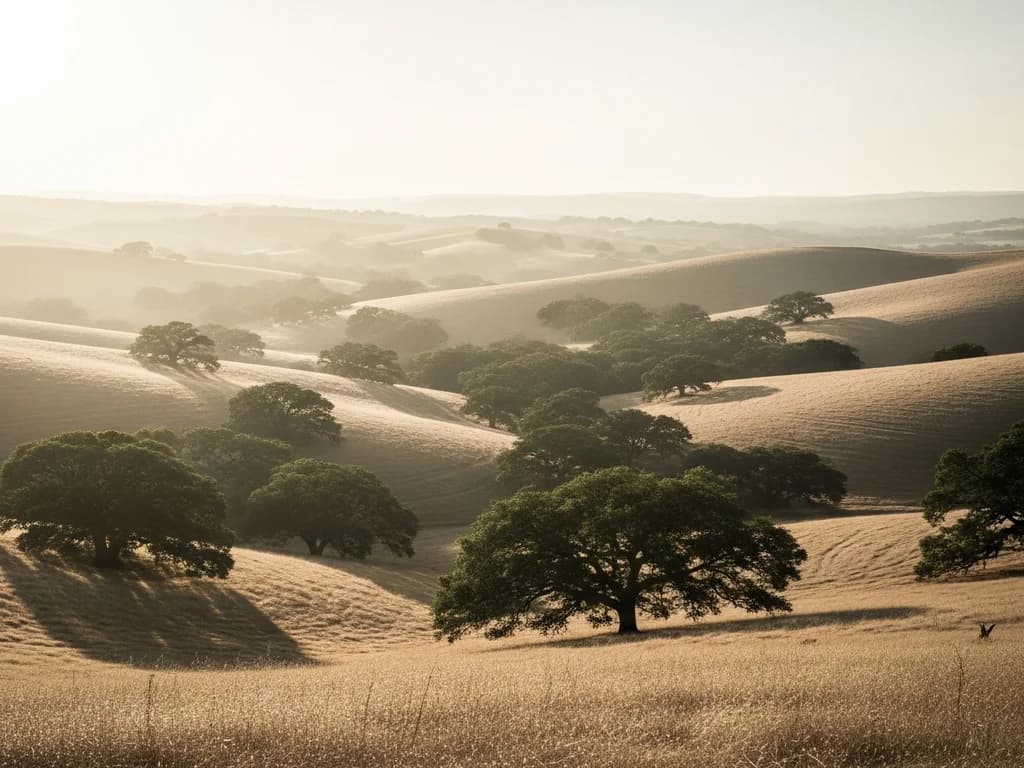
The foothill belt sits roughly between 800 and 2,500 feet, which puts it in a genuinely different envelope than the Sacramento or Bay floors. Summers deliver valley-grade heat and UV that bakes and chalks coatings; winters bring real freeze cycles that intensify with elevation; and most of the belt falls inside Wildland-Urban Interface terrain where wildfire exposure is not theoretical. That combination — UV, freeze, and ember exposure on the same parcel — is what makes foothill siding a different conversation than a tract job on flat ground. We start by being straight about which of those pressures actually applies to your lot rather than selling a generic 'foothill package.'
The WUI code is the foundation of foothill spec
On any parcel in a designated Fire Hazard Severity Zone — which covers much of the foothill belt — the 2025 California Wildland-Urban Interface Code governs the exterior. It requires non-combustible Class A cladding, ember-resistant vents, boxed non-combustible eaves and soffits, and Zone 0 ground-to-wall clearance in the first five feet. Crucially, the cladding alone doesn't earn compliance; the whole assembly does. You can read the code itself in the 2025 California Wildland-Urban Interface Code, and we check your parcel against the State Fire Marshal map during scoping so the spec matches your actual designation rather than an assumption.
Why vinyl and untreated wood don't belong here
Combustible cladding is not WUI-code-acceptable on designated parcels, and beyond the strict code question, putting a combustible exterior on a home in genuine ember terrain is a serious liability you have to own. Vinyl can ignite and deform; untreated wood is fuel. Engineered wood like LP SmartSide is an improvement over old hardboard but is still a wood-based product and does not qualify under the WUI code. An honest foothill recommendation rules combustible options out on FHSZ parcels — our overview of California fire-resistant exteriors walks through why the material category is the starting filter. CAL FIRE's home-hardening guidance reaches the same conclusion from the wildfire side.
Freeze-thaw at the higher elevations
Above roughly 2,000 feet — upper Auburn, the Grass Valley highlands, Pollock Pines and similar — freeze-thaw cycling becomes a real material factor. Aged hardboard cups and delaminates faster as moisture freezes inside it; flashings benefit from ice-and-water-shield consideration at vulnerable transitions; and substrate damage tends to concentrate near the freeze line. Properly installed fiber cement handles this well because it doesn't rely on a moisture-sensitive core, but detailing still matters — the gaps, flashings, and fastener choices that survive a valley winter are not automatically right at elevation. We adjust the detailing to the elevation band your parcel actually sits in.
Microclimate variation is real — spec to the parcel
Auburn proper, a ridgetop lot above Cool, a north-facing draw near Grass Valley, and a sun-blasted south slope in El Dorado Hills are not the same exterior problem, even though they're all 'foothill.' Elevation, slope, prevailing wind direction, surrounding vegetation, and shading all change how a wall is loaded by sun, moisture, and ember exposure. Generic foothill advice averages those differences away and gets the spec wrong on the parcels that need it most. We assess elevation, aspect, slope, and vegetation during scoping and write the assembly to the lot in front of us, not to a regional template.
The complete foothill assembly
A defensible foothill exterior is a system: Class A fiber cement siding installed to James Hardie's published standards, a properly detailed weather-resistive barrier, kick-out and step flashing at roof-wall intersections, ember-resistant vents listed by the State Fire Marshal, boxed non-combustible eaves and soffits, and Zone 0 detailing in the first five feet from the wall. Each element closes a path that embers or water would otherwise exploit. Leaving any single piece out — most commonly the vents or the eaves — undercuts the whole assembly, which is why a credible bid itemizes them rather than burying them under 'fire-rated siding.'
Cost and insurance, without the games
Foothill scope honestly sits above equivalent valley work because the assembly is more comprehensive — the planning bands in our companion cost resources reflect that, and the premium is real scope, not a pricing tactic. A cladding-only bid that matches flat-ground pricing in WUI territory is simply an incomplete bid. On the upside, California insurers increasingly recognize documented WUI-code hardening through the state's Safer from Wildfires framework, so a well-documented assembly can affect renewability and premium. We document the work — photos, spec, completion file — as standard project management. Whoever you hire, verify their license first through the Contractors State License Board.
Foothill spec checklist
| Element | Foothill requirement |
|---|---|
| Cladding | Class A non-combustible (typically fiber cement) |
| Vents | Ember-resistant per State Fire Marshal listing |
| Eaves | Boxed non-combustible soffit and fascia |
| Zone 0 (0–5 ft from wall) | Non-combustible ground cover; AB 3074 compliance |
| Roof | Class A (separate scope; coordinate with roofer) |
| Defensible space | Standard CA Public Resources Code 4291 (separate scope) |
Key takeaways
- The WUI code is the foundation of foothill spec on FHSZ parcels
- The assembly passes, not the cladding alone — vents, eaves, and Zone 0 all count
- Vinyl and untreated wood don't belong on designated foothill lots
- Freeze-thaw above ~2,000 feet changes detailing, not just material choice
- Microclimate varies parcel to parcel — spec to elevation, slope, and aspect
- Documented hardening can support insurance renewability and premium
FAQ
Quick Answers
Most foothill parcels are. We check the State Fire Marshal map during scoping and tell you honestly which designation applies to your specific lot.
Technically you can outside a designated zone, but we'll have a frank conversation about whether that makes sense given the general fire reality of the surrounding terrain.
Yes. The HZ10 product line handles foothill freeze well, and correct flashing detail at transitions matters more than the product choice itself.
Foothill adds the WUI-code assembly — ember-resistant vents, boxed eaves, and Zone 0 detailing — that valley parcels typically don't require. The cladding category is largely the same.
It can. Documented the WUI code and Safer from Wildfires alignment increasingly factors into renewability and premium in foothill markets, which is why we keep a completion file.
The whole envelope. Embers find vents, eaves, and the Zone 0 ground-to-wall band, so hardening only the cladding leaves the most common ignition paths open.
Sources
Authoritative references
- CAL FIRE — California Department of Forestry and Fire Protection
- CA Office of the State Fire Marshal — WUI building materials listing
- 2025 California Wildland-Urban Interface Code (Title 24, Part 7) — exterior walls & wall coverings, §504.5
- CAL FIRE Ready for Wildfire — defensible space & the 0–5 ft ember-resistant zone (AB 3074)
- Contractors State License Board (CSLB) — verify a California contractor
External links to government, code, and manufacturer sources. Sierra Siding is not affiliated with these organizations; references are provided for verification.