Fire-Resistant Siding in Cameron Park
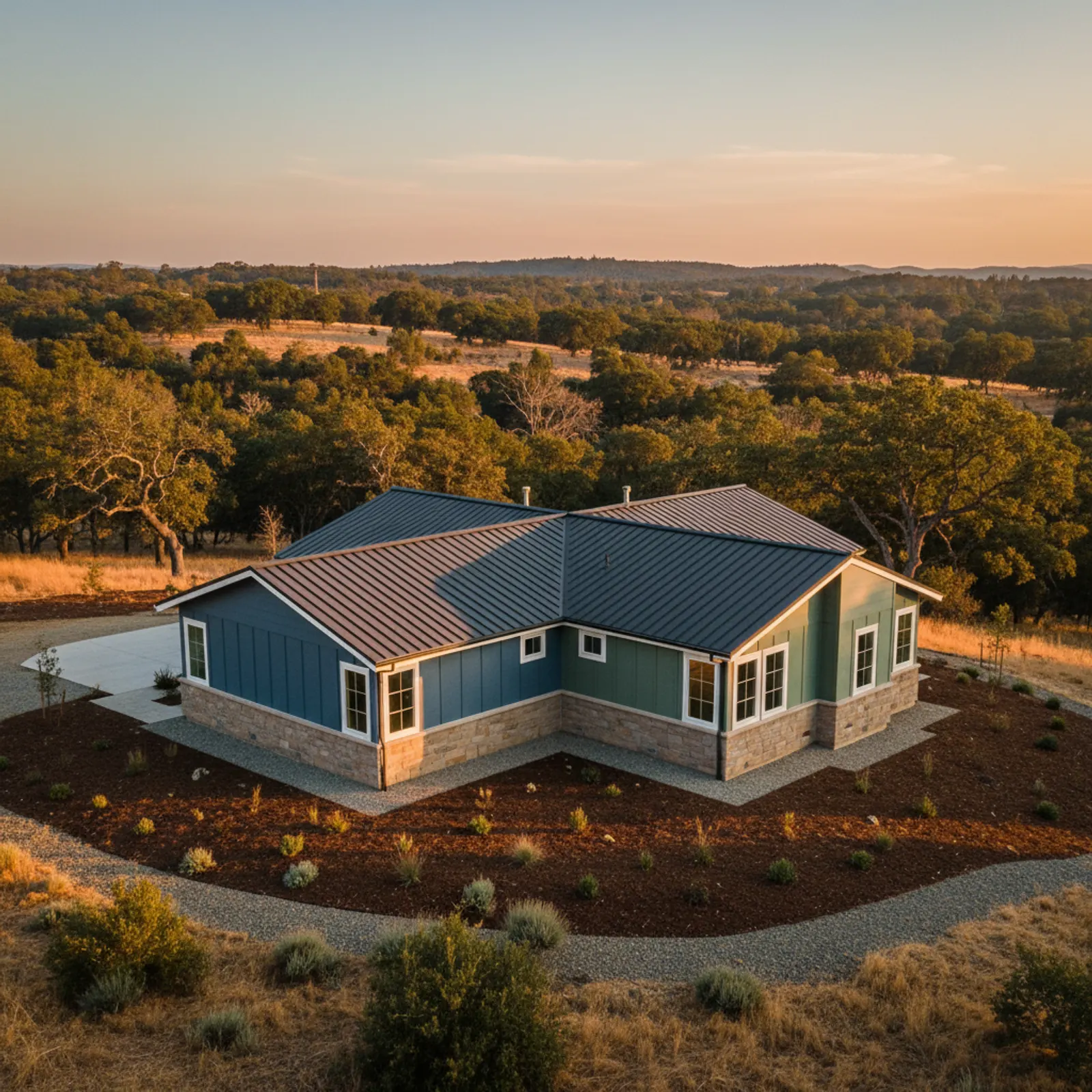
This is a primary service in Cameron Park. The community's oak-woodland subdivisions and rural-residential/airpark parcels sit in genuine high Sierra-foothill fire terrain along the Highway 50 corridor — fire-resistant siding here is a central exterior decision across the whole property, not a low-regret nicety.
Oak-woodland high exposure, openly
Cameron Park's exposure is overt: oak-woodland foothill terrain with real fire history nearby. We specify Class A non-combustible cladding and harden eaves, soffits, vents, decks, and ground transitions as the baseline — extended across hangars/outbuildings where they're part of the home.
Document the hangar too, not just the house
Cameron Park insurability conversations stumble when an attached airpark hangar isn't part of the hardening record. We document the Class A materials and assemblies across the dwelling AND the attached hangar as one envelope, so the file reflects the actual structure an inspector or carrier will look at — they still set their own criteria.
Building to 7A in the Highway 50 corridor
Cameron Park's location in El Dorado County's wildland-urban interface means a re-side here rarely stops at the wall plane. Much of the foothill housing stock west of Placerville falls under California's WUI building standards, and that drives the spec from the studs out: ignition-resistant or non-combustible cladding rated for direct flame and radiant heat, then the connected details that actually decide whether a house survives an ember storm. We treat the soffit-to-wall junction, the bottom course where siding meets the foundation, and any inside corner that can trap windblown embers as part of the same assembly. On the oak-woodland custom homes scattered through town, that often means swapping wood fascia and open eaves for boxed, fire-rated returns at the same time the new cladding goes on. The goal is not a single product swap but a continuous, gap-free shell that denies embers a foothold. Pairing the siding scope with eave, vent, and trim hardening in one project is almost always cheaper and tighter than revisiting those transitions later as separate jobs.
Access, staging, and the airpark factor
How a Cameron Park fire-siding job actually runs depends heavily on which part of town the home sits in. The conventional foothill subdivisions give crews predictable street frontage and driveway staging, so material handling for heavy non-combustible board is straightforward. The rural-residential parcels and the Cameron Park Airpark community are a different story: long private drives, shared taxiway frontage, and homes set back behind oak canopy change where we can stage scaffolding, stack cladding, and protect aircraft or outbuildings during demolition and install. On airpark lots we plan dust and debris control around hangar doors and ramp areas, since a home that backs onto a taxiway has fuel-sensitive neighbors close by. We also confirm whether any parcel-specific defensible-space or El Dorado County conditions affect ground-level clearances before fastening the first course. Sorting this out at the walkthrough stage keeps the wildfire-hardening intent intact and avoids mid-project surprises that compromise the very transitions the siding is meant to protect, whether the structure is a tract home off Cambridge Road or a custom build deeper in the woodland.
Why this matters in Cameron Park
- Specified for Sierra Foothills conditions
- Class A non-combustible fiber cement as the recommended system
- Correctly detailed weather-resistive barrier and flashing
- Installed by a crew with 20 years combined experience
Recommended systems for Cameron Park
- Class A non-combustible fiber cement
- fire-aware detailing
- durable factory finishes
Fire-Resistant Siding for Cameron Park homes
The full fire-resistant siding approach — materials, weather-resistive detailing, and the manufacturer standards we install to — is covered on the main service page, then specified for Cameron Park's conditions on this one.
Our Cameron Park process
- Step 1
Consultation
We listen to your goals and assess your home on site — exposure, substrate, and architecture.
- Step 2
Design & Proposal
A clear written proposal with the right system specified for your climate and a transparent scope.
- Step 3
Expert Installation
Trained crews install to manufacturer best practices with careful weather-management detailing.
- Step 4
Walkthrough & Support
A final walkthrough, full cleanup, and a clear written record of the scope completed — work we stand behind.
FAQ
Fire-Resistant Siding in Cameron Park — FAQ
High — oak-woodland Sierra-foothill terrain along the Hwy 50 corridor. Non-combustible, hardened exteriors are the baseline.
Where it's part of the home, yes — a coherent non-combustible envelope across the property, not a hardened house beside a vulnerable hangar.
It can support insurability in oak-woodland fire terrain; we document materials and assemblies, though insurers set their own criteria.
No — eave, soffit, vent, deck, and ground-transition detailing complete the protection; we treat the property as one hardened system.
Keep Exploring
More for Cameron Park homeowners
More in Cameron Park
Other exterior services in Cameron Park
Nearby Service Areas
Fire-Resistant Siding near Cameron Park
Back to
El Dorado County & Cameron Park
Helpful Exterior Guides