6 min read · Fire-Resistant
For most California homes in or near a wildfire hazard zone, the best fire-resistant siding is Class A non-combustible fiber cement, with three-coat stucco and certain metal systems as the other proven choices. Fiber cement leads because it does not ignite, carries the top tested ratings, holds a residential look, and repairs easily — but no single board makes a home fire-safe on its own. Real protection comes from a hardened assembly: the right cladding plus ember-resistant vents, boxed eaves, sealed penetrations, and a clear zone at the base of the wall, all matched to your parcel's exposure. This guide explains which materials actually resist ignition, what the 2025 California Wildland-Urban Interface Code requires, how the options compare over decades, where assemblies fail, and how to scope the work honestly for your address.
The short answer: non-combustible Class A cladding wins
The best fire-resistant siding for a California home is a non-combustible, Class A cladding — and in practice that means fiber cement first, with three-coat stucco and some metal systems as legitimate alternatives. "Non-combustible" (ASTM E136) and "Class A" (ASTM E84, the top surface-burning rating) are defined laboratory tests, not marketing adjectives; fiber cement meets both, which is why it dominates wildfire-exposed assemblies across the state. The reason this matters is mechanical, not promotional: combustible cladding adds fuel to the wall, and non-combustible cladding does not. If you remember one thing, remember that you are choosing a material that cannot contribute to the fire, then building a complete assembly around it. Our fiber cement siding installation is built on exactly that foundation, and our broader fire-resistant siding service starts from the same non-combustible-first principle.
What California code actually requires (the WUI code / SFM 12-7A-1)
In a designated fire hazard zone, new and substantially remodeled walls fall under the 2025 California Wildland-Urban Interface Code, and wall siding and sheathing are evaluated by the State Fire Marshal's SFM 12-7A-1 test. The crucial nuance is that the code does not bless one "fireproof" board — it requires a listed, tested assembly. Fiber cement is the most common compliant cladding; three-coat stucco and some metal and masonry systems also qualify with the correct backing and detailing. This is why two crews can both name the same brand of plank and still deliver very different levels of real protection: the listing covers the whole wall, not just the visible surface. You can read the standard itself in the 2025 California Wildland-Urban Interface Code, and your local building department's determination governs your specific parcel. We won't quote a jurisdiction's ruling from a desk — we scope it on site.
The materials that actually resist ignition
Fiber cement and three-coat stucco are non-combustible and the practical California leaders. Metal panel is non-combustible but conducts heat and leans heavily on its backing assembly to protect the framing behind it. Fire-retardant-treated (FRT) wood is improved over raw lumber but still combustible and limited under the WUI code, reviewed case by case rather than accepted broadly. Untreated wood and standard vinyl ignite readily and are not suitable as exposed cladding in the wildland-urban interface — vinyl in particular can soften, sag, and expose the sheathing behind it well before flames arrive. The honest hierarchy is simple: non-combustible first, treated wood only on genuinely low-exposure lots, and combustible vinyl essentially off the table in any real hazard zone. For homeowners weighing engineered wood as a middle path, our guide on fiber cement versus wood siding for fire lays out why treatment does not equal non-combustibility.
Comparing fiber cement, stucco, and metal in real California conditions
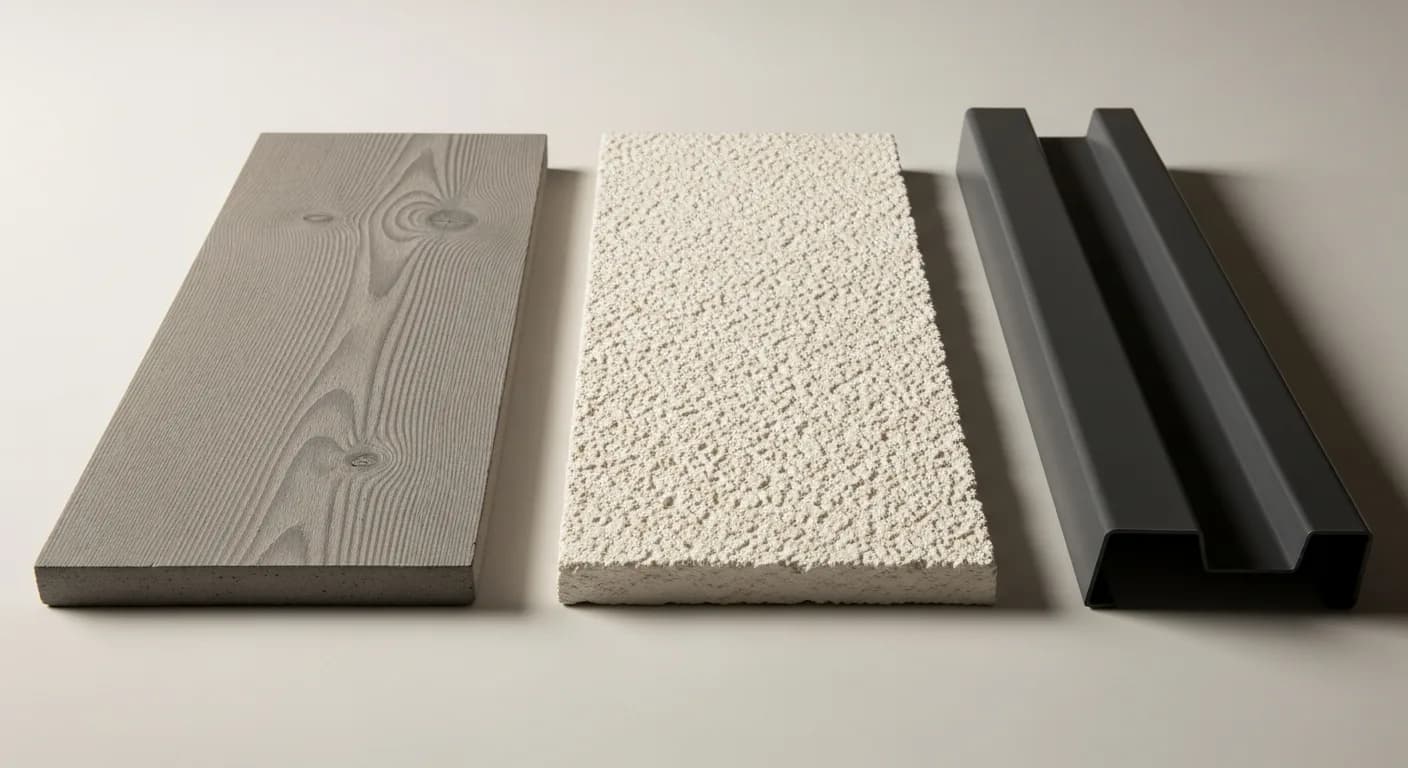
Choosing among the compliant non-combustible options comes down to how each behaves over decades on a specific wall, not just whether it passes a single test. Fiber cement holds paint well, takes wood-grain or smooth profiles, and tolerates the wide humidity swings between the Sacramento Valley and the coast. Three-coat stucco delivers a seamless monolithic surface that resists ember intrusion in the field, but it telegraphs hairline cracks as a structure settles and traps moisture if the weep screed and drainage plane are wrong. Metal cladding is genuinely non-combustible and sheds embers, yet it dents, can read industrial on a traditional home, and demands careful isolation to avoid galvanic corrosion at fasteners — a real concern in coastal salt air. None is universally best. A foothill home in a heavy ember zone may favor continuous stucco at lower walls with fiber cement above, while a modern build leans into metal accents. On the balance of appearance, repairability, and predictable performance, fiber cement siding usually wins, which is why specifiers reach for it first when a wall must look residential and still earn its rating.
Detailing completes it — the assembly is the product
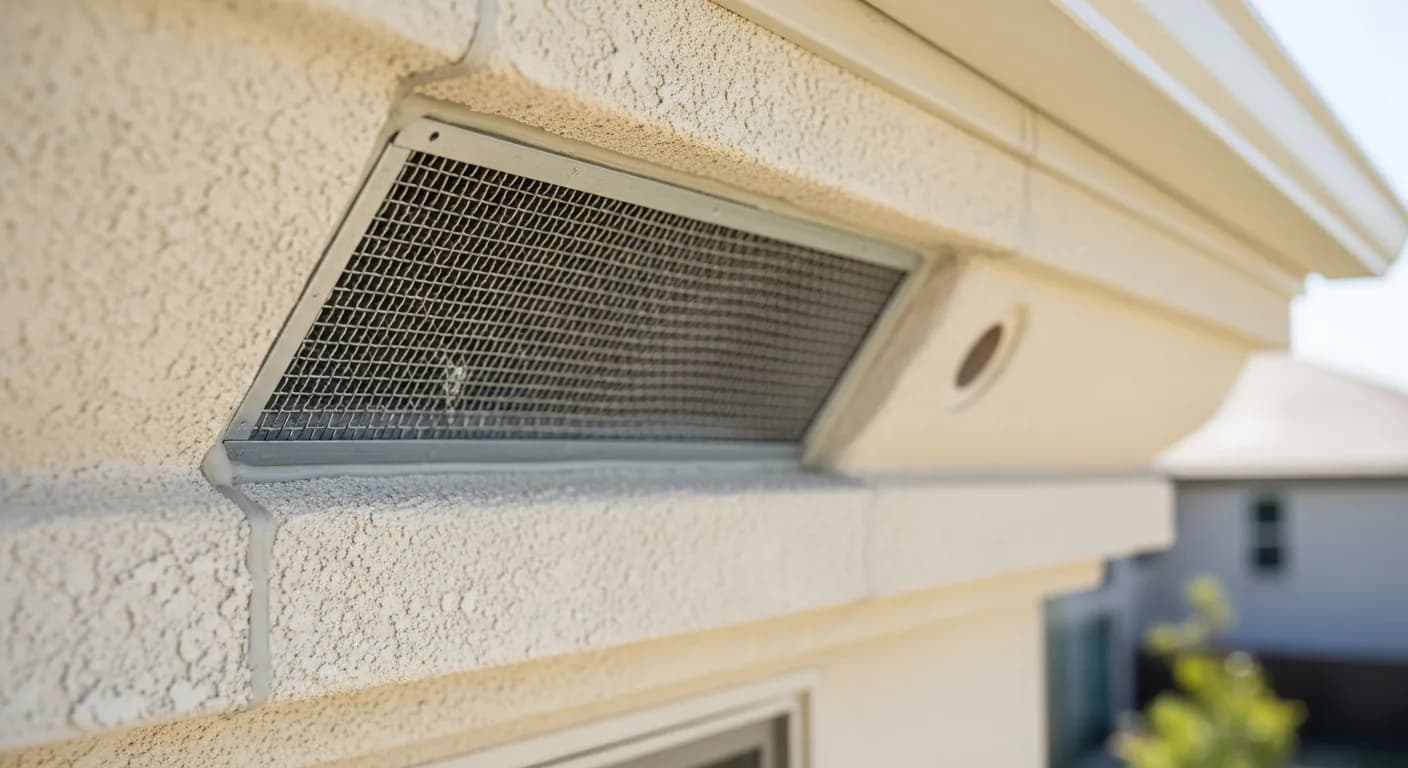
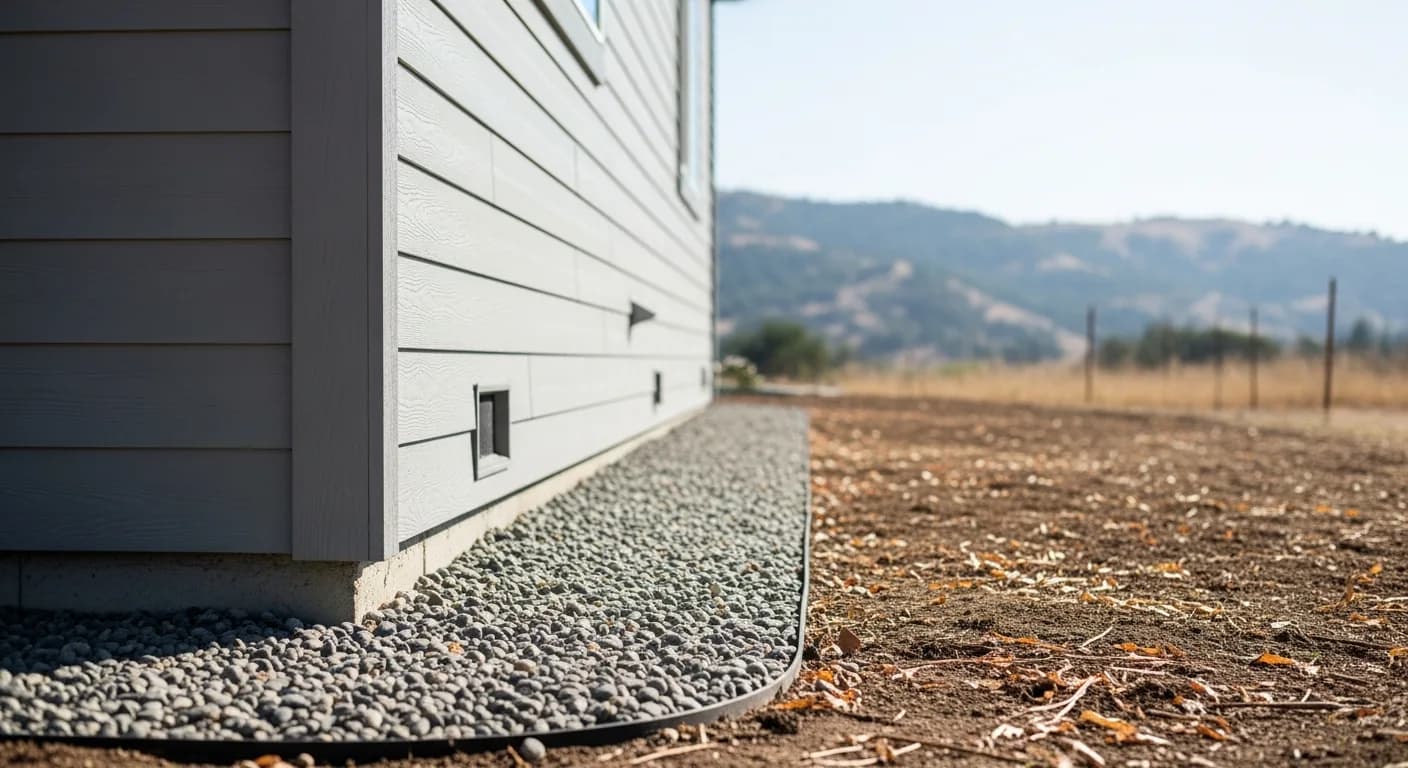
Cladding alone is insufficient. Wind-driven embers enter at under-screened vents, accumulate at eaves and decks, and pile up at the ground-to-wall transition. Ember-resistant vents, boxed non-combustible eaves and soffits, and a clear zero-to-five-foot base (Zone 0) are as decisive as the board itself. A "fire-resistant siding" job that ignores these still loses homes. California's wildfire guidance from CAL FIRE and its home-hardening recommendations consistently treat the house as a system — vents, decks, the first five feet, and the walls as one connected problem. That is why our scope ties cladding to its surroundings: pairing non-combustible walls with hardened soffit and fascia detailing and a properly designed weather-resistant exterior assembly so the rating you pay for survives a real ember storm rather than only a lab test.
Where most fire-resistant assemblies actually fail
A Class A board does very little if embers find an unprotected gap behind it, and post-fire investigations repeatedly point to the same weak spots rather than the cladding. Open eave and soffit vents pull glowing embers into the attic, which is why baffled or ember-resistant vents are now expected in hazard zones. Unsealed penetrations around hose bibs, electrical boxes, and dryer terminations leave a direct path to combustible sheathing. The bottom course of siding, where it meets a wood deck or accumulated leaf litter, ignites long before the wall does. Even the substrate matters: putting non-combustible cladding over ordinary housewrap and OSB without attention to the weather-resistive barrier and any required gypsum sheathing undercuts the rating. The practical lesson is to budget for detailing, not just material. When a crew quotes only the board and labor and skips flashing upgrades, vent retrofits, and non-combustible trim, the number looks attractive but the assembly is incomplete — and rotten framing found behind old cladding often needs dry rot repair before the new wall can perform.
What a good bid looks like versus a cheap one
The single most useful skill when comparing quotes is reading what is itemized versus what is quietly omitted. A strong fire-resistant siding bid names the specific cladding and profile, but it also spells out how the crew treats joints, terminations, and the bottom edge; whether it includes ember-resistant vent retrofits, non-combustible trim and fascia, upgraded flashing, and the weather-resistive barrier; and how it handles any sheathing repairs uncovered when the old wall comes off. A cheap bid typically names the same brand of plank and stops there, leaving the detailing that actually stops embers as a series of change orders or simply undone. Ask every contractor to break out the field material from the resilience detailing so you can compare apples to apples. A licensed contractor is also non-negotiable in California — verify any bidder through the CSLB license lookup before signing. When you request a free on-site estimate from us, the written scope itemizes the assembly so you can see exactly what your fire performance is buying.
What fire-resistant siding actually costs in California
Fire-resistant cladding generally lands above vinyl or wood but below full masonry, and the spread depends heavily on the detailing the wall requires rather than the planks alone. Fiber cement material sits in a moderate tier, while three-coat stucco often costs more on labor because it is a multi-day, multi-trade application that has to cure between coats. The bigger budget driver is the work around the field: ember-resistant vents, non-combustible trim and fascia, upgraded flashing, and any sheathing changes needed to meet a listed assembly. A teardown of old wood siding in a hazard zone also adds disposal and inspection steps, and rotten sheathing discovered behind the old cladding becomes its own line item once the wall is open. It helps to separate the resilience premium from the base re-side cost so you can see what the fire performance is actually buying. For a regionally grounded breakdown rather than a national average, the variables that move a quote are qualitative as much as numeric — exposure, access, substrate condition, and detailing scope. Rather than rely on a per-square-foot rule of thumb that ignores your exposure, request a scoped figure for your own wall through our free estimate.
Maintaining a fire-resistant exterior so it keeps performing
Non-combustible siding is durable, but its fire performance erodes quietly if maintenance lapses, because the threat is usually what collects against the wall rather than the wall material decaying. Embers ignite leaf litter, bark mulch, and stored firewood, so the single most valuable habit is keeping the first few feet around the foundation clear and non-combustible, especially before peak fire season. Inspect caulk and sealant at trim joints and penetrations each year; failed sealant reopens the ember paths the original detailing was meant to close. On fiber cement, look for chipped or cracked planks and worn paint, since exposed fiber cores absorb water, and repaint on the manufacturer's schedule to keep the coating intact — a job our exterior painting crews handle with finishes matched to the substrate. On stucco, patch meaningful hairline cracks before water gets behind the lath. Confirm ember-resistant vent screens stay unblocked and free of dust and lint, and keep gutters and roof valleys cleared of needles. Treating the exterior as a standing seasonal checklist, not a finished one-time job, is what keeps a rated wall performing the way it did at inspection.
Matching the siding to your specific California fire exposure
The best fire-resistant siding for one California address is not automatically right for the next, because exposure changes dramatically over short distances. A home backed up to dense chaparral on a foothill ridge faces sustained radiant heat and a heavy ember wash, so its walls want a continuous, gap-free non-combustible surface and especially careful treatment on the windward elevation. A suburban infill lot faces a different threat, driven more by the structure next door igniting than by wildland flame, which shifts attention to side-yard separation and eave protection. A lakeside or canyon home routinely sees wind that funnels embers into corners and reentrant angles, so those geometries deserve extra sealing. The practical move is to map your own parcel before choosing a product: note the prevailing fire-weather wind direction, identify which walls have the worst vegetation or neighboring exposure, and check whether you sit in a designated hazard zone that triggers the WUI code. Many homes benefit from a tiered approach — the most robust assembly on high-exposure elevations, a lighter but still compliant finish elsewhere — which spends the budget where it changes the outcome. Our wildfire exterior home-hardening guide walks through that parcel-by-parcel read.
It's the system, not the board — and how to move forward
The strongest fire-resistant siding is a Class A board installed inside a hardened assembly matched to the parcel's Fire Hazard Severity Zone. That means specifying the material and the detailing together: aggressive hardening where exposure is real, sensible non-combustible defaults where it isn't, and no fear-selling of protection a low-exposure lot doesn't need. The right next step is a parcel-specific scope rather than a generic product pick. A good process starts with confirming your hazard zone designation, reading the walls that face the worst exposure, and pricing the field material and the resilience detailing as separate line items so you understand the full assembly. From there, a written estimate should govern — it documents exactly what is and isn't included, so there are no surprises mid-project. To begin, you can review related material on California fire-resistant exteriors for context, then request a free on-site estimate and let an exterior contractor scope the assembly your specific lot warrants — honestly, by address.
Fire performance of common sidings
| Cladding | Fire rating | Ember/WUI behavior | WUI-code use |
|---|---|---|---|
| Fiber cement | Class A, non-combustible | Does not ignite | Widely used in compliant assemblies |
| Stucco (3-coat) | Class A, non-combustible | Resists flame; detailing-sensitive | Accepted with correct assembly |
| Metal panel | Non-combustible | Resists flame; conducts heat | Used; backing/detailing matters |
| Treated/FRT wood | Improved but combustible | Can still ignite | Limited; case-by-case |
| Untreated wood / vinyl | Combustible | Ignites readily | Not suitable as exposed WUI cladding |
Key takeaways
- The best choice for most California hazard-zone homes is Class A non-combustible fiber cement, with stucco and some metal as proven alternatives
- "Non-combustible" (ASTM E136) and "Class A" (ASTM E84) are defined tests — fiber cement meets both
- The WUI code and the SFM 12-7A-1 test govern WUI walls as a listed assembly, not a single "fireproof" board
- Detailing is decisive: ember-resistant vents, boxed eaves, sealed penetrations, and a clear 0-5 ft (Zone 0) base
- Read bids by what's itemized — field material versus resilience detailing — and verify the contractor's CSLB license
- Treated wood and vinyl generally don't qualify as exposed WUI cladding; engineered wood is not a fire upgrade
- Match the spec to your parcel: tier the strongest assembly onto the highest-exposure elevations
- Maintenance keeps the rating alive — clear the base, reseal joints, and keep vents and gutters clean each season
FAQ
Quick Answers
For most homes in or near a wildfire hazard zone, Class A non-combustible fiber cement is the best choice, with three-coat stucco and certain metal systems as proven alternatives. Fiber cement leads because it does not ignite, carries the top tested ratings, looks residential, and repairs easily. No single board makes a home fire-safe alone — the cladding has to sit inside a hardened assembly.
Both are non-combustible and acceptable under the WUI code. Fiber cement offers more design flexibility, easier repair, and a strong factory finish, while stucco gives a seamless monolithic surface but is detailing-sensitive and prone to trapped-moisture cracking over time. On many California homes the two are combined, with stucco on lower walls and fiber cement above.
Not literally fireproof — nothing is — but fiber cement is non-combustible, which is the closest practical thing for a home exterior. It passes the ASTM E136 non-combustibility test and carries a Class A flame-spread rating under ASTM E84, making it the standard cladding for California wildfire (WUI) zones. It will not ignite or feed a fire the way wood or vinyl can.
For walls, the State Fire Marshal's SFM 12-7A-1 test under the 2025 California Wildland-Urban Interface Code is the practical gate for exposed cladding. Non-combustibility is measured by ASTM E136 and Class A flame spread by ASTM E84. The code evaluates the full wall assembly and its listing, not just the visible board, so the tested assembly is what governs compliance.
No. A Class A board does little if embers reach unprotected gaps. Most California homes ignite from wind-driven embers that enter at open vents, lodge at eaves and decks, or pile up at the base of the wall. Real protection requires the whole hardened assembly — ember-resistant vents, sealed penetrations, non-combustible eaves, and a clear zero-to-five-foot zone — alongside the cladding.
No. Engineered wood has real strengths in workability and impact resistance, but it is still wood fiber and still combustible. Treatment and factory finishing do not make it non-combustible, and it lands on the same side of the line as natural wood under the WUI code. On a genuine WUI parcel it is not a fire upgrade over cedar.
Yes — fire-aware specification to the WUI code is standard on our foothill, wine-country, and mountain projects. We check your Fire Hazard Severity Zone designation when scoping and confirm requirements with your local building department, because the jurisdiction's determination and the assembly listing govern your specific parcel rather than any general rule.
Fire-resistant cladding generally costs more than vinyl or wood but less than full masonry, and the real driver is the detailing, not the planks. Ember-resistant vents, non-combustible trim, upgraded flashing, and any sheathing changes needed for a listed assembly add to the field-material cost. A teardown in a hazard zone also adds disposal and inspection steps, so the most accurate figure comes from an on-site scope of your actual wall.
Yes. Narrow-exposure fiber cement lap, cedar-texture shingle, and deep board-and-batten profiles replicate wood character convincingly at normal viewing distance while meeting the WUI code on an exposed parcel. Wood-grain panel products and stain-style finishes extend the effect further, so you get the warmth of cedar without putting fuel on the wall.
Keep the first few feet around the foundation clear of leaf litter, mulch, and firewood; inspect and reseal caulk at trim joints and penetrations each year; repaint fiber cement on schedule to protect the fiber core; and confirm ember-resistant vent screens stay clean and undamaged. Treat the exterior as a seasonal checklist, not a one-time job, so the rated assembly performs the way it did at inspection.
Sources
Authoritative references
- CAL FIRE — California Department of Forestry and Fire Protection
- CA Office of the State Fire Marshal — WUI building materials listing
- 2025 California Wildland-Urban Interface Code (Title 24, Part 7) — exterior walls & wall coverings, §504.5
- CAL FIRE Ready for Wildfire — defensible space & the 0–5 ft ember-resistant zone (AB 3074)
External links to government, code, and manufacturer sources. Sierra Siding is not affiliated with these organizations; references are provided for verification.