5 min read · Fire-Resistant
On fire performance, fiber cement and wood are not a close comparison. One adds fuel to the wall and one does not, and in California that single fact often decides whether a re-side is code-compliant on your parcel at all. Here is how the two materials behave under ember and flame, what the wildfire code actually allows, and the one honest exception where wood still makes sense.
Combustible vs. non-combustible — the core difference
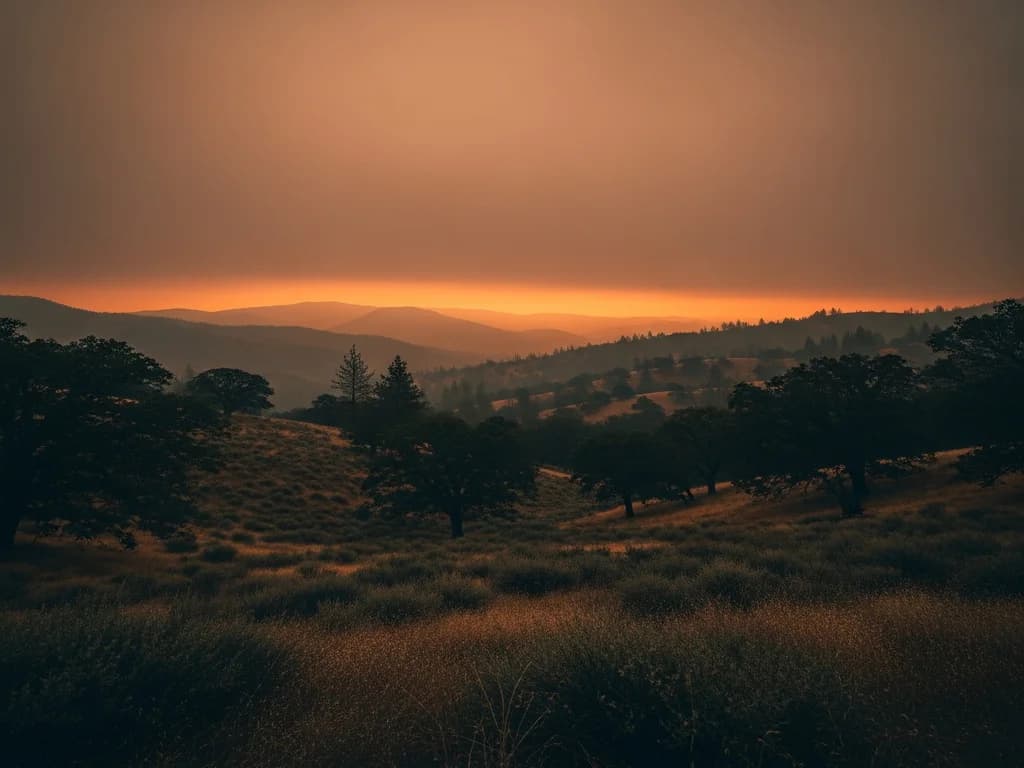
Wood siding is fuel attached to the structure; fiber cement is not. Fiber cement is tested non-combustible under ASTM E136 and rates Class A for surface flame spread under ASTM E84. Natural cedar, redwood, and engineered wood panels are all combustible. The distinction matters most in a wind-driven ember storm — the way the large majority of California homes actually ignite, not from a wall of advancing flame but from embers landing in vulnerable spots. Embers that settle against cementitious cladding cannot ignite it; embers that settle against, or lodge behind, wood lap can smolder and then sustain open flame against the wall. That difference is the whole comparison in a single sentence. The relevant background on how homes ignite is summarized by CAL FIRE's home-hardening guidance.
What the wildfire code actually allows
In a designated Fire Hazard Severity Zone, the 2025 California Wildland-Urban Interface Code governs exterior materials, and the SFM 12-7A-1 wall-assembly test is the practical gate for exposed cladding. Under that standard, exposed combustible wood siding generally does not qualify as a compliant exterior surface, and fiber cement is the common material that does. Even fire-retardant-treated wood is constrained and reviewed case by case rather than accepted broadly. We won't quote your jurisdiction's determination from a desk — your local building department and the assembly listing govern — but on most foothill, wine-country, and mountain parcels the answer is that exposed wood is off the table. You can review the standard itself in the 2025 California Wildland-Urban Interface Code.
Cost over time, not just at install
A fire-performance comparison that stops at the install invoice misses the real picture. Wood demands a recurring sealing or repaint cycle, plus rot and pest vigilance, and any neglected season raises both its maintenance cost and its ignition vulnerability as the surface checks and weathers. Fiber cement holds a baked-on factory finish far longer under California UV, so the painting interval stretches and the wall stays sound. Across a fifteen- or twenty-year horizon the lower-combustibility choice is usually also the lower-total-cost choice, because you are not paying repeatedly to keep a fuel source presentable. Our fiber cement siding service is built around that long-finish, low-upkeep behavior.
Getting the wood look without the wood risk
Most homeowners who ask for wood want the warmth and grain, not the combustibility, and modern fiber cement gives you the look without the liability. Narrow-exposure lap, cedar-texture shingle, and deep-relief board-and-batten profiles read convincingly as wood at normal viewing distance, and wood-grain panel products extend that even further. Stain-style and warm-tone finishes complete the effect. The result satisfies the aesthetic intent that drew you to cedar in the first place while clearing the WUI code on an exposed parcel. Homeowners weighing engineered wood as a middle path can compare the trade-offs in our guide on LP SmartSide versus fiber cement.
Engineered wood is not a fire loophole
Engineered wood siding such as LP SmartSide is a real, well-made product with genuine strengths in workability and impact resistance, but it is still wood fiber and still combustible. It does not become non-combustible because it is treated or factory-finished, and it should not be sold to you as a fire upgrade over cedar on a WUI parcel. Where wildfire exposure is genuine, engineered wood and natural wood land on the same side of the line: combustible cladding that WUI code generally excludes. We carry engineered wood and install it where it fits, but we won't position it as the fire-resistant answer when it isn't.
The honest exception
We don't fear-sell. On a genuinely low-exposure parcel — a flat valley-floor lot with no wildland interface, ag-edge open ground, and no Fire Hazard Severity Zone designation — natural or engineered wood can be a perfectly reasonable choice for the look, and we will tell you so rather than upsell non-combustible you don't need. The responsible call depends on your parcel, not on a blanket rule. On any foothill, marine-influenced coastal, or mountain parcel with real ember exposure, non-combustible is the right answer. We scope this on site and your written estimate reflects what your specific lot actually warrants; our fire-resistant siding service starts from that parcel-specific read.
Fiber cement vs. natural wood for fire
| Attribute | Fiber cement | Natural wood siding |
|---|---|---|
| Combustibility | Non-combustible, Class A | Combustible |
| WUI-code suitability | Suitable for compliant assemblies | Generally unsuitable as exposed WUI cladding |
| Ember resistance | High — does not ignite | Low — can ignite and sustain flame |
| Maintenance | Periodic clean and caulk checks | Frequent sealing/repaint; rot and pest vigilance |
| Finish life | Long with a factory finish | Shorter repaint cycle |
| California fit | Strong in fire-prone regions | Niche/period-restoration, low-fire only |
Key takeaways
- Fiber cement is non-combustible (ASTM E136) and Class A (ASTM E84); wood is fuel on the wall
- The WUI code and the SFM 12-7A-1 test effectively rule out exposed wood in Fire Hazard Severity Zones
- Engineered wood is still combustible — it is not a fire upgrade over cedar on a WUI parcel
- Modern fiber cement lap, shingle, and board-and-batten profiles deliver the wood look without the risk
- Fiber cement's longer factory-finish life usually makes it the lower total-cost choice over time
- Wood is defensible only on genuinely low-exposure, non-WUI parcels — we won't fear-sell otherwise
FAQ
Quick Answers
Yes. Narrow-exposure fiber cement lap, cedar-texture shingle, and deep board-and-batten profiles replicate wood character convincingly while meeting the WUI code on an exposed parcel.
Treatment reduces ignition but does not make wood non-combustible. The WUI code limits treated wood and reviews it case by case, so fiber cement remains the safer, simpler compliant choice on exposed parcels.
No. Engineered wood has real strengths, but it is still combustible wood fiber and lands on the same side of the line as natural wood under the WUI code. It is not a fire upgrade.
Most California homes ignite from wind-driven embers, not a wall of flame. Embers can lodge against or behind wood siding and sustain flame against the wall; they cannot ignite non-combustible fiber cement.
It depends on your Fire Hazard Severity Zone and your local building department's reading of the WUI code. We scope it on site, and you can independently verify any contractor's license and standing through the CSLB.
Carriers set their own criteria and we don't promise premium outcomes, but documented non-combustible cladding and hardened assemblies support those conversations. Verify specifics with your insurer.
Sources
Authoritative references
- CAL FIRE — California Department of Forestry and Fire Protection
- 2025 California Wildland-Urban Interface Code (Title 24, Part 7) — exterior walls & wall coverings, §504.5
- James Hardie — official product & installation resources
External links to government, code, and manufacturer sources. Sierra Siding is not affiliated with these organizations; references are provided for verification.