
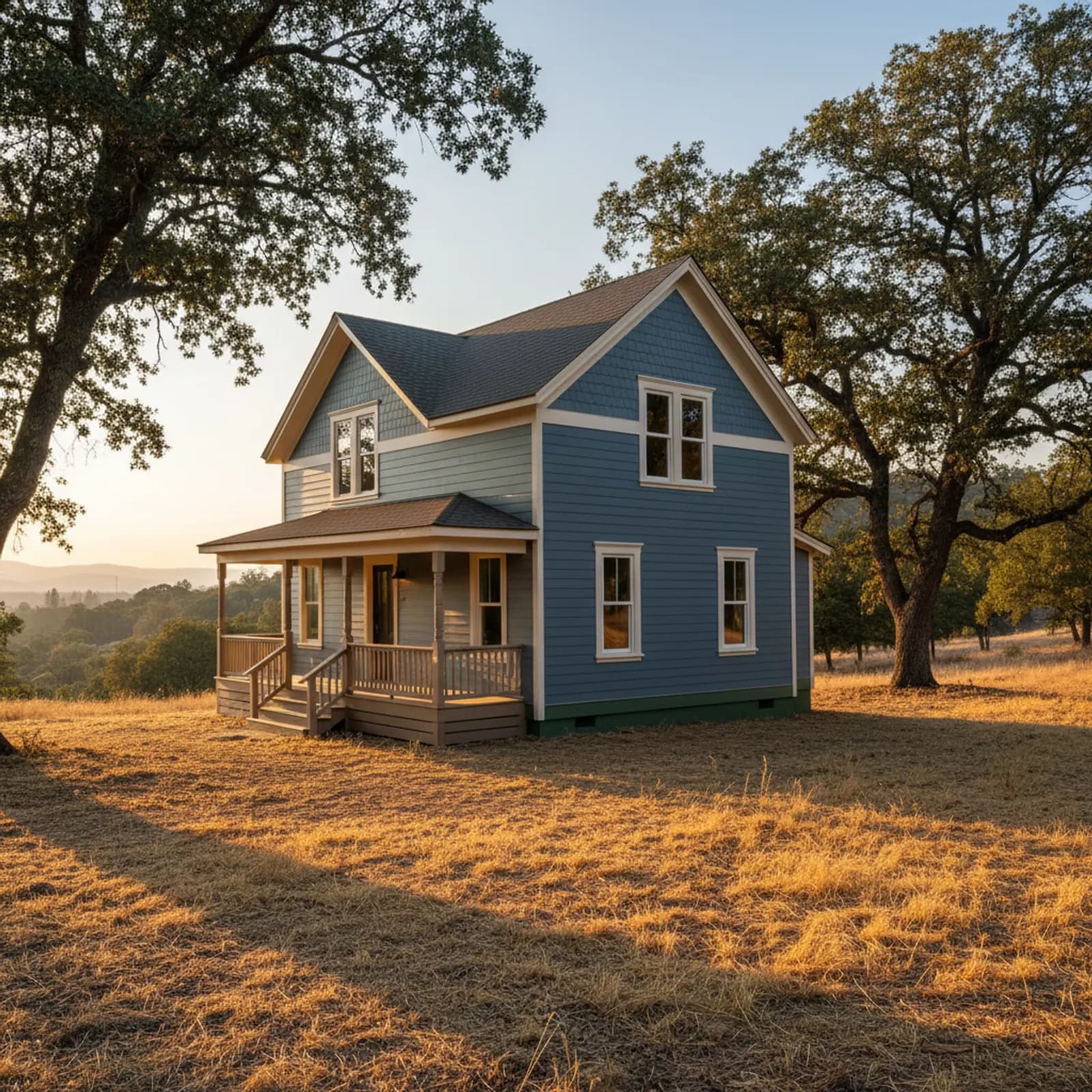
Siding in Colfax
A Colfax re-side blends transcontinental-railroad heritage with remote, high-fire foothill living. The historic I-80-corridor rail town at roughly 2,400 feet pairs an old rail-town core with rural foothill cabins, acreage, older small-lot homes, and notably a share of off-grid and remote ridge properties — in genuine high Sierra-foothill fire terrain, elevated heat, and a moderate winter.
So a Colfax project is scoped per parcel — rail-town core versus remote ridge/off-grid acreage — around non-combustible hardening, heritage fidelity in the core, and honest access planning for the remote properties.
Rail-town heritage and remote ridge living
Colfax's historic rail-town homes reward period-faithful detailing; its off-grid and ridge properties are remote, self-sufficient, and access-constrained. We tailor a hardened, non-combustible re-clad to each — and plan logistics honestly for the remote parcels.
High fire, moderate winter
Colfax sits in high forested-foothill fire terrain; we specify Class A non-combustible cladding and harden eaves, vents, decks, and ground transitions, with moderate snow-aware clearances for the winter and heat-stable finishes for the elevated summers.
Choosing siding material for Colfax's ember zone
Sitting around 2,400 feet and frequently inside the wildland-urban interface, Colfax pushes the siding decision toward noncombustible and ember-resistant assemblies rather than appearance alone. Fiber-cement and mineral-based claddings carry the kind of flame-spread ratings that matter when wind-driven embers travel uphill ahead of a foothill fire, and they hold up far better than wood lap or vinyl, which can ignite or slump at the worst possible moment. The detailing behind the panel earns its keep here: tight, ember-blocked joints, metal flashing at transitions, and closed eave and rake interfaces so glowing debris finds no gap to lodge in. Where a home meets decks, fences, or attached wood structures, we treat that junction as a likely ignition path and specify accordingly. The goal on a Colfax re-side is a continuous, low-ignition shell from foundation to roofline, with no soft seam an ember can exploit. That hardened envelope is the difference between siding that merely looks finished and siding doing real defensive work in fire country.
Access, staging, and sequencing on foothill acreage
A re-side in town near the old rail core is one logistics problem; a re-side on a remote Colfax ridge parcel is another entirely. Long private drives, grade, tree cover, and limited turnaround shape how material gets staged and how scaffolding goes up, so we walk the access route before committing to a schedule rather than discovering a pinch point on delivery day. Off-grid and self-sufficient properties add their own wrinkles: power may come from solar or a generator, water can be limited, and there is rarely a tidy municipal hookup to lean on, all of which we plan around so the crew is not improvising on site. Weather sequencing matters too, since moderate Sierra winters can interrupt exterior work and snow or mud can close a steep drive for days. We scope Colfax jobs parcel by parcel, set realistic staging zones for foothill terrain, and build the timeline around honest access rather than a flat in-town assumption, so the project finishes clean instead of stalling halfway up the ridge.
Why this matters in Colfax
- Specified for Sierra Foothills conditions
- Class A non-combustible fiber cement as the recommended system
- Correctly detailed weather-resistive barrier and flashing
- Installed by a crew with 20 years combined experience
Recommended systems for Colfax
- Class A non-combustible fiber cement
- aggressive fire-hardening detailing
- freeze-aware flashing
- durable factory finishes
Fiber Cement Siding for Colfax homes
The full fiber cement siding approach — materials, weather-resistive detailing, and the manufacturer standards we install to — is covered on the main service page, then specified for Colfax's conditions on this one.
Our Colfax process
- Step 1
Consultation
We listen to your goals and assess your home on site — exposure, substrate, and architecture.
- Step 2
Design & Proposal
A clear written proposal with the right system specified for your climate and a transparent scope.
- Step 3
Expert Installation
Trained crews install to manufacturer best practices with careful weather-management detailing.
- Step 4
Walkthrough & Support
A final walkthrough, full cleanup, and a clear written record of the scope completed — work we stand behind.
FAQ
Siding in Colfax — FAQ
Colfax is the historic I-80 transcontinental-railroad town with a notable off-grid/remote-ridge component — distinct from foothill Auburn or the Gold-Rush Victorian character of Grass Valley/Nevada City.
High — forested Sierra-foothill terrain. Non-combustible, hardened exteriors are the baseline, especially on rural cabins, acreage, and ridge properties.
Yes — with hardened non-combustible assemblies and honest access/logistics planning for remote, self-sufficient sites.
Yes — period-faithful profiles and trim on the rail-town core, with non-combustible upgrades given the genuine fire exposure.
Moderately — at ~2,400 ft it sees some winter; we add moderate snow-aware clearances within the hardened envelope.
Keep Exploring
More for Colfax homeowners
More in Colfax
Other exterior services in Colfax
Helpful Exterior Guides