Siding built for North Auburn's foothill exposure
North Auburn spreads north of the City of Auburn across unincorporated Placer County, along the Highway 49, Bell Road, and Dry Creek Road corridor at roughly 1,200 to 1,400 feet. It mixes a busy commercial strip with established subdivisions and rural-residential parcels tucked into oak and pine. That foothill setting is hard on exteriors: intense summer sun, a long dry fire season, and wide day-to-night temperature swings. We scope every project on site and match the siding approach to how your particular elevation faces the weather and the wildland around it.
Local knowledge, honest scope
Most homes here are 1960s through 1990s ranch houses and tract builds, with some older stock and rural homes on larger lots. We regularly see cedar, hardboard (Masonite), T1-11, and stucco walls that have taken decades of heat and dry weather. Rather than sell a one-size answer, we walk the walls with you, note what is failing and why, and put it in writing. Your written estimate governs the work. Where fire exposure or moisture entry drives the decision, we say so plainly instead of guessing.
Considering an exterior project in North Auburn?
Foothill housing stock along the Highway 49 corridor
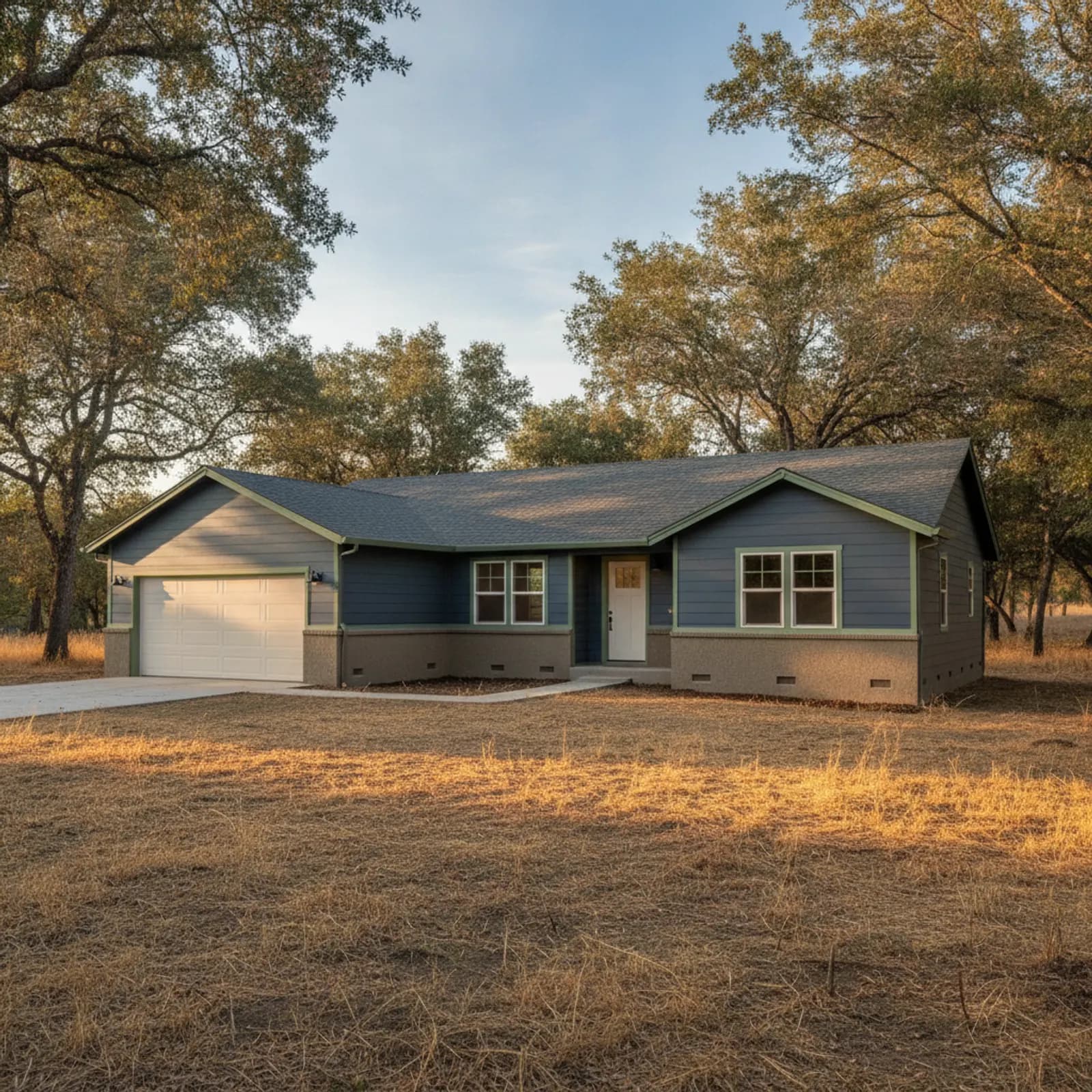
Drive North Auburn and you see the pattern quickly: single-story ranch homes and tract subdivisions from the mid-century through the 1990s, interrupted by older mixed-vintage houses near the corridor and larger rural-residential parcels toward the fringes. Wide eaves, wood trim, and long uninterrupted wall runs are common, and many of those walls still wear original hardboard, T1-11 plywood, cedar, or stucco. Each material ages differently in this dry heat. We identify what you actually have, which sections are sound, and which have swelled, cupped, or delaminated, then build a re-clad or repair plan around the real condition of the house.
Heat, UV, and dry-season stress
At foothill elevation North Auburn runs hot and dry through a long summer, and that is the controlling stress on siding here alongside fire. Relentless UV fades paint, chalks finishes, and embrittles older wood and hardboard, while big daily temperature swings work fasteners and joints loose over years. Winter brings rain rather than meaningful snow, so wind-driven moisture at failing laps and cut edges is the moisture concern. We detail for expansion, keep end cuts sealed and back-primed where it matters, and choose finishes that hold up to the sun on south and west walls that take the worst of it.
Home hardening in American River canyon fire country
North Auburn is squarely in the wildland-urban interface, close to the American River canyon and Auburn State Recreation Area, with oak-and-pine fuels right up against many neighborhoods. Siding is one layer of a home-hardening approach that reduces ignition risk; it does not make a house fireproof. Non-combustible fiber cement, careful detailing at eaves, soffits, and wall-to-deck transitions, and closing gaps where embers collect all help. Documenting these upgrades can support a conversation with your insurer, but insurers set their own criteria and we never promise coverage or a discount. We focus on lowering ignition risk you can actually see.
Fiber cement and fire-aware detailing
For most North Auburn walls we install James Hardie fiber cement, a non-combustible, Class A material per ASTM E84 that stands up to foothill heat and UV far better than aging hardboard or T1-11. It resists the swelling, delamination, and pest damage we see on older panels, and it holds paint through hard summers. Combustible siding is not automatically bad; it is a hardening opportunity, and sometimes targeted repair plus better detailing is the right call. We lay out the trade-offs, including cost, so you can decide. Whatever the material, the written estimate defines exactly what we will do.
What siding work costs here
Cost in North Auburn depends on the house: single-story ranches are simpler to re-clad than cut-up multi-gable homes, and rural parcels can add access and staging considerations. Substrate surprises drive the biggest swings, since decades of heat and moisture often hide rot, failed sheathing, or previous patchwork behind old hardboard, cedar, or stucco. A full fiber cement re-clad costs more up front than repainting tired siding, but on a foothill home facing this sun and fire season it usually buys decades of lower maintenance. We give you an itemized written estimate after an on-site scope, and that estimate governs.
Unincorporated North Auburn vs. the City of Auburn
This is a point of real confusion: North Auburn is an unincorporated community, so it falls under Placer County jurisdiction rather than the incorporated City of Auburn next door. In practice that means county building department review and Placer County fire and WUI expectations govern permitted work here, not city hall. The two places share a name and a border but not a government. We work within the county process, pull the permits the scope calls for, and coordinate inspections accordingly. If your address sits on the line, we confirm jurisdiction before we start so nothing stalls midway through the job.
Re-cladding aging hardboard, Masonite, and T1-11
A large share of North Auburn's subdivisions went up when hardboard (Masonite) lap and T1-11 plywood siding were standard, and many of those walls are now decades past their easy years. In this dry heat with seasonal rain, we routinely find swollen bottom courses, delaminating panel faces, chalked paint, and soft spots at cut edges and nail heads. Sometimes sections can be repaired; often the smarter long-term move is a fiber cement re-clad that ends the cycle. We assess panel by panel, show you what is failing, and recommend repair or replacement based on condition rather than a blanket rule.
The Bell Road and Dry Creek corridor mix
The stretch along Bell Road, Highway 49, and Dry Creek Road blends commercial frontage, tidy residential tracts, and rural-residential homes that back up toward open oak-and-pine ground. That variety means no two jobs on the same street are quite alike: a corridor-adjacent ranch, a fringe parcel with heavy wildland fuel nearby, and an older mixed-vintage home each need a different siding and detailing answer. We tailor the scope to where your home actually sits, how exposed it is to the canyon and the sun, and what the walls are made of, then document the plan in writing before any work begins.
North Auburn is unincorporated: county permits (NOT the City of Auburn)
A common confusion worth clearing up: North Auburn is not the City of Auburn. It is an unincorporated community — a Census-Designated Place — in Placer County. That distinction matters at permit time, because building permits, planning review, and code enforcement all run through Placer County's Community Development Resource Agency in Auburn (the county government) rather than the City of Auburn Building Department, and the 2025 LRA Fire Hazard Severity Zone map applies directly to North Auburn parcels through the county's adoption. Electric and gas are PG&E, and North Auburn is in high-PSPS territory. Water is supplied by the Placer County Water Agency (PCWA). Fire response is Newcastle Fire Protection District or Placer Hills Fire, alongside CAL FIRE for surrounding SRA. Our /dry-rot-repair service page names Auburn in its Placer foothill belt.
HZ10 and the American River canyon FHSZ edge
North Auburn is in James Hardie's HZ10 climate zone; installing HZ5 is a documented warranty misapplication. On the fire side, essentially all of North Auburn sits in the oak-and-pine foothill belt above the American River canyon with Moderate to Very High FHSZ under California's 2025 LRA Fire Hazard Severity Zone map, with the canyon-edge parcels and outlying territory in State Responsibility Area. The 2025 California Wildland-Urban Interface Code governs the exterior wall on essentially every re-side. The code frame changed on January 1, 2026, when Chapter 7A moved into the standalone WUI Code.
Our process in North Auburn
- Step 1
Consultation
We listen to your goals and assess your home on site — exposure, substrate, and architecture.
- Step 2
Design & Proposal
A clear written proposal with the right system specified for your climate and a transparent scope.
- Step 3
Expert Installation
Trained crews install to manufacturer best practices with careful weather-management detailing.
- Step 4
Walkthrough & Support
A final walkthrough, full cleanup, and a clear written record of the scope completed — work we stand behind.
If you own a home in North Auburn, from a corridor subdivision to a rural parcel above the American River canyon, we can help you re-clad or repair your siding with heat- and fire-aware detailing suited to Placer County's foothills. We scope every project on site, explain the trade-offs honestly, and give you a written estimate that governs the work.
FAQ
North Auburn — Common Questions
No. North Auburn is an unincorporated community in Placer County, just north of the incorporated City of Auburn along the Highway 49 and Bell Road corridor. They share a name and a border but not a government, so permitted siding work here goes through the Placer County building department and county fire and WUI rules rather than the City of Auburn. If your address sits near the boundary, we confirm which jurisdiction applies before we start.
Yes. Because North Auburn is unincorporated, we work within the Placer County permitting process and pull the permits your scope requires, then coordinate inspections with the county. We confirm jurisdiction and requirements up front so the project does not stall partway through, and we spell out what is permitted in your written estimate.
No siding makes a house fireproof. Siding is one layer of home hardening that reduces ignition risk. Non-combustible fiber cement plus careful detailing at eaves, soffits, and wall-to-deck transitions helps a home resist embers and radiant heat, which matters in this American River canyon WUI. We focus on lowering ignition risk you can see, and we are straight about what siding can and cannot do.
We cannot promise that. Documenting home-hardening upgrades like non-combustible siding can support a conversation with your insurer, but insurers set their own criteria and decide what qualifies. We will provide clear documentation of the work we did; whether it affects your coverage or premium is up to your carrier.
Not always. Combustible or aging siding is a hardening and maintenance opportunity, not automatically a failure. We assess panel by panel: swollen, delaminating, or rotted sections often warrant replacement, while sound areas may only need repair and better detailing. On many decades-old North Auburn tract homes a full fiber cement re-clad ends the repair cycle, but we base the recommendation on your walls' real condition.
For most homes here we install James Hardie fiber cement, a non-combustible, Class A material per ASTM E84 that handles foothill heat, UV, and the long fire season well and holds paint through hard summers. It resists the swelling and delamination common on older hardboard and T1-11. That said, the right answer depends on your home, and we walk through the trade-offs before you decide.
It depends on the home's size and complexity, access on rural parcels, and what we find behind the existing siding, since decades of heat and moisture often hide rot or failed sheathing. A full fiber cement re-clad costs more up front than repainting, but usually buys decades of lower maintenance on a foothill home. We give you an itemized written estimate after an on-site scope, and that estimate governs the work.
Yes. We work on the full range here, from corridor-adjacent subdivisions to rural-residential parcels backing up to open oak-and-pine ground near the canyon. Those fringe homes often have heavier wildland fuel nearby and different access, so we tailor the siding and fire-aware detailing to where your home actually sits and scope it on site before writing the estimate.
Helpful Exterior Guides