
9 min read · Buyer's Guide
When you spot damage on your siding, the natural reaction is to focus on the hole or the crack itself. But the more useful question is what caused it — because the cause determines both the fix and how urgently you need it. A woodpecker hole, a wind-lifted board, and a water stain look different, mean different things, and carry very different price tags if ignored. This guide is a field diagnostic: 8 of the most common siding damage types we see on California homes, how to recognize each, the likely cause, and a plain urgency rating. Use it to figure out what you're looking at before you call anyone. When you want it confirmed and scoped, siding repair starts with that diagnosis on site.
1. Woodpecker and pest holes — soon
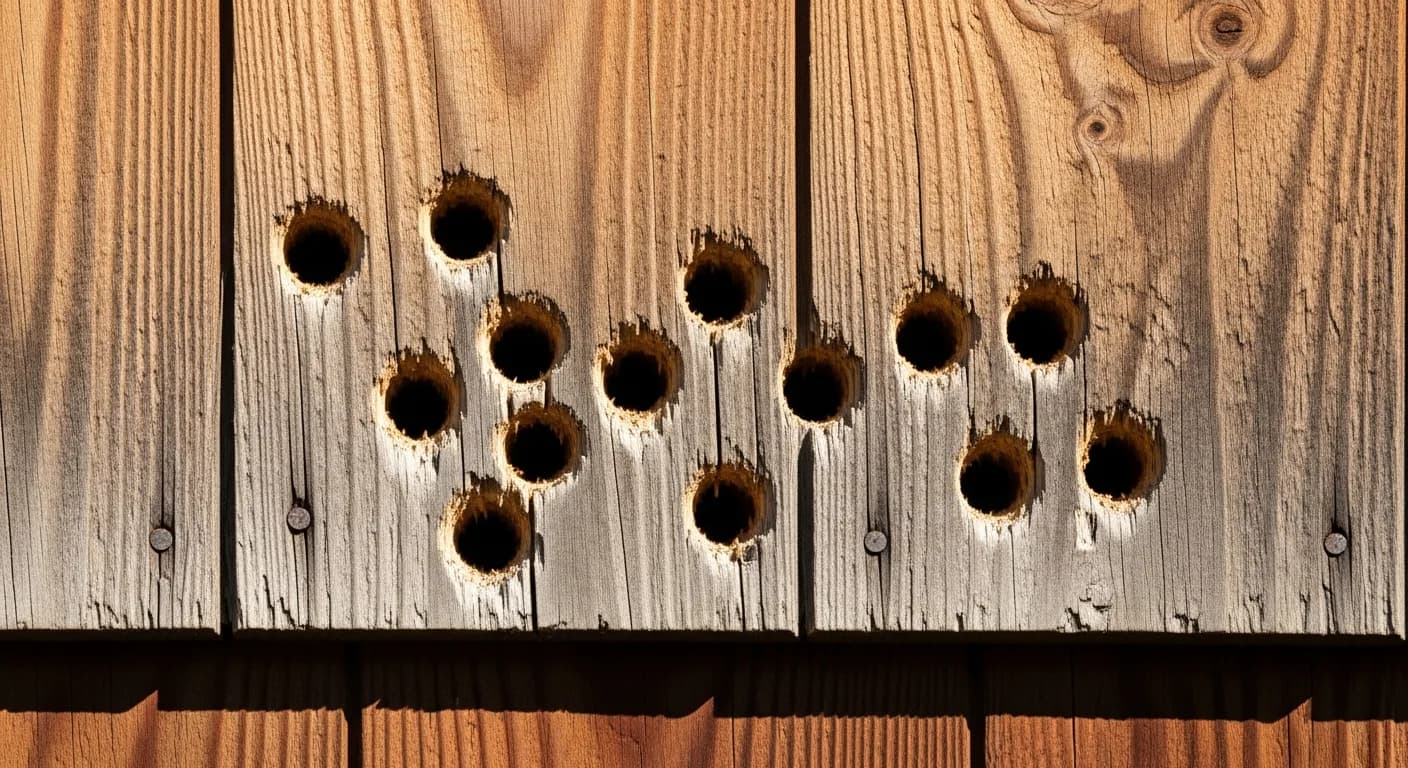
Recognize it by clean, round-ish holes, often in clusters and frequently on the same elevation (woodpeckers favor sunny, sheltered walls and resonant cavities). The cause is usually birds drumming or excavating — sometimes hunting insects already in the wall. Urgency is 'soon': each hole is a water and pest entry point, and on combustible siding an ember risk. Widespread pecking can mean an insect problem inside the wall worth investigating before you simply patch the holes.
2. Wind-lifted or missing boards — soon
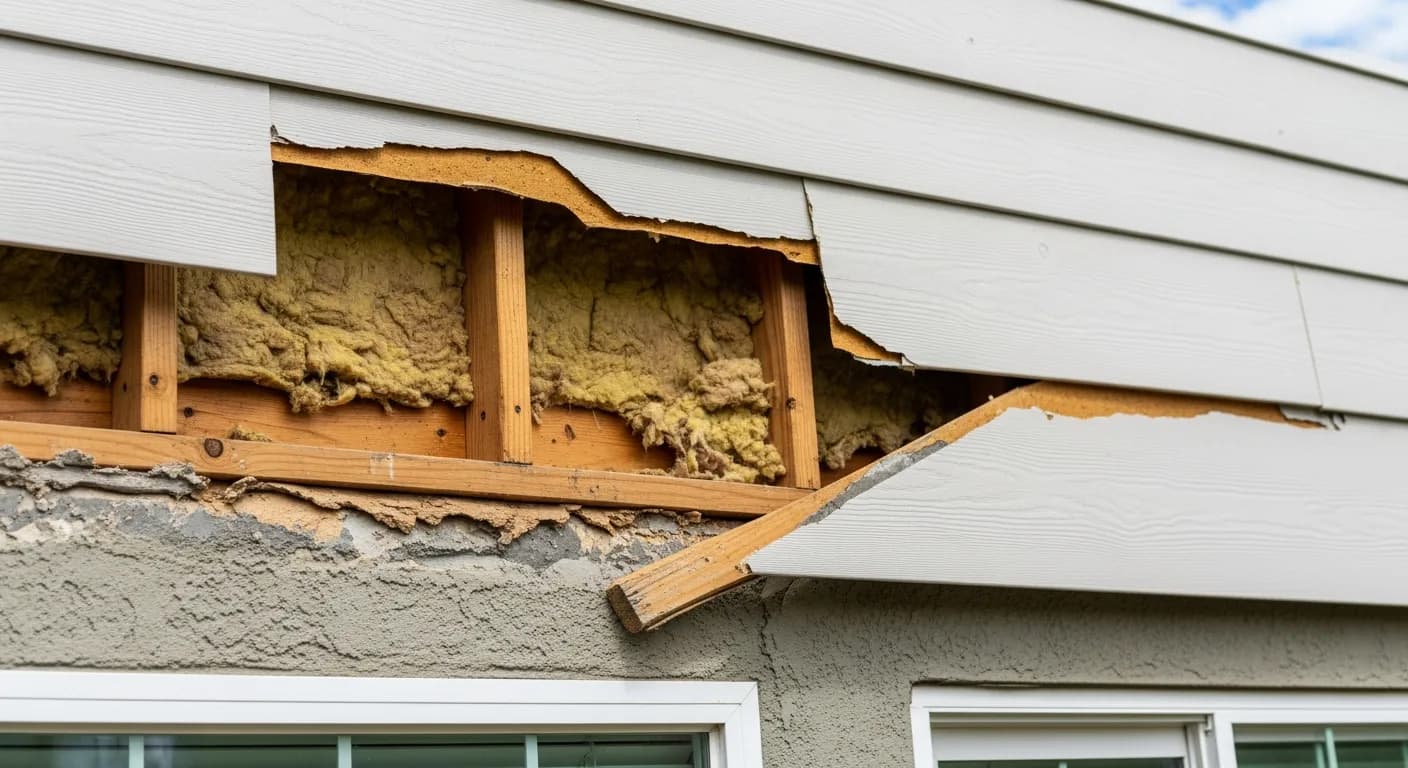
Recognize it by boards that have pulled loose at the bottom edge, lifted at a corner, or gone missing entirely after a storm. The cause is wind getting under an inadequately fastened or aging board and levering it. Urgency is 'soon' — an open or missing board exposes the wall to water immediately. California's Delta winds and valley gusts make this more common than people expect on exposed elevations.
3. Water staining and streaking — soon
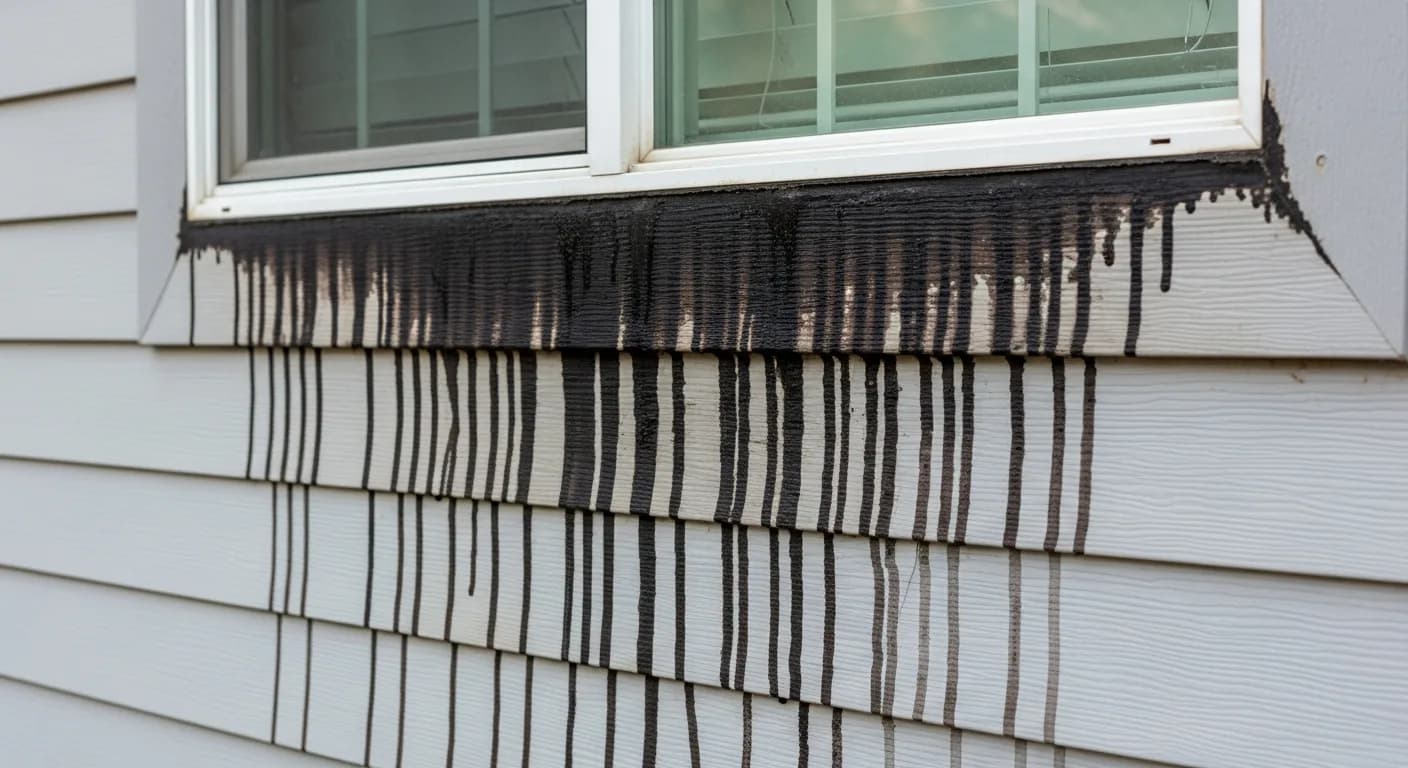
Recognize it by dark vertical streaks below windows, gutters, or joints, or diffuse staining low on a wall. The cause is water that's running where it shouldn't — a failed gutter, a flashing gap, a caulk failure. Urgency is 'soon': the stain itself is cosmetic, but it marks the path water is taking, and persistent wetting feeds the dry rot covered in dry rot behind siding. Fix the water source, not just the stain.
4. Cracking and splitting — depends
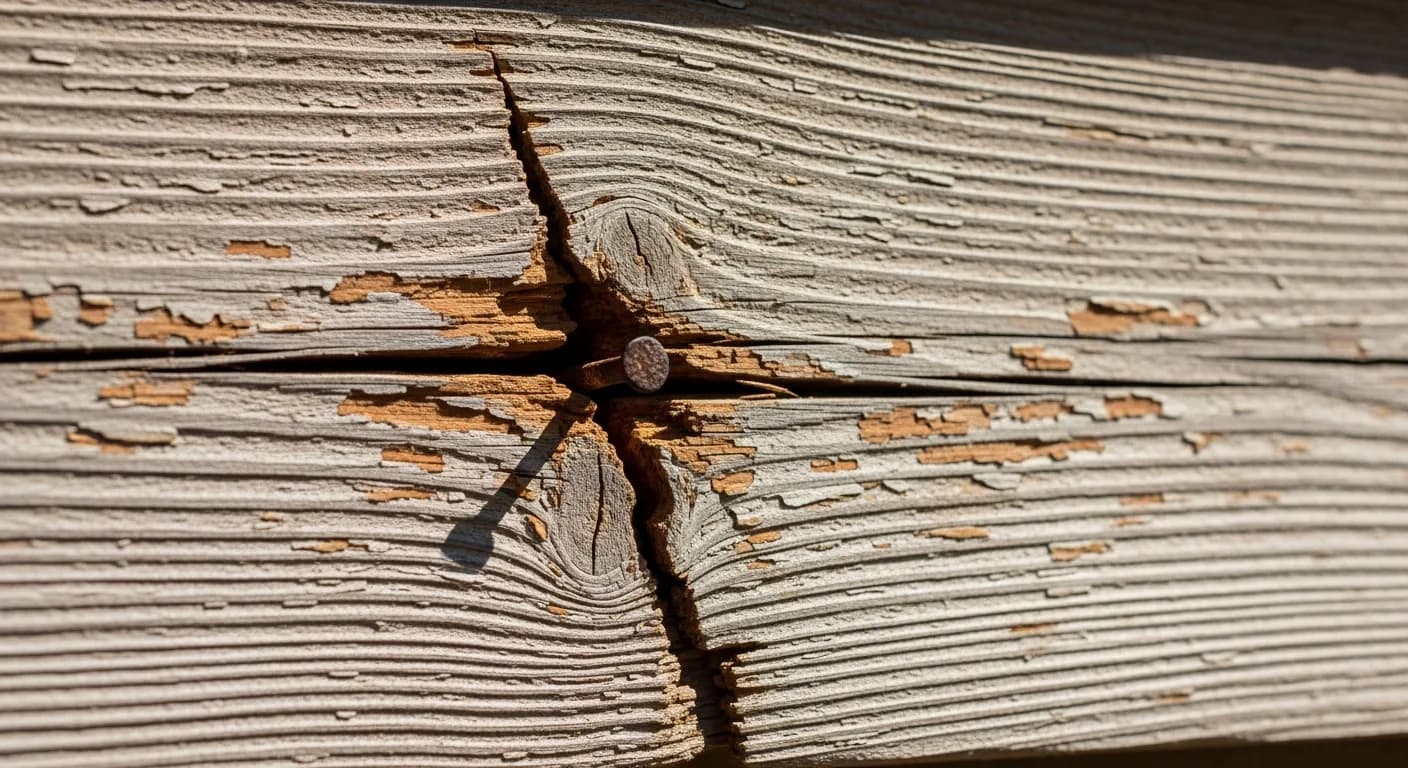
Recognize it by linear cracks along a board or splits radiating from a fastener. On fiber cement, hairline surface cracks are often cosmetic; splits at nails usually mean the board was fastened too tight or without a gap. On wood, splitting tracks drying and age. Urgency 'depends': isolated hairline cracks can be monitored, but cracks that expose the core or cluster at fasteners let water in and should be addressed.
5. Warping and buckling — act now
Recognize it by boards that bow outward, ripple, or wave along their length. The cause is either moisture behind the cladding swelling the substrate, or thermal movement with no expansion room. Urgency is 'act now': warping breaks the wall's weather seal and frequently signals moisture already behind the siding. It rarely improves on its own and usually points to a system issue — see siding warning signs.
6. Impact damage — depends
Recognize it by localized dents, punctures, or shattered sections — from hail, a thrown ball, a ladder, a mower kicking up rock. The cause is obvious and mechanical. Urgency 'depends' on whether the board's skin is breached: a cosmetic dent can wait, but a puncture that exposes the substrate is a water entry point. Impact damage is also the type most often covered by insurance — see the siding insurance claim process.
7. UV fading and chalking — monitor
Recognize it by washed-out color and a chalky residue on your hand when you wipe the wall, worst on south and west elevations. The cause is simply California sun aging the finish. Urgency is 'monitor': this is cosmetic finish wear, not damage to the board, and it's a repaint-or-refresh item on your schedule, not an emergency. Factory-baked finishes resist it far longer than field paint.
8. Insect damage (termites, carpenter ants) — act now
Recognize it by mud tubes at the base of the wall, tiny holes with frass (sawdust-like debris), hollow-sounding wood, or visible ant/termite activity. The cause is pests colonizing wood, very often wood already softened by moisture. Urgency is 'act now': insect damage compromises structure and usually rides on top of a rot problem, so it needs both pest treatment and repair of the underlying moisture issue.
From diagnosis to fix
Once you've matched the damage to its cause, the fix follows — but confirming the cause on site is what prevents paying twice. Whoever you bring in should be verifiable on the Contractors State License Board, and for storm or impact damage it's worth reviewing the siding insurance claim process before work begins. Most of what's on this list comes back to one thing — keeping water out of the wall — which is also the heart of reading siding warning signs. If you're not sure what you're looking at, book a free assessment and we'll diagnose it with you and scope an honest siding repair.
How California's microclimates change what you'll find
Where your home sits in the state shifts the odds dramatically. Coastal homes from the Bay Area to the North Coast battle salt-laden fog and near-constant moisture, so water staining, swelling at board ends, and fastener corrosion dominate. Inland valley and foothill homes from Sacramento to the Sierra face the opposite stress: intense summer UV, wide day-to-night temperature swings, and bone-dry air that accelerate fading, chalking, and the seasonal expansion-and-contraction cracking you see at butt joints. In wildfire-prone foothill zones, the bigger concern is whether the siding itself is combustible, which is why the state pushes ignition-resistant assemblies in designated areas mapped by CAL FIRE. Mountain communities around Tahoe add heavy snow load and freeze-thaw cycling, which pries at any board that already has a moisture path behind it. Knowing your microclimate lets you weight the diagnosis before you ever pick up a ladder: a streak on a foggy coastal wall and an identical streak on a dry inland wall often have different root causes and different fixes. It also explains why a material that performs beautifully in one county underperforms two hours away. If you are weighing a switch, the trade-offs between products under these specific conditions are laid out in our overview of fiber cement siding, which tolerates both moisture and heat far better than aged wood or older vinyl.
Reading the back side: what the failure pattern is telling you
Most homeowners diagnose siding from the street, but the real story is usually written on the hidden face and the edges. When you can safely lift a loose board or inspect at a gable end, look at where the damage concentrates. Failure that clusters at the bottom edge of boards points to wicking moisture, often from splashback off hardscape or soil contact, and means your clearance to grade is too small. Damage radiating from nail heads suggests overdriven or corroded fasteners letting water track inward. Cupping that curves consistently in one direction usually signals a vapor-drive problem, where one face stays wetter than the other. Cracks that always start at a window or door corner are telling you about stress concentration and flashing, not the siding material at all. Reading these patterns matters because it separates a cosmetic surface repair from a system problem behind the wall. A board you simply swap will fail again in the same spot if the underlying driver, such as a missing kickout flashing or a failed weather-resistive barrier, stays in place. This is also why a thorough on-site look beats a photo estimate: the diagnostic clues live in three dimensions. If your walk-around turns up any of these recurring patterns rather than a single isolated hit, it is worth scheduling a proper assessment through our free estimate so the cause gets addressed, not just the symptom.
Spot repair, board replacement, or full re-side: making the call
Once you know the damage type, the next decision is scope, and it usually lands in one of three buckets. Spot repair, such as filling a single woodpecker hole or sealing one cracked joint, makes sense when damage is isolated, the surrounding boards are sound, and the cause is one-time rather than ongoing. Board or section replacement is the right move when several adjacent boards are warped, rotted, or impact-shattered but the bulk of the wall still has years of life left; the challenge here is matching profile, texture, and color on weathered siding, which is harder than people expect. Full re-siding becomes the economical choice once you are chasing repairs across multiple elevations, the material is at end of life, or a moisture problem has spread behind the cladding. A useful rule of thumb: when projected repair costs climb past roughly a third of replacement, replacement usually wins on both value and peace of mind. Industry data on what different exterior projects return at resale is tracked in the annual Remodeling Cost vs. Value report, and siding consistently recovers a strong share of its cost. To pressure-test which bucket your situation falls into, compare the likely figures in our California siding cost guide against the repair quotes you gather, and weigh how many separate problem areas you are realistically tracking across the house.
Before you hire: verifying the contractor and the diagnosis
A correct diagnosis is only useful if the person fixing it actually understands what they are looking at, so vetting matters as much as the inspection itself. In California, anyone performing siding work over a small dollar threshold must hold an active state contractor license, and you can confirm any license is current and unrestricted in seconds through the Contractors State License Board. Beyond the license, ask the estimator to explain the cause, not just the cure: a pro who can point to the failed flashing, the grade clearance, or the vapor path behind a warped board is diagnosing, while one who only quotes a board swap may be treating symptoms. Get the moisture source identified in writing before any cladding goes back on, because a beautiful new board over a wet wall simply hides the next failure. It also pays to confirm the repair will respect manufacturer requirements; products like James Hardie fiber cement have specific clearance, fastening, and gapping rules that, if skipped, can void coverage and reintroduce the very damage you are paying to remove. Finally, insist on photos of any concealed conditions the crew uncovers during the work, since those images become your record if a hidden issue turns out larger than the original scope. When you line up a current license, a cause-based explanation, and a written moisture diagnosis side by side, you can tell at a glance whether a bid is fixing the wall or just covering it.
Key takeaways
- The cause matters more than the hole — it sets both the fix and the urgency
- Warping and insect damage are act-now; woodpecker holes, wind, water, and cracks are usually 'soon'
- Water stains mark the path water is taking — fix the source, not just the stain
- Impact damage is the type most likely to be covered by insurance
- UV fading and chalking are cosmetic finish wear, not board damage
- Pest activity at the wall base often sits on top of a hidden moisture-and-rot problem
FAQ
Quick Answers
Match the pattern to the cause: round clustered holes suggest woodpeckers, dark vertical streaks suggest a water path, outward bowing suggests moisture or thermal warping, and mud tubes or frass suggest insects. The pattern usually points to the culprit.
Warping/buckling and insect damage are act-now because they signal moisture or structural compromise. Woodpecker holes, wind-lifted boards, water staining, and substrate-exposing cracks are 'soon.' Cosmetic dents and UV fading can be monitored.
Sometimes. Woodpeckers often peck where they hear or find insects, so widespread pecking can indicate an insect problem inside the wall that's worth investigating before you patch the holes.
Sudden, accidental damage like hail, wind, or impact is often covered, while gradual wear, rot, and pest damage generally are not. Impact and storm damage are the most commonly claimable — document it and check your policy.
It's cosmetic. Fading and a chalky film are normal UV aging of the finish, worst on sun-facing walls, and are addressed with a repaint or refresh on your own schedule rather than as a repair.
Patch the symptom only after you've identified and fixed the cause. Patching a water stain or a hole without addressing the water source or the pests behind it lets the real problem keep spreading.
Sources
Authoritative references
- James Hardie — official product & installation resources
- Contractors State License Board (CSLB) — verify a California contractor
External links to government, code, and manufacturer sources. Sierra Siding is not affiliated with these organizations; references are provided for verification.