
10 min read · Pillar Guide
"Should I just repair this, or is it time to replace the whole thing?" is the most common question we get, and the honest answer is that it depends on a handful of specific factors — not on a salesperson's preference. Repair is often the right, cost-effective call. So is replacement. The skill is knowing which situation you're in. This guide lays out the 7 questions that actually decide it, in the order a good contractor weighs them, so you can reason about your own wall before anyone gives you a number. The goal isn't to talk you into a bigger project; it's to make sure you spend money where it does the most good. For the cost context behind these decisions, see what siding costs in California.
1. How much of the wall is actually affected?
Extent is the first filter. Damage confined to a few boards, one section, or a single elevation is a repair candidate. When the same problem shows up across multiple elevations — failing finish everywhere, widespread cracking, rot in more than one location — you're usually looking at a system at end of life, and spot repairs become an expensive game of whack-a-mole. As a rough rule, once you're repairing more than about a quarter of the cladding, full replacement often costs less over time.
2. How old is the siding, and what is it?
Age sets the backdrop. A 5-year-old wall with localized impact damage is an obvious repair. A 30-year-old wall of a material near the end of its service life is a different conversation — even if today's damage is small, the rest is close behind. Material matters too: fiber cement has a long structural life and repairs well, while aging vinyl or original-era wood may be brittle and hard to match. See how long siding really lasts for material-by-material service life.
3. How much finish life is left on the rest?
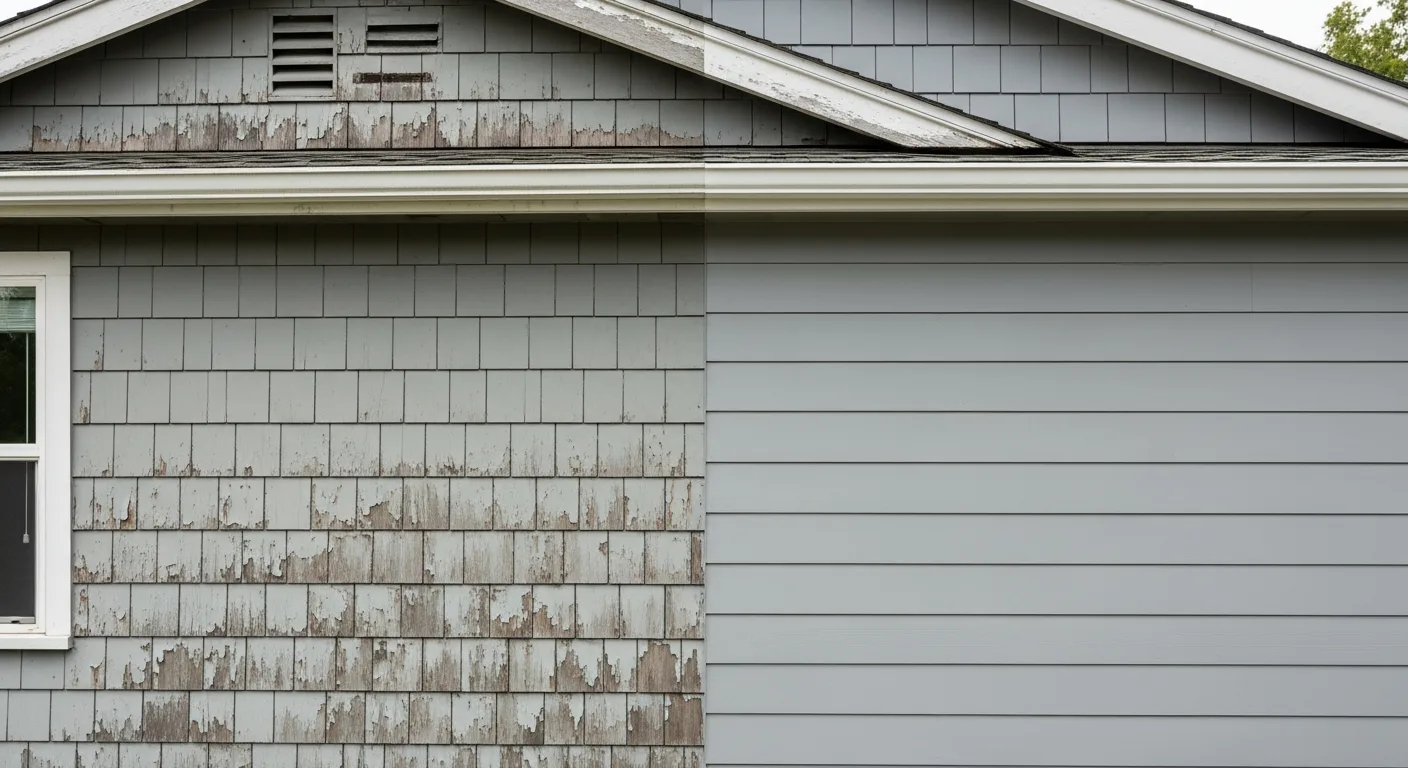
Even when the boards are sound, the finish has its own clock. If the undamaged siding is faded, chalking, and due for a repaint anyway, the math shifts: you may be paying to repair-and-repaint a wall that's only a few years from a larger refresh. When the finish is mid-life and healthy, repair preserves real value. When it's near the end, replacement folds the finish upgrade into one project.
5. Can the repair actually be matched?
A repair that's obvious from the curb isn't much of a win. Discontinued profiles, faded colors that no longer match, and textures that aren't made anymore all make seamless repair hard. On a side elevation, a visible patch may be fine; on the front of the house, a mismatch you'll see every day may push you toward replacing at least that whole elevation for a consistent result.
6. How long are you staying — and are you selling?
Time horizon changes the calculus. If you're staying ten years, investing in a durable replacement that ends the repair cycle is usually worth it. If you're selling in one or two years, the question becomes what buyers and inspectors will flag — sometimes a targeted repair and refresh is the smart pre-sale move, sometimes new siding is what the market in your area expects. The resale angle is covered in is new siding worth it before selling.
7. What does it cost over time, not just today?
Repair almost always wins on sticker price. The real comparison is cost over the years you'll own the home. A cheap repair on a failing wall that needs three more repairs and a replacement anyway is more expensive than replacing once. A sound wall with isolated damage is the opposite — repair is clearly cheaper. Weigh the patch against the full job over a realistic horizon, the same way you'd judge fiber cement siding on lifetime value rather than upfront cost.
Putting it together
No single question decides it — the pattern across all seven does. Localized damage, sound material with finish life left, no hidden rot, and a matchable repair point clearly to repair. Widespread issues, aging material, rot behind the cladding, an unmatched front elevation, and a long stay point to replacement. When several questions pull in opposite directions, that's exactly the case worth an on-site siding repair assessment, where the wall can be opened and judged honestly rather than guessed at.
Deciding with real numbers
The seven questions narrow it down, but the final call benefits from real figures. National Remodeling Cost vs. Value data shows exterior work among the better-returning improvements, and pairing that with honest local pricing in what siding costs in California turns the decision from a guess into a comparison. When several questions pull in different directions, an on-site look — opening the wall where needed — is what settles it. Request a free assessment and we'll give you a repair-versus-replace recommendation based on your actual wall, not a sales target, including a clear fiber cement option if replacement is the better value.
What a partial replacement looks like on a single elevation
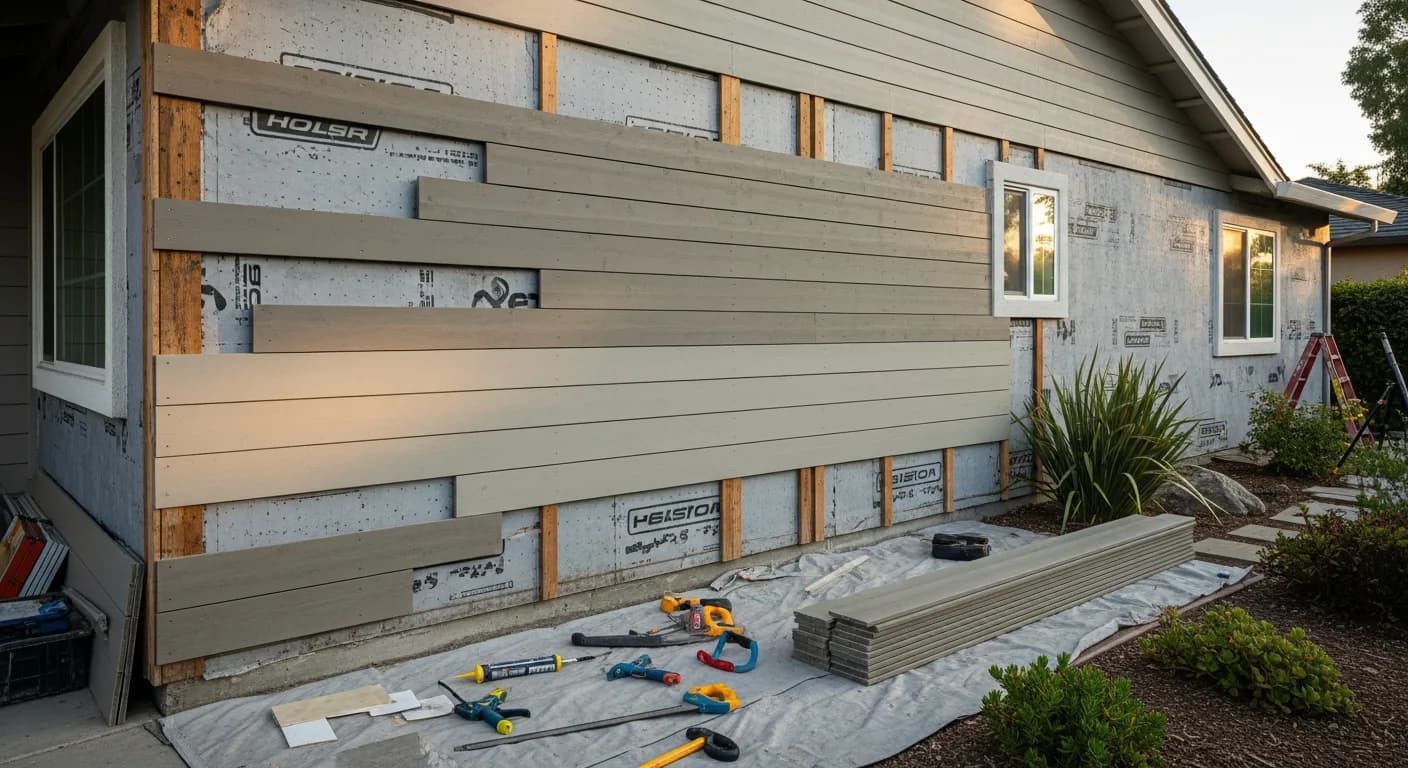
There is a middle option that homeowners often miss: replacing one full elevation rather than patching it or redoing the entire house. If the south- and west-facing walls take the brunt of California sun and weather, they frequently fail years before the shaded north side. Rather than spot-repairing failing boards on a sun-baked wall, replacing that whole plane gives you a clean, uniform finish from corner to corner with no visible seam between old and new. This sidesteps the matching headache entirely on that face, and it lets you address the underlying water-resistive barrier and flashing in one pass. The decision usually comes down to where the natural break lines fall. Corners, trim boards, and changes in wall plane are logical stopping points; mid-wall is not, because any transition there will telegraph through paint and shadow. A by-elevation approach also makes budgeting easier to stage. You can replace the worst-exposed face this year and revisit the others later, as long as the product line stays available so future phases still match. Before committing, walk each elevation and rate it honestly, because a wall that looks tired from the curb may simply need cleaning and recoating. If only one or two faces are genuinely compromised, a targeted siding repair or single-elevation replacement keeps the spend proportional to the actual problem instead of defaulting to a whole-house tear-off.
Fire-zone rules that can override the repair-versus-replace math
In much of California, the choice is not purely about condition and cost; it can be dictated by where your home sits on the fire-severity map. Properties in designated wildland-urban interface and high or very-high fire hazard severity zones fall under the WUI code of the building code, which governs exterior materials and assemblies. You can check your zone designation through CAL FIRE and your local jurisdiction. The practical effect is that a repair which simply patches in more of an old, non-compliant combustible material may not satisfy a building department when a permit is pulled, and large-scale work often does require one. If you are already replacing a significant portion of a wall in one of these zones, it can make sense to upgrade the whole assembly to an ignition-resistant product rather than reinstalling something that meets neither current code nor your insurer's expectations. Noncombustible options such as fiber cement are popular here precisely because they hold up to ember exposure far better than wood. Insurance is the other pressure point: carriers in fire-prone areas increasingly tie renewals and pricing to hardened exteriors, so a replacement that improves your rating can pay back beyond the wall itself. If you are weighing materials with code and embers in mind, our overview of fiber cement siding explains why it performs so well in these settings.
The order of operations: why the decision is made on a ladder, not a desk
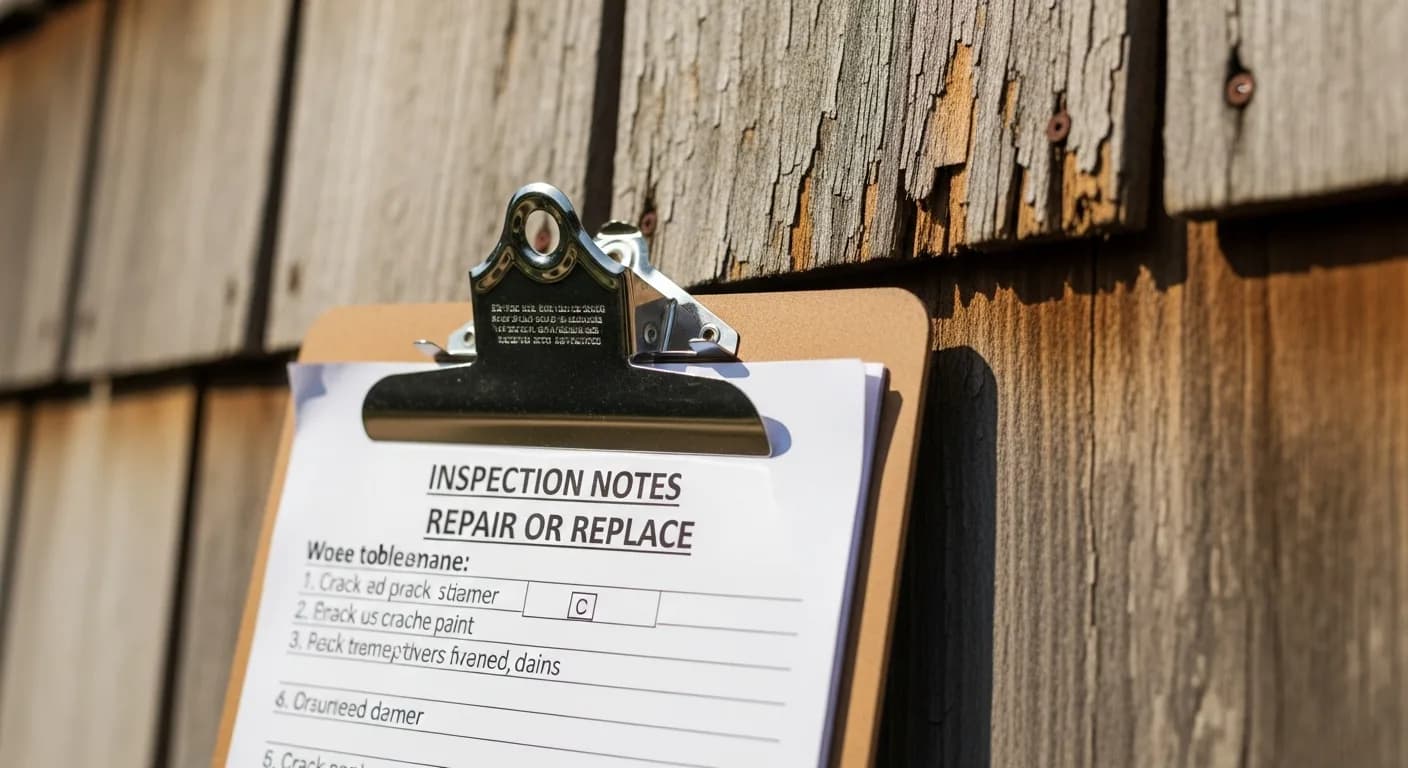
A repair-or-replace call should never be finalized from photos or a quick curbside glance, because the most expensive surprises live behind the cladding. The reliable sequence starts with a close inspection of the suspect area, then a small, deliberate removal of a board or two to expose the sheathing and the water-resistive barrier underneath. What the wall reveals at that moment frequently changes the plan. Dry, sound sheathing with localized surface damage points toward repair. Soft, stained, or crumbling sheathing means the moisture traveled further than the visible blemish suggested, and the affected zone widens accordingly. Next comes probing around penetrations, since windows, hose bibs, dryer vents, and deck ledgers are where water actually gets in. Only after that evidence is gathered does anyone responsibly talk scope or numbers. This is also the stage where you confirm the installer is properly licensed; you can verify any California contractor through the Contractors State License Board. Skipping the exploratory step is how a quoted patch balloons into a change order mid-project, which is the worst time to discover a bigger problem. If you would rather start the process with someone who opens the wall before quoting it, you can request a free on-site estimate and have the decision driven by what the sheathing shows rather than by assumptions.
Resale value: which choice the data actually rewards
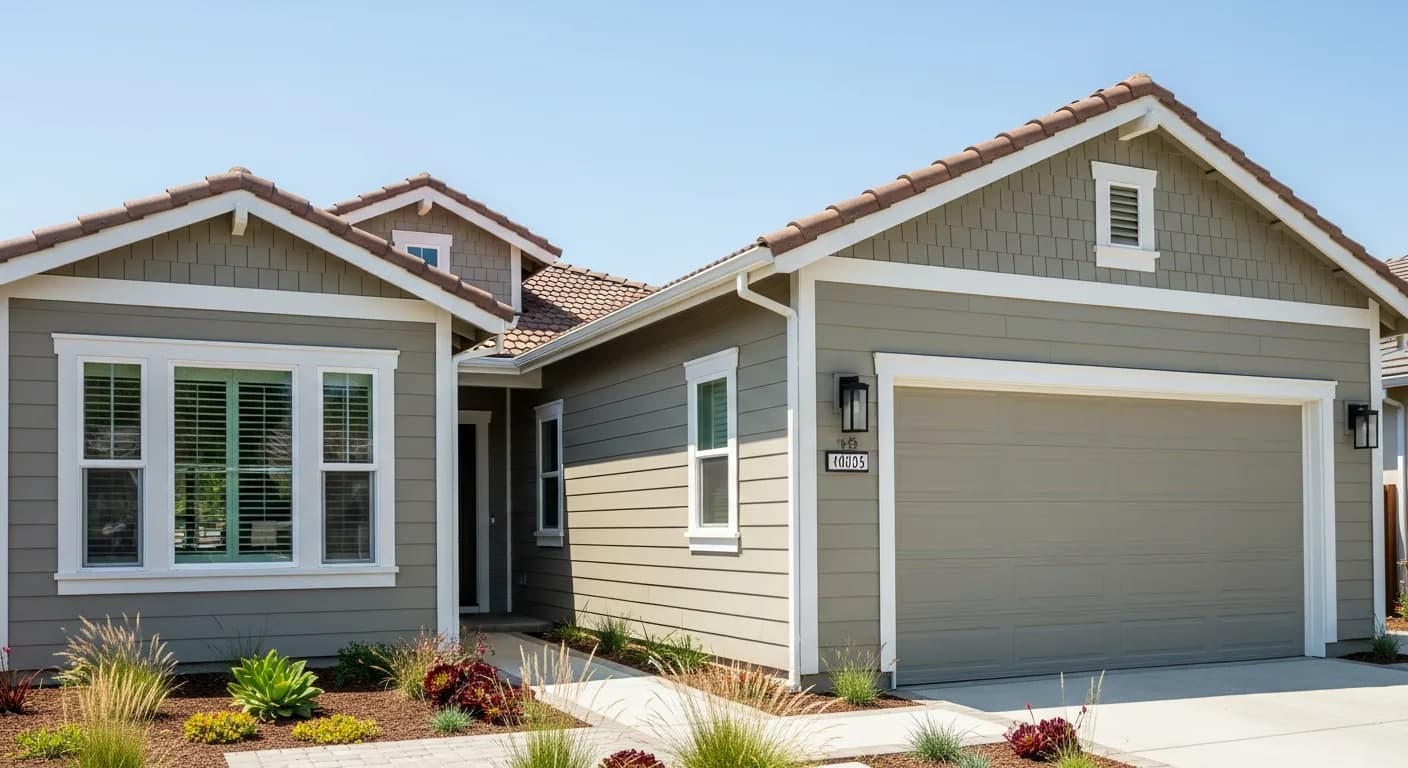
When a sale is on the horizon, the repair-versus-replace question shifts from pure function to return on investment, and the national remodeling data is unusually clear on exterior projects. Siding replacement has consistently ranked among the highest cost-recouped improvements in the annual Remodeling Cost vs. Value report, often outperforming interior remodels because curb appeal drives the first impression and, increasingly, the first online photo a buyer ever sees. That does not automatically mean replace before listing. A buyer's inspector will flag visible damage, peeling finish, and obvious patches, and any of those can become a negotiating wedge that costs you more than a clean repair would have. The pragmatic read is this: if the siding is fundamentally sound and the issues are cosmetic, a quality repair plus a fresh coat usually clears inspection objections at a fraction of replacement cost. If the cladding is at end of life, mismatched from prior repairs, or actively failing, a full replacement removes the objection entirely and lets you market the home as updated. Timing matters too, since a tear-off close to listing can delay the sale and rarely lets you capture the full appeal in photos. Estimate the recoup against your local market rather than the national average, and weigh the cost of doing the work now against the very real chance that an unaddressed exterior simply scares off offers or invites lowball bids at the negotiating table.
Key takeaways
- Extent is the first filter — once you're repairing ~25%+ of the wall, replacement often wins
- Hidden rot or a chronic moisture path overrides everything else toward replacement
- If the finish on the rest of the wall is due anyway, repair-and-repaint may be short-lived value
- An unmatchable repair on the front elevation is a quality problem, not just cost
- Your time horizon matters — staying long favors replacing once; selling soon may favor a targeted fix
- Compare cost over the years you'll own the home, not just today's sticker price
FAQ
Quick Answers
Repair almost always costs less upfront. Over time, though, repeated repairs on a failing wall can exceed the cost of replacing once — so the right comparison is total cost over the years you'll own the home, not the sticker price today.
When damage spans multiple elevations, the material is near end of life, there's widespread rot behind it, or you can't match a repair on a visible elevation. A common rule of thumb is that repairing more than about a quarter of the cladding tips toward replacement.
Often yes — localized damage on sound, matchable siding is a straightforward repair. The catch is matching discontinued profiles and faded colors, which can make a patch obvious on a front-facing wall.
Significantly. A cosmetic repair over rot or a chronic leak just hides a spreading problem. Once moisture damage is found, the durable fix is removing the affected cladding, correcting the water source, and often replacing rather than patching.
It depends on your market and timeline. Sometimes a targeted repair and refresh is the smart pre-sale spend; sometimes buyers in your area expect new siding. Inspectors do flag visible siding problems, so addressing them generally helps.
A walk-around catches the visible damage, but the true extent — especially hidden rot — isn't known until the wall is examined and, where needed, opened up. That on-site look is what an honest repair-versus-replace recommendation is based on.
Sources
Authoritative references
- Zonda — 2025 Cost vs. Value Report (exterior remodel ROI)
- James Hardie — official product & installation resources
External links to government, code, and manufacturer sources. Sierra Siding is not affiliated with these organizations; references are provided for verification.