
6 min read · Cost
What James Hardie siding costs in Mountain View is driven less by climate than by architecture and craft. The city's prized Eichler and postwar stock demands period-correct detailing, while newer infill rebuilds price more predictably. In both contexts, South Bay labor and Peninsula permitting set the baseline, and the budget tends to concentrate on finish quality and getting the mid-century look exactly right.
The main cost drivers in Mountain View
A Mountain View Hardie number is shaped by architectural context first, then South Bay prevailing labor, City of Mountain View permit and inspection cycles, and substrate condition on aged Eichler stock. The mild Peninsula climate barely enters the equation — there's little heat, moisture, or fire to harden against — so cost is a design-and-quality decision rather than a maintenance emergency. Newer infill construction prices more predictably than heritage homes. A credible James Hardie siding bid here is built around correct product spec and substrate allowance for the specific home, not square footage alone, because two Mountain View houses of equal size can carry very different detailing demands.
Working with Eichler and post-and-beam stock
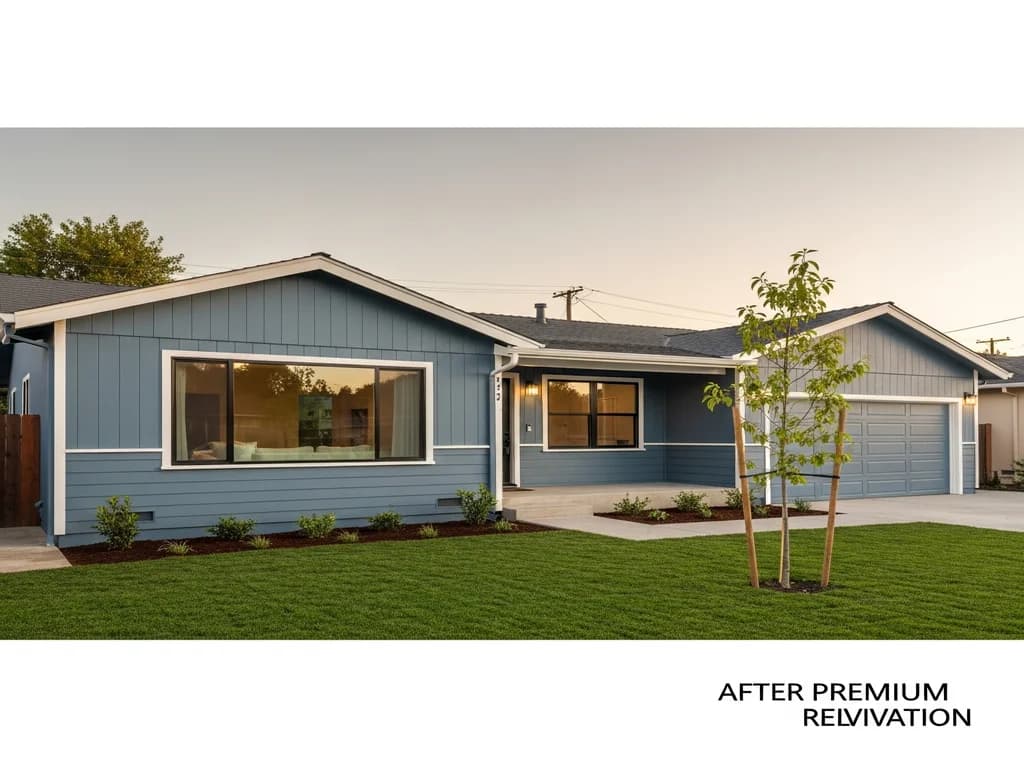
Mountain View holds some of the Bay Area's most significant mid-century residential architecture, and Eichler homes set a distinctive vocabulary: exposed post-and-beam structure, flush fascia, horizontal lap, and clean panel lines. Hardie's modern profiles read era-correct here, and the Reveal panel system suits the flat-plane aesthetic where traditional craftsman trim would look wrong. Getting those reveals and transitions right is exactly the work a generic crew underprices and a careless one ruins. On an Eichler, the precision of the detailing is the cost — which is why period-correct experience belongs in any serious Mountain View bid.
Choosing era-correct Hardie profiles
Matching product to architecture is the central design decision in Mountain View. Flat-panel and modern lap profiles translate the original wood-and-glass mid-century look; ornate trim packages do not. The Hardie board complete guide walks through the profile families, and the manufacturer's own catalog at James Hardie shows how the modern lines are intended to be used. On a postwar ranch the choices are broader, but on an Eichler the spec narrows to a handful of profiles that respect the structure. A Mountain View estimate should name the specific profiles and explain why they fit the home, not list a generic siding count.
South Bay labor and Peninsula permitting
Mountain View sits in a high-cost labor market, and that prevailing rate runs above the Sacramento Valley baseline — a real and legitimate part of the number. City of Mountain View permitting and inspection add itemizable cost and time, typical of Peninsula jurisdictions that take exterior work seriously. These aren't padding; they're the structural reality of building here. A trustworthy bid breaks permit and inspection out as line items rather than burying them, so you can see what's regulatory and what's labor. Where a quote lumps everything into one round figure, ask for the itemization before comparing it against another Mountain View estimate.
Substrate condition on aged heritage homes
Eichler and postwar construction was sometimes economy-grade for its era, and decades of settling and weathering mean substrate condition is genuinely variable on heritage Mountain View stock. What's behind the original cladding — framing condition, moisture at glazing transitions, aged sheathing — isn't fully known until tear-off, so a substrate-repair allowance is the honest way to price it. Pairing the re-side with weather-resistant exteriors detailing protects that repair going forward. Newer infill homes carry far less of this uncertainty. Knowing which kind of home you own tells you how much variability to expect in the final number.
How to read a Mountain View bid
Because climate is a non-factor here, focus your comparison on three things: era-appropriate product spec, a substrate-repair allowance on aged stock, and clear permit-and-inspection itemization. A bid that nails the Eichler detailing but hides the permit cost, or one that's cheap because it skips the substrate question, isn't really comparable to a thorough one. Verify the contractor's license on the state board as basic diligence — the CSLB makes that a two-minute check. In a high-value resale market like Mountain View, the bid worth choosing is the one that treats the home's architecture as the brief.
A modernization decision, not an emergency
Re-siding in Mountain View is almost always a deliberate modernization weighed against a strong resale market, rather than the urgent maintenance that drives jobs in hotter or fire-exposed regions. That changes how owners spend: the budget concentrates on finish quality, coordinated window and trim modernization, and clean reveals rather than on hardening the exterior against weather. It also means you have time to do it right — to wait for the correct profiles, the right crew, and a complete substrate assessment instead of rushing. For a Mountain View homeowner, the cost question is really a quality question, and the bid that respects the home's mid-century design is usually the one that protects its value best.
What drives a Mountain View Hardie price
| Cost driver | Effect |
|---|---|
| Eichler architectural context | Modern product spec preferred |
| Substrate condition on aged stock | Variable; assessed on-site |
| South Bay prevailing labor | Above the valley |
| City permit and inspection | Real and itemizable |
| Modern infill vs. heritage stock | Predictability variable |
James Hardie scope bands in the Mountain View area (for planning)
| Scope | Per sq ft of wall | Typical project total |
|---|---|---|
| Single-story Eichler or postwar, modern HardiePlank | $18–$25 | $40,000–$72,000 |
| Two-story custom or substantial rebuild with Reveal | $22–$30+ | $56,000–$100,000+ |
| Premium modern custom | $25–$34+ | $66,000–$120,000+ |
Typical Hardie planning range for the Mountain View area — a general California market range, not a Sierra Siding quote. Permit/inspection cost included.
Key takeaways
- Architecture, not climate, drives Mountain View Hardie cost
- Eichler and post-and-beam stock demand period-correct modern profiles
- Substrate condition on aged heritage homes is the main variable
- South Bay labor and Peninsula permitting run above valley baselines
- Newer infill construction prices more predictably than heritage homes
- Verify era-correct product spec, substrate allowance, and permit itemization in every bid
FAQ
Quick Answers
Yes — modern flat-panel and lap profiles read era-correct, and the original wood-and-glass aesthetic translates well in fiber cement.
The Peninsula climate is mild on heat, moisture, and fire, so the budget goes toward finish quality and correct detailing rather than hardening against weather.
Sometimes — original construction was occasionally economy-grade, so we assess condition during scoping and price a repair allowance.
South Bay prevailing labor and Peninsula permit and inspection cycles run above the Sacramento Valley baseline; a good bid itemizes those.
Flat-panel and modern lap profiles such as the Reveal system; ornate traditional trim doesn't fit the post-and-beam vocabulary.
Often more predictable rather than strictly cheaper, because newer construction carries far less substrate uncertainty.
Sources
Authoritative references
- James Hardie — official product & installation resources
- Contractors State License Board (CSLB) — verify a California contractor
- Zonda — 2025 Cost vs. Value Report (exterior remodel ROI)
External links to government, code, and manufacturer sources. Sierra Siding is not affiliated with these organizations; references are provided for verification.