6 min read · Cost
James Hardie siding cost in Palo Alto sits at the top of the Bay tier on most projects. Premium architecture, Eichler heritage, modern custom rebuilds, and City of Palo Alto permit and inspection cycles all push the band up. The fiber-cement product itself does not change; what changes is the hours, the detailing precision, and the review process around it. We scope each elevation on site, and the written estimate is what governs.
What drives a Palo Alto Hardie price
Three forces set the band: premium frame and trim spec, architectural complexity, and South Bay labor at the upper tier. City of Palo Alto permit and inspection are among the more involved in the South Bay, and architectural review on historic and Eichler-area projects adds schedule time that translates to cost. The Hardie board is the same product available elsewhere, so the spread between a Palo Alto bid and a neighboring town's is rarely about material. It is about how many hours the elevation takes, how exacting the reveal lines are, and how much coordination the review process demands. A bid that itemizes those is being honest about where Palo Alto money goes.
Eichler and modern architectural context
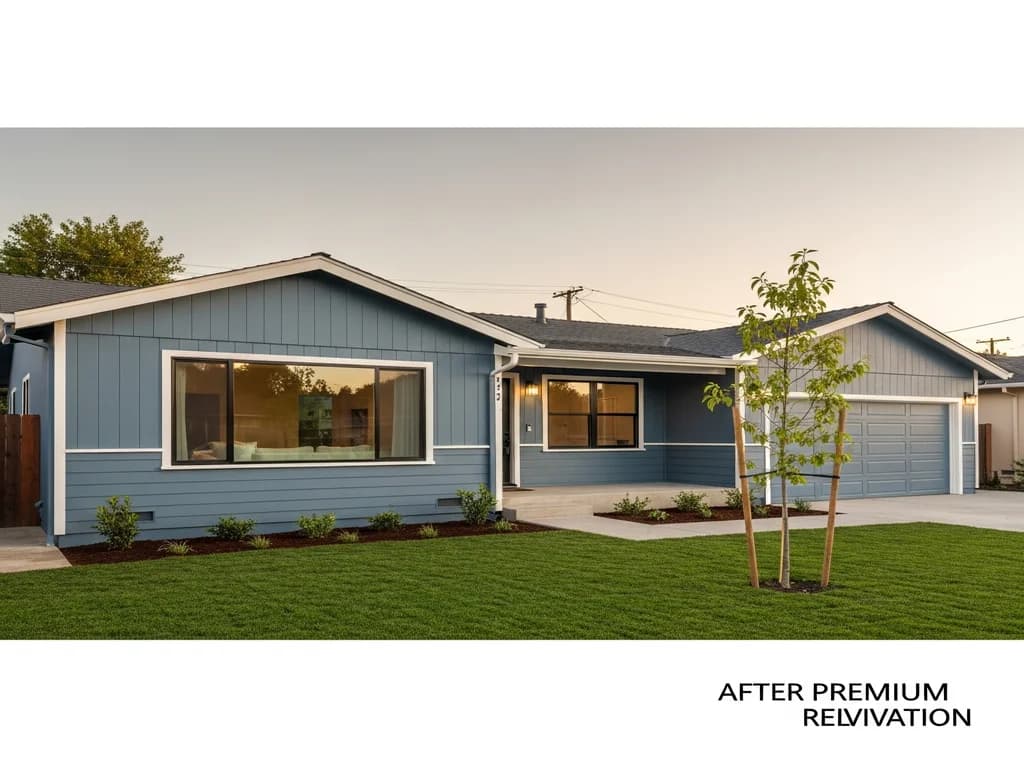
Palo Alto's Eichler stock has distinctive horizontal mass and clean lines that warrant careful product selection. Hardie Reveal panels or modern lap profiles in confident colors read era-correct, while traditional craftsman-style detailing does not fit and looks costumed on these homes. Modern custom rebuilds are increasingly common and call for the premium tier outright. Getting the product language right matters as much as the budget, because the wrong profile undermines an expensive job. James Hardie's own ColorPlus technology is part of why these factory-finished panels hold confident modern colors cleanly over time, which suits the design expectations of this market better than a field-painted finish would.
How neighborhoods shape the re-side
Scope and price track closely with which pocket of town a home sits in. The flat-roofed Eichlers were built with floor-to-ceiling glass, exposed post-and-beam framing, and minimal eave overhang, so a Hardie re-side has to respect tight reveal lines and clean butt joints rather than hide behind trim. That detailing slows installation and raises the labor share of the bid. In the larger two-story homes, more wall area, ornate trim returns, and mature landscaping right up to the foundation add staging, protection, and access time. Deep lots and narrow driveways limit where crews can stack planks and run a brake. None of this changes the product; it changes hours, prep, panel-versus-lap selection, and custom flashing, which is where Palo Alto bids separate from neighboring towns.
What the mild Peninsula climate means
Palo Alto sits in a forgiving bay-moisture band: low heat, low rainfall load, no snow, no salt spray, and modest wildfire exposure compared with foothill towns. That benign profile is good news for the budget because it lets the assembly stay conventional rather than hardened. You generally do not need heavy WUI ember detailing, soffit screening, or premium fire-rated venting, and there is no marine corrosion forcing stainless fasteners everywhere. Where spending actually goes is moisture management done right: a properly lapped weather-resistive barrier, careful kickout and window flashing, and color-fast factory finish so the exterior reads crisp for a design-conscious owner. Coastal fog rewards back-priming cut ends and clean ground clearance, but these are detailing line items, not structural upgrades that inflate the bid.
Comparing Palo Alto bids honestly
Verify three things in any Palo Alto bid: that architectural fit is itemized, that premium product spec is appropriate to the home rather than over- or under-specified, and that City of Palo Alto permit and inspection cost is line-itemed. Eichler context warrants special design attention, so a bid that treats one of these homes like a generic tract re-side is missing the point and probably the detailing budget. For homeowners deciding between profiles, our fiber cement siding service walks through how lap and panel options behave, and the Hardie Reveal panel system guide shows the detailing that makes a modern Palo Alto facade read clean rather than busy.
Getting the product spec right for the home
On premium Peninsula work the product decision is as consequential as the price, which is why our James Hardie siding service is scoped around matching profile, reveal, and finish to the specific architecture rather than defaulting to a single look. A confident modern color on a Reveal panel suits an Eichler; a warm traditional lap suits a period two-story; the wrong choice wastes a large investment. James Hardie's product information is a useful reference for the profile families available, and we pair that catalog knowledge with on-site judgment about how each option reads against the home's massing, glass, and neighbors before any spec is committed to the written estimate.
Palo Alto Hardie price drivers at a glance
| Cost driver | Effect |
|---|---|
| Premium architectural context (Eichler, modern custom) | Top-tier product spec |
| City of Palo Alto permit and inspection | Real and itemizable |
| South Bay prevailing labor (premium tier) | Above standard Bay labor |
| Architectural review on heritage areas | Schedule factor |
| Hardie Reveal or premium product spec | Premium tier |
James Hardie scope bands in the Palo Alto area (for planning)
| Scope | Per sq ft of wall | Typical project total |
|---|---|---|
| Single-story Eichler or postwar, modern HardiePlank | $19–$26 | $42,000–$76,000 |
| Two-story custom rebuild with Reveal or premium profile | $24–$32+ | $62,000–$110,000+ |
| Premium custom with Architectural Collection | $28–$38+ | $80,000–$150,000+ |
Typical Hardie planning range for the Palo Alto area — a general California market range, not a Sierra Siding quote. City permit/inspection cost is included. Premium architectural specs apply on most projects here. Final number is set on-site after architectural review — your written estimate is what governs.
Key takeaways
- Palo Alto sits at the top of the Bay tier on most Hardie projects
- The product is the same; hours, detailing precision, and review drive the spread
- Eichler and modern stock warrant specific Reveal or modern lap spec, not craftsman detailing
- Neighborhood, wall area, and access shape labor more than square footage alone
- Mild Peninsula climate trims survival hardening; dollars go to flashing and finish
- Verify architectural fit, product spec, and permit cost are itemized before comparing
FAQ
Quick Answers
Yes. Flat panel with intentional reveals reads era-correct on the Eichler vocabulary and is a strong direction for these homes.
Not city-wide, but several neighborhoods have associations with design review, and some Eichler-area homes have architectural review through preservation programs.
The product is the same. The difference is upper-tier South Bay labor, more involved city permitting, architectural review time, and the detailing precision these homes demand.
Usually not. Wildfire exposure here is modest, so the assembly stays conventional and dollars go to moisture detailing and finish quality instead.
On Eichler and modern stock, no. It reads wrong-period and costumed. Clean modern lap or Reveal panel suits the architecture far better.
Sources
Authoritative references
- James Hardie — official product & installation resources
- Contractors State License Board (CSLB) — verify a California contractor
- Zonda — 2025 Cost vs. Value Report (exterior remodel ROI)
External links to government, code, and manufacturer sources. Sierra Siding is not affiliated with these organizations; references are provided for verification.