James Hardie Siding in Mountain View
Mountain View's defining tension isn't weather — the bay-moisture climate is gentle — it's preservation versus rebuild. The city's dense Eichler tracts sit on land valuable enough to tear down for, so the real James Hardie question here is whether a re-side keeps an original Eichler honest or quietly modernizes it past recognition.
Re-cladding an Eichler without losing the Eichler
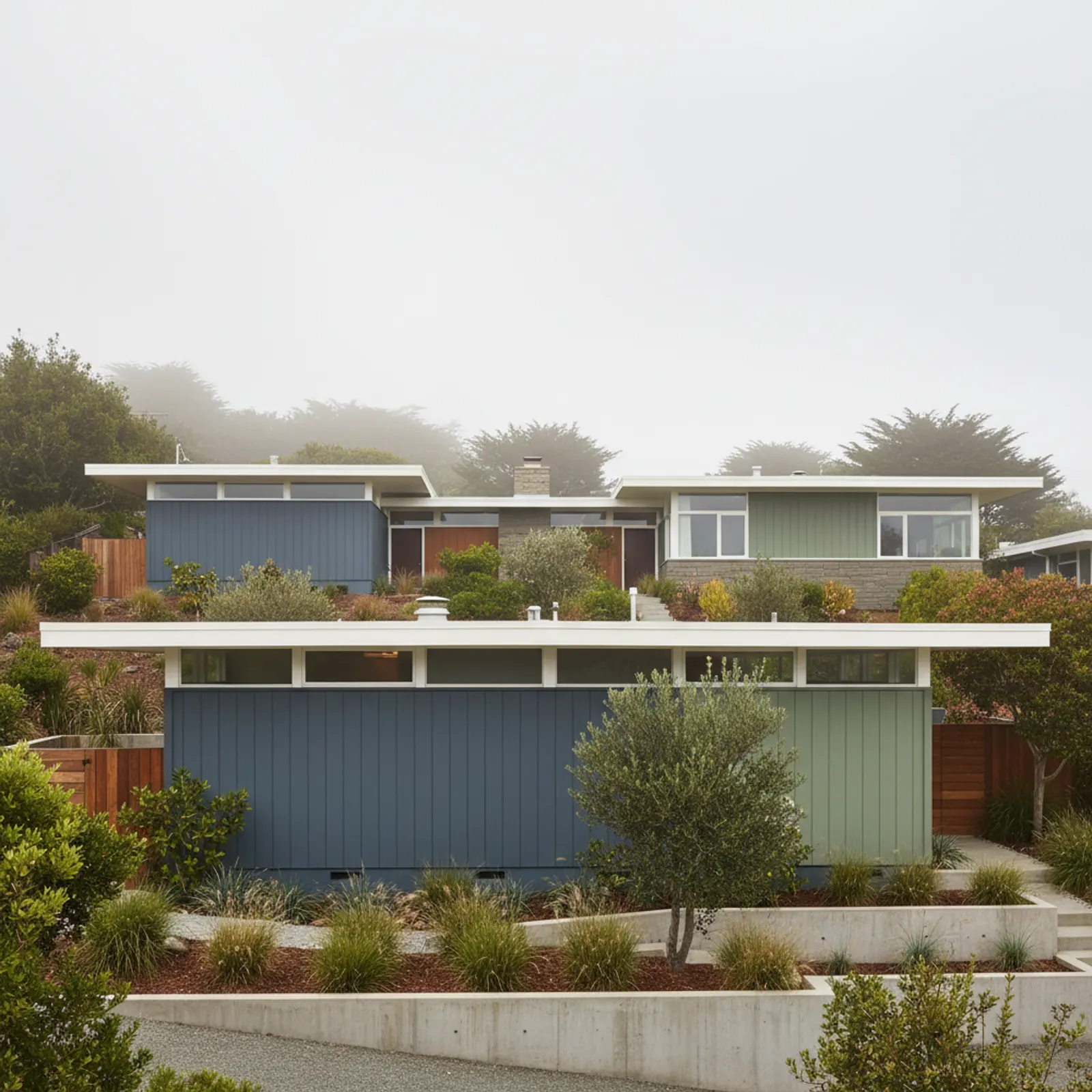
An Eichler's whole identity is in its flat planes, tight reveals, and post-and-beam rhythm. Done wrong, fiber cement bulks those lines and the house stops reading as mid-century. We use flat-panel Hardie with deliberately tight reveal spacing and minimal trim so the result is a more durable Eichler, not a generic modern box where one used to be — that restraint is the entire job on these blocks.
Why the payoff here is decades, not weather
Nothing about Mountain View's climate is hard on cladding, so we're honest that this isn't a survival upgrade. The value is a finish that stays exact for decades on a high-scrutiny home — installed to Hardie's gap, fastening, and clearance spec so the ColorPlus and product warranties hold, on a house the next owner will inspect closely.
Postwar ranches off El Camino and the all-in re-side
Mountain View's identity isn't only Eichlers. The postwar ranch tracts threading off El Camino Real and toward the Sunnyvale line carry low-slung gable rooflines, wide eave overhangs, and original board or stucco that has long outlived its useful life. On these homes James Hardie behaves very differently than it does on a flat-roofed Eichler: there is room for HardiePlank lap or HardieShingle to add texture without fighting the architecture, and the deep eaves give natural protection that lets the cladding earn its full warranty. The scope that comes up most on these blocks is a complete tear-off rather than an overlay, because the underlying sheathing and house wrap on a sixty-year-old ranch rarely meet current standards. We strip to the studs, correct the weather barrier, then run lap with consistent exposure so the horizontal lines read clean from the curb. Done this way, a tired postwar ranch near downtown reads as intentionally updated rather than patched, and the owner stops chasing paint and rot every few years.
Tight lots, neighbor setbacks, and staging the work in Mountain View
A large share of the re-side work here happens on compact lots in dense neighborhoods between downtown and Los Altos, and the logistics shape the job as much as the product does. Many of these homes sit close to the side property line, so swinging full sheets of James Hardie, setting up cut stations to control silica dust, and staging scaffolding all has to happen in a narrow side yard without spilling onto a neighbor's parcel. We plan cut zones and dust capture before the first board comes off, because mature landscaping and tight fences leave little margin for error. Mountain View permitting is straightforward for like-for-like re-cladding, but any change that touches the building envelope or pushes into a setback can trigger additional review, so we confirm scope against the city's requirements up front. On streets where homes are only feet apart, sequencing one elevation at a time keeps the site secure, limits the days a wall sits open to the weather, and keeps the relationship with the folks next door intact through the project.
Why this matters in Mountain View
- Specified for South Bay / Peninsula conditions
- fiber cement with modern profiles as the recommended system
- Correctly detailed weather-resistive barrier and flashing
- Installed by a crew with 20 years combined experience
Recommended systems for Mountain View
- fiber cement with modern profiles
- factory finishes
- custom trim
James Hardie Siding for Mountain View homes
The full james hardie siding approach — materials, weather-resistive detailing, and the manufacturer standards we install to — is covered on the main service page, then specified for Mountain View's conditions on this one.
Our Mountain View process
- Step 1
Consultation
We listen to your goals and assess your home on site — exposure, substrate, and architecture.
- Step 2
Design & Proposal
A clear written proposal with the right system specified for your climate and a transparent scope.
- Step 3
Expert Installation
Trained crews install to manufacturer best practices with careful weather-management detailing.
- Step 4
Walkthrough & Support
A final walkthrough, full cleanup, and a clear written record of the scope completed — work we stand behind.
FAQ
James Hardie Siding in Mountain View — FAQ
Only if it's done without restraint. The risk on an Eichler is exactly that — losing the flat-plane proportions. We spec tight-reveal flat panel and minimal trim specifically so the home still reads as a preserved Eichler, not a modern replacement.
Not for weather — we'll say that plainly. The case is decades of stable finish and near-zero upkeep on a high-value, closely-scrutinized home, not climate protection. If that math doesn't work for your situation we'll tell you.
Restrained, era-true tones — warm grey, slate, warm white — in factory ColorPlus, chosen against the home's original palette so it reads as authentic mid-century rather than a current trend applied to an old house.
Keep Exploring
More for Mountain View homeowners
More in Mountain View
Other exterior services in Mountain View
Nearby Service Areas
James Hardie Siding near Mountain View
Back to
Santa Clara County & Mountain View
Helpful Exterior Guides