

9 min read · Buyer's Guide
The most important decision in a siding project isn't the material — it's the contractor, because the same boards installed two different ways produce two completely different outcomes, and the failures hide behind a finished surface where you can't see them for years. The fastest way to tell a craftsman from a closer is to ask a handful of specific questions and listen to how they answer: a reputable California contractor offers a verifiable CSLB license, current insurance, a detailed written contract, and a fluent explanation of the wall system behind the siding, while an evasive one tips their hand on exactly those points. This guide walks through the twelve questions worth asking every contractor you interview, plus what a genuinely good answer sounds like, so you can filter out the operators you don't want before they ever touch your home. Pair it with our list of siding contractor red flags for the warning signs that should end a conversation early. Used together, these questions and flags let you choose with confidence and protect both your money and your house.
1. What's your CSLB license number — and is it the right classification?
In California this is non-negotiable. Any contractor performing siding work of this size must hold a current Contractors State License Board license, and you can verify it yourself in seconds at the CSLB website. A good answer is the number offered without hesitation. Then do the legwork: confirm it's active, in an appropriate classification for exterior work, and that it matches the exact business name on your contract — a license tied to a different name or a lapsed status is a problem. Check the bond and workers' comp status shown on the same record, and scan for any disclosed accusations or revocations. A clean, verifiable license is the floor, not the ceiling, but a contractor who can't clear it shouldn't be on your shortlist. Learn more about how we work and the credentials we put in writing.
2. Are you insured, and do you carry workers' comp?
Ask for proof of general liability insurance and, if they employ a crew, workers' compensation — and ask for the certificates, not a verbal assurance. This protects you directly: if a worker is injured on your property or a falling panel damages your roof, car, or neighbor's fence, you don't want that exposure landing on your homeowner's policy or, worse, on you personally. Uninsured contractors quote lower precisely because they've skipped this cost, and that savings becomes your risk. A legitimate operator provides current certificates without fuss and won't bristle at you calling the carrier to confirm coverage is active. 'We're careful, we don't need it' is not an acceptable answer. Adequate coverage is part of what separates a real business from a truck and a phone number, and it's worth confirming before anyone climbs a ladder on your house.
3. Will I get a detailed written contract — and can I read the full scope?
Everything should be in writing: scope, materials by brand and product line, price, payment schedule, timeline, exclusions, and how changes are handled. A detailed written contract protects both sides and is your only reference if something is disputed. Be wary of anyone who wants to work on a handshake or a one-line estimate, because the contract is where the real agreement lives and where corners get cut when it's vague. Read the scope line by line: two bids can show the same bottom line and describe completely different jobs once you see whether house wrap, flashing, trim, and edge priming are included or quietly omitted. The CSLB recommends getting all promises in writing for exactly this reason — verbal assurances rarely survive a busy job site. If a bid won't commit to specifics, the cheaper bidder wins by leaving things out, then adds them back mid-project.
4. Who actually does the work, and who supervises it?
Find out whether the crew is the contractor's own trained team or rotating day labor, and who runs the job day to day. Siding quality lives in the small, repetitive details — fastener depth, gap spacing, flashing laps — and a consistent, experienced crew with real on-site supervision produces dramatically better results than an anonymous crew assembled per job and left unmanaged. Ask who your point of contact is, how to reach them during the day, and who inspects the work before it's called finished. If specialty subcontractors handle parts of the job, that's fine, but you should know who's accountable for the whole and that their work is covered under the same warranty. Whether you're doing a single home, a multifamily siding project, or a commercial siding building, knowing who's on your property and who answers for the result is fundamental to a job that goes well.
5. How will you detail the wall behind the siding?
This is the question that separates a finisher from a craftsman. The boards are only the visible part of the system — the weather-resistive barrier, flashing at every window, door, and roofline, ground clearance at the bottom course, and ventilation behind the cladding are what determine whether the wall lasts thirty years or rots in eight. A contractor who can speak fluently about the weather barrier and flashing is one who builds walls that shed water instead of trapping it. Listen for specifics: how they integrate the WRB with window flashing, whether they use a rainscreen gap, how they detail kick-out flashing where a roof meets a wall. Vague answers here — 'we just put it up the normal way' — are a serious warning, because moisture intrusion is the single most common cause of premature siding failure, and it's invisible until the damage is extensive. Our approach to weather-resistant exteriors is built around getting these hidden layers right.
6. What warranty do I get — on materials and on labor?
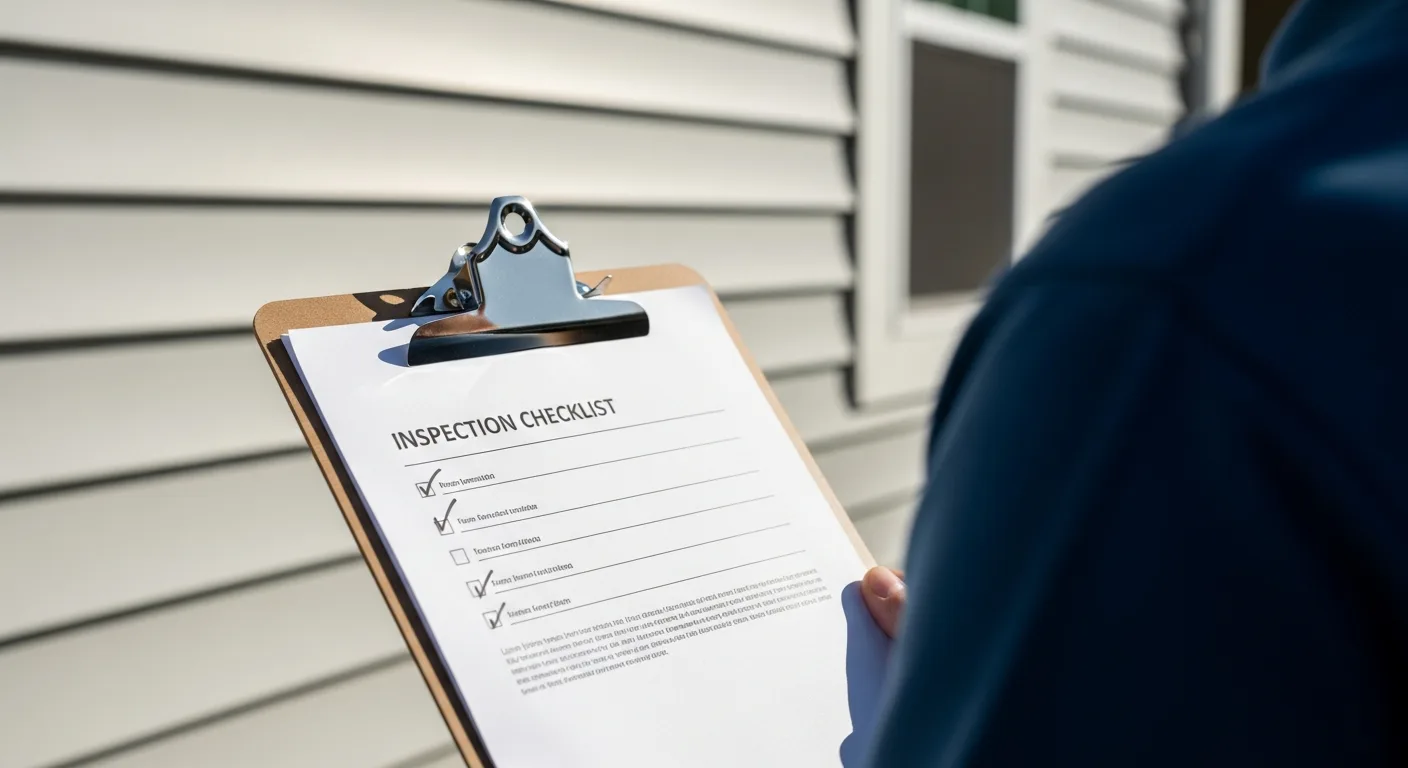
There are two distinct warranties, and you need both in writing. The manufacturer's warranty covers the product itself — and it only applies when the contractor follows the specified fasteners, gap spacing, and clearances, so a sloppy install can void it. The contractor's workmanship warranty covers the installation. Ask about both, get the terms and durations in writing, and ask exactly how warranty service works if something fails after the job: who do you call, what's the response, and is labor covered or just materials. A contractor confident in their work stands behind it without hedging. Also confirm who registers the manufacturer's warranty — you should hold that paperwork yourself, not leave it with the crew. See how we handle our workmanship warranty. For premium engineered products, you can review coverage straight from the source, such as James Hardie, and confirm your contract names the specific product line that warranty applies to.
7. Can I see recent work and talk to past clients?
Ask for photos of completed projects and references you can actually contact — ideally jobs similar to yours in material, age of home, and scope. Real references and a genuine portfolio are easy for an established contractor to provide; reluctance, or only being able to show generic stock images, tells you something important. When you call references, ask the questions that surface real performance: did the job finish on schedule, were there surprise charges, how was cleanup, and would they hire the contractor again. If you can, ask to drive past a completed project a few years old, because siding that still looks crisp after several California summers is the best portfolio there is. Online reviews help too, but verifiable, contactable references carry more weight. A contractor who installs James Hardie siding or LP SmartSide siding regularly should have no trouble pointing you to homes you can see and owners you can call.
8. Will you pull the required permits?
Significant siding work often requires permits, and the contractor should handle them as part of the job. A contractor who suggests skipping permits 'to save time or money' is exposing you to problems at resale, with code compliance, and with your insurance if a claim ever depends on the work being permitted. Pulling permits is also a sign they're operating legitimately and expect their work to pass inspection — which is exactly what you want. In wildfire-prone areas this matters even more, because the inspection is what verifies the exterior assembly meets the state's ignition-resistant requirements under the 2025 California Wildland-Urban Interface Code. A contractor steering you away from permits in a fire-hazard zone is steering you away from the very inspection that would catch a noncompliant wall. Treat the willingness to permit as a feature you're paying for, not a cost to dodge.
9. What's the payment schedule?
Understand exactly when money is due and what each payment is tied to. California law caps a home-improvement down payment at $1,000 or 10% of the contract price, whichever is less — a contractor demanding 30%, 50%, or full payment upfront, especially in cash, is either ignorant of the law or planning to take your money. Healthy payment schedules tie progress payments to project milestones, with a meaningful balance withheld until the work is complete and you've inspected it. This matters enough that it has its own guide — see contractor deposit and payment rules for the legal limits and what a fair schedule looks like. Never let payments get ahead of completed work; if you've paid for more than what's on the wall, your leverage is gone. If you need to spread the cost over time, ask about financing options rather than fronting a large lump sum the law doesn't allow them to demand.
10. What's the timeline, and what could delay it?
Ask for a realistic start and completion window and what typically causes delays — weather, material lead times, or hidden damage found during tear-off. An honest contractor gives you a range and names the variables rather than promising an unrealistically fast finish to win the job. Be skeptical of anyone who guarantees a tight timeline before they've scoped the work, because the contractors who over-promise on speed are often the ones juggling too many jobs and rotating crews off yours. Ask how many other projects they'll be running simultaneously and whether your crew stays on-site start to finish or disappears for days. A predictable, sequenced schedule — which walls come off when, how your entries stay accessible — signals an organized operation. The honest version of project duration, including what stretches a job and what doesn't, is covered in how long a re-side takes. A contractor who can talk through the variables candidly is one who'll communicate when something shifts mid-project.

11. How do you handle dry rot, pest damage, and surprises behind the old cladding?
On almost any re-side, the crew finds something once the old material comes off — soft sheathing, leaking window flashing, carpenter ant galleries, or framing that wicked moisture for years. The question isn't whether surprises happen; it's how the contractor prices and communicates them. A good answer describes a clear process: they stop, photograph the condition, show you the damage, and issue a written, priced change order before any extra work proceeds. Be wary of 'we'll deal with it as we go,' because that phrasing often precedes an open-ended bill at the end. Ask whether the estimate includes a contingency for hidden repairs and how repair labor is rated versus the main install. If discovered rot is structural, you may need a focused dry rot repair or siding repair phase before the full re-side continues — and covering compromised sheathing only hides the next failure. For a sense of how these add-ons move a budget, our hidden costs of siding replacement guide walks through where surprise line items typically land.
12. What siding material do you recommend for my exposure — and why?
A contractor who recommends the same product on every home isn't reading your house. Ask why they're steering you toward a given material for your specific wall orientation, climate zone, and fire exposure. A west-facing wall that bakes in afternoon sun behaves very differently from a shaded north elevation, and a foothill lot in a high fire-hazard zone carries requirements a sheltered subdivision does not. A thoughtful answer weighs fire performance, moisture handling, expansion and contraction, and how the product ages in your microclimate — not just price per square foot. In wildfire-prone parts of the state, noncombustible or fire-resistant siding is often the smarter long-term choice, and the standards behind those ratings are published by CAL FIRE. If you're comparing options, our breakdown of fiber cement siding explains why it performs well across most California exposures. Someone who can articulate what they'd choose differently on the shaded side of the same house is thinking like a builder, not a salesperson closing a quota.
How will you protect my property — and handle older painted surfaces?
A re-side is messy and disruptive, and how a crew runs the site tells you how they'll treat the parts of the job you can't see. Ask what they do to protect plantings, irrigation lines, AC condensers, and walkways under the work zone, and whether they cover or move patio furniture and vehicles before tear-off begins. Old cladding releases nails and debris across a yard, so ask how they contain it daily, not just at the end. If your home predates the late 1970s, ask directly how they follow lead-safe work practices, because disturbing old painted surfaces carries real exposure for your family and pets — a professional contractor is certified for this and won't dodge the question. A good answer covers daily broom-and-magnet cleanup, drop cloths over delicate beds, and a named contact you can reach while you're at work. If you're also updating window replacement or exterior painting during the project, confirm how those trades are sequenced so the site stays orderly. Crews that describe a tidy, predictable routine tend to bring the same discipline to flashing and fastening.
Reading two bids that look identical — what to compare
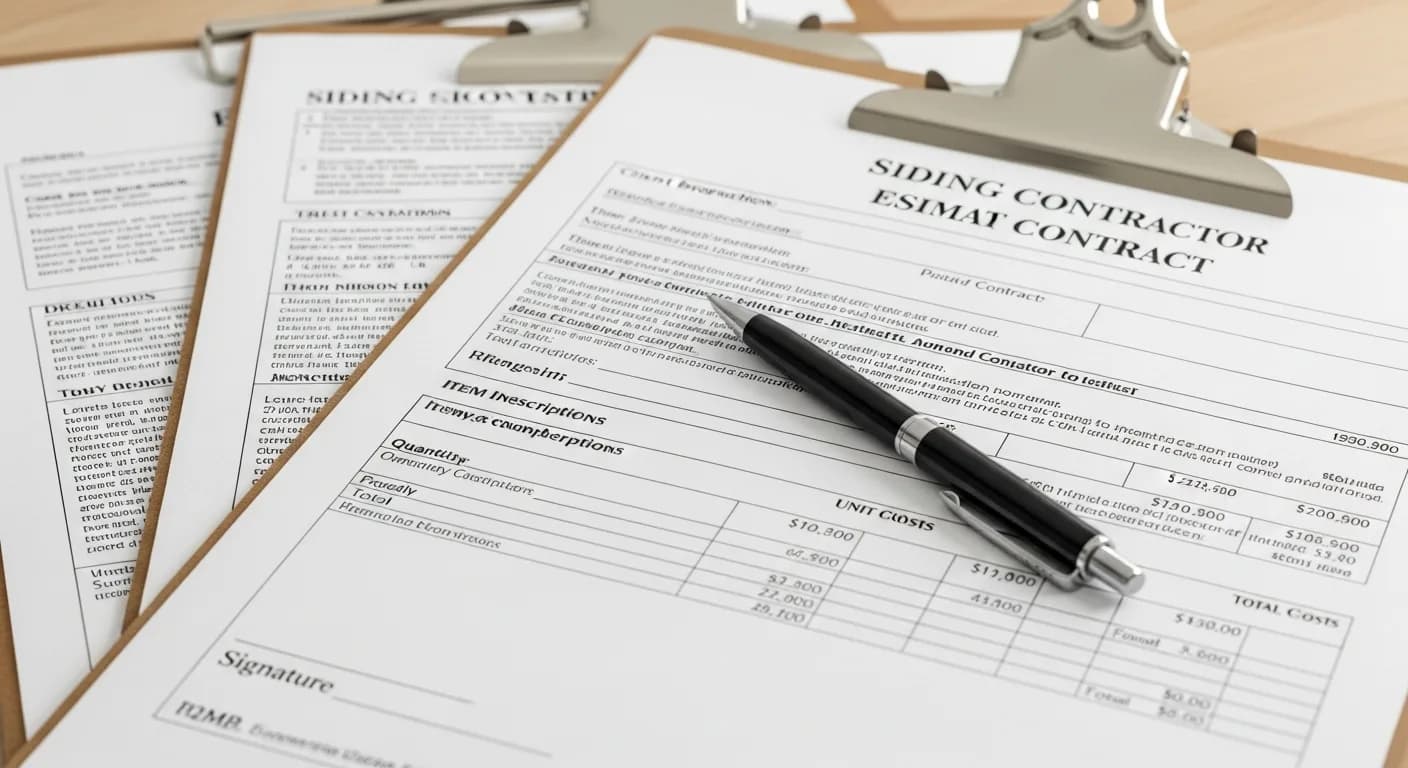
After collecting three estimates, homeowners often gravitate to the cheapest, but on exterior work the lowball bid is frequently the most expensive choice in disguise. A number thousands under the others usually means the contractor plans to skip steps you can't see, intends to return with 'unforeseen' change orders once you're committed, or is buying the job to fund another crew's payroll. The hidden steps matter most: a proper install includes the weather-resistive barrier, correct flashing, adequate fastening, and clearance at the bottom course — exactly the line items that vanish from a suspiciously low quote and exactly the ones that cause water intrusion years later. Compare bids on what's actually included, not just the total, and make sure each names the same brand, product line, and color so substitution can't recover margin quietly. Calibrate against real ranges first; our California siding cost guide shows what materials and labor genuinely run. If a bid is far under the realistic floor, ask line by line what's being left out before you celebrate the savings, and reference the ranges in the table above to gauge whether a number is plausible.
Putting the questions to work
The point of these questions isn't to interrogate — it's to surface how a contractor operates before you commit a large sum and weeks of disruption. Verify the license on the Contractors State License Board, get every answer in writing, and watch for the red flags that should end a conversation. A contractor confident in their work welcomes the scrutiny, just as a fair deposit and payment schedule signals an honest operation. Use the answers to compare bidders on the same scope rather than on a single bottom-line number, and don't be rushed by artificial urgency. When you're ready, the best next step is to put a contractor to the test on your actual house: a real scope comes from a real site visit, not a phone quote. Working with a qualified exterior contractor who answers all twelve questions plainly is how good re-sides happen. If you'd like to see how we answer them, learn more about how we work or get a free on-site estimate and judge for yourself.
Key takeaways
- A CSLB license number you can verify — active, correct classification, matching the business name — is the non-negotiable first question in California
- Insist on certificates for general liability insurance and workers' comp; it protects you, not just the crew
- Everything belongs in a detailed written contract read line by line: scope, named products, price, schedule, exclusions, and change-order process
- How a contractor describes the wall behind the boards — WRB, flashing, clearance, ventilation — reveals real skill
- California caps the down payment at $1,000 or 10%; healthy schedules tie payments to milestones, never full payment upfront
- Get both warranties — manufacturer and workmanship — in writing, and hold the registration paperwork yourself
- Ask how surprises like dry rot are priced: a written, photographed change order before extra work, not an open-ended bill
- A reputable contractor welcomes these questions and compares apples to apples on the same scope; evasiveness is itself an answer
FAQ
Quick Answers
Start with their CSLB license number, proof of general liability insurance and workers' comp, and a detailed written contract. Then ask who actually does the work and supervises it, how they detail the wall behind the siding, the material and workmanship warranties, references you can contact, whether they pull permits, the payment schedule, the timeline, and how change orders and hidden damage are handled. How candidly they answer matters as much as the answers themselves.
Look up the license number at the CSLB website (cslb.ca.gov) and confirm it's active, in an appropriate classification for exterior work, and matches the exact business name on your contract. Check the bond and workers' comp status on the same record and scan for disclosed accusations. A legitimate contractor provides the number without hesitation and won't object to you verifying it.
California law caps a home-improvement down payment at $1,000 or 10% of the contract price, whichever is less. A contractor demanding 30%, 50%, or full payment upfront — especially in cash — is either unaware of the law or planning to take your money. Healthy projects tie progress payments to milestones, with a balance withheld until the work is complete and inspected.
Yes. Ask for current general liability insurance and, if they have employees, workers' compensation, with certificates as proof you can verify with the carrier. This keeps liability for injuries on your property or damage to your home from falling on you as the homeowner. Uninsured contractors quote lower because they've skipped this cost — and that savings becomes your risk.
Because that's where walls succeed or fail. The weather-resistive barrier, flashing at every opening, ground clearance, and ventilation determine how long the wall lasts and whether water gets trapped behind the cladding. A contractor who speaks knowledgeably about the full system, not just the boards, is one who builds durable work — and moisture intrusion, the most common cause of premature failure, is invisible until the damage is extensive.
Yes — significant siding work often requires permits, and a legitimate contractor handles them as part of the job. Anyone who suggests skipping permits to save time or money is creating resale and code-compliance problems for you, and in wildfire zones is bypassing the inspection that verifies the exterior meets ignition-resistant requirements. Treat the willingness to permit as a feature you're paying for.
Expect a manufacturer's warranty on the product and a separate workmanship warranty from the contractor, both in writing. The manufacturer's coverage usually applies only when the install follows specified fasteners and clearances, so quality work protects it. Ask exactly how warranty service works after the job, whether labor is covered, and confirm you hold the registration paperwork yourself.
A good contractor stops, photographs the condition, shows you the damage, and issues a written, priced change order before doing any extra work. Be wary of 'we'll deal with it as we go,' which often precedes an open-ended bill. Ask whether the estimate carries a contingency for hidden repairs and how repair labor is rated versus the main install — discovered damage should be a documented decision you make together, not a quiet upcharge.
A bid thousands below the others usually means hidden steps are being skipped — the weather barrier, proper flashing, adequate fastening, edge priming — or that 'unforeseen' change orders will appear once you're committed. Those omitted line items are exactly what cause water intrusion and rot years later. Compare bids on what's actually included and confirm each names the same brand, product line, and color so cheaper substitutions can't recover margin quietly.
Read the scope, not just the total. Confirm each bid names the same specific product, includes the same tear-off and disposal allowance, and itemizes house wrap, flashing, trim, soffit, fascia, caulking, and edge priming rather than burying them. Ask each contractor for a written estimate built on identical scope so the numbers are genuinely comparable, and use a trusted cost reference to sanity-check whether any figure is realistically achievable.
Sources
Authoritative references
- Contractors State License Board (CSLB) — verify a California contractor
- CSLB — Home Improvement Contracts & Down Payment Limits (CA B&P Code §7159)
External links to government, code, and manufacturer sources. Sierra Siding is not affiliated with these organizations; references are provided for verification.