
7 min read · Hardie
HardiePanel is James Hardie's flat fiber-cement sheet, and it is the base product behind several distinct California looks — board-and-batten, clean modern flat-panel, and revealed-joint installations. The panel itself is simple; what you do at the seams determines whether the wall reads as a modern farmhouse, a contemporary box, or an architectural showpiece. Here is the complete picture of what HardiePanel is, where it fits, and how the look is actually achieved.
What HardiePanel actually is
HardiePanel is a flat fiber-cement sheet, typically four feet wide by eight, nine, or ten feet tall, available in smooth and stucco textures (and a cedarmill grain in some lines). On its own it is a plain panel; the architectural character comes from how the vertical seams are treated. Add battens over the seams and you get board-and-batten. Caulk the seams flush and you get a clean modern surface. Hold the joints open intentionally and you get a revealed-joint look. Because it is fiber cement, the panel carries the same non-combustible, dimensionally stable, rot- and pest-resistant properties as the rest of the James Hardie siding family — a real advantage on California fire-exposed parcels.
Board-and-batten — the dominant California application
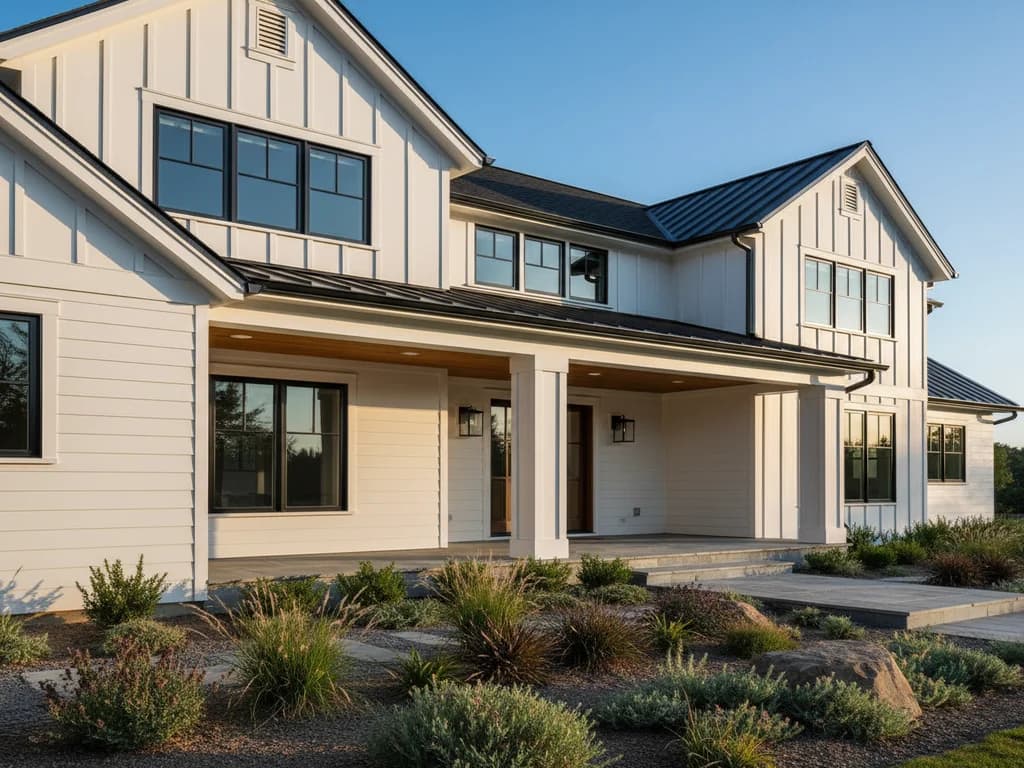
Board-and-batten is the highest-impact and most-requested HardiePanel use on California modern-farmhouse, contemporary-craftsman, and tract-upgrade work. Panels install vertically, then battens — usually Hardie Trim in roughly one-and-a-half to two-inch widths — cover the panel seams at a regular interval. The result is strong vertical emphasis with real shadow-line depth, which is why it photographs so well and reads as a deliberate design statement. Batten spacing is a design decision: tighter battens read cottage-scale and busier, wider spacing reads modern and calmer. We mock up batten layout on the elevation so the rhythm lands before anything is fastened.
Modern flat-panel and revealed-joint applications
On intentionally contemporary architecture, HardiePanel installs as flat panel with caulked seams that read clean rather than emphasized — a quieter, more minimal surface than board-and-batten that depends on tight, well-detailed joints. The related approach is the Hardie reveal: the same panel installed with deliberate open joints, often with a metal reveal trim, so the seam becomes an architectural feature rather than something to hide. Both looks demand contemporary massing to feel right; dropped onto a traditional craftsman they look unfinished. Our fiber-cement siding scoping walks through which of these fits a given elevation.
Panel sizes, seams, and water management
Standard panels are four feet wide by eight, nine, or ten feet tall. The four-foot width is constant for install efficiency, while panel height is matched to wall height wherever possible to avoid horizontal seams. On walls taller than ten feet to the plate, a horizontal joint is unavoidable, and that joint must be detailed with Z-flashing so water sheds outboard of the panel below rather than tracking behind it. Proper flashing, fastener spacing, and clearance to grade and roofing are where a panel job succeeds or fails over time — the panel is forgiving, but the details are not.
How HardiePanel compares on cost
Board-and-batten built from HardiePanel plus battens generally runs modestly above an equivalent area of lap siding, because the panel material is similar in cost but you are adding and fastening separate batten pieces and detailing every seam. Modern flat-panel without battens often lands at or slightly below lap-siding cost, since there are fewer pieces to handle even though seam caulking is more exacting. Revealed-joint work sits at the top of the range because the trim and tolerances are tighter. We itemize panel versus batten versus trim labor on the written estimate so you can see what each design choice is buying.
Texture, finish, and color choices
HardiePanel comes in smooth and stucco textures, and the choice changes the character significantly: smooth reads clean and modern, while a textured face softens the look and hides minor surface variation. Finish is the other decision — factory ColorPlus or field paint. For most California exposures we recommend the baked finish for fade and chalk resistance, especially on south and west elevations; details are on the James Hardie ColorPlus page. On board-and-batten, contrasting the batten color against the panel field is a common and effective way to emphasize the vertical rhythm without changing the architecture.
Where HardiePanel fits — and where it doesn't
HardiePanel earns its place on modern farmhouses with board-and-batten, contemporary homes with flat-panel or reveal installs, ADUs and outbuildings where a simple modern read is appropriate, and accent elevations such as a board-and-batten gable on an otherwise lap-sided home. It is the wrong tool for traditional craftsman vocabularies that want lap siding, for Spanish-revival or Mediterranean architecture, and for period restorations where the original was never board-and-batten. The honest test is whether the look serves the building's architecture rather than fighting it — we scope that on site before specifying panel.
HardiePanel application options
| Application | Look | Cost vs HardiePlank |
|---|---|---|
| Board-and-batten (panel + battens) | Vertical lines emphasized | +10-20% |
| Modern flat-panel with caulked seams | Clean modern surface | Similar or slightly below |
| Hardie Reveal (intentional reveal joints) | Contemporary architectural | +15-25% |
| Whole-body or accent walls | Per design intent | Per scope |
Key takeaways
- HardiePanel is a flat fiber-cement sheet; the seam treatment creates the look
- Add battens for board-and-batten, caulk flush for modern, open joints for reveal
- Standard panels are four feet wide by eight, nine, or ten feet tall
- Walls over ten feet need a horizontal seam detailed with Z-flashing
- Board-and-batten runs modestly above lap; flat-panel often at or below it
- Best for modern farmhouse and contemporary; wrong for craftsman and Mediterranean
FAQ
Quick Answers
Yes. HardiePanel is James Hardie's vertical fiber-cement sheet, offered in smooth and textured finishes and commonly paired with HardieTrim battens for a board-and-batten look across California modern and farmhouse homes.
Only slightly. There is a bit more caulk to monitor at the batten and panel transitions, but otherwise maintenance is comparable to lap siding.
No. The product is engineered for vertical installation; horizontal orientation is not an approved application.
HardiePanel is the base flat panel. Reveal is that same panel installed with intentional open joints, often with reveal trim, rather than caulked flush seams.
Panel height is matched to wall height to avoid seams where possible. Above ten feet to the plate, a horizontal seam is required and is detailed with Z-flashing to manage water.
Smooth reads clean and contemporary; stucco texture softens the surface and hides minor variation. It is an aesthetic call tied to your architecture.
Sources
Authoritative references
External links to government, code, and manufacturer sources. Sierra Siding is not affiliated with these organizations; references are provided for verification.