
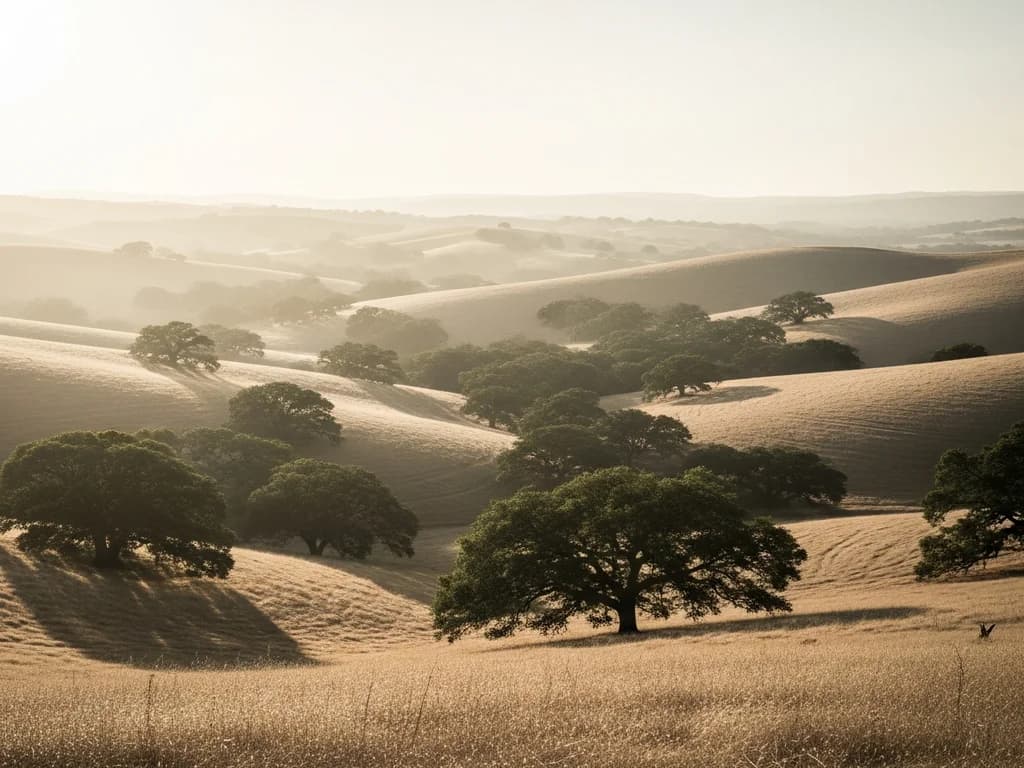
A valley-floor county anchored by Marysville and the rivers
Yuba County sits on the Sacramento Valley floor roughly forty minutes north of the capital, where the Feather and Yuba rivers join. Its housing concentrates on that valley floor: Marysville, the historic levee-ringed county seat with a genuinely old downtown and Victorian stock; Linda and Olivehurst, the large unincorporated communities spreading south and southeast near Beale Air Force Base; Wheatland, a small ag city to the south; and Plumas Lake, a newer master-planned community. A foothill edge climbs eastward toward the Sierra, but the bulk of the county — and the bulk of the re-side market — is flat, sun-loaded valley ground.
Aging stock and new tracts under the same hard sun
Across Yuba County a wide span of housing meets the end of its original cladding's service life under the same controlling stressor — relentless valley heat and UV. Marysville's older and Victorian-era homes, the post-war and economy stock through Linda and Olivehurst, Wheatland's small-town and farmhouse homes, and even the earliest Plumas Lake tracts all carry wood, hardboard, T1-11, or builder-grade siding that the sun has chalked, cupped, and faded on south and west walls. The county's open agricultural setting means little canopy on most lots, so unprotected elevations weather fast and a heat-durable re-side is both overdue protection and a real curb-appeal upgrade.
Utility, permit, and fire authorities across Yuba County
Yuba County has only two incorporated cities — Marysville (the county seat) and Wheatland — with the rest of the county unincorporated: Linda, Olivehurst, Plumas Lake, Smartsville, Browns Valley, Loma Rica, Dobbins, Oregon House, Camptonville, Challenge, and the Yuba River foothill communities. Each city runs its own community development department; unincorporated permits go through the Yuba County Community Development and Services Agency. Electric and gas are PG&E throughout, and the entire western foothill corridor is documented high-PSPS territory. Water is served by California Water Service (Cal Water) Marysville District, City of Wheatland, Linda County Water District (LCWD), Olivehurst Public Utility District (OPUD, which extends into Plumas Lake), plus private wells common on rural foothill acreage. Fire response is Cal Fire Butte Unit (on the north/east) and Cal Fire Nevada-Yuba-Placer Unit (NEU, on the foothill/south) as the primary wildland responders, alongside Marysville Fire, Linda Fire Protection District (covering Linda, Olivehurst, and Plumas Lake), Wheatland Fire Authority, Smartsville-Rose Bar FPD, and Dobbins-Oregon House FPD in the western foothills. Reclamation Districts and the U.S. Army Corps of Engineers maintain the Marysville levee system.
HZ10 climate and the Yuba County FHSZ landscape
Every parcel in Yuba County is in James Hardie's HZ10 climate zone; installing HZ5 anywhere in the county is a documented warranty misapplication. On the fire side, the valley-floor cities and communities (Marysville, Linda, Olivehurst, Plumas Lake, Wheatland) sit in Low or unmapped FHSZ territory under California's 2025 LRA Fire Hazard Severity Zone map — the Feather/Yuba levee-protected river-town ground is not a wildland-fire environment, but it does face FEMA flood-hazard framework (the January 1997 New Year's flood destroyed more than 100 homes in Linda and Olivehurst). Western foothill parcels (Smartsville, Browns Valley, Loma Rica, Dobbins, Oregon House, Camptonville) carry High to Very High designations where oak-woodland and conifer fuel cures fast. The 2020 Bear Fire / North Complex (318,935 acres, 16 fatalities) burned into northeastern Yuba County; the 1994 49er Fire is a longer-memory foothill reference. On foothill parcels the 2025 California Wildland-Urban Interface Code governs the exterior wall. Chapter 7A moved into the standalone WUI Code on January 1, 2026.
Climate and exterior risk in Yuba County
Long, hot, high-UV summers are the controlling exterior factor across Yuba County's valley floor. South- and west-facing elevations age fastest, and original wood, hardboard, T1-11, and economy vinyl typically reach end of life through chalking, cupping, and fading. The Feather and Yuba river corridor adds a moisture consideration on the lower-lying levee and flood-plain ground around Marysville, where humidity and seasonal high water raise the stakes on drainage-plane detailing. The open ag landscape leaves most homes with little shade, so UV exposure on unprotected walls is severe, and the daily and seasonal temperature swings stress joints and finishes year after year.
Wildfire exposure in Yuba County
Most of Yuba County carries low wildfire exposure — Marysville, Linda, Olivehurst, and Plumas Lake sit on the open valley floor where fields, levees, and irrigation, not wildland fuel, surround the homes. The honest exceptions are the rural grass margins and the county's eastern foothill edge climbing toward the Sierra. Around Wheatland's rural fringe, summer-cured grass raises ember exposure from negligible to a low-to-moderate seasonal consideration, and homes pushed against the eastern foothills carry more. For those parcels, non-combustible cladding and hardened detailing are a sensible step; for the valley-floor cities and communities, fire is not a driving factor in the spec.
Moisture, the rivers, and flood-plain edges
Snow is not a factor anywhere on the Yuba County valley floor. Moisture is concentrated along the Feather and Yuba river corridor and the levee-ringed flood-plain ground around Marysville, where seasonal high water, humidity, and the county's documented flood history make weather-resistive barrier, flashing, and bottom-course detailing especially important on lower-lying parcels. The same care applies to river-adjacent stretches through Linda and Olivehurst. The cladding material itself does not change for it — fade-resistant fiber cement still leads — but the drainage-plane detailing around it is given particular attention so the wall sheds and manages water where the rivers and flood plain raise the exposure.
Recommended materials for Yuba County
Fade-resistant fiber cement is the default across Yuba County for its heat durability and color stability under sustained valley UV, and its non-combustibility is a low-regret bonus toward the eastern foothill edge and the rural grass margins south of Wheatland. Factory-finished systems hold color far longer than field paint on the county's unshaded elevations. Engineered wood is acceptable on the many low-fire valley-floor parcels in Marysville, Linda, Olivehurst, and Plumas Lake where homeowners want deep wood character, while modern lap and board-and-batten programs modernize the county's older, post-war, and newer-tract stock effectively. Near the rivers, the cladding stays the same but the flashing and bottom-course detailing works harder.
Cities We Serve
Communities Across Yuba County
FAQ
Yuba County — Common Questions
Yes — Marysville, Linda, Olivehurst, Wheatland, Plumas Lake, and the surrounding Yuba County communities, all about forty minutes north of Sacramento within our core service area.
Re-siding aging builder-grade, post-war, and original homes in fade-resistant fiber cement, frequently paired with window updates and a modern color program for protection and resale value.
Generally not — Marysville, Linda, Olivehurst, and Plumas Lake are low-exposure valley-floor communities. The rural grass margins around Wheatland and the eastern foothill edge carry more, where non-combustible cladding is a sensible, low-regret choice.
Original wood, hardboard, T1-11, and economy vinyl was not specified for the valley's sustained UV load. Chalking, cupping, and fading on sun-facing elevations is the typical end-of-life pattern across the county's open, largely unshaded lots.
The cladding material stays the same fade-resistant fiber cement, but homes on the levee-ringed flood-plain ground around Marysville and along the river corridor get extra attention to weather-resistive barrier, flashing, and bottom-course detailing because of the added moisture and flood history.
Yes. Marysville has one of the region's older downtowns with genuine Victorian-era stock, and we choose profiles and trim that read as period-appropriate so durability is upgraded without erasing a home's historic character.
A correctly installed fiber cement system commonly performs 30+ years in the valley climate, with factory finishes extending the time before any cosmetic refresh on the county's sun-loaded elevations.
South- and west-facing walls take the heaviest afternoon sun and age fastest, especially on the open, low-canopy lots common across Linda, Olivehurst, the newer Plumas Lake tracts, and the ag fringe.