Exterior renovation in Marysville
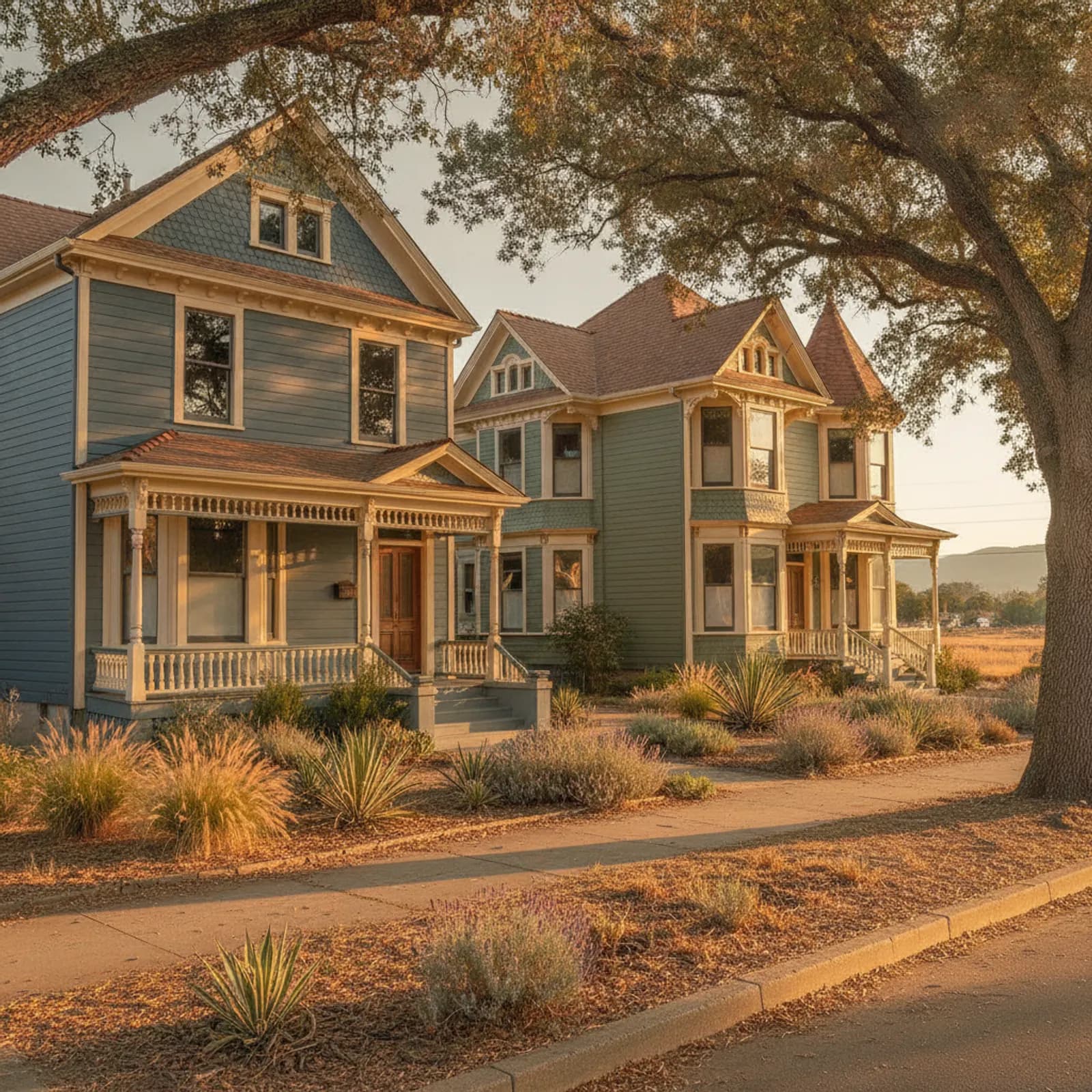
Marysville is the historic seat of Yuba County, a compact city literally ringed by levees at the confluence of the Feather and Yuba rivers. That setting shaped its housing: a genuinely old downtown grid holds Victorian, Queen Anne, and early-1900s cottage and bungalow stock from the Gold Rush and railroad era, surrounded by post-war ranch neighborhoods and modest river-flat homes that sit inside the levee system. A large share of all of it is now well past the service life of its original wood and economy cladding, weathered by sustained valley sun and, on the lower ground, by the river-corridor moisture and flood history that define the city.
Heat first, with a levee-and-river wrinkle
Marysville's controlling exterior stressor is the long, intense valley summer, which fades, cups, and opens joints on original cladding worst on south and west walls. But Marysville carries a moisture layer the inland valley cities don't share as sharply: the city sits behind levees in the Feather and Yuba flood plain, with a well-documented flood history, so humidity and seasonal high water raise the stakes on lower-lying and river-adjacent homes. The cladding answer stays the same fade-resistant fiber cement, but the drainage-plane detailing around it has to work harder here than almost anywhere else in the county.
Considering an exterior project in Marysville?
Marysville housing and architecture
Marysville's stock is older and more layered than most of Yuba County: Victorian, Queen Anne, and Italianate homes plus early-1900s cottages and bungalows in and around the downtown historic grid, broad post-war ranch neighborhoods that filled in mid-century, and modest river-flat homes on the lower ground inside the levees. The historic homes demand narrow, period-correct profiles, accurate trim proportions, and restraint — the wrong board width or a generic corner detail reads as a mistake on these old downtown streets. The ranch belts take a clean lap re-side well, and the river-flat homes benefit most from the moisture-aware detailing. We design to the era and the elevation, not to one template.
Built for Marysville's heat and river moisture
Marysville behaves as valley-heat country first: long, high-UV summers fade finishes and stress joints worst on south and west elevations, so fade-resistant factory-finished fiber cement and heat-aware gapping and fastening are the baseline. What changes here is the water. Marysville sits behind levees at the Feather and Yuba confluence in a flood plain with a real flood history, and the humidity and seasonal high water raise moisture exposure on the lower-lying and river-adjacent stock. The same wall has to beat the sun across the city and, near the rivers, also shed and manage more moisture through rigorous weather-resistive barrier, flashing, and bottom-course detailing.
Recommended materials for Marysville
James Hardie fiber cement with a factory finish is the core recommendation for Marysville: non-combustible, dimensionally stable in valley heat, color-stable under UV, and well suited to the river-corridor moisture when paired with correct detailing. On the historic downtown homes we select narrow lap profiles and trim that read as period-appropriate, so the upgrade reinforces a Victorian or Craftsman home's character rather than erasing it. On the post-war and river-flat homes, a continuous lapped weather-resistive barrier, flashed penetrations, kickout flashings, and correct bottom-course clearances handle the added moisture, while the factory finish resists the chalk and fade the valley sun drives.
What an exterior project costs in Marysville
Marysville pricing turns on home size and stories, profile and trim complexity — often markedly higher on the ornate historic homes where detailed trim and reveal matching add real scope — substrate and dry-rot condition once cladding is removed, window integration, and the weather-management scope. Two variables are particular to Marysville: the downtown's old homes most frequently reveal layered original siding and dry rot at demolition after a century of heat and river-corridor moisture, and the flood-plain detailing scope is heavier on the lower-lying river-adjacent parcels. We provide a written, scoped estimate after an on-site assessment so bids can be compared on substance rather than a headline number.
The historic downtown and Victorian core
Marysville's downtown grid and its surrounding Victorian, Queen Anne, and early-1900s cottage stock are the heart of the city's identity and the most demanding re-side work in Yuba County. These homes carry detailing expectations a generic re-side will visibly miss, so we match lap width, trim proportions, and finish to the era and respect the existing ornamentation. They are also the most likely to hide dry rot or multiple layers of original siding after a century behind the levees, which we plan for rather than discover mid-project. Getting the character right here protects both the home and one of the region's oldest streetscapes.
The levees, the rivers, and the flood plain
What truly sets Marysville apart is that the whole city sits inside a levee ring at the Feather and Yuba confluence, with a documented flood history. The lower-lying and river-adjacent homes are the most moisture-sensitive stock in the county, so we pair the same fade-resistant fiber cement with more rigorous drainage-plane work — flashing laps, kickout flashings, and bottom-course clearances — and check carefully for the dry rot that decades of valley sun and river humidity can leave behind on these flats.
Post-war ranch belts and resale
The mid-century ranch neighborhoods that filled in around the historic core are broad, horizontal elevations that take re-cladding cleanly with a clean lap profile and updated palette. Many still wear original hardboard or economy cladding the valley sun has chalked. In a county-seat market where the downtown's historic character anchors the city's appeal, an exterior that respects original proportions protects resale far better than a trend-chasing makeover, and predictable framing on these ranch homes usually keeps the scope estimable once a wall is opened and checked.
City of Marysville, California Water Service, and Marysville Fire
Working exteriors in Marysville coordinates with a few local authorities. Building permits come through the City of Marysville Community Development Department (Marysville is the Yuba County seat and the county's only incorporated city). Electric and gas are PG&E. Water is supplied by California Water Service (Cal Water) Marysville District, an investor-owned utility, and wastewater is a city responsibility. Fire response is the Marysville Fire Department (city) alongside CAL FIRE Butte Unit on wildland calls and Yuba County OES coordinating flood-related evacuations. Levee integrity is administered by the Marysville Levee District and the U.S. Army Corps of Engineers — flood plane management shapes many redevelopment permitting conversations here in ways it does not on higher ground.
HZ10 and the levee-ringed flood-plain reality
Marysville is in James Hardie's HZ10 climate zone; installing HZ5 is a documented warranty misapplication. On the fire side, the entire levee-ringed downtown grid sits in Low or unmapped FHSZ territory under California's 2025 LRA Fire Hazard Severity Zone map — Marysville is a flood-plain river town, not a fire-front town. The 1955, 1986, and 1997 flood events documented what happens when levees are overtopped or fail; the 1997 New Year's flood destroyed 100+ homes in the Olivehurst/Linda area just south. On flood-hazard-designated parcels the FEMA flood-elevation and floodway construction requirements govern base-of-wall clearances and cladding transitions independently of any fire code. Chapter 7A moved into the standalone WUI Code on January 1, 2026, but does not typically drive Marysville's spec.
Our process in Marysville
- Step 1
Consultation
We listen to your goals and assess your home on site — exposure, substrate, and architecture.
- Step 2
Design & Proposal
A clear written proposal with the right system specified for your climate and a transparent scope.
- Step 3
Expert Installation
Trained crews install to manufacturer best practices with careful weather-management detailing.
- Step 4
Walkthrough & Support
A final walkthrough, full cleanup, and a clear written record of the scope completed — work we stand behind.
Marysville rewards an exterior approach that respects its remarkable historic core and its levee-ringed river setting at once, from a downtown Victorian to a post-war ranch on the flats. We scope every Marysville project on site so the heat and flood-plain moisture detailing match the actual parcel, and your written, itemized estimate governs the work.
FAQ
Marysville — Common Questions
Fiber cement with a factory fade-resistant finish — it handles Marysville's valley heat and, with correct detailing, the river-corridor moisture on the lower-lying and flood-plain neighborhoods inside the levees.
Yes. We choose narrow, period-correct profiles and accurate trim proportions so the result upgrades durability without erasing the home's character — essential on Marysville's old downtown streets.
The cladding material is the same, but homes on the lower-lying flood-plain ground inside the levees get extra attention to weather-resistive barrier, flashing, kickout flashings, and bottom-course clearances because of the added moisture and flood history.
Original wood, hardboard, and economy cladding was never specified for Marysville's UV load, and river-corridor moisture accelerates failure on lower walls. Chalking, cupping, opening joints, and faded paint on sun-facing elevations is the typical pattern.
Low — Marysville is a valley-floor, levee-ringed city. Non-combustible fiber cement remains a sound, low-regret choice alongside its heat and moisture performance.
When feasible, yes — combining them ensures correct flashing integration and avoids duplicated trim work, which matters more on detail-rich historic homes and moisture-sensitive river-adjacent stock.
South- and west-facing walls take the heaviest afternoon sun and age fastest; we account for orientation when specifying finishes and detailing.
A correctly installed fiber cement system commonly performs 30+ years in Marysville's climate, with factory finishes and proper moisture detailing extending the time before any cosmetic refresh.
Helpful Exterior Guides