
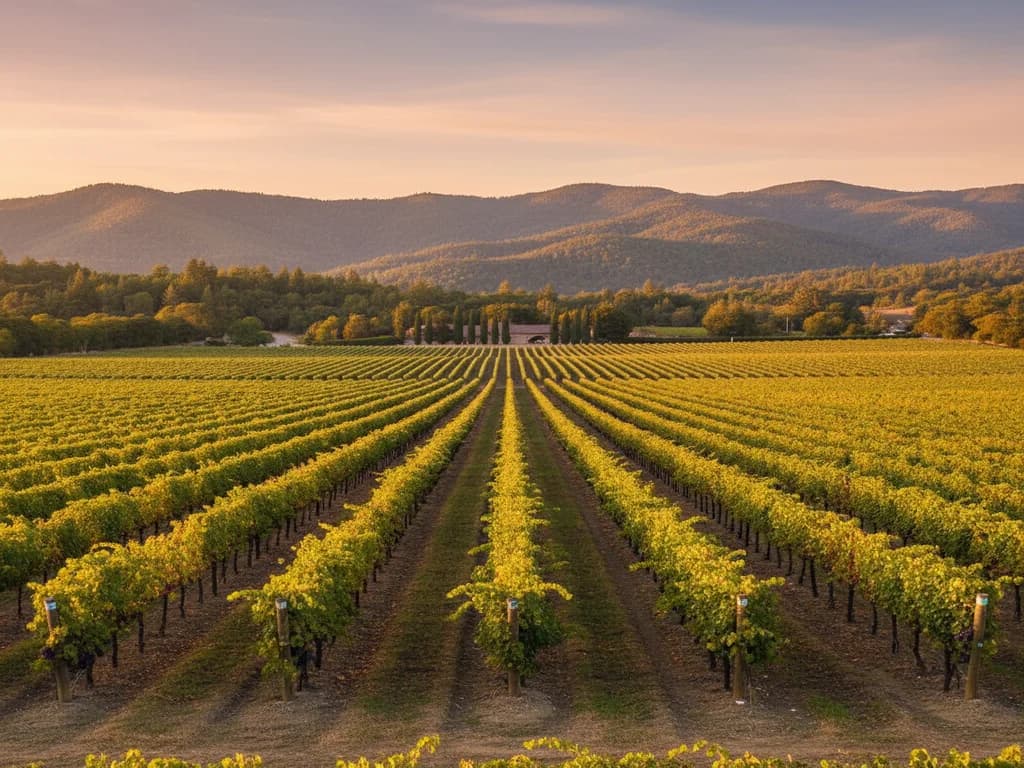
Premium homes in real fire terrain
Napa County's housing skews high-value — from the city of Napa through the hillside and upvalley estates of Yountville, St. Helena, and Calistoga. Recent fire history (LNU, Glass) makes wildfire exposure acute for hillside and rural-residential homes, while the homeowner expectation for architectural finish quality is among the highest in our service area.
Heat, hillsides, and an estate standard
Beyond fire, the upvalley climate runs hot and high-UV through long summers, so finish durability and color stability matter as much as ember resistance on south- and west-facing walls. The county's geography drives the spec: valley-floor hamlets like Oakville and Rutherford lead with heat and an exacting estate finish, while wooded slopes around Angwin, Deer Park, and Pope Valley lead with aggressive hardening. The constant is the standard — Napa homeowners expect custom trim, refined profiles, and execution judged against the same bar as the wine.
Utility, permit, and fire authorities across Napa County
Napa County has five incorporated cities — Napa (the county seat), American Canyon, Yountville, St. Helena, and Calistoga — plus large unincorporated areas including Oakville, Rutherford, Angwin, Deer Park, Pope Valley, Berryessa Estates, and the many AVA-designated vineyard corridors. Each city runs its own community development department; unincorporated permits go through the Napa County Planning, Building, and Environmental Services Department. Electric and gas are PG&E throughout, and the entire county sits at the epicenter of PG&E's PSPS-shutoff footprint since the 2017 and 2020 fire seasons. Water is served by City of Napa Water, City of American Canyon, City of St. Helena, City of Calistoga, Napa County Flood Control and Water Conservation District as the wholesale layer, and Napa County Groundwater Sustainability Agency framework governing groundwater management — with private wells on most vineyard estates and rural acreage. Fire response is Cal Fire Sonoma-Lake-Napa Unit (LNU) as the primary wildland responder, alongside Napa Fire, American Canyon Fire, Yountville Fire, St. Helena Fire, Calistoga Fire, and Napa County Fire and adjacent volunteer companies for unincorporated areas. AVA overlays (Oakville, Rutherford, Stags Leap, Howell Mountain, Spring Mountain, etc.) shape vineyard-adjacent land-use and estate exterior scope.
HZ10 climate and the Napa County FHSZ landscape
Every parcel in Napa County is in James Hardie's HZ10 climate zone; installing HZ5 anywhere in the county is a documented warranty misapplication. On the fire side, the valley-floor cities (city of Napa, American Canyon, Yountville, St. Helena, Calistoga cores) sit largely in Moderate FHSZ territory under California's 2025 LRA Fire Hazard Severity Zone map, while essentially every hillside and upvalley rural parcel — Howell Mountain, Spring Mountain, Atlas Peak, Mount Veeder, Diamond Mountain, Pope Valley, Berryessa — carries High to Very High designations, with most surrounding land in State Responsibility Area. The 2017 Atlas Fire (51,624 acres, 6 fatalities), 2017 Tubbs Fire (which burned into western Napa), 2017 Nuns Fire, 2020 LNU Lightning Complex / Hennessey Fire (192,000+ acres through Pope Valley/Berryessa), and 2020 Glass Fire (67,484 acres burning across Howell Mountain and into St. Helena/Calistoga) are the reference events. On designated hillside parcels the 2025 California Wildland-Urban Interface Code governs the exterior wall. Chapter 7A moved into the standalone WUI Code on January 1, 2026.
Climate and exterior risk in Napa County
Napa runs hot and dry through long upvalley summers — Calistoga and St. Helena regularly sit well above the valley-floor average, and the narrow valley holds afternoon heat against the slopes on both sides. That sustained UV load is what governs finish life on south- and west-facing elevations, and it is why chronically peeling paint on an upvalley home is usually a substrate story rather than a painter story. Toward the south the bay moderates: American Canyon and the southern edge of the city of Napa see cooler, damper marine influence off San Pablo Bay, which shifts the emphasis toward drainage and drying. The county's autumn is the risk window, when cured vegetation and offshore wind events coincide. Fire hardening dominates hillside and rural specs; heat and finish durability govern the rest.
Wildfire exposure in Napa County
Hillside and upvalley areas around St. Helena, Calistoga, Angwin, Deer Park, Pope Valley, and the Napa hillsides carry high exposure, and the county's recent record is unambiguous. The 2017 Atlas Fire burned in the hills east of the city of Napa; the 2020 LNU Lightning Complex ignited across a wide area of the North Bay; and the 2020 Glass Fire moved through upvalley terrain around St. Helena and Calistoga, damaging homes and wineries. The terrain is the reason: narrow valleys flanked by steep, vegetated slopes channel wind and carry fire uphill fast. Valley-floor in-town areas carry meaningfully lower exposure but benefit from non-combustible cladding as a low-regret choice. On any exposed parcel, hardened cladding and detailing are one layer of a whole-property defensible-space strategy — worth doing, and not a promise the home survives.
Moisture and bay influence
Snow is not a factor anywhere in Napa County. Southern Napa County sees genuine bay-moisture influence — American Canyon and the southern city edge sit close enough to San Pablo Bay for marine humidity to matter, and assemblies there need real drying capacity rather than a token drainage gap. Upvalley is hotter and drier, but the winter rainy season is still substantial and the drainage plane still has to work: lapped weather-resistive barrier, kickout flashings, head flashing over openings, and correct bottom-course clearance. Napa River frontage and the low-lying parcels near it add localized exposure worth specifying around. The cladding recommendation does not change across that gradient; the detailing behind it does.
Recommended materials for Napa County
Premium non-combustible fiber cement with custom trim packages and full fire-hardening detailing is the core recommendation on hillside and rural parcels, and the reason it works in this market is that the fire performance and the architecture are not in conflict — the substrate does the hardening while profile, reveal, and trim proportion carry the design. Where the two do interact is at the details Napa homeowners care about most: deep eaves, exposed rafter tails, and generous overhangs are exactly the assemblies that need enclosing or non-combustible treatment on an exposed parcel. That is a design conversation worth having at the start of a project rather than at the framing stage. Factory-applied finishes are the right call on upvalley elevations, where field paint gives up years earlier under the heat and UV load.
Cities We Serve
Communities Across Napa County
FAQ
Napa County — Common Questions
Yes — Yountville, St. Helena, Calistoga, and the surrounding hillside and rural-residential areas with hardened non-combustible specifications.
Yes — premium fiber cement with custom trim and profile packages, with fire hardening designed into the architecture rather than bolted on.
Valley-floor Napa carries lower exposure than the hillsides, but non-combustible cladding remains a sound, low-regret choice.
Not necessarily, but they do have to be addressed. Open eaves and exposed rafter tails are among the most ember-vulnerable details on a house, so on an exposed parcel they need enclosing or non-combustible treatment. There are ways to keep the architectural read while hardening the assembly — it is a design decision best made at the start of the project, not discovered partway through.
The 2017 Atlas Fire in the hills east of the city, the 2020 LNU Lightning Complex across the wider North Bay, and the 2020 Glass Fire through upvalley terrain around St. Helena and Calistoga. Together they establish that this county's exposure is driven by terrain — narrow valleys flanked by steep vegetated slopes that channel wind and carry fire uphill quickly.
It genuinely affects it. Calistoga and St. Helena run hot through long summers, and sustained UV is what chalks finishes, opens joints, and ends the service life of original cladding on sun-facing walls. Fire drives the material choice on exposed parcels; heat drives the finish specification almost everywhere upvalley.
American Canyon and the southern edge of the city sit under more marine influence off San Pablo Bay, so the assembly needs real drying capacity and the emphasis shifts toward drainage detailing. Upvalley is hotter, drier, and more fire-driven. Same cladding family, different detailing priorities.