
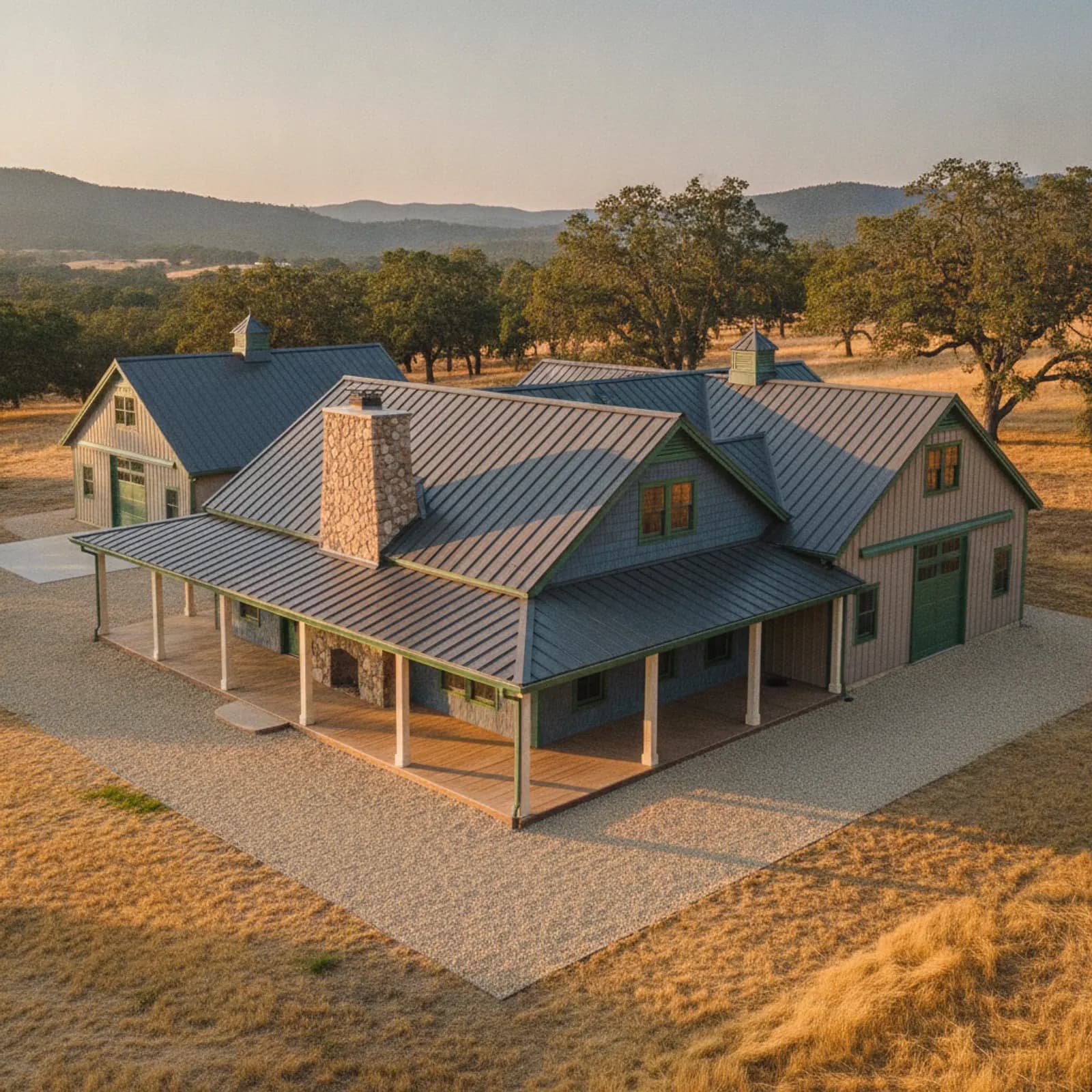
Fire-Resistant Siding in Pope Valley
Fire-resistant siding is the headline service in Pope Valley, and the reason is on the maps, not in a sales pitch. This remote northeastern corner of Napa County lies squarely in country that burned in the 2017 Atlas Fire and again in the 2020 Hennessey and Glass complexes — wildland-urban interface in the truest sense, with grass, oak, and brush running right up to ranch homes and outbuildings.
Out here the question is not whether a parcel is exposed but how hard the whole structure has been made to refuse an ember run, so we scope the cladding as the first layer of a hardened envelope rather than a finish.
Demonstrated, repeat WUI exposure
Pope Valley is not a place where fire risk has to be argued. The valley and the ridges around it have carried major fire more than once in recent years, with homes lost and rebuilds still underway. Under California's wildland-urban-interface ignition-resistant standards, a hardened exterior here is the baseline expectation, not an upgrade — Class A non-combustible cladding carried tight to grade, with the seams and openings detailed to refuse embers.
Embers find the seams, not the field
On Pope Valley parcels the threat is rarely a wall of flame touching the siding; it is the ember shower that arrives ahead of a fire and collects wherever a structure offers a gap. So fire-resistant cladding here is a whole-assembly job: ember-resistant vents, boxed and protected eaves, hardened soffit-to-wall and deck-to-wall junctions, and a clean non-combustible zone at the base where bark mulch, dry grass, and decking meet the house. Non-combustible board over an unhardened detail is a half-measure we don't sell.
Defensible space and the whole property
Out here a home rarely stands alone — there are shops, barns, well-houses, fences, and propane sets, and on grass-and-oak terrain any of them can carry flame toward the main structure. During the walkthrough we flag those approach paths: a wood fence tied to the house, an outbuilding wall facing the brush, vegetation crowding the eaves, a woodpile or propane set parked against a wall. The cladding spec and the defensible-space edge work together — a Class A wall behind a hedge of dry brush is undermined before the first ember lands. We will be straight that hardening the walls is one layer of survival, most effective when the clearance around the structure is handled too, and we point owners toward that work even though it falls outside the cladding scope.
What hardening does — and does not — promise
Many Pope Valley owners considering fire-resistant siding have already lived an evacuation or lost a building, so we owe them plain talk. A hardened, documented, non-combustible exterior meaningfully improves a home's odds against an ember-driven event and gives an insurer a real record to assess in one of the harder areas to cover. It does not make a house fireproof, and no contractor can honestly promise that. We document the Class A materials and the hardened detailing thoroughly so the work supports the decision rather than overselling it.
Why this matters in Pope Valley
- Specified for Wine Country / North Bay conditions
- James Hardie fiber cement as the recommended system
- Correctly detailed weather-resistive barrier and flashing
- Installed by a crew with 20 years combined experience
Recommended systems for Pope Valley
- James Hardie fiber cement
- fully non-combustible cladding systems
- fire-hardened eave, soffit, and vent detailing
- ignition-resistant trim packages
Fire-Resistant Siding for Pope Valley homes
The full fire-resistant siding approach — materials, weather-resistive detailing, and the manufacturer standards we install to — is covered on the main service page, then specified for Pope Valley's conditions on this one.
Our Pope Valley process
- Step 1
Consultation
We listen to your goals and assess your home on site — exposure, substrate, and architecture.
- Step 2
Design & Proposal
A clear written proposal with the right system specified for your climate and a transparent scope.
- Step 3
Expert Installation
Trained crews install to manufacturer best practices with careful weather-management detailing.
- Step 4
Walkthrough & Support
A final walkthrough, full cleanup, and a clear written record of the scope completed — work we stand behind.
FAQ
Fire-Resistant Siding in Pope Valley — FAQ
Severe and demonstrated — the area burned in the 2017 Atlas Fire and the 2020 Hennessey and Glass complexes, with homes lost. It is true wildland-urban interface, and hardened non-combustible exteriors are the baseline here.
No. The cladding has to be paired with ember-resistant vents, hardened eaves and deck junctions, a clean non-combustible base zone, and defensible space. Embers exploit the seams, so we treat the exterior as one system.
It can support insurability in a heavily fire-affected area by giving the insurer documented Class A materials and detailing to assess. Insurers set their own criteria, so we record the work rather than promise an outcome.
It measurably improves the odds against an ember event, but it cannot make any home fireproof, and we won't claim otherwise. We scope it as serious hardening, coordinated with the rebuild and the county's ignition-resistant requirements.
Often yes — a burning outbuilding near the home is an ignition path to the main structure. We assess the whole property and flag which structures and fence lines drive the risk.
Keep Exploring
More for Pope Valley homeowners
Nearby Service Areas
Fire-Resistant Siding near Pope Valley
Helpful Exterior Guides