The North Valley head, from Redding to the wildland edge
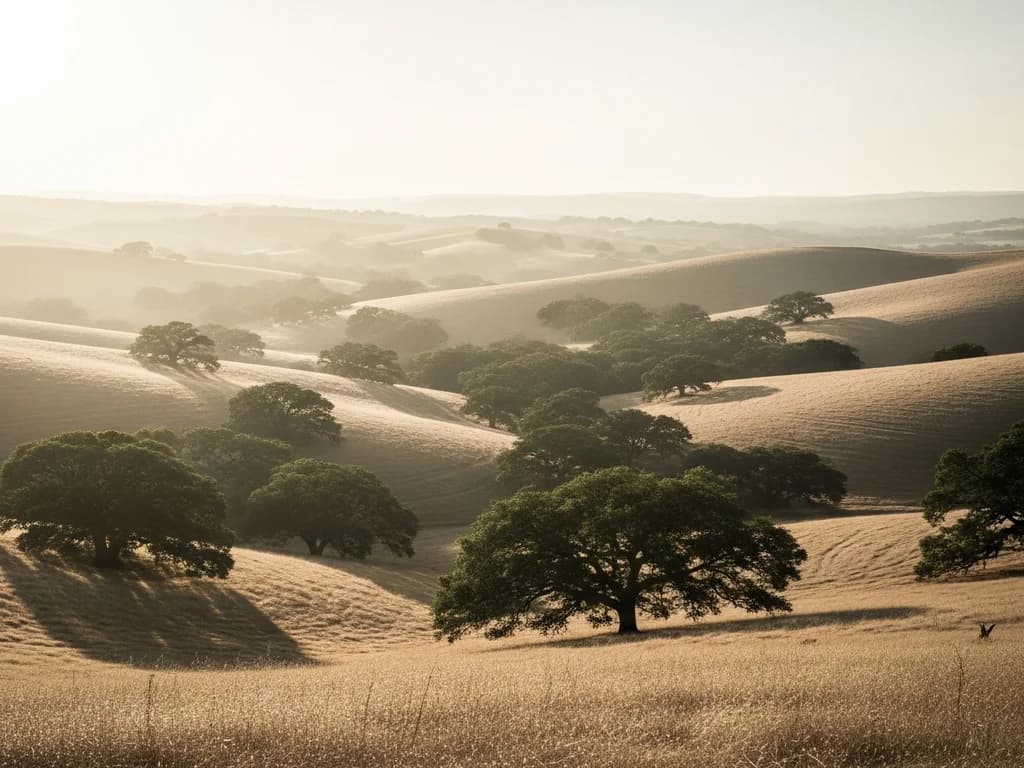
Shasta County anchors the top of the Sacramento Valley, where the flat farm-and-city floor around Redding and Anderson gives way quickly to oak foothills, conifer forest, and the Shasta Cascade rising to the north and west. Redding is the region's hub and one of the hottest cities in California; Anderson sits just south along the Sacramento River and Interstate 5; and Shasta Lake spreads north toward the dam and reservoir in genuine forest-and-foothill country. That range — searing valley floor to wildland interface — is the whole story of exteriors here, and it changes the spec meaningfully from one town to the next.
Aging stock under hard sun, hardened where the forest begins
Across Shasta County a deep span of housing has outlived its original cladding under punishing North Valley UV: mid-century and older Redding neighborhoods, Anderson's valley homes and farmhouses, and the forested ridge and lake-area homes around Shasta Lake all carry wood, hardboard, T1-11, or builder-grade siding the sun has chalked, cupped, and faded. On the valley floor that is a heat-durability problem first. On the county's wildland edges — and much of Shasta County sits in or near that edge — it is also a fire-hardening problem, a reality the Carr Fire drove home when it burned into Redding's western neighborhoods. We read each address for which of those forces governs.
Utility, permit, and fire authorities across Shasta County
Shasta County has three incorporated cities — Redding (the county seat and largest city), Anderson, and Shasta Lake (incorporated 1993) — plus large unincorporated communities including Palo Cedro, Cottonwood, Shingletown, Bella Vista, Millville, French Gulch, Igo, Ono, Whitmore, Round Mountain, and Burney. Each city runs its own community development department; unincorporated permits go through Shasta County Building. Electric is unusually local: Redding Electric Utility (REU) is a customer-owned utility serving the city of Redding — one of only a handful of publicly-owned electric utilities in Northern California — with PG&E covering the rest of the county; gas is PG&E throughout, and the entire county is documented high-PSPS territory since the 2018 Carr Fire. Water is supplied by the City of Redding, City of Anderson, City of Shasta Lake, Bella Vista Water District, Centerville CSD, Clear Creek CSD, Cottonwood Water District, and private wells on rural acreage, alongside the Bureau of Reclamation managing Shasta Dam and reservoir. Fire response is Cal Fire Shasta-Trinity Unit (SHU) as the primary wildland responder, alongside Redding Fire, Anderson Fire, Shasta Lake FPD, and roughly a dozen community/volunteer fire districts across the outlying areas.
HZ10 climate and the Shasta County FHSZ landscape
Every parcel in Shasta County is in James Hardie's HZ10 climate zone; installing HZ5 anywhere in the county is a documented warranty misapplication. On the fire side, the flat valley-floor cores (downtown Redding, Anderson) sit in Low or Moderate FHSZ territory under California's 2025 LRA Fire Hazard Severity Zone map, while western Redding neighborhoods (River Ridge, Land Park, Mary Lake — the areas the Carr Fire actually burned), Shasta Lake city, and essentially every rural, forested, and foothill parcel carry High to Very High designations, with most surrounding land in State Responsibility Area / Shasta-Trinity National Forest. The 2018 Carr Fire (229,651 acres, 1,614 structures destroyed, 8 fatalities — including a documented pyrogenetic tornado over western Redding) and 2020 August Complex (1,032,648 acres — California's largest recorded fire, burning across adjacent Trinity/Tehama/Mendocino terrain) are the corridor's reference events. On these parcels the 2025 California Wildland-Urban Interface Code governs the exterior wall. Chapter 7A moved into the standalone WUI Code on January 1, 2026.
Climate and exterior risk in Shasta County
Extreme, prolonged summer heat and high UV are the controlling exterior factors across Shasta County's valley floor — Redding routinely ranks among the hottest cities in the state, and Anderson shares that load. South- and west-facing elevations age fastest, and original wood, hardboard, T1-11, and economy vinyl typically reach end of life through chalking, cupping, opening joints, and faded paint. Winters are cool and wet, keeping drainage-plane detailing on the list, and the higher-elevation forest edges see occasional snow. But the defining second factor is fire: the county's terrain climbs from valley floor into brush and conifer, and hot, dry, wind-driven fire seasons put its wildland-adjacent neighborhoods at genuine risk.
Wildfire exposure in Shasta County
Wildfire is a defining factor across much of Shasta County, and the 2018 Carr Fire is the plain reference point. That summer a fire ignited to the west near Whiskeytown and, driven by extreme heat and wind — including a documented, unusually violent fire whirl — spread east across the Sacramento River into the western neighborhoods of Redding itself, destroying more than a thousand homes and killing several people before it was contained. It showed that fire in this county is not confined to remote ridges; it can reach into a city's edge. Exposure still varies sharply by address: the flat interior of Redding and Anderson carries lower wildland risk than the forested, foothill, and lake-margin parcels around Shasta Lake and Redding's western and northern fringes. For wildland-adjacent homes we specify non-combustible cladding and hardened detailing as one layer of a whole-property defensible-space strategy — siding is never the whole answer, and we don't present it as making a home immune to fire.
Moisture, winter wet, and the higher edges
Shasta County's summers are dry and its winters cool and genuinely wet, so drainage-plane detailing — weather-resistive barrier, flashing, kickout flashings, and correct bottom-course clearances — earns its place even though heat and fire dominate the spec. The Sacramento River and Lake Shasta add localized moisture exposure on river- and lake-adjacent parcels around Redding, Anderson, and Shasta Lake. Snow is not a valley-floor factor, but the higher forested elevations toward the north and west see occasional snow and freeze, so freeze-aware flashing matters on those upper parcels. The cladding recommendation does not change for any of it — fade-resistant, non-combustible fiber cement still leads — but the detailing around it is tuned to the parcel's real water and freeze exposure.
Recommended materials for Shasta County
Fade-resistant fiber cement is the default across Shasta County for its heat durability and color stability under extreme North Valley UV, and because it is non-combustible (Class A) it simultaneously answers the county's real wildland-edge fire exposure without a change of material. That dual fit is why one cladding family suits the whole county: valley-floor homes in Redding and Anderson for the heat performance, and the forested, foothill, and lake-area homes around Shasta Lake for that same durability plus hardened eave, vent, and ground-transition detailing. Factory-applied finishes hold color far longer than field paint on the county's largely unshaded elevations. Engineered wood remains reasonable on genuinely low-fire valley-floor parcels where deep wood character is the goal; the wildland-interface parcels warrant non-combustible cladding, uncompromisingly detailed.
FAQ
Shasta County — Common Questions
Yes — Redding, Anderson, Shasta Lake, and the surrounding Shasta County communities at the northern head of the Sacramento Valley.
Re-siding aging wood, hardboard, T1-11, and builder-grade cladding in fade-resistant, non-combustible fiber cement — a heat-durability upgrade on the valley floor and a fire-hardening upgrade on the county's wildland edges.
It depends on the address. The forested, foothill, and lake-margin parcels around Shasta Lake and Redding's western and northern edges carry real wildfire exposure — the 2018 Carr Fire reached into western Redding — where non-combustible cladding and hardened detailing are warranted. Flat interior valley neighborhoods carry lower exposure, though non-combustible fiber cement is a sound, low-regret choice there too.
Redding is one of the hottest cities in California, and Anderson shares that extreme summer heat and UV. It matters a great deal: sustained ultraviolet load is what chalks, cups, and fades original cladding on sun-facing walls, which is why we specify factory-finished fiber cement built for it.
The Carr Fire was a 2018 wildfire that ignited west of Redding near Whiskeytown and, driven by extreme heat and wind, spread east across the Sacramento River into Redding's western neighborhoods, destroying more than a thousand homes. It confirmed that fire can reach the city's edge, which is why we treat non-combustible cladding and hardened detailing as core survival infrastructure on wildland-adjacent Shasta County homes — one layer of a whole-property strategy, never a promise that a home cannot burn.
A correctly installed fiber cement system commonly performs 30+ years in the North Valley climate, with factory finishes extending the time before any cosmetic refresh on the county's sun-loaded elevations.
South- and west-facing walls take the heaviest afternoon sun and age fastest, especially on the open, low-canopy lots common across Redding and Anderson.