A Gold Country of foothill towns, wine, and forest
Calaveras County rises off the San Joaquin Valley edge into the central Sierra foothills along Highways 4, 12, 26, and 49. Its communities span a wide band of elevation and character: Angels Camp, the county's only incorporated city and a historic Gold Rush town on Highway 49; San Andreas, the county seat with its own mining-era downtown; Murphys, a wine-country destination with tasting rooms lining a preserved Main Street; Arnold, a pine-forested community high on the Ebbetts Pass corridor toward Calaveras Big Trees; Valley Springs, a lower-foothill crossroads near New Hogan Lake; and Copperopolis, an old copper town reborn around Lake Tulloch and master-planned neighborhoods. The housing runs from 1800s Gold Rush cottages to forest cabins, ranch homes, wine-country custom builds, and current-generation development.
Fire is the common thread up and down the county
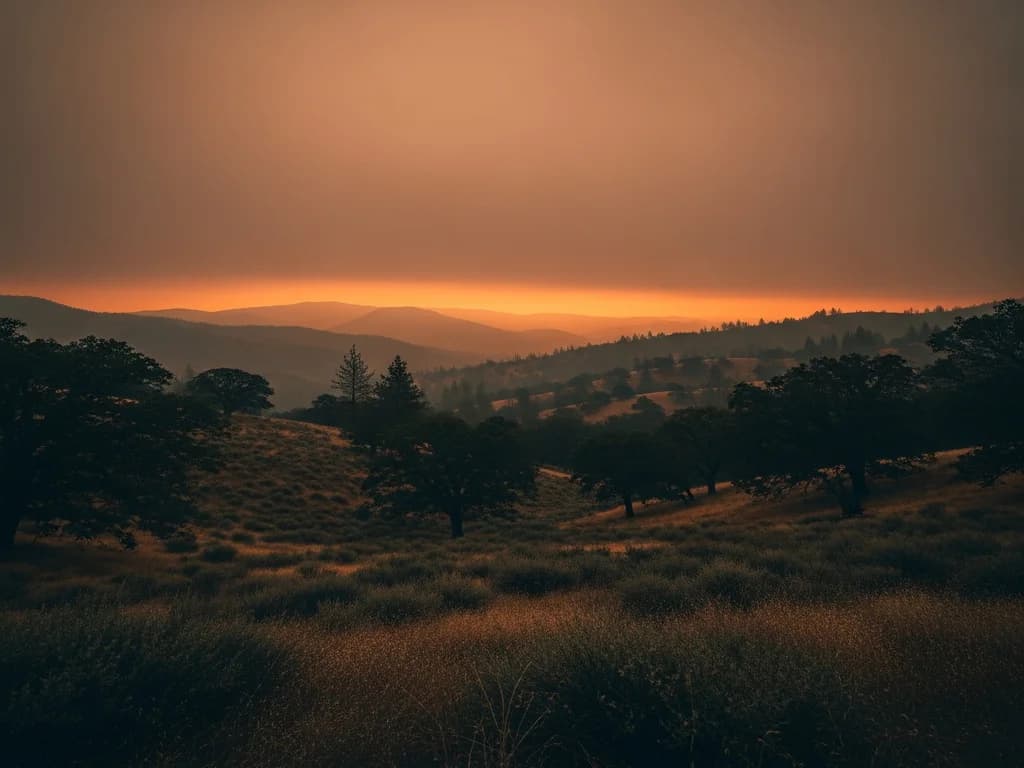
What ties these very different communities together is wildfire exposure. Nearly all of Calaveras County sits in the foothill and mountain wildland-urban interface, in oak-grass and mixed-conifer fuel that cures hard through the long, dry Sierra summer. The Butte Fire of September 2015 burned across the county and destroyed hundreds of homes, and CAL FIRE maps much of Calaveras as elevated to very high fire hazard. That reality shapes the honest starting point for every exterior here: non-combustible cladding and hardened detailing, matched to how much fuel and terrain each specific parcel actually carries.
Utility, permit, and fire authorities across Calaveras County
Calaveras County has only one incorporated municipality — the City of Angels (the legal name of Angels Camp) — with everything else unincorporated: San Andreas (the county seat), Murphys, Arnold, Valley Springs, Copperopolis, Mokelumne Hill, West Point, Wilseyville, Rail Road Flat, and communities along Highway 4 toward Ebbetts Pass. The City of Angels runs its own community development department; unincorporated permits go through the Calaveras County Building Department. Electric and gas are PG&E throughout, and the entire Highway 4 / Highway 49 corridor is documented high-PSPS territory. Water is supplied by the Calaveras County Water District (CCWD) as the county-wide public agency, with the CCWD Ebbetts Pass service area covering Arnold, Copper Cove Community Services District (CCCSD) serving Copperopolis town core, and private wells common on rural ranch acreage. Fire response is Cal Fire Tuolumne-Calaveras Unit (TCU) as the primary wildland responder, alongside the City of Angels FD, Central Calaveras Fire and Rescue Protection District (San Andreas, Angels area), Ebbetts Pass FPD (Arnold/Murphys corridor), Calaveras Consolidated FPD (Valley Springs), Copperopolis FPD, Mokelumne Hill FPD, West Point FPD, and other community volunteer districts.
HZ10 climate and the Calaveras County FHSZ landscape
Every parcel in Calaveras County is in James Hardie's HZ10 climate zone — even the higher Ebbetts Pass communities sit below the HZ5 high-Sierra/Tahoe-basin threshold; installing HZ5 anywhere in Calaveras is a documented warranty misapplication. On the fire side, the historic town cores (Angels Camp, San Andreas, Murphys downtown) sit in Moderate FHSZ territory under California's 2025 LRA Fire Hazard Severity Zone map, while essentially every hillside, wooded, and rural parcel — the Arnold pine belt, the Highway 4 corridor toward Bear Valley, the wooded hillsides around Murphys and San Andreas, and the Copperopolis lake-edge parcels — carries High to Very High designations. The 2015 Butte Fire (549 homes destroyed across Calaveras and Amador) is the reference event, burned into local memory alongside earlier fires that shaped ridge-and-canyon land management. On these parcels the 2025 California Wildland-Urban Interface Code governs the exterior wall. Chapter 7A moved into the standalone WUI Code on January 1, 2026.
Climate and exterior risk in Calaveras County
Calaveras runs hot and dry through long foothill summers, with high-UV exposure that fades and chalks coatings on sun-facing walls, especially at the lower and mid elevations around Valley Springs, Angels Camp, and Copperopolis. Winters are cool and wet, and the upper Ebbetts Pass elevations around Arnold add real snow, freeze, and thaw that stress flashing and finishes. But heat and moisture both defer to the county's controlling exterior factor — wildfire. Dry summers, cured grass and brush, and heavy conifer fuel on the ridges create the ember-and-wind conditions that drive how an exterior should be specified across most of the county.
Wildfire exposure in Calaveras County
Wildfire is the defining exterior consideration across Calaveras County. Most of the county sits in the wildland-urban interface, in oak-grass at the lower foothill elevations and mixed conifer forest on the higher ridges, all of it curing to heavy fuel through the dry Sierra summer. The Butte Fire, which began in September 2015 and burned across Calaveras County and into neighboring Amador, struck communities around Mountain Ranch, Mokelumne Hill, and San Andreas and destroyed hundreds of homes — one of the county's defining wildfire events and a plain reminder of the exposure here. We specify non-combustible cladding countywide and scale the hardening detailing to each parcel's fuel and terrain, from a lower-grassland lot in Valley Springs to a conifer-forest home above Arnold.
Moisture, snow, and the elevation band
Calaveras spans enough elevation that winter behaves differently across it. The lower and mid-elevation communities — Valley Springs, Copperopolis, Angels Camp, San Andreas, Murphys — see cool, wet winters without meaningful snow, so drainage-plane and flashing detailing matters but freeze is not a driver. The upper Ebbetts Pass elevations around Arnold do get real snow, freeze, and thaw, which demands freeze-aware flashing and detailing that manages meltwater and ice alongside the fire hardening. Across the whole county the cladding answer is the same non-combustible fiber cement; what changes with elevation is how hard the winter detailing has to work behind it.
Recommended materials for Calaveras County
Non-combustible fiber cement is the default cladding across Calaveras County. It answers the wildfire exposure that shapes nearly every parcel, and it also handles the foothill heat, high UV, and wet winters that would otherwise chalk and cup lesser materials. On higher-fire and forested parcels — the Arnold pine belt, the wooded ridges above Murphys and San Andreas — we harden the assembly at eaves, soffits, vents, decks, and ground-to-wall transitions to current California WUI standards. On the lower-fire in-town lots the same non-combustible cladding comes standard at no material change, with the heaviest hardening reserved for the parcels that genuinely warrant it. We won't overstate what siding alone does; it is one layer of a whole-home and whole-property defensible-space strategy.
Cities We Serve
Communities Across Calaveras County
FAQ
Calaveras County — Common Questions
Yes — Angels Camp, Murphys, Arnold, San Andreas, Valley Springs, Copperopolis, and the surrounding Gold Country communities, all within our Sierra-foothill service area traveling from our Sacramento-region base.
It is the defining factor. Most of the county sits in the foothill and mountain wildland-urban interface, and the 2015 Butte Fire destroyed hundreds of homes here. We specify non-combustible cladding countywide and scale the hardening detailing to each parcel's fuel and terrain.
Non-combustible fiber cement is the default across the county. It answers the wildfire exposure that shapes nearly every parcel and also handles the foothill heat, high UV, and wet winters, with added hardening detailing on the higher-fire and forested lots.
No — no cladding is fireproof, and we won't claim otherwise. Fiber cement is noncombustible (rated Class A when tested per ASTM E84), which makes it a sound choice in fire country, but it is one layer of a whole-home and defensible-space strategy rather than a guarantee against wildfire.
Yes for winter. The Arnold pine belt on the Ebbetts Pass corridor sees real snow, freeze, and thaw, so we add freeze-aware flashing there. The lower and mid-elevation towns get standard wet-winter drainage detailing. The non-combustible cladding and fire hardening apply across the whole county.
Long, high-UV summers chalk and fade coatings on sun-facing walls, wet winters work at joints and flashing, and older wood, board-and-batten, and T1-11 cladding was never specified for that load — or for the fire exposure. A non-combustible re-side resolves both the durability and the hardening in one project.
Yes. On rebuilds we install non-combustible, hardened assemblies to current California WUI standards; on older surviving homes still clad in wood or T1-11, re-cladding in hardened fiber cement is the single highest-value survival upgrade available. We document the materials used for code and insurability conversations.