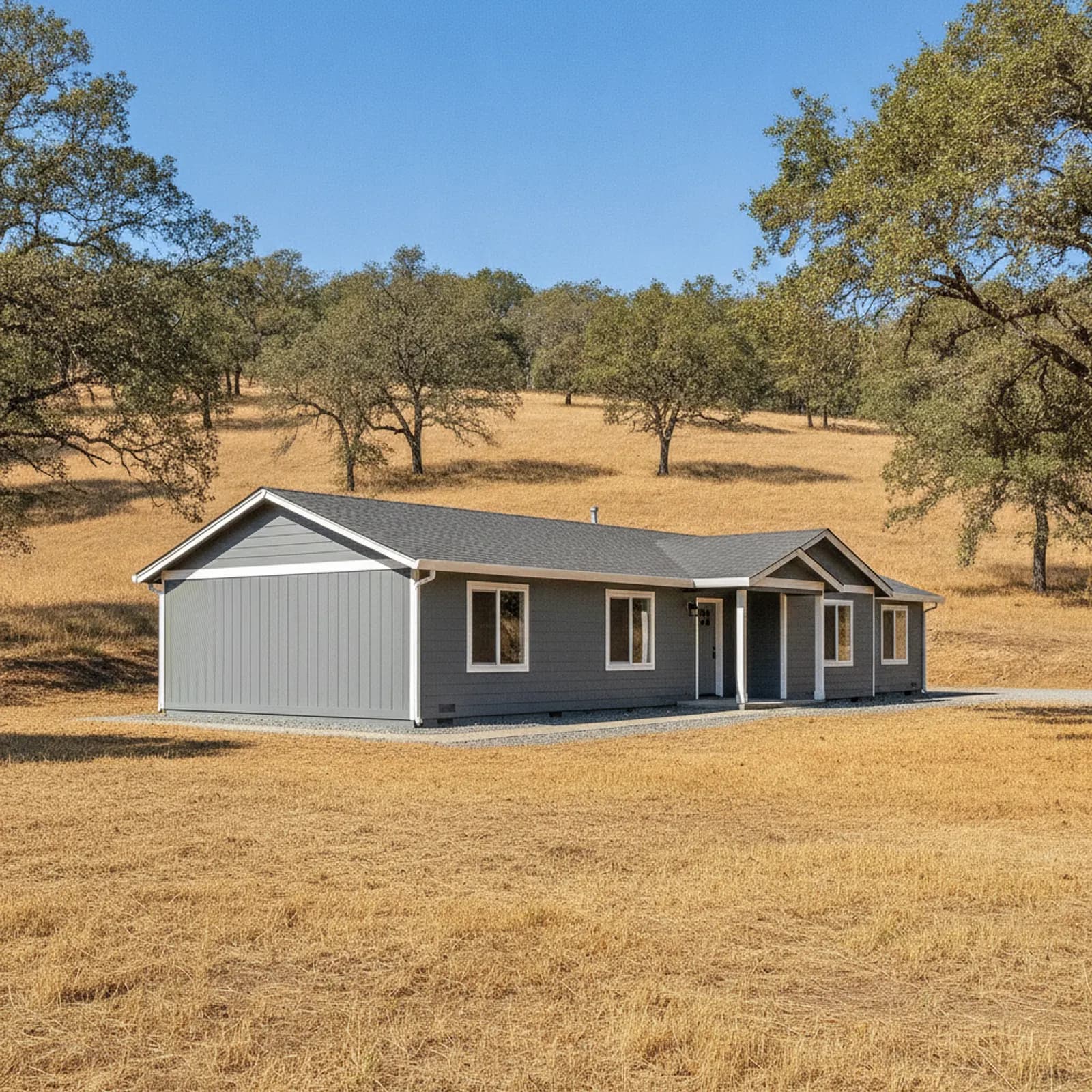
Exterior renovation in San Andreas
San Andreas is the seat of Calaveras County, an unincorporated Gold Rush town on Highway 49 with its own historic mining-era downtown — including the courthouse where the bandit Black Bart was brought to trial. Its housing runs from 1800s Gold Rush homes and older county-seat neighborhoods near the core to rural foothill and acreage homes in the surrounding oak-grass and woodland. San Andreas also sat near the center of the county's defining recent wildfire, so the fire conversation here is grounded in lived experience: much of the surrounding country carries real exposure, and a re-side is a hardening project as much as a renovation.
Fire hardening the county seat knows firsthand
What frames an honest San Andreas exterior is that the worst case is recent and local. The Butte Fire of September 2015 burned across Calaveras County and struck communities in and around the San Andreas area — Mountain Ranch, Mokelumne Hill, and the surrounding country — destroying hundreds of homes. Homeowners here don't need to be persuaded that the exposure is real. Our job is to deliver non-combustible cladding and hardened detailing correctly, matched to each parcel's fuel and terrain, while treating the historic downtown's older homes with the period sensitivity they call for.
Considering an exterior project in San Andreas?
San Andreas housing and architecture
San Andreas's stock centers on its Gold Rush and county-seat history: 1800s homes and stone-and-brick buildings in the historic downtown core, older established neighborhoods around it, and rural foothill and acreage homes spreading out into oak-grass and woodland — plus post-Butte-Fire rebuilds in the surrounding communities. The historic homes reward narrow, period-correct profiles and accurate trim, while the rural and wooded parcels warrant the fuller fire detailing their setting demands. We design to the era and the exposure at once, matching profile and finish to a downtown county-seat home or a rural home in the fire-shaped country around it rather than running one template over both.
San Andreas's foothill climate
San Andreas runs hot, dry, and high-UV through long foothill summers that chalk and fade coatings on sun-facing walls, with cool, wet winters that keep drainage detailing on the list but bring little to no snow at this elevation. Both defer to fire. The surrounding oak-grass and woodland cure to heavy fuel through the dry season — the same conditions that fed the 2015 Butte Fire — and the terrain and wind drive the ember exposure that governs the spec. The cladding is specified for ember-and-wind behavior first, with non-combustible fiber cement carrying the summer heat and UV and correct flashing carrying the wet winter.
Wildfire hardening in San Andreas
San Andreas carries fire exposure the community learned firsthand in 2015, so we treat hardening as a first-order design factor. We specify Class A non-combustible fiber cement and harden the vulnerable details — eaves, soffits, vents, decks, and ground-to-wall transitions — to current California WUI standards, weighting the detailing to each parcel's fuel and terrain. The rural and wooded homes in the surrounding country warrant the fuller treatment; the denser in-town lots carry the same non-combustible cladding at no material change. On Butte Fire rebuilds we build the hardening in from the studs out; on surviving older homes still clad in wood or T1-11, re-cladding is the highest-value survival upgrade. We document the assemblies for defensible-space and insurability conversations, and we're clear that siding is one layer of a whole-property strategy.
Recommended materials for San Andreas
Class A non-combustible fiber cement is the core recommendation across San Andreas: it answers the fire exposure the area knows firsthand and delivers the heat, UV, and wet-winter durability the foothill setting demands. On the historic downtown homes we choose narrow lap profiles and trim that read as period-appropriate, hardening a Gold Rush home without erasing its character. On the rural and wooded parcels we pair the same cladding with fuller fire detailing and high-UV factory finishes that hold color through long foothill summers far better than field paint. Whether it's a rebuild or a re-side, the assembly is non-combustible and hardened to current standards.
What an exterior project costs in San Andreas
San Andreas pricing turns on home size and stories, profile and trim complexity — higher on the ornate historic homes — substrate and dry-rot condition once cladding comes off, window integration, and fire-hardening scope. Two variables are particular here: the downtown's old homes often reveal layered original siding or dry rot at demolition after more than a century of foothill weather, and the rural and fire-affected parcels carry heavier hardening detailing and sometimes longer access. On a Butte Fire rebuild the hardening is simply how the home is built; on a surviving home it's a deliberate upgrade with its own discovery. We provide a written, scoped estimate after an on-site assessment.
The historic county-seat downtown
San Andreas's Gold Rush downtown and its surrounding older homes are the core of the county seat's character, from the historic courthouse to the 1800s homes nearby. These homes carry detailing expectations a generic re-side would miss, so we match lap width, trim proportions, and finish to the era while hardening the assembly, and we plan for the dry rot and layered siding a century-old foothill home often hides. Getting the character right protects both the home and the historic heart of the county.
Butte Fire rebuilds and surviving homes
The 2015 Butte Fire reshaped the communities around San Andreas, and the work here reflects both paths it left behind. A ground-up rebuild is typically non-combustible from the framing out, coordinated with a current-code shell; a surviving older home still clad in wood or T1-11 sits in the same fire country with combustible skin, and re-cladding in hardened fiber cement is the highest-value survival upgrade available to it. We scope each path for what it is and hold both to current WUI standards.
Rural foothill and acreage parcels
Beyond the town, San Andreas's rural foothill and acreage homes sit in oak-grass and woodland where the fire exposure is most acute and where outbuildings, transitions, and the immediate defensible zone all factor into a sound exterior strategy. Access can be longer on acreage, which we account for in the site walk. We document what we install so an owner, buyer, or insurer has a record of the hardening on a parcel where fire history is recent and real.
Calaveras County, CCWD, and Central Calaveras Fire
Working exteriors in San Andreas coordinates with a few local authorities. San Andreas is unincorporated Calaveras County — the county seat, but not an incorporated city — so building permits come through the Calaveras County Building Department rather than a municipal department. Electric and gas are PG&E, and the entire Highway 49 corridor is documented high-PSPS territory. Water and wastewater are supplied by the Calaveras County Water District (CCWD). Fire response is the Central Calaveras Fire and Rescue Protection District alongside CAL FIRE Tuolumne-Calaveras Unit (TCU) on wildland calls. The historic county courthouse and Gold Rush downtown are locally recognized preservation zones.
HZ10 and the Butte-Fire FHSZ reality
San Andreas is in James Hardie's HZ10 climate zone; installing HZ5 is a documented warranty misapplication. On the fire side, the downtown San Andreas core sits in Moderate FHSZ territory under California's 2025 LRA Fire Hazard Severity Zone map, while rural foothill and acreage parcels around town carry High to Very High designations. The 2015 Butte Fire destroyed 549 homes across Calaveras County and reset the local fire conversation. On designated hillside parcels the 2025 California Wildland-Urban Interface Code governs the exterior wall. Chapter 7A moved into the standalone WUI Code on January 1, 2026.
Our process in San Andreas
- Step 1
Consultation
We listen to your goals and assess your home on site — exposure, substrate, and architecture.
- Step 2
Design & Proposal
A clear written proposal with the right system specified for your climate and a transparent scope.
- Step 3
Expert Installation
Trained crews install to manufacturer best practices with careful weather-management detailing.
- Step 4
Walkthrough & Support
A final walkthrough, full cleanup, and a clear written record of the scope completed — work we stand behind.
San Andreas rewards an exterior approach grounded in the fire exposure the county seat knows firsthand and in respect for its historic core, from a downtown Gold Rush home to a rebuild or surviving home in the country around it. We scope every San Andreas project on site so the hardening and period detailing match the parcel, and your written, itemized estimate governs the work.
FAQ
San Andreas — Common Questions
Real and firsthand — San Andreas sat near the center of the 2015 Butte Fire, which burned across Calaveras County and destroyed hundreds of homes. We treat fire as a first-order design factor, specifying non-combustible cladding and scaling hardening to each parcel.
Yes — on rebuilds we install non-combustible, hardened exterior assemblies to current California WUI standards from the framing out, and we document the materials used for code and insurability. On surviving older homes, re-cladding in hardened fiber cement is the highest-value survival upgrade.
Class A non-combustible fiber cement — it answers the local fire exposure and also handles the foothill heat, high UV, and wet winters, with fuller hardening on rural and wooded parcels and period-appropriate profiles for the historic downtown.
No — no siding is fireproof, and we won't claim it is. Fiber cement is noncombustible (Class A when tested per ASTM E84), which makes it a sound choice in fire country, but it's one layer of a whole-home and defensible-space strategy.
Explore
Exterior Services
Helpful Exterior Guides