
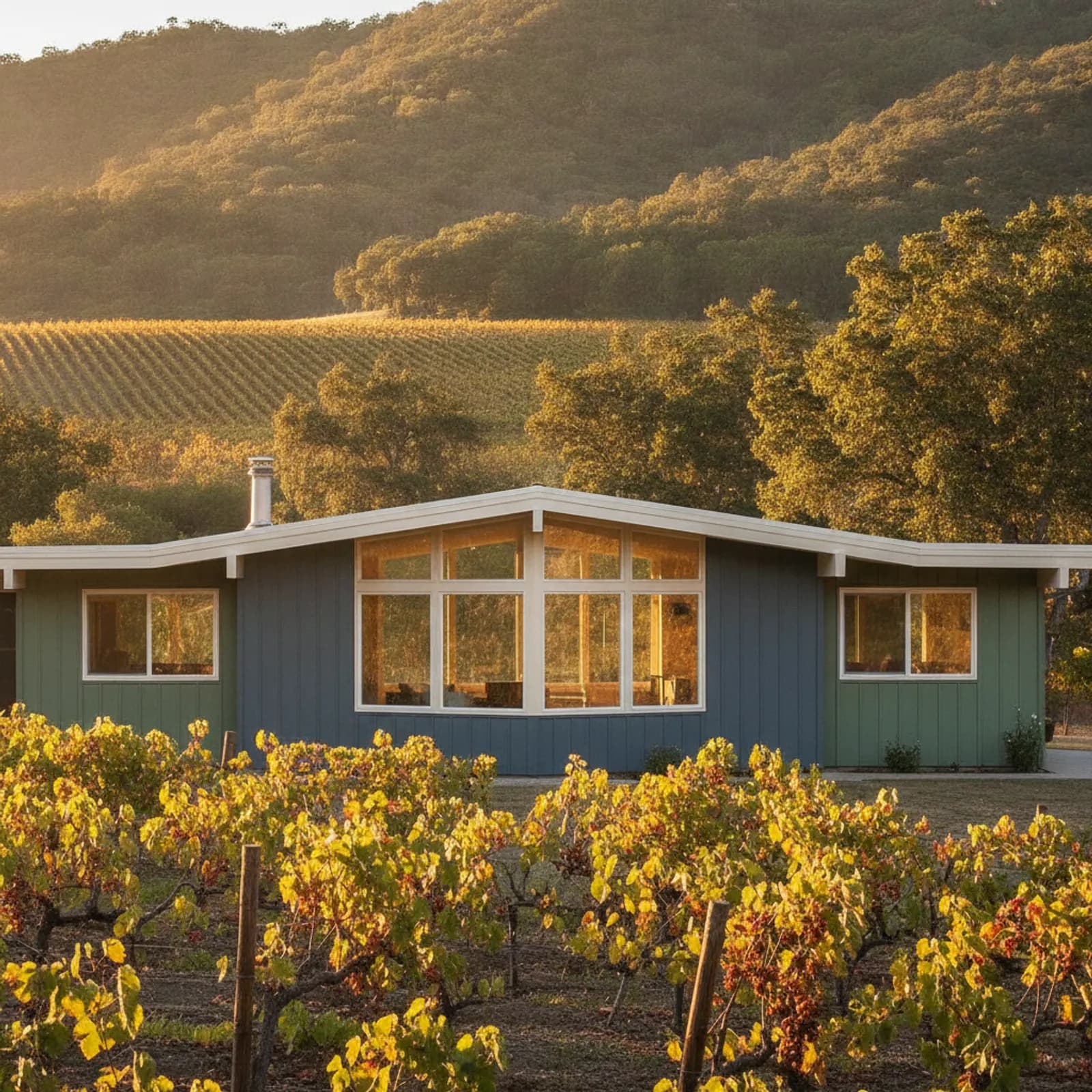
Fire-Resistant Siding in Angwin
Fire-resistant siding is a primary service in Angwin, and honestly so: this is high wildfire terrain. Howell Mountain is standing-timber wildland-urban interface, the 2020 Glass Fire burned across this area, and most homes sit on a forested hilltop where ember exposure is the controlling design problem. For an Angwin owner, WUI-code-style hardening is not a low-regret nicety — it is the central exterior decision, and it answers a real, documented threat the community lived through.
What the WUI code means on a forested ridge
California's wildland-urban-interface building requirements — the WUI-code family of standards — exist for exactly the conditions Angwin presents: homes embedded in fuel on a fire-prone hilltop. On Howell Mountain the rules translate into specifics. We carry ignition-resistant, Class A non-combustible cladding across the wall, but the cladding is only the visible layer. The assembly that actually keeps a house standing is the detailing around it: ember-resistant vents so the attic and crawlspace can't draw in burning debris, boxed and protected eaves and soffits, and hardened junctions where the wall meets a deck, a porch, or the ground. We treat a fire-resistant re-side as bringing the whole envelope toward those WUI expectations, not just swapping the boards.
How embers actually attack an Angwin home
The Glass Fire taught upvalley owners that most homes are lost to embers, not a wall of flame. On a hilltop wrapped in conifer, wind drives a storm of burning particles ahead of and around any fire, and those embers hunt for the smallest combustible ledge. The vulnerable points on an Angwin house are predictable: open eave and soffit cavities, unscreened vents, the gap where siding meets grade with needle litter piled against it, and combustible attachments — decks, trellises, fences — touching the wall. Fire-resistant siding closes the field of the wall, but we walk every one of those weak seams during the assessment, because a single unscreened vent or a wood deck butted to a hardened wall can undo the entire effort on a forest parcel.
Defensible space and the wall together
On Howell Mountain the cladding and the immediate landscape are one system, and a fire-resistant re-side is the moment to address both. The first few feet around an Angwin home — the noncombustible zone — matter as much as the siding itself: pulling firewood, bark mulch, and dense plantings back from the base, swapping combustible fencing that touches the house for non-combustible transitions, and keeping the needle and leaf litter that the canopy constantly drops out of wall-to-grade junctions. We flag these conditions as we re-clad, because hardening the wall while leaving fuel stacked against it is the most common way a hardened home still ignites. The honest framing for an Angwin owner is that the best fire-resistant siding job assumes embers will arrive and removes every place they can take hold near the wall.
Hardening without making a home look defensive
Angwin homes range from tidy college-community residences to custom forest-edge and vineyard-edge houses, and owners here want hardening that disappears into the architecture rather than reading as bunker detailing. We match non-combustible cladding to the existing profile, exposure, and reveal so a fire-rated wall carries the same board widths and shadow lines as the wood it replaces, and we handle trim, corner boards, and window surrounds in compatible non-combustible detail rather than leaving combustible accents that quietly defeat the rating. On the rural mountain parcels the same logic extends to visible outbuildings owners want to keep warm and woodsy. The goal is an envelope that satisfies an insurer and a fire inspector while still looking like a home that belongs on a wooded Howell Mountain lot.
Why this matters in Angwin
- Specified for Wine Country / North Bay conditions
- Class A non-combustible fiber cement as the recommended system
- Correctly detailed weather-resistive barrier and flashing
- Installed by a crew with 20 years combined experience
Recommended systems for Angwin
- Class A non-combustible fiber cement
- fire-hardened detailing
- James Hardie
Fire-Resistant Siding for Angwin homes
The full fire-resistant siding approach — materials, weather-resistive detailing, and the manufacturer standards we install to — is covered on the main service page, then specified for Angwin's conditions on this one.
Our Angwin process
- Step 1
Consultation
We listen to your goals and assess your home on site — exposure, substrate, and architecture.
- Step 2
Design & Proposal
A clear written proposal with the right system specified for your climate and a transparent scope.
- Step 3
Expert Installation
Trained crews install to manufacturer best practices with careful weather-management detailing.
- Step 4
Walkthrough & Support
A final walkthrough, full cleanup, and a clear written record of the scope completed — work we stand behind.
FAQ
Fire-Resistant Siding in Angwin — FAQ
Yes. Howell Mountain is high wildfire terrain, the 2020 Glass Fire burned across this area, and homes sit inside standing timber. Non-combustible cladding with hardened vent, eave, and ground detailing is the baseline here, not an option.
The WUI code is California's set of wildland-urban-interface construction standards for fire-prone areas, covering cladding, vents, eaves, and other ignition-resistant detailing. Most of Howell Mountain falls in genuine WUI territory, so those expectations are directly relevant to an Angwin re-side.
The siding closes the wall, but embers attack vents, eaves, decks, and the litter piled at the base. We harden those details and flag defensible-space issues, because a hardened wall behind a wood deck or a stacked woodpile is only a half-measure on a forest parcel.
In high-exposure wine-country terrain it commonly does, and carriers increasingly ask for it before renewal. We document cladding, vent details, eave assemblies, and ground-to-wall transitions so the work can be shown to an insurer.
Yes — we match non-combustible cladding and trim to the existing profiles and reveals so the wall reads as the home's architecture, not as defensive detailing imposed on top of it.
Keep Exploring
More for Angwin homeowners
Nearby Service Areas
Fire-Resistant Siding near Angwin
Helpful Exterior Guides