
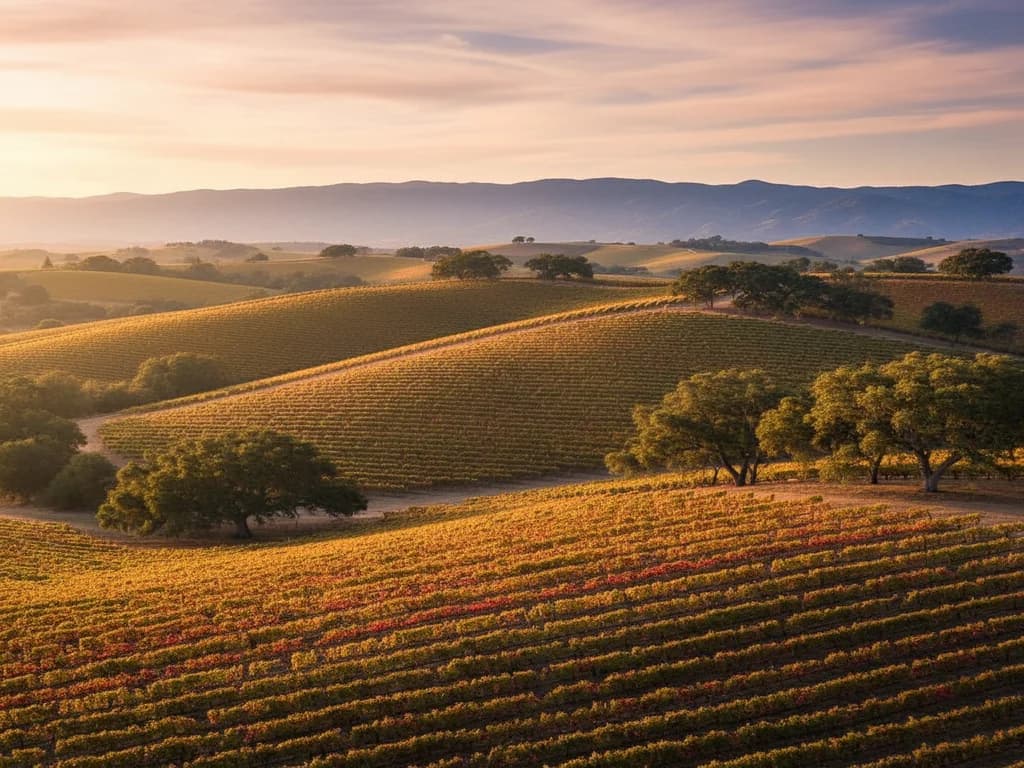
Fire and fog in the same county
Sonoma County's recent fire history — Tubbs in 2017, Kincade in 2019, Glass in 2020 — makes wildfire exposure a central concern for hillside and rural-residential homeowners around Santa Rosa, Healdsburg, and the Sonoma Valley. At the same time, the county's North Bay and coastal influence brings persistent marine moisture that never fully leaves the wall alone. The exterior here has to be both fire-aware and moisture-managed, and the two demands genuinely pull in different directions: fire hardening wants a tight, sealed, ember-resistant envelope, while moisture management wants an assembly that can dry. Resolving that tension in the detailing — not in the material brochure — is most of the engineering on a Sonoma re-side.
A premium, design-conscious wine-country market
Sonoma is also one of the most design-aware exterior markets in Northern California. Estate and vineyard properties around Healdsburg, Kenwood, Glen Ellen, and the city of Sonoma expect cladding that hardens the home against fire while reading as architecture, not armor — custom trim, refined profiles, and finishes chosen to suit the setting. In the historic plazas and Victorian-rich towns like Petaluma and Santa Rosa, period sensitivity matters as much as performance. We treat the fire and moisture engineering as the floor, not the finished product.
Utility, permit, and fire authorities across Sonoma County
Sonoma County has nine incorporated cities — Santa Rosa (the county seat), Petaluma, Rohnert Park, Healdsburg, Windsor (a town), Cloverdale, Sonoma, Cotati, and Sebastopol — plus large unincorporated communities including Glen Ellen, Kenwood, Geyserville, Guerneville, Forestville, Penngrove, Bodega Bay, Occidental, Monte Rio, and Fulton. Each city runs its own community development department; unincorporated permits go through Sonoma County Permit and Resource Management Department (Permit Sonoma). Electric and gas are PG&E throughout, and the entire county is documented high-PSPS territory since the 2017 fire season. Water is unusually fragmented: City of Santa Rosa Water, Sonoma Water (the county wholesale agency), City of Petaluma, City of Healdsburg, City of Sonoma, Valley of the Moon Water District (VOMWD), Sweetwater Springs Water District (Guerneville/Forestville), Marin Municipal Water District (MMWD) on the southern edge, plus a mix of smaller districts and private wells in vineyard country. Fire response is Cal Fire Sonoma-Lake-Napa Unit (LNU) as the primary wildland responder, alongside Santa Rosa Fire, Petaluma Fire, Rohnert Park DPS, Healdsburg Fire, Windsor Fire, Cloverdale FPD, Sonoma Valley Fire, Rancho Adobe Fire (JPA covering Cotati/Penngrove), Sebastopol Fire, Russian River FPD (absorbed Guerneville FPD), Forestville FPD, Geyserville FPD, Gold Ridge FPD, and several other community districts.
HZ10 climate and the Sonoma County FHSZ landscape
Every parcel in Sonoma County is in James Hardie's HZ10 climate zone despite the county's north-of-San Francisco coastal fog — the HZ5 exception is reserved for higher-elevation Sierra work, and installing HZ5 anywhere in Sonoma is a documented warranty misapplication. On the fire side, the flat downtown grids (Santa Rosa's Junior College district, downtown Petaluma, historic Sonoma) sit in Low or Moderate FHSZ territory under California's 2025 LRA Fire Hazard Severity Zone map, while essentially every hillside neighborhood and rural-residential parcel carries High to Very High designations — including parts of Santa Rosa that were unmapped or Moderate before the 2017 Tubbs Fire burned Coffey Park on the valley floor and rewrote the map. The 2017 Tubbs Fire (36,807 acres, 5,636 structures destroyed, 22 fatalities), 2017 Nuns Fire (54,382 acres), 2019 Kincade Fire (77,758 acres, ignited on Burned Mountain ridge above Geyserville), 2020 Walbridge Fire (part of LNU Lightning Complex, forcing widespread Russian River evacuations), and 2020 Glass Fire (67,484 acres) all burned Sonoma ground. On designated hillside parcels the 2025 California Wildland-Urban Interface Code governs the exterior wall. Chapter 7A moved into the standalone WUI Code on January 1, 2026.
Climate and exterior risk in Sonoma County
Sonoma runs a Mediterranean pattern with an unusually sharp split between the two halves of the year. Summers are warm and rainless, and the late-summer-into-autumn stretch — vegetation fully cured, humidity low, offshore wind events possible — is when the county's hillside fire exposure becomes acute. The rest of the year is cool, damp, and fog-influenced, dramatically so toward the coast and along the Russian River corridor, where west-county communities like Sebastopol, Guerneville, and Occidental sit under marine fog for long stretches and assemblies stay wet enough that drying capacity, not bulk water shedding, is the limiting factor. Inland valley towns run warmer and drier in summer with real UV load on unshaded elevations. Both fire detailing and rigorous drainage-plane work matter here, and which one leads is a parcel-level question, not a county-level one.
Wildfire exposure in Sonoma County
Hillside, valley-edge, and rural-residential areas around Santa Rosa, Healdsburg, Glen Ellen, and the Sonoma Valley carry high exposure, and the county has the recent record to prove it. The 2017 Tubbs Fire is the case that reset expectations statewide: driven by extreme offshore winds, it crossed Highway 101 and burned into the Coffey Park subdivision on Santa Rosa's flat valley floor, an area no one had previously treated as a wildland-interface neighborhood. Kincade in 2019 and Glass in 2020 reinforced the pattern. The practical lesson is that in this county the fire-exposed parcel and the in-town parcel are not always different parcels — long-range ember cast under wind can carry fire well past the vegetated edge. Dense in-town flatland areas still carry meaningfully lower exposure, but non-combustible cladding is a low-regret choice throughout. As always, hardening is one layer of a whole-property defensible-space strategy and not a guarantee the home survives a fire.
Moisture and coastal influence
Marine fog and humidity make moisture management a first-order concern, particularly toward the coast and along the Russian River corridor, where extended damp periods mean a wall assembly spends much of the year at elevated moisture content. Snow is not a factor anywhere in the county. The wall has to shed bulk water and still dry, which in practice means a properly lapped weather-resistive barrier, kickout flashings where roofs meet walls, head flashing over every opening, and a drainage gap that stays open. Russian River frontage adds genuine flood and splash exposure on low-lying parcels around Guerneville and Monte Rio, where bottom-course clearance and material choice at the base of the wall deserve specific attention rather than a default.
Recommended materials for Sonoma County
Non-combustible fiber cement over a rigorously detailed drainage plane is the core recommendation, because it addresses hillside fire exposure and persistent moisture with one material rather than forcing a trade. The detail that matters most in this county is the rainscreen: a drained and vented cavity behind the cladding gives a wall in fog country somewhere to dry to, and it is the difference between an assembly that survives Sonoma's damp season and one that quietly rots behind intact-looking siding. Hillside and rural parcels then get full fire-hardening detailing on top — ember-resistant vents, non-combustible eave and soffit treatment, hardened ground transitions. On historic plaza-area and Victorian stock in Petaluma, Santa Rosa, and the town of Sonoma, narrow period-appropriate profiles and properly proportioned trim carry the architecture while the substrate does the performance work.
Cities We Serve
Communities Across Sonoma County
FAQ
Sonoma County — Common Questions
Yes — hillside and rural-residential areas around Santa Rosa, Healdsburg, and the Sonoma Valley, with hardened non-combustible specifications.
Both, depending on the parcel. Hillside and rural homes lead with fire; coastal and river-corridor homes lead with moisture. We design for the controlling factor at each address.
Non-combustible fiber cement over a rigorously detailed drainage plane addresses the county's combined fire and moisture demands.
It changes how we talk about exposure. Tubbs showed that wind-driven ember cast can carry fire well past the vegetated edge into a conventional subdivision, so we don't treat 'in town' as automatically low risk in this county. In practice the in-town spec still differs from the hillside spec — the full hardened vent and eave package is warranted where radiant and direct flame exposure are plausible — but non-combustible cladding is a sound choice on the flats too.
Because in fog country the wall's problem is not only keeping bulk water out, it is getting rid of the moisture that inevitably gets in. A drained and vented cavity behind the cladding gives that moisture a path out. In Sebastopol, Guerneville, Occidental, and the coastal edge, that detail does more for the assembly's lifespan than any upgrade in cladding brand.
Yes. Non-combustible fiber cement comes in narrow period-appropriate profiles and takes properly proportioned trim, so the performance decision and the architectural decision are largely independent. The constraint worth knowing early is at eaves, vents, and other detailing, where the hardened version of a detail sometimes looks different from the original — that is a design conversation to have at the start rather than a surprise at the end.
That depends on the parcel's fire hazard severity zone and the scope of the permit, and the call belongs to the county or city building department, not to us. On hillside and rural-residential parcels we specify to the hardened standard regardless, because the exposure is real whether or not a given permit triggers it.