Exterior renovation in Glen Ellen
Glen Ellen is a small, wooded village in the heart of the Sonoma Valley, tucked against the Mayacamas and surrounded by oak canyon, vineyard, and the open space of Jack London and Sugarloaf Ridge state parks. It is a high-value, design-conscious market of estates, custom canyon homes, and historic village properties — and it is also one of the communities most directly marked by the 2017 firestorm. The Nuns Fire burned through the area that fall, and the recovery and hardening of Glen Ellen's housing stock has shaped every serious exterior conversation here since.
Hardening in a wooded canyon setting
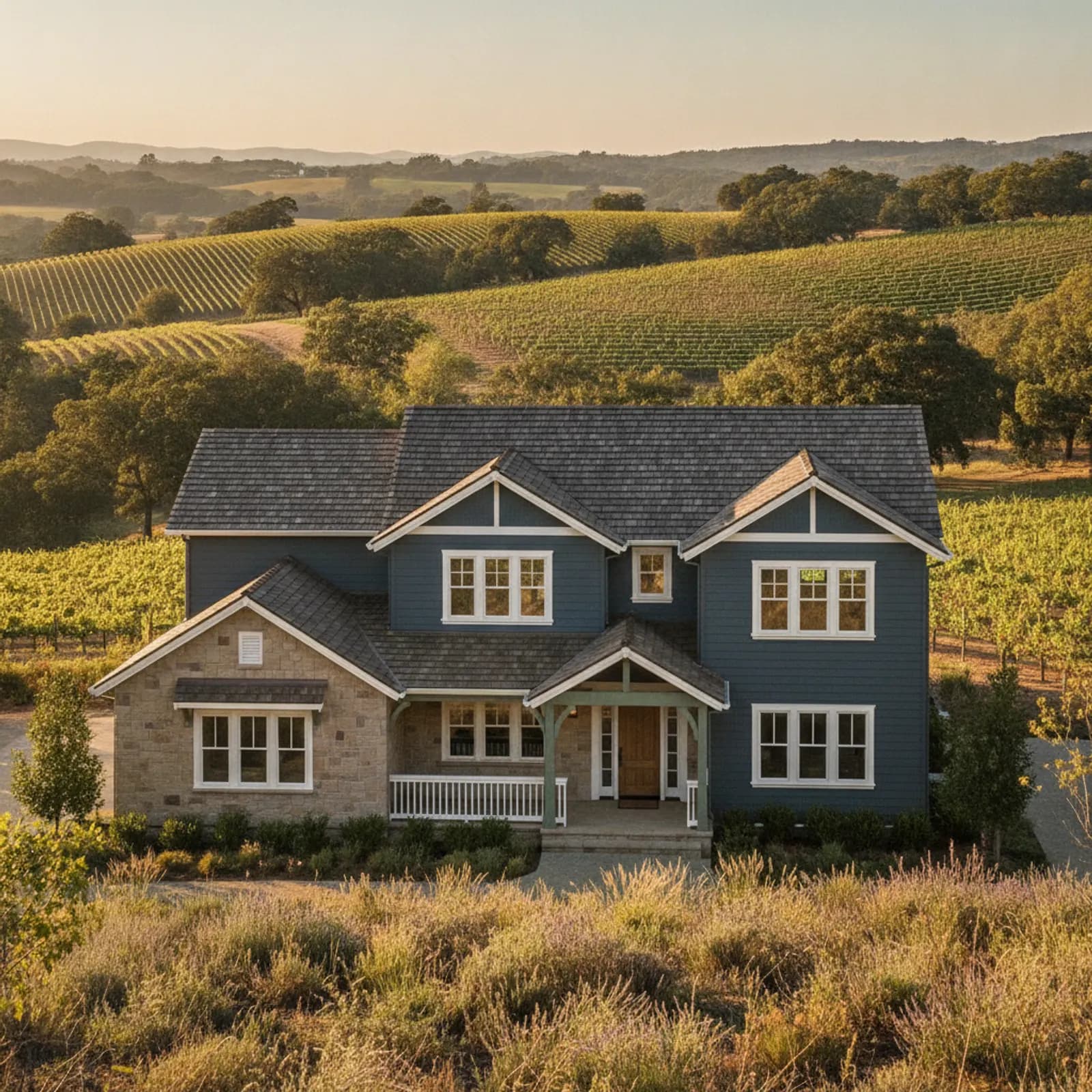
What makes Glen Ellen distinct is the combination of real wildfire exposure and a heavily wooded, canyon-and-ridge setting that homeowners specifically value for its privacy and oak cover — the very vegetation that drives ignition risk. A correct Glen Ellen exterior is non-combustible and hardened at every ember-prone point, designed as one system with the eaves, vents, and ground transition. Because this is a premium architectural market, the hardening has to be achieved without surrendering the custom trim and proportion these homes are built around.
Considering an exterior project in Glen Ellen?
Glen Ellen housing and architecture
Glen Ellen's stock is weighted toward custom and estate homes — wooded canyon and hillside houses, Sonoma Valley estates on larger parcels, historic homes near the village core, and vineyard and ranch properties along the valley floor and lower slopes. A meaningful share of the area is post-Nuns-Fire rebuilds, many already constructed to current non-combustible standards. The homes that survived or predate the fire — often older custom homes wearing wood, board-and-batten, or stucco-and-wood combinations — are where re-cladding delivers the biggest hardening gain, and where matching the original architectural character with custom trim matters most to owners.
Glen Ellen's canyon climate and fire windows
Glen Ellen's summers are warm and dry, and the surrounding oak canyons and ridges cure to tinder through the long rainless stretch from late spring into fall. The critical hazard is the diablo-wind season of early fall, when dry offshore winds funnel through the Mayacamas canyons — the exact mechanism that drove the Nuns Fire through this valley in 2017. The cooler months bring Sonoma Valley moisture that settles in the low canyon ground. The dry-season wind-driven fire exposure dominates the spec here, while the wet season makes a properly lapped drainage plane a real performance factor on the shaded, canyon-floor parcels.
Hardening a Glen Ellen home
Glen Ellen sits squarely in high wildfire-hazard terrain, and we treat it that way. We specify premium Class A non-combustible fiber cement and harden the ignition-prone points — eaves, vents, and the ground-to-wall transition — recognizing that wind-driven ember showers, not just direct flame, were what threatened homes here in 2017. We coordinate cladding with soffit, fascia, and vent detailing so the wooded-canyon home behaves as one hardened envelope, and we document materials and assemblies to support insurability and rebuilding-standard conversations. In a community this directly affected by fire, hardening is the default assumption rather than the exception.
Recommended materials for Glen Ellen
Premium Class A non-combustible fiber cement over a rigorously detailed drainage plane is the core recommendation for Glen Ellen, because it answers the high canyon-and-ridge fire exposure and the valley moisture together with no durability trade-off. Custom architectural trim packages let us preserve the estate and canyon-home character that this market expects without resorting to combustible accents in ember-prone locations. On wooded, hillside, and canyon parcels we steer firmly away from combustible cladding given the documented exposure, and we align eave and vent materials to the wall's fire class so no weak link is left in the assembly.
What an exterior project costs in Glen Ellen
Glen Ellen pricing reflects the premium, architectural nature of the market — custom trim complexity and design expectations sit alongside the standard drivers of size, stories, substrate condition and hidden dry rot, and window integration — plus the fire-hardening scope that nearly every parcel here warrants. Steep, wooded canyon lots and narrow access roads add staging and scaffolding considerations, and post-fire parcels can carry substrate or detailing surprises. We provide a written, scoped estimate after an on-site assessment; in Glen Ellen the hardening line items are not where we recommend economizing, and the written estimate governs the work.
The wooded canyons and ridges
The canyon and hillside parcels climbing toward the Mayacamas and the state-park boundaries are where Glen Ellen's wildfire conversation is sharpest. These are often custom homes set deliberately among oak cover on steep, view-oriented lots, with the same vegetation that owners prize also driving the ignition risk. Narrow, winding canyon roads shape how we stage material and scaffold, which we walk during the on-site scope. For homes that survived or predate the fire, re-cladding is the opportunity to bring an older wall assembly up to a hardened, non-combustible standard.
The village and valley floor
Near the Glen Ellen village core and along the lower valley floor, homes sit on flatter, more accessible ground and include historic properties and smaller-parcel houses. Fire exposure remains a factor given the surrounding terrain, but access is easier and the emphasis can shift toward substrate repair, moisture management on shaded canyon-floor lots, and respecting the village's older character. We tailor the spec to each parcel rather than assuming the valley floor and the ridges call for the same approach.
Rebuilding and design context
Because so much of Glen Ellen has rebuilt or hardened since 2017, exterior work here often intersects with insurance, documentation, and current building-standard conversations more than in unaffected towns. We document the materials and assemblies we install so owners have a clear record for insurers and any design-review context, and we scope each project to its specific parcel — canyon, ridge, or valley floor, survivor or rebuild — rather than applying one template across an area with this much variation in exposure and value.
Glen Ellen is unincorporated: county permits, VOM Water, and Kenwood Fire District
Glen Ellen is not a city. It is an unincorporated community — a Census-Designated Place — governed by Sonoma County rather than a municipal government of its own. That means building permits, planning review, and code enforcement all run through Sonoma County's Permit Sonoma agency in Santa Rosa, not a local town hall. Electric and gas are PG&E, and Glen Ellen sits in one of the highest-PSPS corridors in Northern California — the same offshore-wind conditions that drove the 2017 Nuns Fire trigger PG&E's Public Safety Power Shutoffs, so scheduling on any late-summer through fall exterior project has to plan around them. Water is supplied by the Valley of the Moon Water District, a customer-owned public agency serving Glen Ellen and much of the surrounding lower valley. Fire response is the Kenwood Fire Protection District (or, on some parcels, Mayacamas Volunteer Fire Department) alongside CAL FIRE for wildland calls, both of which run the defensible-space inspection homeowners on wooded parcels should treat as routine. We flag county, utility, and fire-district items at the estimate stage rather than at the wall.
HZ10, the 2017 Nuns Fire, and the 2025 FHSZ remap
Glen Ellen is one of the wine-country communities where the fire framework is neither abstract nor optional. The 2017 Nuns Fire — part of the October 2017 Northern California firestorm — burned directly through Glen Ellen, destroying and damaging homes across the village and surrounding canyons. California's 2025 LRA Fire Hazard Severity Zone map (the first comprehensive revision since 2007) applies directly to Glen Ellen parcels through Sonoma County's adoption, because the community is unincorporated — the county map governs without city re-adoption. Essentially all of Glen Ellen's wooded canyon and hillside terrain carries Moderate to Very High designations, and portions climb into State Responsibility Area (SRA) outright. On designated parcels the 2025 California Wildland-Urban Interface Code governs the exterior wall. The code frame itself changed on January 1, 2026, when Chapter 7A was deleted from the Building Code and moved into the standalone WUI Code. On the material side, Glen Ellen is in James Hardie's HZ10 climate zone; installing HZ5 is a documented warranty misapplication. We check the parcel against the current designation at scoping.
Our process in Glen Ellen
- Step 1
Consultation
We listen to your goals and assess your home on site — exposure, substrate, and architecture.
- Step 2
Design & Proposal
A clear written proposal with the right system specified for your climate and a transparent scope.
- Step 3
Expert Installation
Trained crews install to manufacturer best practices with careful weather-management detailing.
- Step 4
Walkthrough & Support
A final walkthrough, full cleanup, and a clear written record of the scope completed — work we stand behind.
In Glen Ellen, a re-side done right is a serious reduction in wind-driven ignition risk and an architectural upgrade that respects the valley's custom character. We design for both and scope every Glen Ellen project on site so the spec fits the actual canyon, ridge, or valley parcel. Your written estimate governs the work.
FAQ
Glen Ellen — Common Questions
Glen Ellen sits in high wildfire-hazard terrain that burned in the 2017 Nuns Fire, so non-combustible cladding with hardened detailing is strongly advised for nearly every parcel, especially wooded canyon and hillside homes.
Yes. We install non-combustible, hardened exterior assemblies appropriate to current rebuilding standards and document the materials used for insurance and design context.
Yes. Custom architectural trim packages over Class A fiber cement let us preserve estate and canyon-home character while removing combustible accents from ember-prone locations.
Diablo winds funnel dry offshore air through the Mayacamas canyons in early fall, driving the ember showers that threatened Glen Ellen homes in 2017. We harden vents and eaves specifically against that.
Yes on shaded, canyon-floor parcels where wet-season moisture settles. We detail the drainage plane and flashing rigorously alongside the fire strategy.
Home hardening can support insurability in this fire-affected market. We document the materials and assemblies used, though insurers set their own criteria.
Yes. We walk the grade and access during the on-site scope and plan material handling and scaffolding around the actual canyon site and its roads.
A correctly installed fiber cement system commonly performs 30+ years here while materially reducing ignition risk over that lifespan.
Explore
Exterior Services
Helpful Exterior Guides