
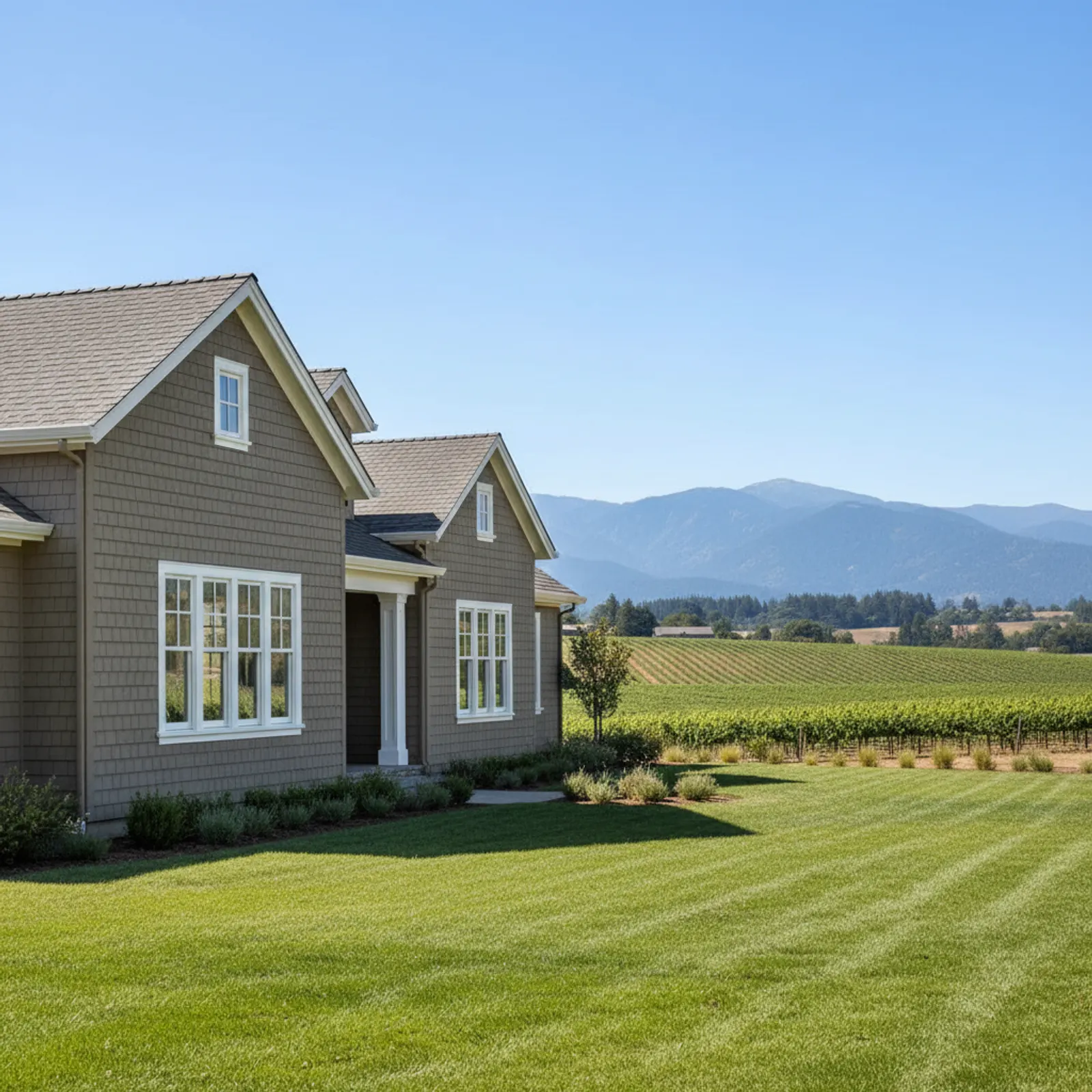
Exterior renovation in Sonoma
The city of Sonoma anchors the historic Sonoma Valley — a famous plaza, deep early-California history, and a surrounding valley of vineyard estates climbing toward the Mayacamas. It sits in genuine wine-country fire terrain (the Nuns and Glass fires pressed against the valley), and its historic fabric is irreplaceable, so exterior work here must be both period-respectful and seriously hardened.
Why it matters here specifically
Sonoma is unusual in that two pressures shape every exterior project before the carpentry even starts. The controlling exterior concern on the hillside and vineyard-edge parcels rising toward the Mayacamas is wildfire, made real here by the Nuns and Glass fires, so we specify Class A non-combustible fiber cement and harden eaves, vents, and ground-to-wall transitions against ember entry. At the same time, homes ringing the plaza and inside the historic core sit under design review, where a swap from old wood lap to a look-alike product, or even a color shift on a street-facing wall, can trigger a look from the planning desk. We plan the period documentation and the fire-hardened assembly to land together rather than fight each other, because in this market a re-side has to preserve early-California character and demonstrate fire resilience in the same project.
Considering an exterior project in Sonoma?
Sonoma housing and architecture
Sonoma's stock blends historic adobe and Victorian/early-California homes around the plaza, established in-town residences, and vineyard and hillside estates in the surrounding valley. The historic core demands genuinely period-sensitive profiles and trim; the estates are detail-intensive, design-led, and increasingly fire-aware.
Sonoma Valley's climate
Warm, dry summers with significant hillside and valley-edge fire windows; mild, moderately damp winters. Fire detailing dominates hillside and vineyard-edge specs; rigorous drainage detailing applies in the lower valley.
Hardening a Sonoma Valley home
Sonoma Valley's hillside and vineyard-edge parcels carry high exposure underscored by the Nuns and Glass fires. We specify Class A non-combustible fiber cement and harden eaves, vents, and ground-to-wall transitions while respecting the area's historic character, and document assemblies for insurability.
Recommended materials for Sonoma
Premium non-combustible fiber cement is the core recommendation — period-appropriate profiles for the plaza-area historic homes, custom architectural packages for the estates. We advise against combustible cladding on exposed valley and hillside parcels.
What an exterior project costs in Sonoma
Sonoma projects span detail-rich historic homes and large estates: custom or period-sensitive trim, fire-hardening scope, estate access, and substrate discovery on older homes. Pricing is established in a detailed written proposal after an on-site assessment.
Permits and overlays that shape Sonoma exterior work
Working on a Sonoma exterior means navigating two overlapping layers of review before a single board comes off. Properties ringing the plaza and within the city's historic core sit under design oversight, so siding profiles, trim reveals, window casings, and even color shifts on a street-facing elevation can trigger a look from the planning desk. Get the documentation and material samples assembled early, because a swap from old wood lap to a look-alike fiber-cement product reads as a change that reviewers will ask about. The second layer is the wildfire side: much of the surrounding valley and the hillside parcels rising toward the Mayacamas ridgeline fall in mapped hazard zones, which pulls in WUI building requirements and defensible-space expectations tied to any meaningful re-side. Practically, that means scheduling, staging access on narrow lanes, and inspections all need to be sequenced so the period-review approval and the fire-hardened assembly land together rather than fighting each other. Plan the paperwork as carefully as the carpentry and the project stays on its timeline.
Why re-siding holds value in the Sonoma market
Sonoma's housing values rest heavily on character and on buyer confidence about fire exposure, and an exterior project speaks directly to both. Around the plaza and in the established in-town neighborhoods, a buyer is paying for an authentic early-California or Victorian feel, so a re-side that preserves correct lap exposure, crisp trim, and period-appropriate detailing protects the very thing that commands the price. Out in the valley and on the hillside estates, the calculus shifts toward risk: appraisers, insurers, and increasingly cautious buyers now weigh whether the cladding and detailing are ignition-resistant, since the Glass and Nuns fires turned that exposure into recent local memory rather than an abstract worry. A documented fire-hardened exterior, with noncombustible or rated materials and clean, ember-resistant detailing, becomes a selling point an agent can point to and an insurer can credit. That dual payoff, heritage appearance preserved and fire resilience demonstrated, is why a well-executed re-side here tends to return more of its cost than a comparable project in a market without Sonoma's particular history and exposure.
City of Sonoma permits, VOM Water District, and Plaza historic-district review
Working exteriors in the City of Sonoma coordinates with a few local authorities. Electric and gas both come from PG&E, and Sonoma is in high-PSPS territory. Water is supplied by the Valley of the Moon Water District (VOMWD), a customer-owned public agency that also serves Glen Ellen and Kenwood. Fire response is the Sonoma Valley Fire District alongside CAL FIRE for surrounding SRA. On the permit side, the City of Sonoma's Planning Department handles building permits, and the Sonoma Plaza Historic District (a California Historical Landmark and one of the state's most intact early-California town centers, anchored by Mission San Francisco Solano) plus the adjacent Historic Overlay District carry strict Design Review Commission oversight — material, profile, and color are all regulated on contributing structures. We flag utility, permit, and heritage items at the estimate stage.
HZ10, the 2017 Nuns Fire and 2020 Glass Fire, and the 2025 FHSZ remap
Sonoma is in James Hardie's HZ10 climate zone; installing HZ5 is a documented warranty misapplication. On the fire side, the City of Sonoma valley-floor blocks around the plaza sit in Low FHSZ territory or unmapped under California's 2025 LRA Fire Hazard Severity Zone map, while the surrounding hillside and vineyard-edge parcels toward the Mayacamas Ridgeline and Sugarloaf Ridge climb into Moderate to Very High designations. Sonoma Valley lived through both the 2017 Nuns Fire (Sonoma Valley firestorm) and the 2020 Glass Fire (spillover from Napa County), and every insurance renewal and rebuild since has run under that shadow. On designated parcels the 2025 California Wildland-Urban Interface Code governs the exterior wall. The code frame changed on January 1, 2026, when Chapter 7A moved into the standalone WUI Code.
Our process in Sonoma
- Step 1
Consultation
We listen to your goals and assess your home on site — exposure, substrate, and architecture.
- Step 2
Design & Proposal
A clear written proposal with the right system specified for your climate and a transparent scope.
- Step 3
Expert Installation
Trained crews install to manufacturer best practices with careful weather-management detailing.
- Step 4
Walkthrough & Support
A final walkthrough, full cleanup, and a clear written record of the scope completed — work we stand behind.
Sonoma rewards an exterior that is genuinely hardened and still true to one of California's most historic towns. We design for both.
FAQ
Sonoma — Common Questions
Hillside and vineyard-edge parcels carry high exposure underscored by the Nuns and Glass fires. Non-combustible cladding with hardened detailing is the baseline there.
Yes — genuinely period-appropriate profiles and trim in non-combustible fiber cement preserve character while adding hardening.
Premium non-combustible fiber cement with a custom trim and profile package — architectural quality, durability, and fire performance together.
The plaza core carries lower exposure; the surrounding valley and hillside parcels are where the serious fire consideration lies.
Moderate — we apply rigorous drainage-plane detailing in the lower valley alongside any fire strategy.
Home hardening can support insurability in this exposed market. We document the materials and assemblies used; insurers set their own criteria.
On exposed hillside and vineyard-edge parcels we advise against it; non-combustible fiber cement carries no finish or durability penalty.
A correctly installed fiber cement system commonly performs 30+ years while materially reducing ignition risk on exposed parcels.
Explore
Exterior Services
Helpful Exterior Guides