
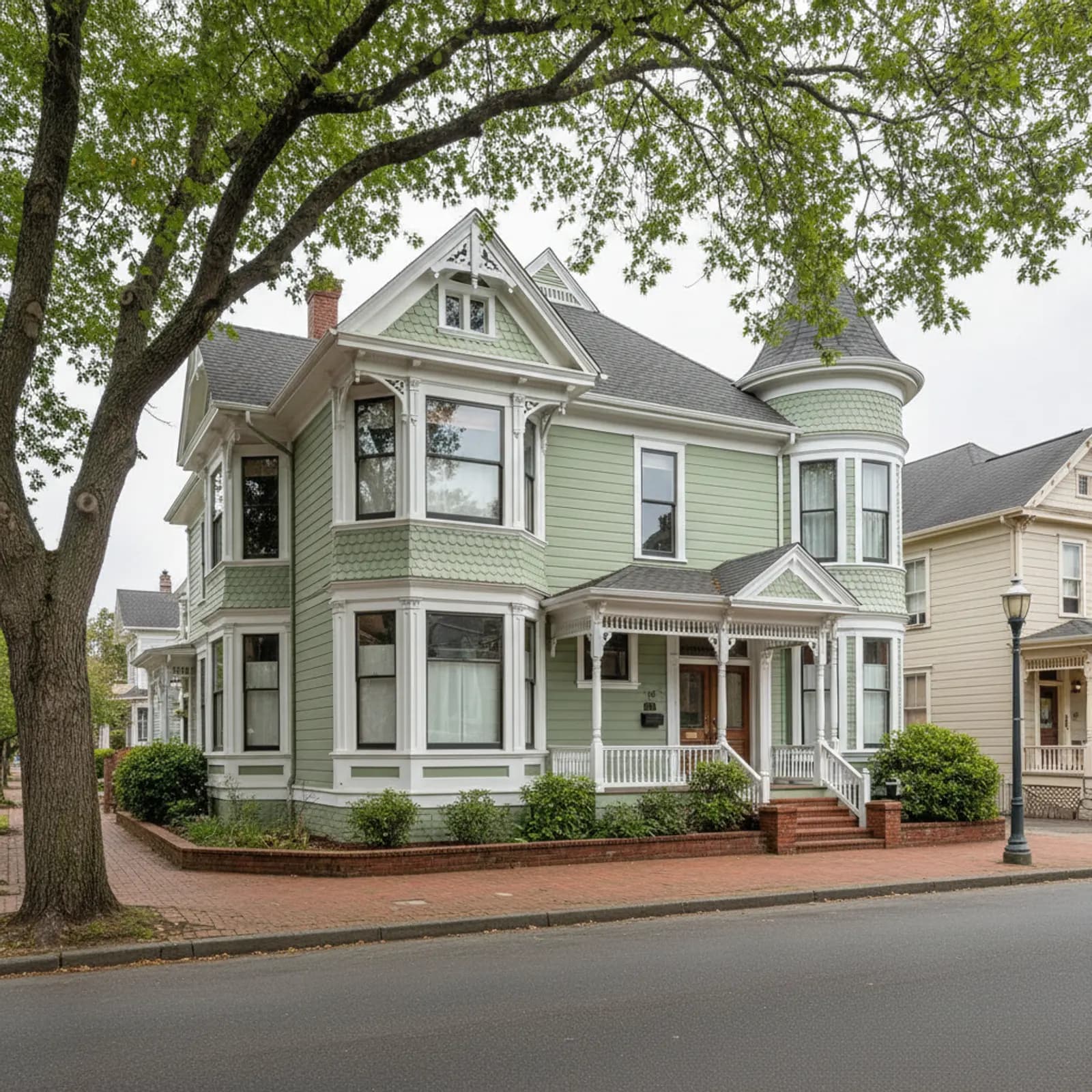
Exterior renovation in Petaluma
Petaluma anchors southern Sonoma County and carries one of the most architecturally distinctive housing stocks in the North Bay, a celebrated collection of Victorian and historic homes around its downtown and the river, alongside mid-century neighborhoods and newer east-side tract development. The defining exterior factor here is North Bay moisture, not fire: Petaluma's setting along the river and toward the bay keeps wall assemblies damp, and its irreplaceable historic homes demand genuinely period-sensitive work. An exterior that performs in Petaluma has to manage water and respect character at the same time, and we weigh both before specifying anything on a given block.
Why Petaluma siding fails the way it does
When a Petaluma exterior gives out, trapped moisture is almost always the real culprit, not the cladding wearing out on its own. The river corridor and the pull toward the bay keep humidity in the walls, fog-shaded older homes are slow to dry, and a weak drainage plane or sloppy flashing lets water sit in the assembly with nowhere to go. On a century-old Victorian that failure has had decades to do its damage. That is why we diagnose the drying path first and treat the cladding swap as the visible half of a moisture fix that is mostly happening behind the boards, then choose genuinely period-appropriate fiber cement profiles so the home reads as itself, only dry and protected.
Considering an exterior project in Petaluma?
Petaluma housing and architecture
Petaluma is known for its intact Victorians and detail-rich historic homes around the downtown, the river, and the west-side blocks, houses where profile, trim, proportion, and millwork must be exact for the result to read as authentic. From there the stock steps through mid-century neighborhoods to contemporary east-side tracts. The historic homes reward genuinely period-appropriate fiber cement profiles and crisp trim that hold the line on character, while the newer production tracts modernize strongly with clean lap-and-batten and a refreshed palette. Matching the approach to the era of the home is most of the craft in Petaluma.
Petaluma's North Bay moisture climate
Petaluma runs cool and fog- and river-influenced, with persistent seasonal moisture that makes drying capacity the controlling exterior concern. The river corridor and the pull toward the bay keep humidity in the walls, and shaded older homes are slow to dry. Heat and fire are comparatively minor here. The wall assembly has to shed bulk water and still breathe back out, which is why drainage-plane and flashing detailing is the single highest-value part of a Petaluma exterior, far more than the cladding choice on its own.
Recommended materials for Petaluma
Fiber cement over a rigorously detailed, drying-capable drainage plane is the core recommendation for Petaluma, in genuinely period-appropriate profiles for the historic districts and clean modern profiles for the newer east-side homes. Fiber cement resists moisture-driven decay far better than the original wood on many older Petaluma houses, and it holds a factory finish through the damp North Bay seasons. On a Victorian, the profile and trim selection is where the value lives; behind it, the drainage detailing is what actually keeps the home dry for decades.
What an exterior project costs in Petaluma
Petaluma pricing turns on home size and stories, the often-high trim and profile complexity of historic homes, and substrate and rot condition once cladding is removed, which is frequently significant on older damp-exposed houses near the river. Window integration, the moisture-management scope, and access on tight downtown and west-side lots all factor in. On historic homes the detailing craftsmanship is central to the value rather than an add-on. We provide a written, scoped estimate after an on-site assessment, and that written estimate governs the work.
Working on Petaluma's historic homes
Petaluma's downtown and west-side historic districts are why people fall in love with the town, and a careless re-side can erase that in a single season. We treat profile width, trim reveals, corner detailing, and millwork as the controlling constraints on those homes, choosing fiber cement profiles that read as authentic rather than generic lap. The goal is to solve the moisture problem invisibly, so a finished Petaluma Victorian looks like itself, only dry and protected, with no obvious sign that the cladding ever changed.
East-side tracts and mid-century blocks
Away from the historic core, Petaluma's mid-century neighborhoods and newer east-side tracts are a different and often more straightforward re-side market. These production elevations modernize dramatically with a clean lap-and-batten system and a refreshed color palette, one of the most cost-effective curb-appeal upgrades available in the city. The moisture detailing still matters because the climate doesn't change across town, but the profile and trim decisions are far simpler than on a Victorian, which keeps these projects efficient.
Why Petaluma siding rots
When a Petaluma home's siding fails, trapped moisture is almost always the real cause, not the cladding wearing out on its own. Poor drainage-plane and flashing detailing in a cool, damp, river-influenced climate lets water sit in the wall with nowhere to go, and the older the home, the longer that has had to do its damage. That is why we diagnose the drying path first and treat the cladding swap as the visible half of a moisture fix that is mostly happening behind the boards.
PG&E, City of Petaluma utilities, and historic-district review
Working exteriors in Petaluma coordinates with a few local authorities that shape scope. Electric and gas both come from PG&E, and Petaluma is in PG&E's PSPS territory, where Public Safety Power Shutoffs during red-flag events can affect scheduling. Water and sewer are supplied by the City of Petaluma Water Resources & Conservation Department, city-owned. Fire response is the Petaluma Fire Department. On the permit side, the City of Petaluma's Community Development Department handles building permits, and the city's Historic Preservation review applies to the Petaluma Historic Commercial District (downtown), the A Street / Martha Street residential district, and other designated blocks where visible exterior work on contributing structures falls under review — material, profile, and color can be regulated. We flag utility, permit, and heritage items at the estimate stage rather than at the wall.
HZ10 climate and Petaluma's low-fire, damp-corridor reality
Petaluma is in James Hardie's HZ10 climate zone despite the fog — HZ10 covers the West's mild coastal-adjacent areas — and HZ10 is the correct spec for a Petaluma home; installing HZ5 is a documented warranty misapplication. On the fire side, Petaluma's low, damp valley setting keeps most of the city outside high-hazard FHSZ territory under California's 2025 LRA Fire Hazard Severity Zone map — the moisture-and-detailing spec is the entire game there. The wooded eastern hillsides toward Sonoma Mountain and the western ridges climbing toward Two Rock can pick up Moderate designations where the grass and brush fuel. On those hillside parcels the 2025 California Wildland-Urban Interface Code may apply. The code frame changed on January 1, 2026, when Chapter 7A moved into the standalone WUI Code, but on a Petaluma re-side the moisture work carries the day.
Our process in Petaluma
- Step 1
Consultation
We listen to your goals and assess your home on site — exposure, substrate, and architecture.
- Step 2
Design & Proposal
A clear written proposal with the right system specified for your climate and a transparent scope.
- Step 3
Expert Installation
Trained crews install to manufacturer best practices with careful weather-management detailing.
- Step 4
Walkthrough & Support
A final walkthrough, full cleanup, and a clear written record of the scope completed — work we stand behind.
Petaluma rewards an exterior approach that respects both its damp climate and its irreplaceable historic character, in equal measure. We scope every Petaluma project on site, and your written estimate governs the work.
FAQ
Petaluma — Common Questions
Fiber cement over a rigorously detailed, drying-capable drainage plane — it manages the North Bay moisture and, in period-appropriate profiles, suits Petaluma's historic homes.
Yes — genuinely period-appropriate profiles and trim are essential on these homes and are central to how we approach Petaluma's historic districts.
Comparatively minor — Petaluma's controlling factor is moisture, not fire. Non-combustible fiber cement is still a sound, low-regret choice.
Almost always trapped moisture from poor drainage-plane and flashing detailing in a damp climate — not the cladding alone. Drying-capable detailing fixes the root cause.
Against persistent seasonal moisture it underperforms a properly drained fiber cement assembly; fiber cement also resists moisture-driven decay far better.
When feasible, yes — correct flashing integration is especially important in a high-moisture environment and on detail-rich historic homes.
Yes — the historic downtown and west side, mid-century neighborhoods, and the newer east-side tracts.
A correctly detailed, well-drained fiber cement system commonly performs 30+ years in Petaluma's damp climate.
Explore
Exterior Services
Helpful Exterior Guides