
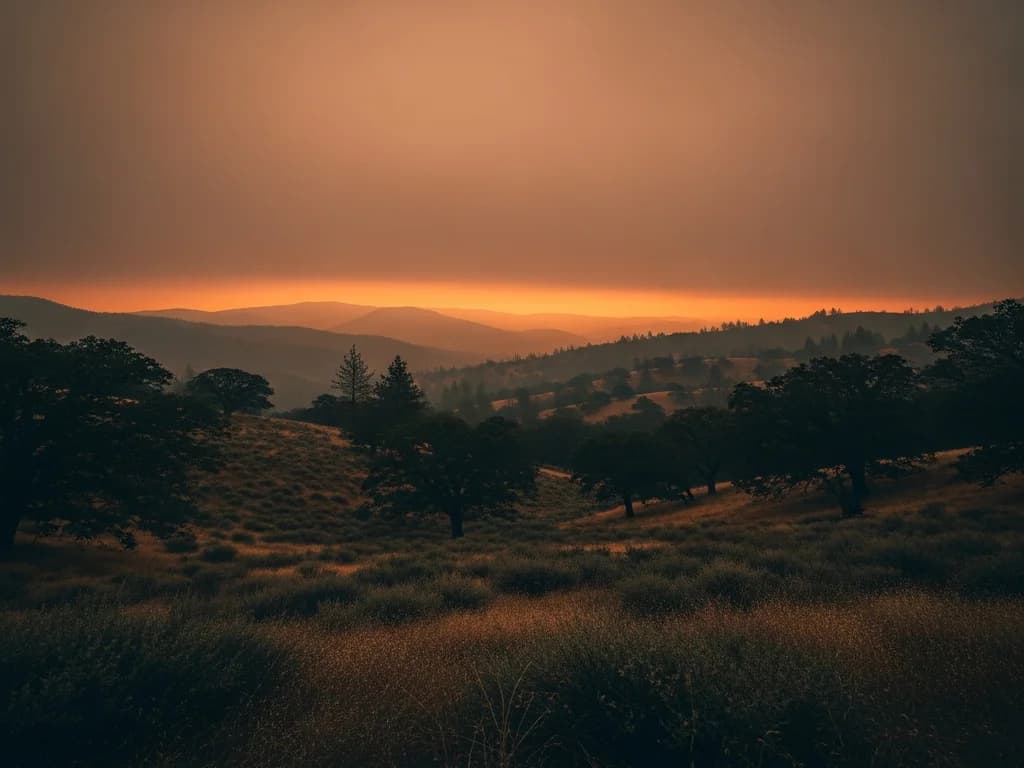
A Gold Country foothill county strung along Highway 49
Amador County climbs from the lower valley edge near Ione up into the Sierra foothills southeast of Sacramento, with Highway 49 threading its historic Mother Lode towns together. Jackson, the county seat, and Sutter Creek anchor a corridor of preserved Gold Rush Main Streets, while Plymouth opens the gateway to the Shenandoah Valley wine region in the north and Pine Grove climbs toward the pines on Highway 88. The Mokelumne River forms the county's southern boundary. This is foothill country first and foremost — rolling oak-grassland giving way to ponderosa as elevation rises — and that wildland setting, not valley sun alone, defines how exteriors here have to be built.
Historic stock meeting a modern fire standard
Much of Amador County's housing predates the modern fire-hardening era. The Gold Rush cores of Jackson and Sutter Creek hold genuine 19th-century and early-20th-century stock, and the foothill subdivisions and rural parcels around them carry decades of wood, hardboard, and economy cladding that the dry foothill summers have weathered hard. Across the county a large share of homes sit in the wildland-urban interface, where ember exposure during the long dry season is the controlling exterior risk. A re-side here is rarely just cosmetic — it is the practical moment to swap end-of-life combustible cladding for a non-combustible, heat-stable system that the foothill setting genuinely calls for.
Utility, permit, and fire authorities across Amador County
Amador County has five incorporated cities — Jackson (the county seat), Sutter Creek, Ione, Amador City (California's smallest incorporated city by population), and Plymouth — plus large unincorporated areas including Pine Grove, Volcano, River Pines, Fiddletown, Drytown, and the Highway 88 corridor toward Buckhorn and Cook Station. Each city runs its own community development department; unincorporated permits go through the Amador County Community Development Department. Electric and gas are PG&E throughout, and the entire county is at the epicenter of PG&E's PSPS-shutoff footprint given the fire history. Water is supplied by the Amador Water Agency (AWA) as the county-wide public agency, alongside Jackson Valley Irrigation District for irrigation on some parcels; private wells are common on rural acreage. Fire response is Cal Fire Amador-El Dorado Unit (AEU) as the primary wildland responder, alongside Jackson Fire, Sutter Creek Fire, Ione Fire, Amador Fire Protection District (northern towns), Lockwood FPD (Highway 88 timber belt), and Jackson Valley FPD.
HZ10 climate and the Amador County FHSZ landscape
Every parcel in Amador County is in James Hardie's HZ10 climate zone — the county sits below the HZ5 high-elevation threshold; installing HZ5 anywhere in Amador is a documented warranty misapplication. On the fire side, the historic town cores (Jackson, Sutter Creek, Ione, Plymouth) sit in Moderate FHSZ territory under California's 2025 LRA Fire Hazard Severity Zone map, while essentially every hillside, wooded, and rural parcel — the Shenandoah Valley vineyard corridor, the Pine Grove Highway 88 timber belt, foothill subdivisions and acreage — carries High to Very High designations. The 2015 Butte Fire (549 homes destroyed across neighboring Calaveras County) is the plainest recent reminder of what a wind-driven event does to this ground. On designated hillside parcels the 2025 California Wildland-Urban Interface Code governs the exterior wall. Chapter 7A moved into the standalone WUI Code on January 1, 2026.
Climate and exterior risk in Amador County
Amador County's foothill climate runs hot, dry summers and cool, wet winters, with conditions shifting markedly by elevation. The lower-elevation western edge near Ione behaves much like the valley — long, high-UV summers that chalk and fade unprotected cladding on south and west walls. As Highway 49 and Highway 88 climb east toward Jackson, Plymouth's wine country, and Pine Grove, summers stay hot and tinder-dry while winters bring more rain and, at the higher pine elevations, occasional light snow. Across the whole county the long, rain-free summer cures the surrounding grass, oak, and brush, which makes wildfire — not moisture — the dominant exterior stressor that drives the specification.
Wildfire exposure in Amador County
Amador County is genuine wildland-urban interface country, and wildfire is the honest controlling factor for most homes here. The rolling oak-grassland of the lower foothills cures to fine flashy fuel every summer, and as elevation rises toward Pine Grove and the Highway 88 pine belt, heavier timber and brush raise the stakes further. Wind-driven foothill fire is a known regional hazard, and ember exposure during the long dry season reaches most parcels in the county. We treat fire as a first-order design input across Amador: non-combustible cladding as standard, with hardened detailing at eaves, vents, and the ground-to-wall transition. The risk is real, we read each parcel honestly, and we never overstate or understate it.
Moisture and light mountain snow
Moisture is a secondary concern across Amador County compared with fire and heat. Winters bring meaningful rain to the foothills, so weather-resistive barrier, flashing, and bottom-course detailing matter, but the long dry summers keep sustained humidity low and exterior moisture problems modest. Snow is not a factor at the lower and mid elevations around Ione, Jackson, Sutter Creek, and Plymouth. Only the higher, forested communities such as Pine Grove along Highway 88 see occasional light snow, which calls for sensible clearances and detailing rather than the heavy alpine assemblies needed up at Tahoe-level elevations. The cladding answer does not change; the drainage-plane care simply scales with elevation and exposure.
Recommended materials for Amador County
Non-combustible fiber cement is the default across Amador County, and the reason is the foothill fire setting rather than fashion: James Hardie and comparable fiber cement resist ignition, shrug off the hot, high-UV foothill summers without chalking, and hold factory-applied color far longer than field paint on the county's unshaded foothill walls. The same product line carries the historic Main Street homes, the foothill subdivisions, and the rural parcels, keeping a fire-hardened spec consistent across very different towns. On the period stock in Jackson and Sutter Creek, narrow lap and accurate trim upgrade durability without erasing Gold Rush character. Engineered wood is a far weaker fit here given the wildland exposure.
FAQ
Amador County — Common Questions
Yes — Jackson, Sutter Creek, Ione, Plymouth, Pine Grove, and the surrounding Gold Country communities along Highway 49 and Highway 88. The Sierra foothills are within our service area, so coverage here is part of our normal range.
For most homes, yes. Amador is wildland-urban interface country where oak-grassland and foothill timber cure to flashy fuel every summer, so ember exposure is a genuine seasonal hazard. Non-combustible fiber cement and hardened detailing are a sound, low-regret choice across the county.
Replacing end-of-life wood, hardboard, or economy cladding with non-combustible, heat-stable fiber cement — often the practical moment to fire-harden a foothill home while upgrading curb appeal and protection in one project.
Yes. These towns hold genuine 19th- and early-20th-century stock, and we select narrow, period-appropriate profiles and accurate trim so durability and fire performance are upgraded without erasing a home's Gold Country character.
Only the higher forested communities such as Pine Grove on Highway 88 see occasional light snow; the lower towns generally do not. Snow calls for sensible clearances and detailing rather than heavy alpine assemblies — the non-combustible cladding choice stays the same.
Original wood, hardboard, and economy cladding was not specified for the hot, high-UV foothill summers. Chalking, cupping, opening joints, and faded paint on south- and west-facing walls is the typical end-of-life pattern across the county.
It is secondary to fire and heat. Foothill winters bring real rain, so flashing and bottom-course detailing matter, but the long dry summers keep sustained moisture problems modest. The drainage-plane care scales with elevation and exposure.
A correctly installed fiber cement system commonly performs 30+ years in the foothill climate, with factory finishes extending the time before any cosmetic refresh on the county's sun-loaded foothill elevations.