8 min read · Hardie
For most Northern California homes, the James Hardie versus LP SmartSide decision comes down to one question first: is your parcel in a wildfire hazard zone? If it is, non-combustible fiber cement (Hardie) is effectively the answer, because California's WUI code pushes you toward non-combustible cladding. If it isn't, engineered wood (LP SmartSide) becomes a genuine option that usually installs faster and costs less. Beyond fire, the honest tie-breakers are your microclimate, your budget, your timeline, and how long you plan to own the home. This guide compares the two products the way we'd talk you through it on your own porch — no brand cheerleading, just the tradeoffs that actually decide it, and how to move forward once you know which one fits. If one of these two isn't in your shortlist, the siding comparison hub covers the other pairings.
Fire performance — the factor that decides most California jobs
This is where the comparison usually ends before it begins. James Hardie is fiber cement — cement, sand, and cellulose — and it is non-combustible (ASTM E136) with a Class A flame-spread rating (ASTM E84), the highest available. LP SmartSide is engineered wood: treated wood strand bonded with resins and waxes. It carries fire-retardant treatment, but it is combustible by definition. In California's High and Very High Fire Hazard Severity Zones, the WUI code and the SFM 12-7A-1 wall-assembly test effectively require non-combustible exterior cladding. That makes Hardie the practical choice for Auburn, El Dorado Hills, Tahoe, Truckee, and the wine-country foothills. Before you fall in love with either product, verify your zone against the official CAL FIRE maps and the 2025 California Wildland-Urban Interface Code requirements — code can take the decision out of your hands. For fire-zone parcels, see our fire-resistant siding scope.
Freeze-thaw and climate durability
Hardie is dimensionally stable through freeze-thaw cycling because it does not absorb moisture biologically the way wood-based products can. James Hardie engineers its boards by climate region — HZ5 for cold, wet conditions including the Tahoe basin, and HZ10 for hot, dry conditions including the Sacramento Valley — so the product you install is matched to where you live. LP SmartSide is treated against rot and handles most California climates well, but its engineered-wood substrate is inherently more sensitive to repeated freezing when paired with standing water at horizontal ledges. For Tahoe and Truckee specifically, where deep snow loads and hard freezes punish exteriors, Hardie HZ5 is the durability leader. In the non-WUI Sacramento Valley, both products perform for decades when the assembly is detailed correctly. Either way, our weather-resistant exteriors approach is about the whole wall, not just the board on the front.
Installation labor, weight, and timeline
The two products handle very differently on a jobsite, and that shows up in both schedule and cost. LP SmartSide weighs roughly 60% of what comparable fiber cement weighs per square foot, cuts with standard wood-cutting tools, and lets a smaller crew move faster — a typical re-side often completes 20-30% quicker in LP. Hardie is dense and heavy: a single plank can weigh around two and a half times its engineered-wood equivalent, which means more fasteners, more careful staging, dust-controlled cutting with a HardieBlade, and slower movement up scaffolding on two-story homes. That weight is part of why fiber cement resists wind uplift and impact so well, but it is less forgiving of marginal sheathing. The labor differential between the two materials typically runs 10-20%. None of this is a reason to pick one blindly — it's a reason to confirm your substrate before committing, which we do on every James Hardie siding and LP SmartSide siding scope.
What it costs — qualitatively, and how to read a bid
We don't quote a number sight-unseen, and you should be wary of anyone who does. Directionally, LP SmartSide material runs meaningfully less per square foot than Hardie, and combined with the faster install, total installed cost on a typical non-WUI California re-side is often noticeably lower in LP. But the spread between two honest bids on the same product is driven far more by the work behind the boards than by the brand: weather-resistive barrier and overlap, flashing at windows and kickouts, fastener type and spacing, and the substrate-repair allowance for whatever tear-off uncovers. A quote that is just a per-foot price or a single lump total is a quote you cannot truly compare. Ask every bidder to itemize material, labor, and substrate repair separately. For a deeper breakdown of where the fire-rated premium is mandatory versus optional, our California siding cost guide walks through it region by region.
Factory finish, color, and field paint
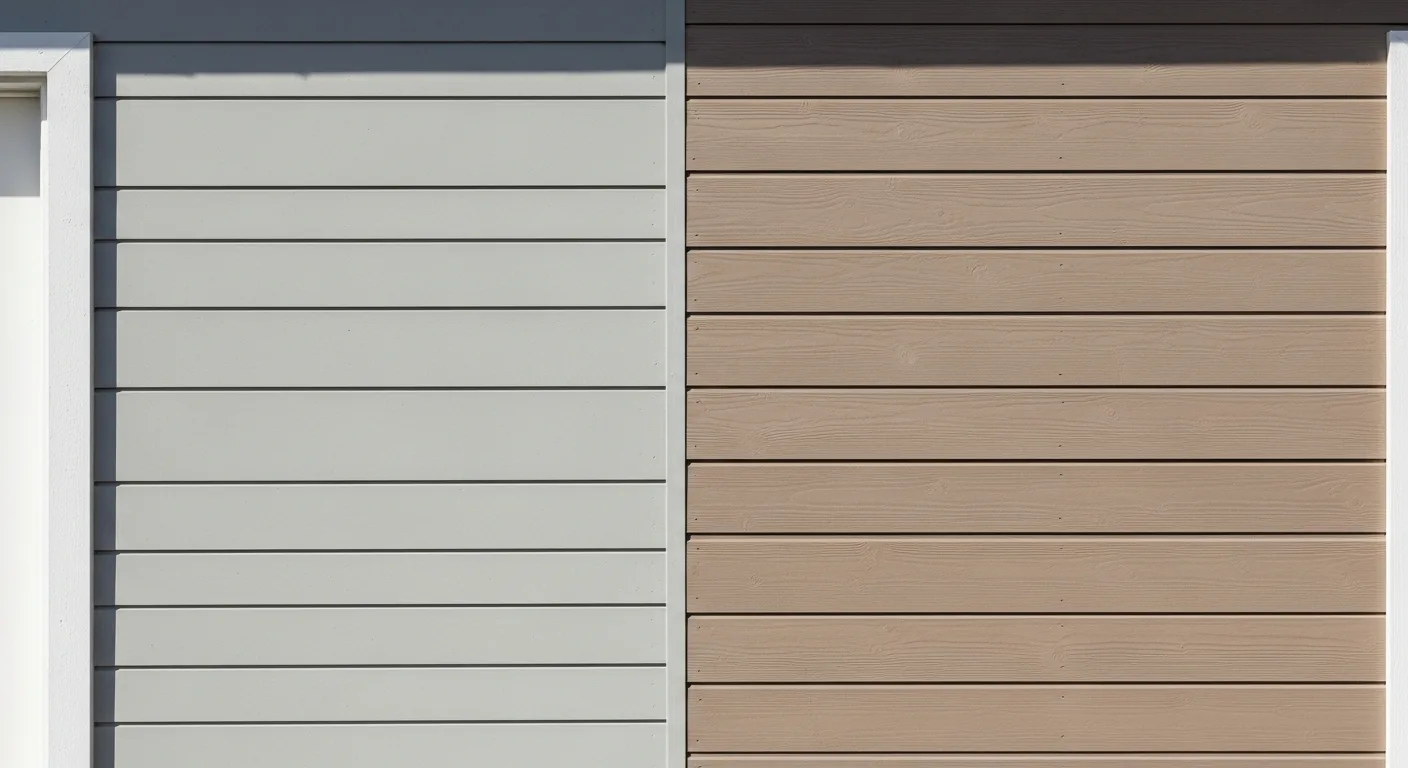
Hardie's ColorPlus is among the strongest factory finishes in the cladding industry: a baked, chemistry-bonded color system carrying a 15-year finish warranty that holds up against the near-vertical UV that chalks ordinary paint on south- and west-facing walls. LP SmartSide offers prefinished options through factory programs with comparable durability claims, plus a primed-and-field-painted path. Both factory finishes significantly outlast field paint in California sun, and the recurring cost of recoating a field-painted exterior every several years quietly outspends the factory-finish premium within a decade on hot elevations. You can read the manufacturer's own explanation of the ColorPlus system, and our exterior painting page covers when field finishing genuinely makes sense. Color range is broad on both lines, so palette is rarely the deciding factor — finish longevity and UV exposure are.
Aesthetics and architectural fit
Both product families reach across the architectural styles common in Northern California. Hardie offers lap in multiple exposures, panel for board-and-batten looks, shingle, soffit, and matching trim, which together support modern farmhouse, craftsman, contemporary, and traditional homes. LP SmartSide offers a comparable range of profiles and an equally complete trim and accessory system, and many homeowners feel engineered wood photographs slightly warmer in listing and curb-appeal shots. Honestly, aesthetics rarely decide this matchup — you can build essentially the same elevation in either material. Where appearance does matter is consistency: a fully re-clad home with clean lines and a factory finish reads as a finished project, while a partial or mismatched job invites a buyer to deduct for work they expect to redo. Let microclimate and fire zone drive the material choice, then let color and trim detailing do the cosmetic work. Our fiber cement siding overview shows the profile range in more detail.
Moisture management behind both claddings
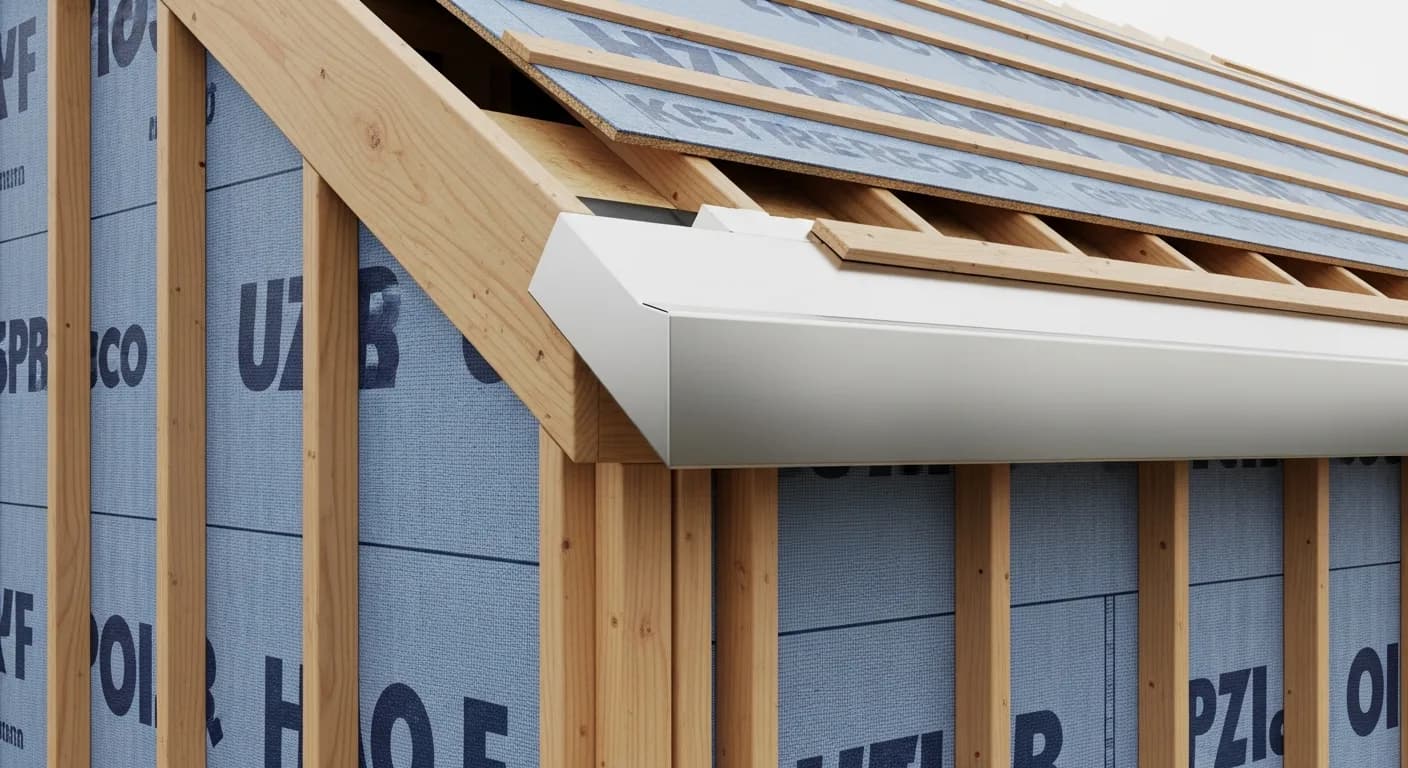
Whichever board you choose, the wall assembly behind it matters as much as the cladding itself. Coastal fog belts, Sierra snow loads, and Central Valley wind-driven rain all push moisture toward the sheathing, and neither fiber cement nor engineered wood substitutes for a properly detailed water-resistive barrier. Hardie is dimensionally stable when wet and won't swell, but the cut edges are not waterproof, so primed end cuts and the recommended gap above flashings still matter. LP SmartSide carries factory treatment through the full thickness of the strand, which protects field cuts better than older hardboard, yet engineered wood is more sensitive to standing water at horizontal ledges and deck-to-wall transitions. On every project we want a continuous drainage plane, kickout flashing at every roof-wall intersection, and a clear gap between the bottom course and any hardscape. The durable truth is that installation detailing, not the brand on the box, keeps water out of the wall over a twenty-year horizon — a premium board over a poorly flashed wall will still rot the framing.
Warranty — read the fine print, not just the headline number
On paper, LP SmartSide's warranty headline is longer: a 50-year limited substrate warranty versus Hardie's 30-year limited substrate warranty, and both lines carry strong factory-finish warranty terms. But a longer number is not automatically a better outcome. Every one of these warranties is a limited warranty with honest exclusions and proper-installation requirements, and coverage is only as good as the install that backs it. We install both products to manufacturer specification precisely so that warranty coverage stays intact — flashing, fastening, clearances, and finish handling all affect whether a future claim is honored. Ask any contractor to confirm in writing that they install to spec, and keep your written estimate and product documentation together. The warranty that matters most is the one that survives a real claim, which depends on workmanship far more than on the headline year count printed in the brochure.
Resale value, appraisal, and insurance
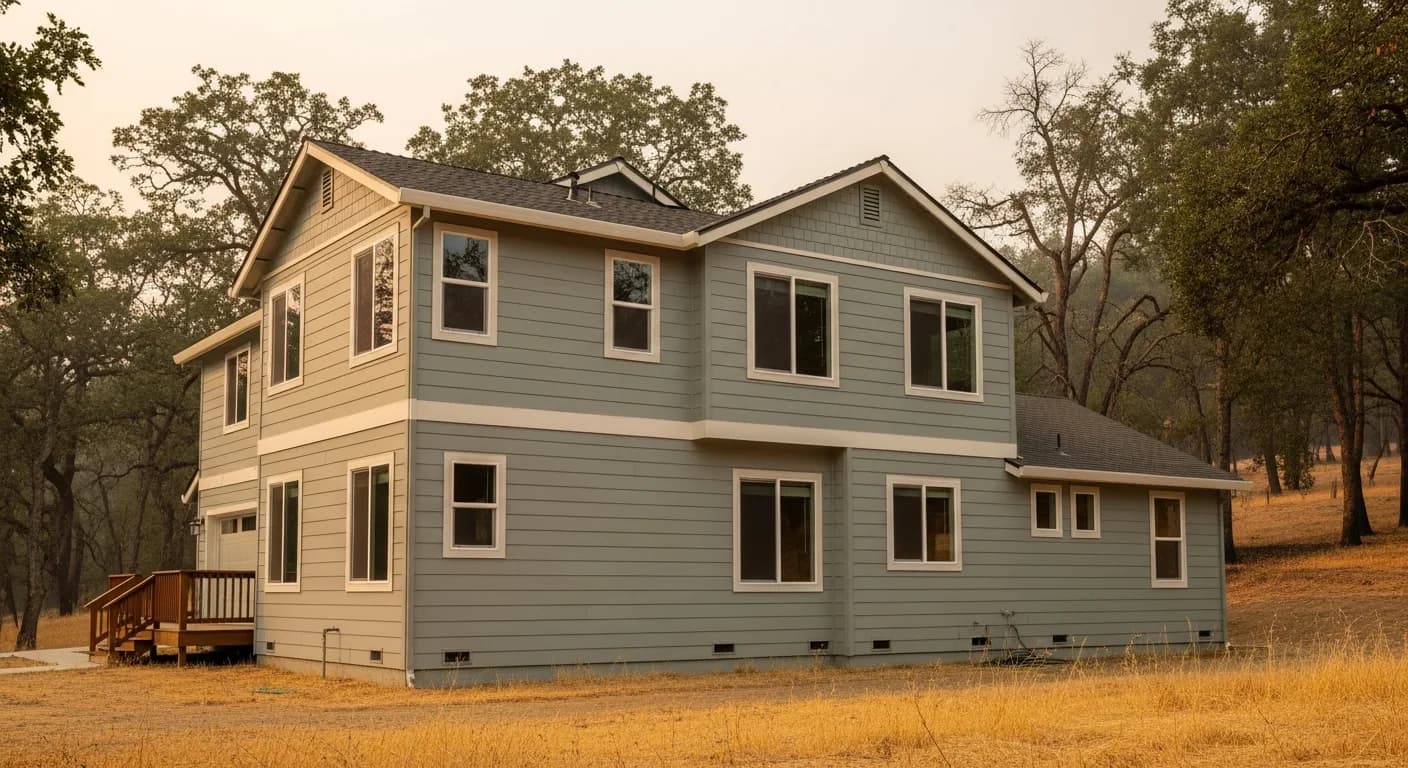
Both products read as upgrades to buyers and appraisers compared with aging vinyl or original T1-11, but they're perceived differently by market. In California's wildfire-aware regions, a non-combustible exterior has become a tangible selling point, increasingly relevant to home-insurance underwriting that has tightened sharply for high-hazard properties. A buyer who has been quoted steep premiums — or denied coverage — may place real value on fiber cement's fire rating in a way that's hard to quantify but easy to feel in negotiation. Engineered wood often photographs warmer, which helps the first impression that drives showings. Remodeling cost-recovery data consistently ranks siding replacement among the better-returning exterior projects, though recovery is rarely dollar-for-dollar, so resale alone shouldn't drive the spend. If a sale is a few years out, choose the material that suits your microclimate and insurance picture first, then let finish color and trim do the cosmetic work listing photos reward.
Decision framework — when each one wins
Choose Hardie when: your parcel sits in any WUI or fire hazard severity zone where the WUI code applies; you have hot-dry, high-UV Sacramento Valley exposure best matched by HZ10; you want maximum long-term color retention from ColorPlus; or you're building a premium custom project where brand recognition supports resale. Choose LP SmartSide when: your parcel is clearly non-WUI and budget is a real constraint; you need a faster timeline; you're refreshing a suburban tract home; or the cost difference would fund other worthwhile improvements like windows, insulation, or design upgrades. The wrong move is picking on price alone in a fire zone — LP simply isn't an option accepted under the WUI code for exposed cladding there, so the savings are illusory. Match the material to the parcel and the parcel decides cleanly for most homeowners.
Common mistakes that blow up either choice
The most expensive errors in this decision aren't about the brand — they're about process. The first is choosing LP for the savings on a fire-zone parcel and discovering at permit or inspection that non-combustible cladding is required, forcing a costly redo. The second is comparing bids on headline per-foot price while ignoring the substrate-repair allowance, then getting hit with a change order when tear-off exposes rotted sheathing. The third is skipping the moisture details — kickout flashing, drainage gap, primed cut edges — under the assumption that a premium board is self-protecting; it isn't. A fourth is field-painting a hot south wall to save money, then recoating every few years until the cumulative cost exceeds the factory-finish premium. The last is hiring on price without verifying the contractor: the CSLB license lookup confirms an active California license and any board history before you sign. Avoid these and either product will serve you for decades.
How Sierra Siding helps you decide — and what's next
We install both Hardie and LP SmartSide regularly, and we recommend based on the parcel and the project, not on which product carries higher margin for us. For foothill, Tahoe, and wine-country work we generally lead with Hardie because of the fire and freeze-thaw realities. For Sacramento Valley non-WUI tract refresh on a tight budget, LP SmartSide gets serious consideration and sometimes wins. We scope on site, verify your fire zone and substrate condition before recommending a material, and itemize your estimate so material, labor, and repair allowance are all visible — your written estimate governs the final figure, and we'll tell you honestly when the lower-cost product is the right answer. The cleanest next step is to get a free on-site estimate: we'll walk your walls, confirm your zone, and give you a recommendation grounded in your actual home rather than a generic spec sheet. From there the choice between James Hardie siding and LP SmartSide siding usually becomes obvious.
James Hardie vs. LP SmartSide at a glance
| Attribute | James Hardie fiber cement | LP SmartSide engineered wood |
|---|---|---|
| Material | Cement, sand, cellulose | Treated engineered wood strand |
| Combustibility | Non-combustible, Class A | Combustible (a wood product) |
| WUI-code fit | Widely used in wildfire-exposed assemblies | Limited where non-combustible cladding is required |
| Weight & handling | Heavier; more labor-intensive | Lighter; faster to handle and cut |
| Moisture behavior | Does not wick or swell | Treated against rot but still wood-based |
| Finish | Factory ColorPlus option, long finish warranty | Pre-finish/field options; warranty varies |
| Relative installed cost | Typically higher | Typically lower |
| Best fit | Fire-exposed, hot, high-UV California sites | Budget-sensitive, lower-fire, faster installs |
Key takeaways
- Fire zone usually decides it: Hardie is non-combustible and WUI-code-friendly; LP is combustible and limited where non-combustible cladding is required
- Verify your CAL FIRE Fire Hazard Severity Zone before choosing — local code can take the decision out of your hands
- Hardie HZ5 leads in Tahoe freeze-thaw; HZ10 is matched to hot-dry Sacramento Valley
- LP installs roughly 20-30% faster and typically costs less installed on non-WUI projects
- Bids diverge most on the work behind the boards — flashing, WRB, fasteners, and substrate-repair allowance — so make every bidder itemize
- Hardie's ColorPlus finish resists UV chalking; field paint on hot walls quietly outspends it within a decade
- LP's 50-year substrate warranty headline is longer than Hardie's 30-year, but warranty value depends on a to-spec install
- Match material to microclimate and insurance picture first; resale and aesthetics follow from a clean, fully re-clad result
FAQ
Quick Answers
Both last decades when installed well. Hardie typically edges it in harsh exposure — Tahoe freeze-thaw, Sacramento heat extremes, coastal Bay Area moisture — because it doesn't absorb moisture biologically. LP SmartSide's 50-year substrate warranty is actually longer than Hardie's 30-year, but real-world performance favors Hardie in extreme climates. For most California ownership periods, either product outlives the homeowner's time in the home when the assembly is detailed correctly.
Hardie. It's non-combustible (ASTM E136 / Class A) and compatible with WUI-code requirements, making it the practical choice for any parcel in CAL FIRE's High or Very High Fire Hazard Severity Zones. LP SmartSide is combustible and generally not a compliant option for new or remodeled exposed cladding in those zones, so on a fire-zone parcel the choice is largely made for you.
On non-WUI parcels, yes — LP material costs less and installs faster, so total installed cost is typically lower than Hardie. That savings can fund windows, insulation, or design upgrades. On WUI parcels the comparison is moot, because LP isn't an option accepted under the WUI code for exposed cladding and the apparent savings disappear at permit or inspection.
Fiber cement is dense — a plank can weigh roughly two and a half times a comparable engineered-wood plank — which means more fasteners and more careful handling. Most standard wood-framed California homes don't need structural upgrades for either product, but the heavier fiber cement is less forgiving of marginal or skip sheathing. We verify substrate condition on site before recommending a material so weight isn't a surprise mid-install.
Don't compare on headline per-foot price. The lines that matter are the weather-resistive barrier brand and overlap, flashing at windows and kickouts, fastener type and spacing, and the substrate-repair allowance. Ask every bidder to itemize material, labor, and repair separately. A single lump total often hides the assembly that actually keeps the wall sound, and the cheapest number is frequently the one that omits it.
On hot south- and west-facing California walls, usually yes. Hardie's ColorPlus and LP's prefinished programs are baked finishes engineered to resist UV chalking, while field paint typically needs recoating every several years. The recurring recoat cost quietly outspends the factory-finish premium within about a decade on high-UV elevations. We'll run the honest recoat math with you rather than steering you toward the pricier option.
Both read as upgrades over aging vinyl or T1-11. In wildfire-aware California markets, a non-combustible exterior is an increasingly tangible selling point tied to insurance underwriting. Engineered wood often photographs warmer for listing shots. But what moves an appraisal most is condition and consistency — a fully re-clad home with a clean factory finish recovers value far better than a partial or mismatched job in either material.
Yes. We install both James Hardie and LP SmartSide to manufacturer specification, which is what keeps warranty coverage intact. The decision is project-specific: we recommend based on your parcel, fire zone, and goals, not on which product carries higher margin for us. We'll tell you honestly when the lower-cost product is the right answer for your home.
Check your address against the official CAL FIRE Fire Hazard Severity Zone maps, and confirm the applicable WUI-code requirements for your jurisdiction. If your parcel falls in a High or Very High zone, non-combustible cladding is effectively required and Hardie becomes the practical choice. We verify your zone on site as part of every estimate so the material recommendation matches your actual code situation.
Sources
Authoritative references
- James Hardie — official product & installation resources
- 2025 California Wildland-Urban Interface Code (Title 24, Part 7) — exterior walls & wall coverings, §504.5
External links to government, code, and manufacturer sources. Sierra Siding is not affiliated with these organizations; references are provided for verification.