Exterior renovation in Kenwood
Kenwood is a small wine-country hamlet strung along Highway 12 between Glen Ellen and the Santa Rosa city edge, hemmed by the Sugarloaf Ridge and Mayacamas slopes that frame upper Sonoma Valley. It is a low-density community of estates, vineyard homes, and acreage parcels rather than a town grid, and that setting shapes every exterior conversation we have here. The hills that give Kenwood its beauty also place it squarely in high wildfire country, so for most homeowners a re-side is as much about reducing ignition risk as about refreshing the look of a valuable property.
Hardening without losing the wine-country look
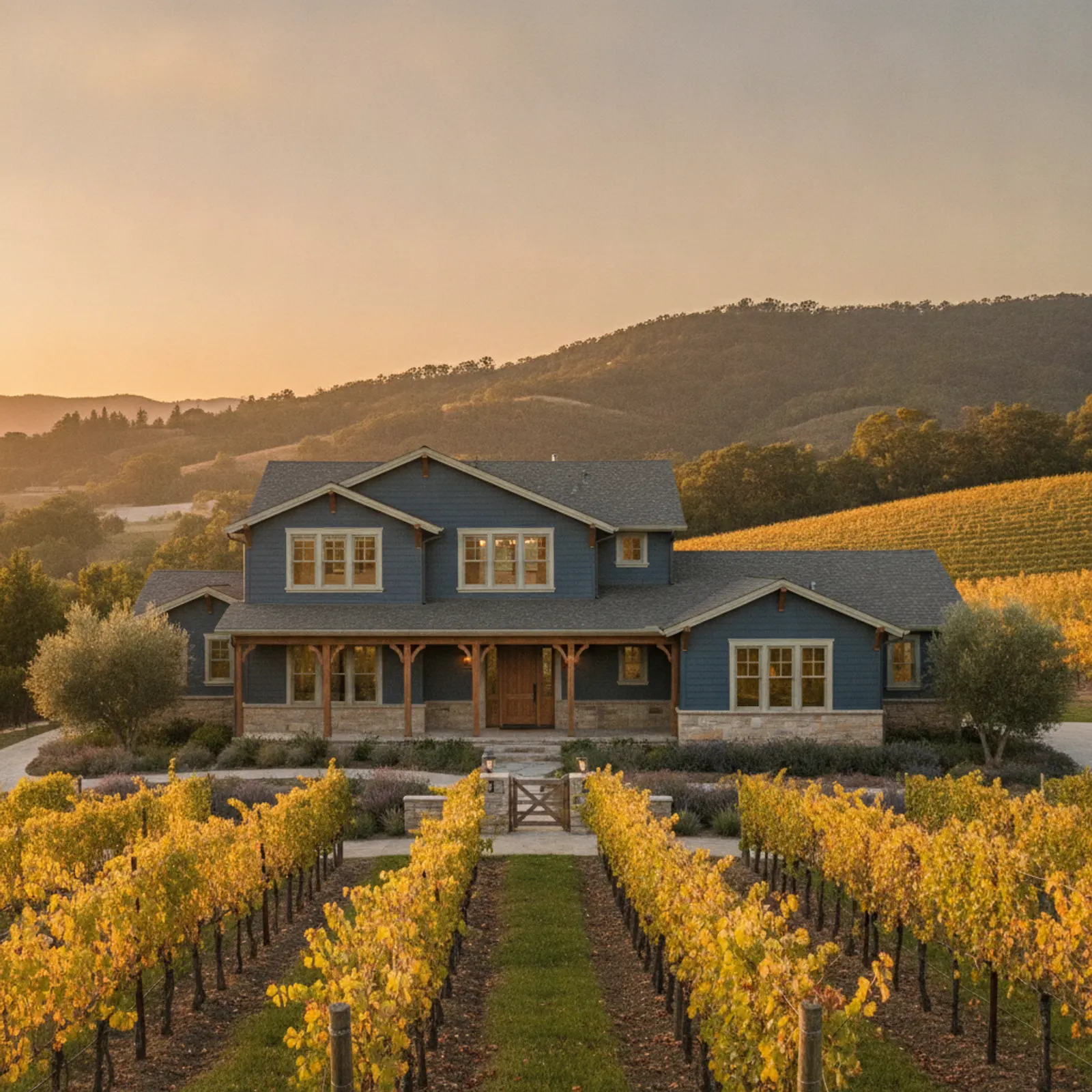
What homeowners in Kenwood want is rarely a generic re-clad. These are properties where the exterior is part of the asset — vineyard estates and custom homes where trim detailing, proportion, and finish all matter. Our job is to deliver a genuinely fire-hardened, non-combustible wall assembly that still reads as a refined wine-country home. We design the fire detailing and the architectural detailing together from the outset, so the hardened result looks intentional rather than utilitarian.
Considering an exterior project in Kenwood?
Kenwood housing and architecture
Kenwood's housing is dominated by estate and vineyard properties on generous parcels, mixed with older valley-floor farmhouses near the highway and custom homes climbing the lower Mayacamas and Sugarloaf slopes. Many of these homes still wear wood lap, board-and-batten, or aging stucco-and-wood combinations chosen decades ago for their rural character. Re-cladding here is rarely about matching a tract streetscape and almost always about upgrading the underlying material of an individual, distinctive home — preserving the board-and-batten or lapped rhythm that suits the valley while replacing the combustible substrate beneath with a non-combustible system.
Kenwood's wine-country climate and fire windows
Kenwood runs hot and bone-dry through the long Sonoma Valley summer, and the surrounding oak-grassland and chaparral cure into available fuel by late summer and early fall. That season overlaps with the diablo-wind events that drove the 2017 Nuns Fire through this exact corridor, making the wind-driven fire window the single controlling stressor on a Kenwood exterior. Winters bring moderate North Bay moisture that settles along the valley floor, enough to require a properly lapped drainage plane, but it is the dry-season fire exposure on the slopes that dictates the core of every spec we write here.
Hardening a Kenwood home against wildfire
The Nuns Fire of October 2017 burned through the Kenwood and Glen Ellen corridor, and that history is not abstract for the homeowners we meet here. For at-risk parcels we specify Class A non-combustible fiber cement and concentrate on the ignition-prone transitions — eaves, vents, and the ground-to-wall zone where embers collect against a slope. We coordinate cladding with soffit, fascia, and vent detailing so the wall behaves as one hardened system, and we document the materials and assemblies installed to support insurability and rebuilding-standard conversations. On Kenwood's hillside and grassland-edge lots this exposure is real, and we treat it that way.
Recommended materials for Kenwood
Class A non-combustible fiber cement over a rigorously detailed drainage plane is the core recommendation for Kenwood, because it answers the dominant wildfire exposure while still carrying the moderate valley-floor moisture without a durability trade-off. For estate work we build custom architectural trim packages around that fiber cement so the hardened wall keeps the proportions and finish a wine-country home deserves. We generally steer away from combustible cladding regardless of aesthetic preference on these slopes, and we match eave and vent materials to the wall's fire class so embers find no soft entry point.
What an exterior project costs in Kenwood
Kenwood pricing follows the usual drivers — overall size, number of stories, trim complexity, substrate condition and any hidden dry rot, and window integration — but the fire-hardening scope and the estate-grade trim detailing are typically the largest variables here. Long private drives, steep hillside parcels, and the staging required on acreage can add access and logistics cost, and older farmhouses sometimes reveal substrate surprises behind aging wood. We provide a written, scoped estimate after an on-site assessment; in Kenwood the hardening and detailing line items are not where we recommend economizing.
Upper Sonoma Valley and the Sugarloaf slopes
The parcels climbing toward Sugarloaf Ridge State Park and the Mayacamas above Kenwood are where the wildfire conversation is sharpest. These are often custom, view-oriented homes on steep, partly wooded lots with real ember and grassland exposure. For homes that survived or predate the Nuns Fire, re-cladding is a chance to bring an older wall assembly up to a hardened, non-combustible standard. Steep grades and narrow drives shape how we stage material and scaffold, which we walk and plan during the on-site scope.
Vineyard estates and acreage properties
Much of Kenwood is vineyard and estate property where the home sits well off the road behind gates and rows of vines. On these parcels the exterior is an expression of the property's value, so we treat trim, profile, and finish as part of the deliverable rather than an afterthought. Defensible-space clearing around these homes also changes the ignition picture, and we scope the wall assembly to complement whatever clearing the owner maintains rather than assuming a generic suburban lot.
Kenwood is unincorporated: Permit Sonoma, VOM Water, Kenwood Fire District
Kenwood is not a city. It is an unincorporated community — a Census-Designated Place — governed by Sonoma County rather than a municipal government of its own. That means building permits, planning review, and code enforcement run through Sonoma County's Permit Sonoma agency in Santa Rosa, not a local town hall. Electric and gas are PG&E, and Kenwood is in one of the highest-PSPS corridors in California — the same dry offshore-wind conditions that drove the 2017 Nuns Fire through this valley trigger PG&E's Public Safety Power Shutoffs, so scheduling on any late-summer through fall exterior project has to plan around them. Water is supplied by the Valley of the Moon Water District, a customer-owned public agency serving Kenwood and adjacent lower valley. Fire response is the Kenwood Fire Protection District — the community's own independent fire district — alongside CAL FIRE for wildland calls. Both agencies run defensible-space inspection on wooded parcels. We flag county, utility, and fire-district items at the estimate stage rather than at the wall.
HZ10, the 2017 Nuns Fire, and the 2025 FHSZ remap
Kenwood is one of the wine-country communities where the fire framework is neither abstract nor optional. The 2017 Nuns Fire burned directly through Kenwood as part of the October 2017 firestorm, and the community has lived under the shadow of that event ever since. California's 2025 LRA Fire Hazard Severity Zone map (the first comprehensive revision since 2007) applies directly to Kenwood parcels through Sonoma County's adoption, because the community is unincorporated. Essentially all of Kenwood's hillside and grassland-edge terrain carries Moderate to Very High designations under the current map, with portions climbing into State Responsibility Area (SRA) outright toward Sugarloaf Ridge and the Mayacamas. On designated parcels the 2025 California Wildland-Urban Interface Code governs the exterior wall. The code frame itself changed on January 1, 2026, when Chapter 7A was deleted from the Building Code and moved into the standalone WUI Code. On the material side, Kenwood is in James Hardie's HZ10 climate zone; installing HZ5 is a documented warranty misapplication. We check the parcel against the current designation at scoping.
Our process in Kenwood
- Step 1
Consultation
We listen to your goals and assess your home on site — exposure, substrate, and architecture.
- Step 2
Design & Proposal
A clear written proposal with the right system specified for your climate and a transparent scope.
- Step 3
Expert Installation
Trained crews install to manufacturer best practices with careful weather-management detailing.
- Step 4
Walkthrough & Support
A final walkthrough, full cleanup, and a clear written record of the scope completed — work we stand behind.
In Kenwood, a re-side done right is a meaningful reduction in wildfire risk and a refined upgrade to a valuable wine-country home at the same time. We design for both, and we scope every Kenwood project on site so the spec fits the actual parcel and slope. Your written estimate governs the work.
FAQ
Kenwood — Common Questions
For most Kenwood parcels, yes. The community sits in high wildfire country and the 2017 Nuns Fire burned this corridor, so non-combustible cladding with hardened detailing is strongly advised.
Class A non-combustible fiber cement over a rigorously detailed drainage plane, finished with a custom trim package so the hardened wall still reads as a refined wine-country home.
Home hardening can support insurability in this fire-exposed market. We document the materials and assemblies installed, though insurers set their own criteria.
It is moderate. The valley floor sees enough seasonal North Bay moisture that we detail the drainage plane and flashing properly, but the controlling stressor here is dry-season wildfire.
Yes. We regularly scope steep Sugarloaf and Mayacamas parcels and vineyard estates on long private drives, planning staging and access during the on-site visit.
On Kenwood's hillside and grassland-edge lots we generally advise against it given the exposure. Non-combustible fiber cement carries no durability penalty here.
Yes. Fiber cement is available in board-and-batten and lapped profiles, so we can preserve the wine-country character while replacing the combustible substrate underneath.
A correctly installed fiber cement system commonly performs 30+ years here while materially reducing ignition risk over that lifespan.
Explore
Exterior Services
Helpful Exterior Guides