Exterior renovation in Geyserville
Geyserville is a small Alexander Valley town on the upper Russian River, ringed by vineyards and the wooded ridges that separate Sonoma County from Lake County to the east. It is a compact community — a short historic downtown surrounded by ranch, vineyard, and acreage properties — and its exterior-renovation conversation is dominated by one fact of geography: this is high wildfire country, and the 2019 Kincade Fire ignited on a ridge just east of town. For most Geyserville homeowners, replacing aging cladding is an opportunity to harden a home that sits genuinely exposed.
Heat, wind, and fire in one exposure
Geyserville also runs among the hottest spots in the county, with inland summer temperatures regularly outpacing the coastal and southern parts of Sonoma. That heat cures the surrounding grassland and chaparral into fuel and pairs with the diablo-wind events that drive the region's worst fires. A correct Geyserville exterior therefore has to be non-combustible, UV-durable against intense inland sun, and detailed to handle wind-driven embers — a combination we engineer from the start rather than bolting fire detailing onto a standard re-clad at the end.
Considering an exterior project in Geyserville?
Geyserville housing and architecture
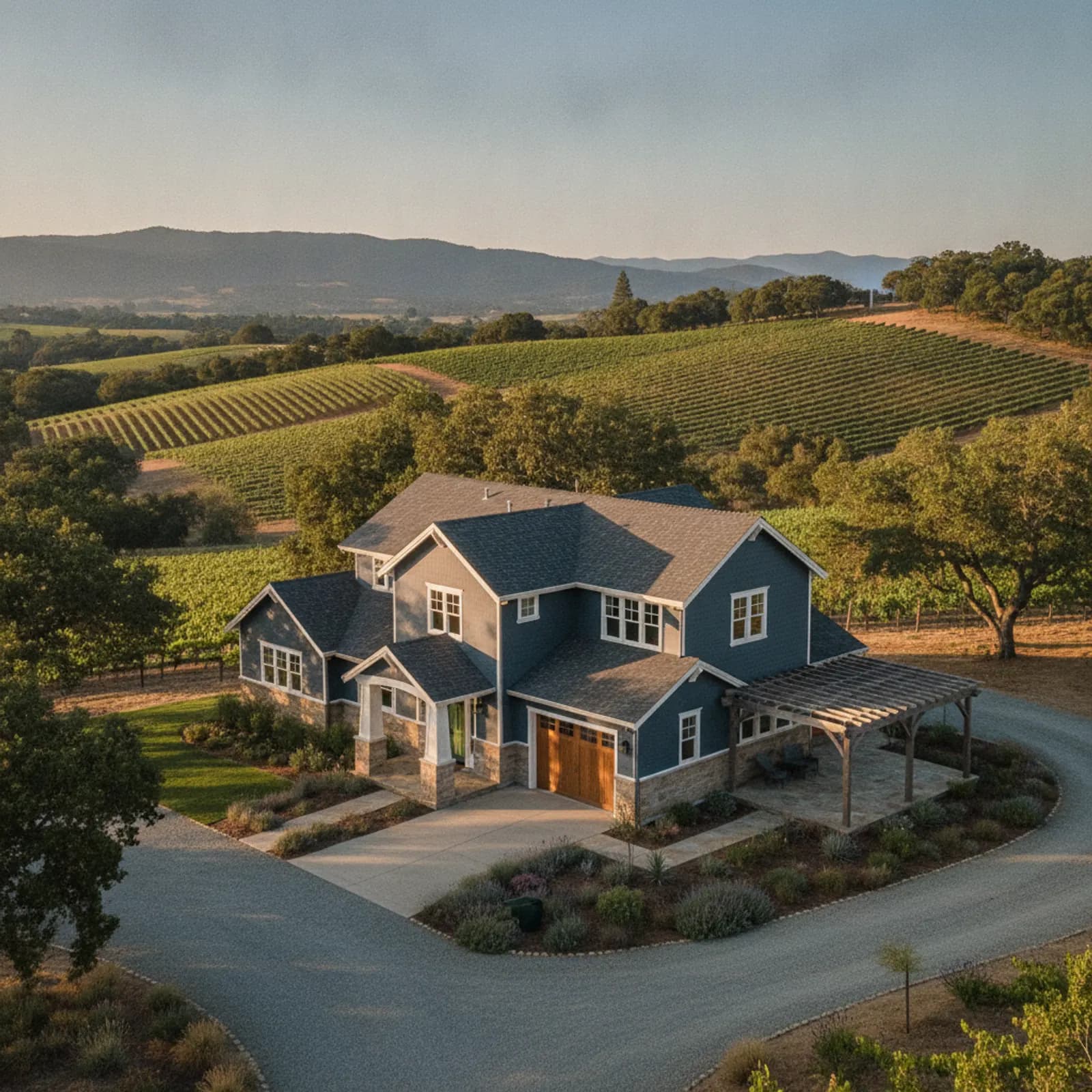
Geyserville's stock is a mix of small historic homes clustered near the downtown grid, rural ranch and farmhouse properties on Alexander Valley acreage, premium vineyard estates, and custom homes set on the lower ridges toward the eastern hills. Many of the older rural and downtown homes still wear wood lap, board-and-batten, or aging stucco chosen for their agricultural character. Re-cladding here is rarely about conforming to a subdivision and almost always about upgrading an individual home — keeping the simple farmhouse or vineyard-estate lines that suit the valley while replacing the combustible material beneath with a hardened, non-combustible system.
Geyserville's hot, fire-prone climate
Geyserville endures long, hot, dry summers — some of the most intense inland heat in Sonoma County — which bake the surrounding hills and cure grass and brush into available fuel by late summer. That season overlaps with the diablo-wind events that drove the 2019 Kincade Fire down from the Geysers ridge toward the valley. The combination of extreme dryness, heat, and wind makes the wildfire window the controlling stressor on every Geyserville exterior. Winters bring moderate moisture along the Russian River corridor, enough to warrant a proper drainage plane, but heat and fire define the spec here.
Hardening a Geyserville home against wildfire
The Kincade Fire ignited on a ridge above Geyserville in October 2019 and forced widespread evacuations through the Alexander Valley, so wildfire is a lived reality for the homeowners we meet here, not a hypothetical. For at-risk parcels we specify Class A non-combustible fiber cement and harden the ignition-prone points — eaves, vents, and the ground-to-wall transition where embers gather. We coordinate cladding with soffit, fascia, and vent detailing so the wall acts as one hardened system, and we document the installed materials and assemblies to support insurability and rebuilding-standard discussions. On Geyserville's ridge-adjacent and grassland parcels this exposure is real, and we spec for it.
Recommended materials for Geyserville
Class A non-combustible fiber cement over a rigorously detailed drainage plane is the core recommendation for Geyserville, because it answers the dominant wildfire exposure while standing up to the punishing inland heat and UV that fade and degrade lesser finishes. Durable factory finishes are particularly important here given the intensity of the summer sun. We generally steer away from combustible cladding regardless of aesthetic preference on these ridge-adjacent and grassland lots, and we align eave and vent materials to the wall's fire class so wind-driven embers find no soft entry.
What an exterior project costs in Geyserville
Geyserville pricing follows the standard drivers — overall size, number of stories, trim complexity, substrate condition and any hidden dry rot, and window integration — plus the fire-hardening scope that dominates ridge-adjacent and grassland parcels. Long rural drives, hillside lots toward the eastern ridges, and acreage staging can add access cost, and older farmhouses sometimes reveal substrate surprises behind aging wood. We provide a written, scoped estimate after an on-site assessment; in Geyserville the hardening line items are not where we recommend economizing, and the written estimate governs the work.
Alexander Valley vineyard and ranch properties
Much of Geyserville is vineyard and ranch land where homes sit well off the road among the rows. On these parcels the exterior reflects the property's value, so we treat profile, trim, and finish as part of the deliverable. The open grassland and brush around these homes also shape the ignition picture, and we scope the wall assembly to work alongside whatever defensible-space clearing the owner maintains rather than assuming a tidy suburban lot.
The eastern ridges and the Geysers corridor
The lower ridges east of town toward the Geysers geothermal area are where Geyserville's wildfire exposure is most acute — it was on these slopes that the Kincade Fire began. Homes here are often custom and view-oriented on partly wooded lots with steep access. For homes that survived or predate the fire, re-cladding is a chance to bring an older wall up to a hardened, non-combustible standard, and we plan staging and scaffold around the grades during the on-site scope.
Sonoma County, private wells, and Geyserville Fire
Working exteriors in Geyserville coordinates with a few local authorities. Geyserville is unincorporated Sonoma County — there is no city government, so building permits come through the Sonoma County Permit and Resource Management Department (Permit Sonoma) rather than a municipal department. Electric and gas are PG&E, and the entire Alexander Valley / Geysers corridor is documented high-PSPS territory since the 2019 Kincade Fire's PG&E-attributed ignition. Water on Geyserville's downtown parcels is served by the Geyserville Water District; most vineyard estates and rural acreage run on private wells. Fire response is the Geyserville Fire Protection District alongside CAL FIRE Sonoma-Lake-Napa Unit (LNU) on wildland calls into the Geysers geothermal-area ridges and Alexander Valley grasslands.
HZ10 and the Kincade-Fire-ignition FHSZ reality
Geyserville is in James Hardie's HZ10 climate zone; installing HZ5 is a documented warranty misapplication. On the fire side, essentially every parcel around Geyserville sits in High or Very High FHSZ territory under California's 2025 LRA Fire Hazard Severity Zone map — the town, the vineyard hillsides, and the Geysers-corridor ridges to the east. The 2019 Kincade Fire (77,758 acres, 374 structures destroyed) ignited on the Burned Mountain ridge above Geyserville on October 23, 2019, and drove the largest evacuation in Sonoma County history at that time. The 2017 Tubbs Fire and 2020 Walbridge Fire also touched adjacent Sonoma terrain. On these parcels the 2025 California Wildland-Urban Interface Code governs the exterior wall. Chapter 7A moved into the standalone WUI Code on January 1, 2026.
Our process in Geyserville
- Step 1
Consultation
We listen to your goals and assess your home on site — exposure, substrate, and architecture.
- Step 2
Design & Proposal
A clear written proposal with the right system specified for your climate and a transparent scope.
- Step 3
Expert Installation
Trained crews install to manufacturer best practices with careful weather-management detailing.
- Step 4
Walkthrough & Support
A final walkthrough, full cleanup, and a clear written record of the scope completed — work we stand behind.
In Geyserville, a re-side done right is a serious reduction in wildfire risk and a heat-durable upgrade for a home that sits genuinely exposed. We design for fire, heat, and moisture together, and we scope every Geyserville project on site so the spec fits the actual parcel. Your written estimate governs the work.
FAQ
Geyserville — Common Questions
For most Geyserville parcels, yes. The town sits in high wildfire country and the 2019 Kincade Fire ignited just east of it, so non-combustible cladding with hardened detailing is strongly advised.
Class A non-combustible fiber cement with durable factory finishes. It resists the intense inland UV and summer heat while answering the area's wildfire exposure.
Home hardening can support insurability in this fire-exposed market. We document the materials and assemblies installed, though insurers set their own criteria.
It is moderate along the Russian River corridor. We detail the drainage plane and flashing properly, but heat and wildfire are the controlling stressors here.
Yes. We regularly scope Alexander Valley acreage and the steeper ridge-adjacent lots toward the Geysers, planning staging and access during the on-site visit.
On Geyserville's ridge-adjacent and grassland lots we generally advise against it given the exposure. Non-combustible fiber cement carries no durability penalty here.
Yes. Fiber cement comes in lapped and board-and-batten profiles, so we can keep the rural character while replacing the combustible substrate underneath.
A correctly installed fiber cement system commonly performs 30+ years here while materially reducing ignition risk over that lifespan.
Explore
Exterior Services
Helpful Exterior Guides