
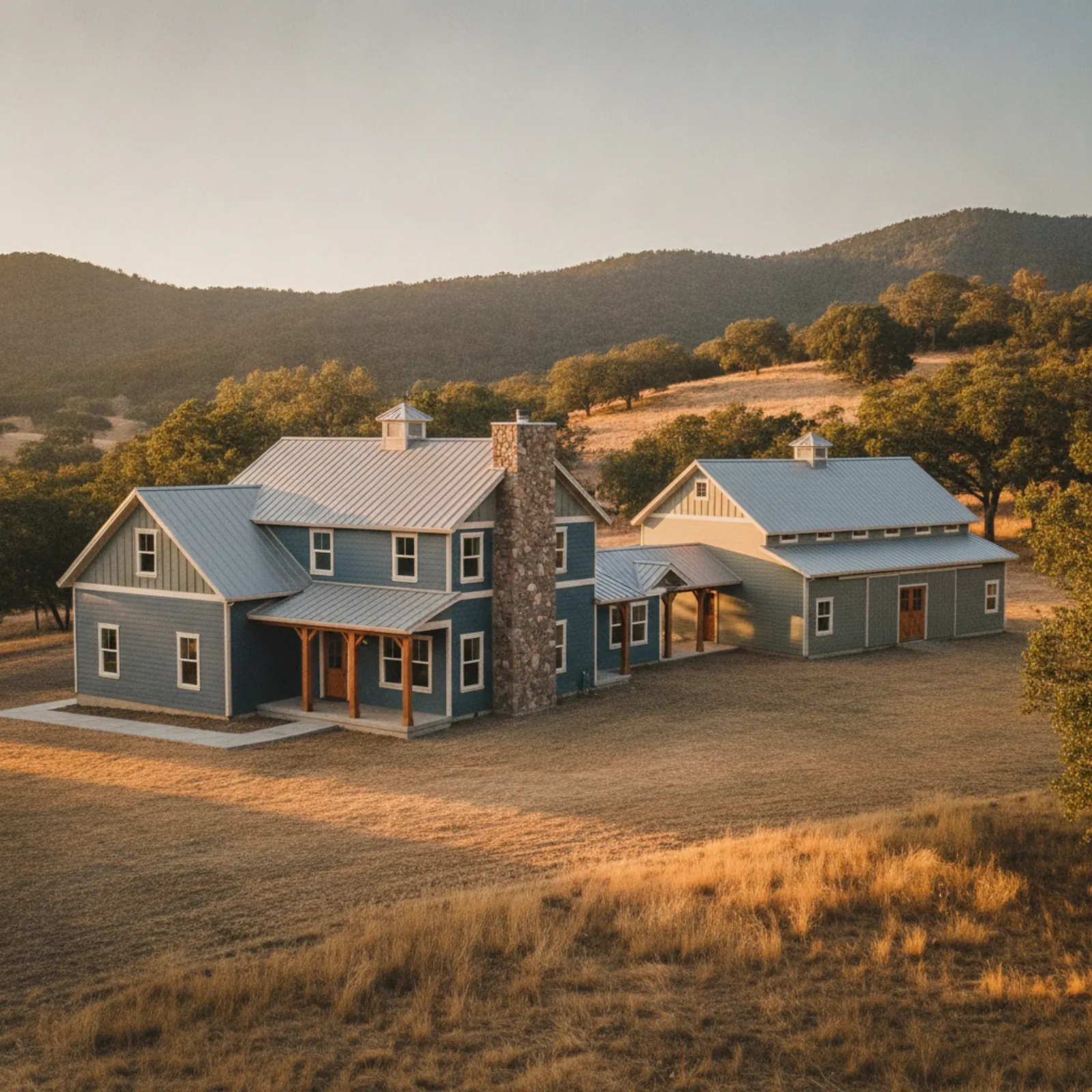
Exterior renovation in Pope Valley
Pope Valley is a different Napa entirely: a remote stretch of ranchland and oak hills in the county's northeastern corner, well off the wine-tourist routes and reached by long rural roads from Angwin and St. Helena. The homes here are working ranch houses, scattered rural homesteads, off-grid custom homes on well and septic, and a meaningful number of residences rebuilt or hardened after the Hennessey and Glass fires swept this country. This is not valley-floor estate work; it is hard-use rural building in an extreme wildland-urban-interface setting. We approach Pope Valley first as a fire problem and build the rest of the exterior decision around that reality.
Honest about what Pope Valley demands
We will not pretend Pope Valley is a low-stakes re-side market. Its exposure is genuinely extreme, the terrain and travel distances are real, and many owners here have already lived through fire once. That shapes everything from material selection to detailing to how we talk about the work. The goal in Pope Valley is a tough, ignition-resistant, low-maintenance exterior that earns its keep over decades of heat, sun, and fire seasons, not a decorative one. We are direct with owners about exposure, trade-offs, and what a hardened exterior can and cannot do, because that honesty is the whole point out here.
Considering an exterior project in Pope Valley?
Pope Valley housing and architecture
Pope Valley's building stock is rural and practical rather than architectural. Much of it is working ranch houses paired with barns and outbuildings, alongside modest homesteads, modular homes, and a scattering of custom rural residences built for self-sufficiency on well and septic. The fires of recent years also left a layer of rebuilt and partially hardened homes across the valley. None of this rewards ornament; it rewards durability and ignition resistance. We design Pope Valley exteriors as long-life, low-maintenance, fire-conscious envelopes, choosing simple fiber cement profiles and clean detailing that hold up to hard rural use rather than chasing a wine-country aesthetic that does not belong here.
Pope Valley's hot, dry foothill climate
Pope Valley's controlling stressor is a hot, dry interior foothill climate that runs harsher than the valley floor to the west. Summers are long, intense, and bone-dry, baking coatings and cladding day after day, while the surrounding oak-and-grass hills cure into heavy fuel by late season. Moisture is comparatively low and the occasional dusting of snow on the higher ground is minor; the real climate story is heat and aridity feeding an extended, severe fire season. Everything in the spec follows from that: non-combustible cladding, ignition-resistant detailing, and a durable finish that survives relentless sun rather than moisture-first detailing suited to wetter parts of the county.
Building for extreme wildfire exposure in Pope Valley
Pope Valley carries some of the most serious wildfire exposure in Napa County. The Hennessey Fire of the 2020 LNU Lightning Complex and the Glass Fire both burned through this rural northeast country, and the area sits squarely in a high-fuel wildland-urban interface with limited egress. For homes here we treat fire as the governing requirement, not an add-on: fully non-combustible fiber cement cladding, ember-resistant eave, soffit, and vent detailing, ignition-resistant trim, and careful management of the near-home zone where cladding meets the landscape. We pair these choices with the defensible-space realities owners already understand. The aim is an exterior that gives a Pope Valley home a genuinely better chance when fire returns to these hills.
Recommended materials for Pope Valley
For Pope Valley we recommend a fully non-combustible approach built on James Hardie fiber cement, paired with ignition-resistant trim and hardened eave, soffit, and vent detailing. In an extreme wildland-urban-interface setting the non-combustibility is the entire point: combustible siding has no place on a home in this exposure class. Beyond fire, fiber cement is dimensionally stable under the long, baking summers and shrugs off the hard rural use Pope Valley homes see. We specify durable factory finishes that survive intense sun with minimal upkeep, since maintenance trips out to this remote valley are not casual. The result is a tough, low-maintenance, fire-conscious envelope suited to where these homes actually sit.
What an exterior project costs in Pope Valley
Pope Valley pricing is driven by the realities of remote rural work and serious fire exposure: the depth of the fire-hardening scope a home needs, substrate and dry-rot condition uncovered once cladding is removed, the size and configuration of ranch homes and their outbuildings, and the access, travel, and staging logistics of a property far from town on rural roads. Off-grid and post-fire-rebuild conditions can add their own variables. Because the fire-hardening detailing is central rather than optional here, a generic per-foot figure would understate what the work involves. We provide a written, scoped estimate after an on-site assessment of the home and its exposure.
Remote ranch logistics
Pope Valley's distance from town is a defining feature of any project here. Long rural roads, well-and-septic infrastructure, working ranch operations, and limited services all factor into how we stage, sequence, and supply a re-side. We plan the logistics deliberately so a crew is not making endless trips out and back, and so the work respects an active ranch or homestead. Owners out here value a contractor who understands that this is not a quick in-town job and who builds the plan around the realities of the valley rather than ignoring them.
Rebuilding and hardening after the fires
A real share of Pope Valley's homeowners are living with the aftermath of the Hennessey and Glass fires, whether rebuilding outright or hardening a home that survived. For those owners the exterior is not a cosmetic upgrade; it is part of how they prepare for the next season. We approach these projects with that weight in mind, focusing on fully non-combustible cladding and ignition-resistant detailing that materially improve a home's odds, and being straight about what hardening achieves and where defensible space and the broader property still carry the load.
A different Napa than the wine routes
It is worth saying plainly that Pope Valley is not the Napa of the tour buses. It is ranch country, oak hills, and working land where homes are built for utility and resilience. The right exterior here looks the part: simple, durable, fire-conscious, and unpretentious. We do not import a valley-floor estate aesthetic into Pope Valley, because it would be both out of place and beside the point. We build for the conditions and the way people actually live and work in this corner of the county.
Napa County, private wells, and CAL FIRE LNU
Working exteriors in Pope Valley coordinates with a few local authorities. Pope Valley is unincorporated Napa County — there is no city government, so building permits come through the Napa County Planning, Building, and Environmental Services Department rather than a municipal department. Electric and gas are PG&E, and Pope Valley sits at the epicenter of PG&E's PSPS-shutoff footprint given the 2017-2020 fire history — offshore-wind red-flag events routinely trigger multi-day shutoffs here. Water on virtually all parcels is from private wells given the rural, remote setting. Fire response is CAL FIRE Sonoma-Lake-Napa Unit (LNU) alongside Napa County Fire and Aetna Springs / Angwin volunteer companies, with the Napa County Sheriff coordinating evacuations — a coordination stress-tested repeatedly by the LNU Complex evacuations.
HZ10 and the LNU-Complex FHSZ reality
Pope Valley is in James Hardie's HZ10 climate zone; installing HZ5 is a documented warranty misapplication. On the fire side, essentially every parcel in and around Pope Valley sits in Very High FHSZ territory under California's 2025 LRA Fire Hazard Severity Zone map, with most surrounding land in State Responsibility Area. The 2020 LNU Lightning Complex — including the Hennessey Fire (192,000+ acres) — burned directly through the Pope Valley/Berryessa corridor; the 2020 Glass Fire (67,484 acres) burned nearby a month later. On every parcel here the 2025 California Wildland-Urban Interface Code governs the exterior wall. Chapter 7A moved into the standalone WUI Code on January 1, 2026.
Our process in Pope Valley
- Step 1
Consultation
We listen to your goals and assess your home on site — exposure, substrate, and architecture.
- Step 2
Design & Proposal
A clear written proposal with the right system specified for your climate and a transparent scope.
- Step 3
Expert Installation
Trained crews install to manufacturer best practices with careful weather-management detailing.
- Step 4
Walkthrough & Support
A final walkthrough, full cleanup, and a clear written record of the scope completed — work we stand behind.
In Pope Valley the exterior decision is, before anything else, a wildfire decision, and we treat it that way with full honesty about exposure and trade-offs. Our aim is a tough, non-combustible, low-maintenance envelope that serves a remote ranch home through decades of heat and fire seasons. When you are ready to plan a re-side or a post-fire rebuild out here, we will come walk the property and assess its exposure with you.
FAQ
Pope Valley — Common Questions
Yes. Pope Valley is part of Napa County, which we serve, so coverage is honest. We plan remote rural logistics deliberately rather than treating it like an in-town job.
A fully non-combustible system built on James Hardie fiber cement with ignition-resistant trim and hardened eave, soffit, and vent detailing. Combustible siding has no place in this extreme exposure class.
Genuinely extreme. The Hennessey and Glass fires both burned through this rural northeast country, and it sits in a high-fuel wildland-urban interface. We treat fire as the governing requirement of the design.
No, and we are honest about that. Non-combustible cladding and ember-resistant detailing materially improve a home's odds, but defensible space and the broader property still carry a major part of the load.
Pope Valley runs hot and dry with low moisture. Long, intense summers punish coatings, so we prioritize non-combustible cladding and durable finishes over the moisture-first detailing used in wetter parts of the county.
Yes. Many owners here are rebuilding or hardening after the fires. We focus those projects on fully non-combustible cladding and ignition-resistant detailing, and we are straight about what hardening can and cannot do.
Yes. We design simple, durable, low-maintenance exteriors that fit ranch houses and outbuildings, and we stage the work to respect an active ranch or homestead far from town.
We provide a written, scoped estimate after an on-site assessment. Fire-hardening depth, substrate condition, home and outbuilding size, and remote access logistics all drive it, so we do not quote a generic per-foot figure.
Explore
Exterior Services
Helpful Exterior Guides