Exterior renovation in American Canyon
American Canyon is the southern gateway to the Napa Valley, a relatively young city built largely from the 1990s onward as master-planned development on the flats between the Napa River and the bay. Its exterior story is different from the rest of Napa County: not upvalley fire, but bay- and delta-influenced moisture and wind, with a large, fairly uniform stock of production homes now entering re-side age.
Why American Canyon siding fails the way it does
The controlling problem here is not vertical rain but the sideways, wind-driven moisture that the open bay margin pushes into walls. On these production homes the first failures show up at predictable spots: behind butt joints, around south- and west-facing windows that take the open bay exposure, and at the base course where siding sits close to grade on level lots. Original tract cladding reaches end of life after a couple of decades, and the steady delta breeze accelerates it wherever flashing was thin. Sierra Siding answers that with a fiber cement system over a continuous, properly lapped weather-resistive barrier, generous head and sill flashing, and a clean clearance gap above grade — a wall built to shed the sideways water, not just the rain that falls straight down.
Considering an exterior project in American Canyon?
American Canyon housing and architecture
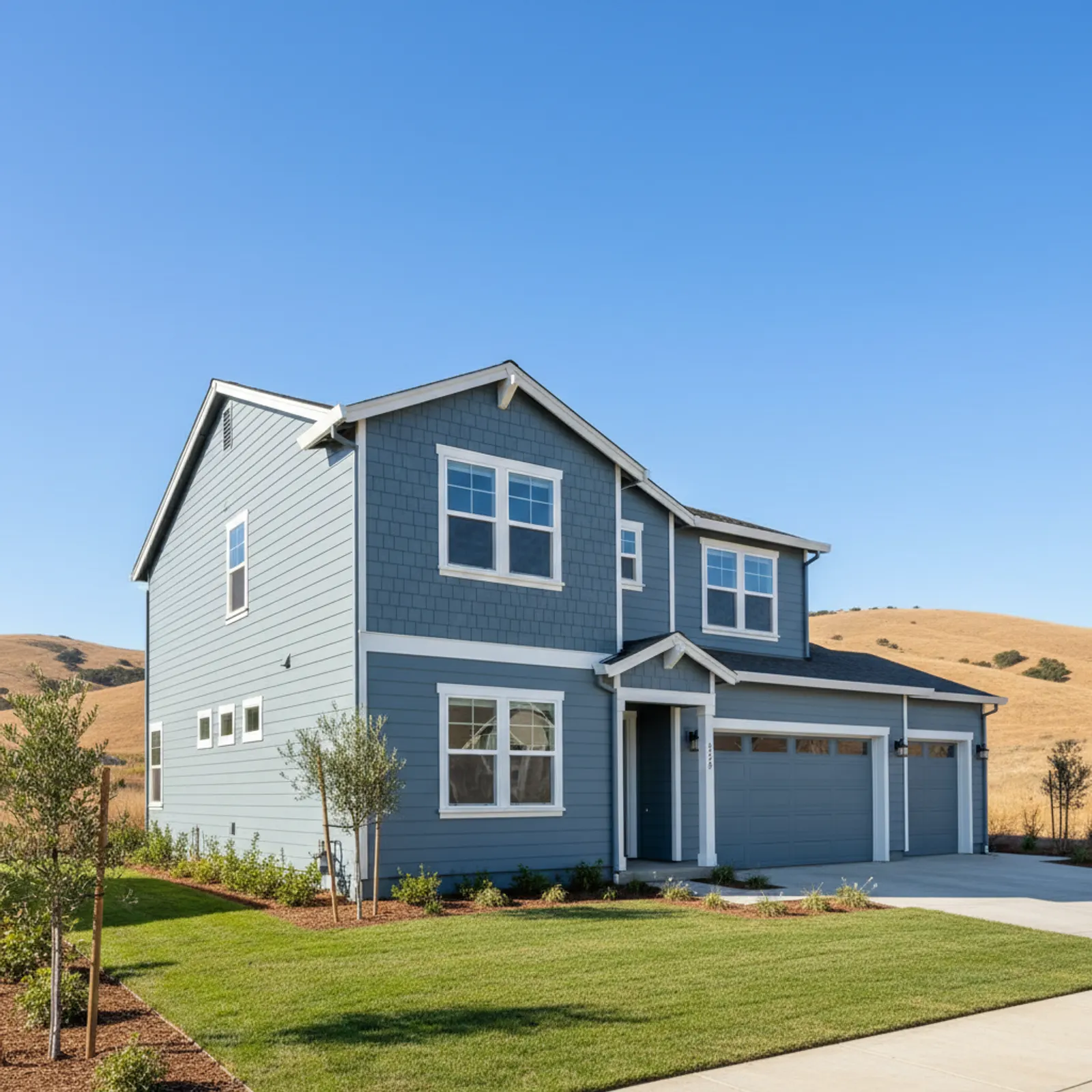
American Canyon's stock is overwhelmingly 1990s–2010s master-planned production homes, two-story and single-story, with newer development continuing on the south and east edges. These elevations modernize strongly with a clean lap-and-batten re-side and a refreshed palette — a high-return curb-appeal upgrade in a steadily appreciating market.
American Canyon's bay-edge climate
American Canyon sits low between the river and San Pablo Bay — cooler, breezier, and more moisture- and wind-influenced than upvalley Napa, with little wildfire exposure. Wind-driven rain and humidity make flashing and drainage detailing the controlling exterior factors here.
Recommended materials for American Canyon
Fiber cement over a correctly detailed drainage plane, with wind-aware fastening, is the core recommendation for American Canyon — durable, low-maintenance, and far more moisture-resistant than original tract cladding, with the wind resilience the bay edge needs.
What an exterior project costs in American Canyon
American Canyon pricing follows the standard drivers — size and stories, trim complexity, substrate and dry-rot condition, window integration, and the wind- and moisture-management scope. We provide a written, scoped estimate after an on-site assessment so bids can be compared on substance.
HOAs and access on American Canyon's tract streets
Because so much of American Canyon went up as planned subdivisions, a re-side here usually runs through a homeowners association before it runs through the city. Communities off Donaldson Way, around the Napa Junction and Vintage area, and the newer phases climbing toward the east hills often carry CC&Rs that govern siding profiles, approved color ranges, and trim details, so an architectural review submittal frequently comes before any material order. We plan for that approval window rather than letting it stall a crew mid-job. Access is the second tract reality: zero-lot-line setbacks and shared side yards between two-story production homes leave tight gaps for staging scaffold and moving long boards, and many streets have posted parking and HOA staging rules. We walk those side returns first, confirm where lifts and dumpsters can sit, and coordinate delivery so a full elevation isn't blocked. Getting the association sign-off and the staging plan settled up front is what keeps an American Canyon exterior on schedule.
Detailing for American Canyon's wind-driven bay moisture
Low on the valley floor where the Napa River widens toward San Pablo Bay, American Canyon takes a steady marine and delta breeze that pushes damp air sideways into wall assemblies rather than just letting rain fall straight down. That changes where exteriors here fail. The vulnerable points are wind-driven water finding its way behind butt joints, around windows on the south and west elevations that face the open bay margin, and at the base course close to grade where these tract homes sit on relatively level lots. So the work that matters is less about extreme heat or fire and more about disciplined moisture management: a continuous weather-resistive barrier, properly lapped and taped, generous flashing at heads and sills, sealed and back-primed joints, and a clean clearance gap above grade and hardscape so siding isn't wicking from concrete. Houses reaching re-side age in American Canyon often show their first soft spots at exactly these details. Building the wall to shed sideways water, not just vertical rain, is the difference that holds up in this bay-edge microclimate.
Our process in American Canyon
- Step 1
Consultation
We listen to your goals and assess your home on site — exposure, substrate, and architecture.
- Step 2
Design & Proposal
A clear written proposal with the right system specified for your climate and a transparent scope.
- Step 3
Expert Installation
Trained crews install to manufacturer best practices with careful weather-management detailing.
- Step 4
Walkthrough & Support
A final walkthrough, full cleanup, and a clear written record of the scope completed — work we stand behind.
American Canyon's production stock rewards a modern, wind- and moisture-durable re-side — strong protection and a clear curb-appeal lift.
FAQ
American Canyon — Common Questions
Fiber cement over a correctly detailed drainage plane with wind-aware fastening — durable, low-maintenance, and resilient against bay-edge wind-driven moisture.
Low — American Canyon is a low, bay-influenced city. Non-combustible fiber cement remains a sound, low-regret choice.
American Canyon's bay-edge setting brings sustained wind that drives rain into walls, making flashing and fastening detail unusually important.
Yes — the 1990s–2010s production homes are entering re-side age and modernize strongly with a clean profile and trim program.
Original tract cladding reaches end of life after decades, and wind-driven moisture accelerates it where flashing is poor. Wind-aware, drying-capable detailing fixes the cause.
When feasible, yes — correct flashing integration matters even more in a wind-driven-rain environment.
Yes — the established master-planned areas and the newer south and east development.
A correctly installed, well-detailed fiber cement system commonly performs 30+ years in American Canyon's bay-edge climate.
Explore
Exterior Services
Helpful Exterior Guides