James Hardie Siding in American Canyon
American Canyon is the Napa County address that isn't wine country — a newer, fast-grown commuter town of master-planned tracts at the bay end of the valley, low fire and bay-damp rather than hillside and ember. The honest James Hardie conversation here starts by setting that expectation: this is a value-and-timing decision, not a fire one.
Not a fire job — and we'll say so
Owners sometimes assume a Napa County home needs the hardened, wine-country spec their upvalley neighbors get. American Canyon's low-fire, bay-influenced tracts don't. The right work here is a clean drainage-plane assembly for moderate North Bay damp and ColorPlus for upkeep — and we won't bill hardening the parcel doesn't need.
Get-ahead timing on newer stock
Much of American Canyon is recent enough that the builder cladding isn't failing yet, which makes this a get-ahead-of-it move: re-cladding before the builder finish degrades avoids the maintenance spiral, at honest value pricing for a low-fuss commuter market. We're straight about whether your home is actually due.
Wind off the river flats, and the nailing it demands
American Canyon sits low and open on the flats between the Napa River and the bay, and that geography matters more than fire does here. The same gap that funnels marine air up from the south also drives steady afternoon wind across these unsheltered tracts, which is exactly the load a fiber-cement install has to be detailed for. With James Hardie, that means following the wind-zone fastening pattern rather than a default schedule: tighter nail spacing at corners and rakes, blind-nailing where the exposure calls for it, and care that fasteners land in the stud line instead of just sheathing. Loose laps and overdriven nails are what start to chatter and let wind-driven rain track behind a board, and on a wide, two-story production elevation facing open ground there is no windbreak to forgive a sloppy course. The honest spec for American Canyon is a moisture-managed assembly built to hold in wind, not a hardened wildfire build. Getting the fastening and laps right up front is what keeps a re-side quiet and tight through years of that river-mouth breeze.
Re-siding a tract where every house is a cousin
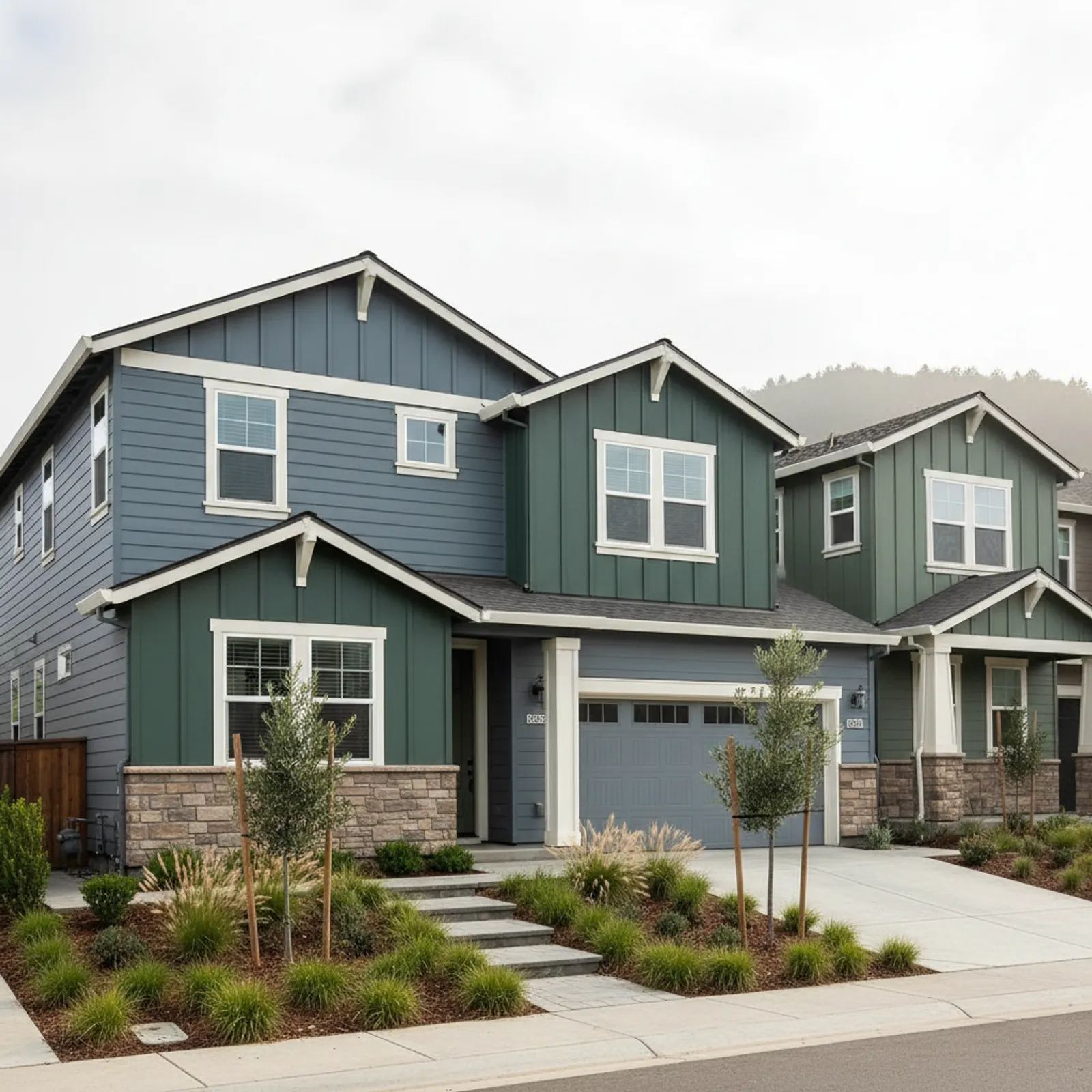
Because American Canyon grew almost entirely from the 1990s onward as master-planned subdivisions, its housing stock is unusually uniform: streets of production homes built to a handful of repeated elevations and floor plans, now all reaching re-side age within a few years of each other. That sameness changes how a James Hardie job runs. Trim profiles, original cladding thickness, and even the way windows were flashed tend to repeat from house to house, so once we have measured and detailed one plan on a street, the next one of the same model goes faster and more predictably. It also means color and texture choices carry weight, since many of these neighborhoods sit under an HOA that reviews exterior changes; a ColorPlus selection that reads well against the existing roof tile and the matching homes next door is part of the planning, not an afterthought. The practical upside for owners is that a clean, repeatable fiber-cement assembly fits this kind of uniform tract well, and a thoughtful color keeps the home in step with the block while the durable surface quietly outlasts the original builder cladding.
Why this matters in American Canyon
- Specified for North Bay conditions
- fiber cement over detailed drainage plane as the recommended system
- Correctly detailed weather-resistive barrier and flashing
- Installed by a crew with 20 years combined experience
Recommended systems for American Canyon
- fiber cement over detailed drainage plane
- factory finishes
- board-and-batten accents
James Hardie Siding for American Canyon homes
The full james hardie siding approach — materials, weather-resistive detailing, and the manufacturer standards we install to — is covered on the main service page, then specified for American Canyon's conditions on this one.
Our American Canyon process
- Step 1
Consultation
We listen to your goals and assess your home on site — exposure, substrate, and architecture.
- Step 2
Design & Proposal
A clear written proposal with the right system specified for your climate and a transparent scope.
- Step 3
Expert Installation
Trained crews install to manufacturer best practices with careful weather-management detailing.
- Step 4
Walkthrough & Support
A final walkthrough, full cleanup, and a clear written record of the scope completed — work we stand behind.
FAQ
James Hardie Siding in American Canyon — FAQ
Generally no — that's the key thing to set straight. American Canyon is low-fire, bay-influenced tracts, not hillside wine country. It's a moisture-and-value spec; we won't charge for hardening the parcel doesn't warrant.
Because re-cladding before the builder finish degrades avoids the accelerating repaint-and-repair spiral. It's a get-ahead decision, and we'll be honest about whether your specific home is actually at that point yet.
A detailed drainage-plane Hardie assembly for the moderate bay damp with ColorPlus for low upkeep — clean, durable, value-priced for the master-planned stock, with nothing added that the low-fire setting doesn't require.
Keep Exploring
More for American Canyon homeowners
More in American Canyon
Other exterior services in American Canyon
Back to
Napa County & American Canyon
Helpful Exterior Guides