Exterior renovation in Oakville
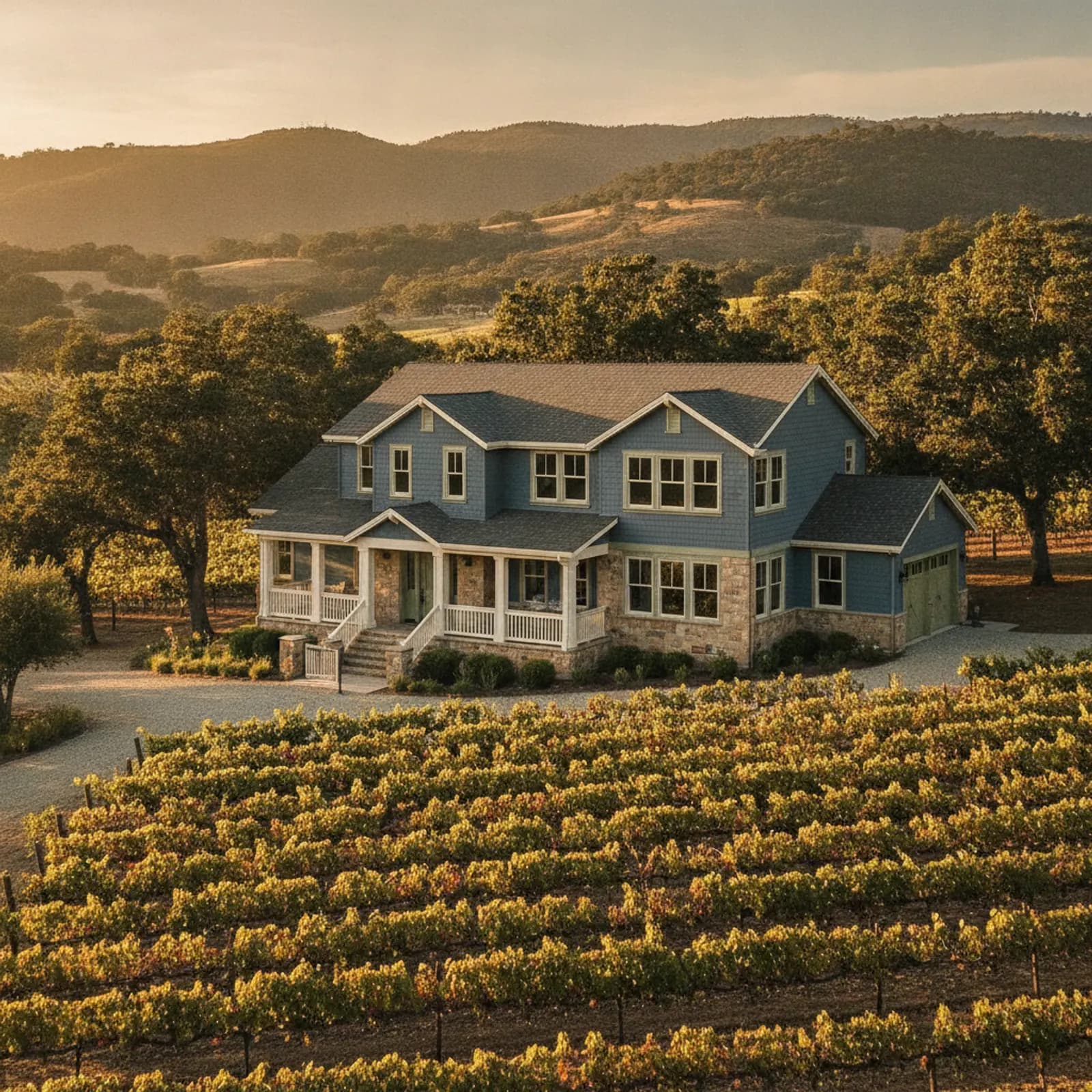
Oakville is one of the smallest places we work, a valley-floor hamlet straddling Highway 29 between Yountville and Rutherford whose name carries more weight in a wine cellar than its population would suggest. The residences here are few but consequential: estate homes set on working vineyards, restored early farmhouses, and caretaker and guest residences tucked behind some of the best-known wineries in California. Owners in the Oakville AVA hold exterior work to the same standard they hold the fruit, which means a re-side is treated as a design decision with a long horizon, not deferred maintenance. We scope each Oakville home to its setting on the valley floor rather than to any template.
The controlling stressor in Oakville and our response
Sitting in the warm heart of the valley floor, Oakville's defining exterior stressor is mid-day summer heat and intense sun, which punishes coatings and lower-grade cladding well before anything else does. That is the practical case for James Hardie fiber cement: dimensionally stable under the baking summer, carrying a durable factory finish the sun cannot chalk out quickly. But the dry season is only half the year — moderate North Bay moisture still pushes into the valley in winter, so we pair the cladding with rigorous drainage-plane and flashing detailing rather than treating heat as the only enemy. On the parcels that climb toward the Mayacamas or the Vaca foothills we add ember-resistant eave, soffit, and vent detailing, and on the flat irrigated interior lots we tell owners plainly that heat, finish, and moisture, not fire, are what their wall actually has to answer.
Considering an exterior project in Oakville?
Oakville housing and architecture
Oakville's building stock is sparse and high-value. Much of it is estate and custom residences positioned within or at the edge of vineyard blocks, where the house is meant to sit quietly inside a working agricultural landscape. Mixed in are early farmhouses and ranch houses that predate the modern wine era and have often been carefully restored, plus secondary guest and caretaker homes serving the wineries along the Oakville Cross Road and the highway corridor. Each calls for restraint: refined fiber cement profiles, consistent reveals, and trim proportions that read as agrarian-elegant rather than suburban. We design to the individual property because in a place this small there is no generic Oakville home.
Oakville's mid-valley climate
Oakville sits in the warm heart of the valley floor, where mid-day summer heat is a defining stressor and the upvalley dryness is already pronounced compared with the cooler southern end near the city of Napa. That sustained heat and intense sun are hard on coatings and on lower-grade cladding, which is the practical case for a non-combustible system with a durable factory finish. The cooler months still bring moderate North Bay moisture into the valley, so drainage-plane and flashing detailing remains a genuine performance factor even though heat is the headline. The spec here has to respect both a long, baking summer and a wet winter.
Fire-aware detailing at Oakville's hillside edges
Oakville's core is flat valley floor, and we will say plainly that a parcel surrounded by irrigated vineyard is not in the same exposure class as a wildland-adjacent home. But the hamlet is hemmed by the Mayacamas foothills to the west and the Vaca range to the east, and homes that climb toward either edge carry a real moderate ember exposure, especially given the valley's recent fire history. For those parcels we specify non-combustible cladding and detail eaves, soffits, and vents to resist ember intrusion. On the flat interior lots we focus the spec on heat, finish, and moisture instead, and we tell owners honestly which situation their property is in.
Recommended materials for Oakville
James Hardie fiber cement is the core recommendation for Oakville: non-combustible, dimensionally stable under intense valley-floor heat, and available in refined profiles that suit estate and restored-farmhouse elevations alike. We lean on simple, well-proportioned lap and clean trim so a home reads as quietly agrarian inside its vineyard setting rather than ornate. The durable factory finish matters here because of how punishing the summer sun is on coatings, and on the hillside-edge parcels the non-combustibility is a meaningful benefit at no cost to that durability. Across the valley floor the system pairs with rigorous moisture detailing for the wet season.
What an exterior project costs in Oakville
Oakville pricing turns on the things that define estate work: home size and stories, the refinement of the profile and trim package, substrate and dry-rot condition revealed once cladding comes off, and window and detailing integration on architecturally deliberate homes. Restored older farmhouses can surface substrate surprises at demolition, and vineyard-set properties sometimes involve access, staging, and timing constraints around the agricultural calendar. The combined heat-, finish-, and edge-of-hill fire scope a given lot needs also moves the number. We provide a written, scoped estimate after an on-site assessment, because in a market this exacting a generic per-foot figure would mislead far more than it would help.
Working inside the Oakville AVA
Oakville's identity is agricultural, and many homes here sit literally within working vineyard blocks served by the Oakville Cross Road and the Highway 29 corridor. That setting shapes the work: staging, dust, and timing have to respect an active growing operation, and the finished elevation should sit comfortably in an agrarian landscape rather than announce itself. We approach these projects to complement the property's purpose, choosing fiber cement profiles and palettes that feel of-the-place while quietly upgrading durability and fire performance under the surface.
Restored farmhouses versus new estate homes
Oakville's stock splits into two broad camps that call for different hands. The restored early farmhouses and ranch houses reward period sensitivity and careful trim proportion so the home keeps its honest, agrarian character; the newer estate residences are detail-intensive projects where reveal consistency and trim craftsmanship define whether the result reads as bespoke. Mapping a home to the right one of these before we quote is what keeps an Oakville re-side from being over- or under-built for what the property actually is.
Napa County, private wells, and CAL FIRE LNU
Working exteriors in Oakville coordinates with a few local authorities. Oakville is unincorporated Napa County — there is no city government, so building permits come through the Napa County Planning, Building, and Environmental Services Department rather than a municipal department. Electric and gas are PG&E. Water on vineyard estates is largely drawn from private wells and irrigation permits under the Napa County Groundwater Sustainability Plan, with the Oakville AVA governing vineyard-adjacent land-use decisions. Fire response is CAL FIRE Sonoma-Lake-Napa Unit (LNU) alongside Napa County Fire and Yountville Fire on structure calls, with the Napa County Sheriff coordinating evacuations. Oakville homes within the Oakville AVA face vineyard-adjacent permitting considerations that touch estate exterior scope.
HZ10 and the vineyard-hillside FHSZ reality
Oakville is in James Hardie's HZ10 climate zone; installing HZ5 is a documented warranty misapplication. On the fire side, the flat valley-floor vineyard blocks sit in Moderate FHSZ territory under California's 2025 LRA Fire Hazard Severity Zone map, while the eastern bench and hillside parcels running toward the Vaca Mountains and the western hills climbing toward the Mayacamas carry High to Very High designations. The 2017 Atlas Fire (51,624 acres) burned east of the valley floor into the Vacas, and the 2020 Glass Fire came within striking distance across the Mayacamas ridge from Sonoma Valley. On designated hillside parcels the 2025 California Wildland-Urban Interface Code governs the exterior wall. Chapter 7A moved into the standalone WUI Code on January 1, 2026.
Our process in Oakville
- Step 1
Consultation
We listen to your goals and assess your home on site — exposure, substrate, and architecture.
- Step 2
Design & Proposal
A clear written proposal with the right system specified for your climate and a transparent scope.
- Step 3
Expert Installation
Trained crews install to manufacturer best practices with careful weather-management detailing.
- Step 4
Walkthrough & Support
A final walkthrough, full cleanup, and a clear written record of the scope completed — work we stand behind.
Oakville may be one of the smallest names on the valley floor, but the standard here is anything but small, and the right exterior reads as quietly as the landscape it sits in. That is the standard we work to, which is why we scope every Oakville project on site before committing to a profile, a palette, or a number. When you are ready to plan one, we are glad to walk the property with you.
FAQ
Oakville — Common Questions
Yes. Oakville is a recognized valley-floor hamlet inside Napa County, which we already serve, so coverage is honest. We scope each property individually rather than running a route.
James Hardie fiber cement in refined, well-proportioned profiles. It is non-combustible and holds its finish under intense valley-floor heat while reading as quietly agrarian inside a vineyard setting.
Flat valley-floor lots ringed by irrigated vineyard are lower exposure, but homes climbing toward the Mayacamas or Vaca foothills carry real moderate ember risk. We assess each parcel honestly and detail accordingly.
Oakville sits in the warm heart of the valley, where long, baking summers are hard on coatings and lesser cladding. A non-combustible system with a durable factory finish stands up to that sun far better.
Yes. We plan staging, dust control, and timing to respect a working agricultural property, including the growing and harvest calendar where it matters.
Always. Oakville still gets moderate North Bay moisture in the cooler months, so we detail the drainage plane, flashing, and clearances rigorously alongside any heat or fire strategy.
After an on-site assessment we provide a written, scoped estimate. Size, profile and trim refinement, substrate condition, and the lot's heat, moisture, and edge-of-hill fire needs all drive it, so we do not quote a generic per-foot figure.
Yes. On older Oakville farmhouses we choose period-credible profiles and restrained trim so the home keeps its agrarian character while gaining durability and fire performance underneath.
Explore
Exterior Services
Helpful Exterior Guides