Exterior renovation in Sacramento
Sacramento is the largest and most architecturally varied city in the region, and that variety shapes every exterior project. The same city contains character-rich Land Park and East Sacramento homes, postwar ranch neighborhoods across the Arden, Pocket, and Greenhaven areas, central-grid bungalows, and large production tracts in Natomas and North Sacramento. What unites them is age and sun: a very large share of Sacramento's housing is decades past its original siding's service life, weathered by some of the most sustained UV exposure in California. A re-side here is rarely cosmetic alone — it is usually overdue protection on walls that have taken the valley sun for forty years or more.
Why it matters here specifically
Sacramento's defining exterior stressor is heat and ultraviolet load over a long, intense summer rather than fire or cold. Original hardboard, T1-11, stucco-and-siding combinations, and economy vinyl across the city's neighborhoods reach end of life through chalking, cupping, swollen joints, and faded paint, with south- and west-facing elevations always leading the failure. A Sacramento re-side is therefore both overdue protection and, in a competitive resale market, a significant curb-appeal and value upgrade — particularly in the older neighborhoods where buyers reward a character-correct exterior.
Considering an exterior project in Sacramento?
Sacramento housing and architecture
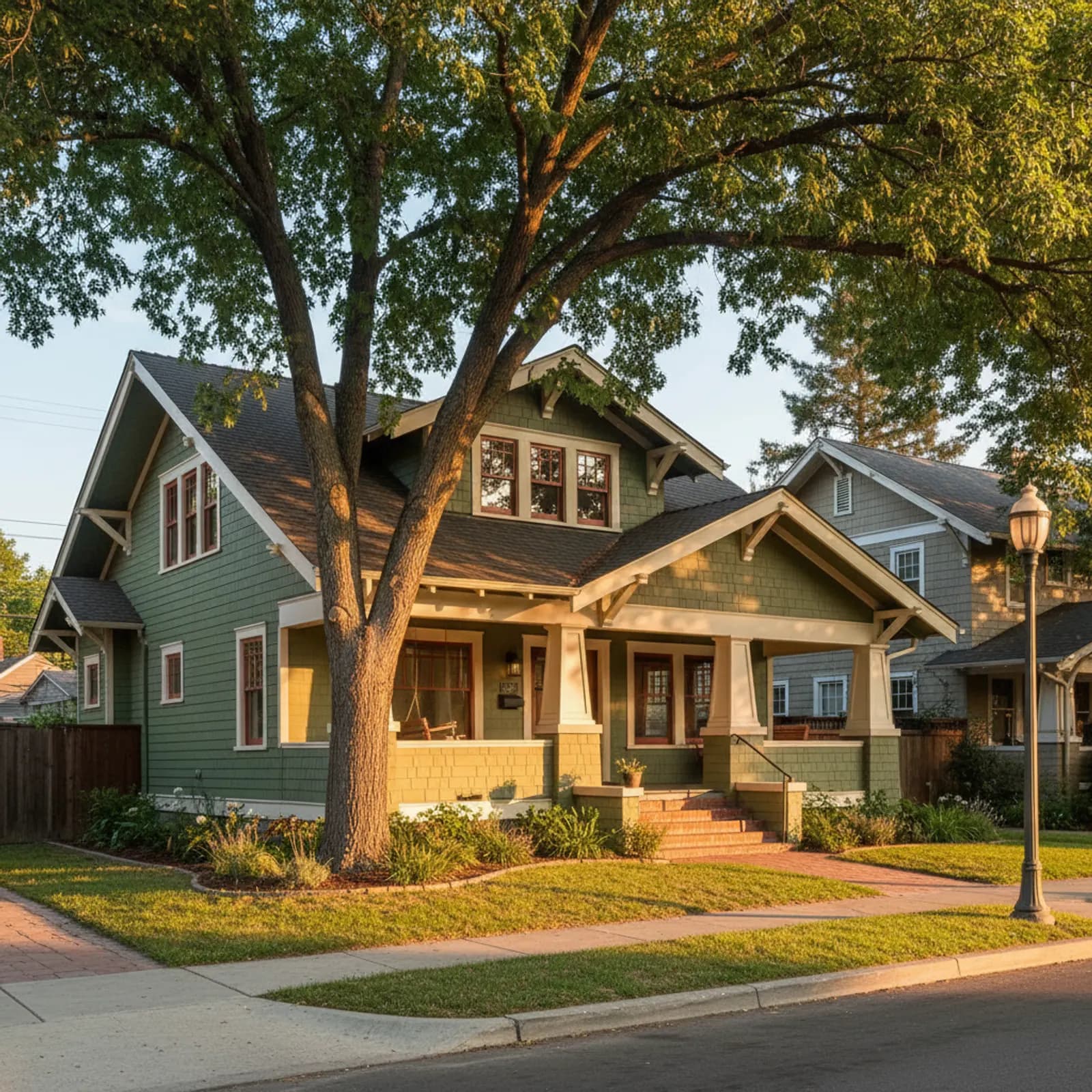
Sacramento's stock spans early-twentieth-century Tudor, craftsman, and bungalow homes in Land Park, East Sac, and the central grid; mid-century ranch homes across Arden, Pocket, and Greenhaven; and contemporary production homes in Natomas and the city's newer northern tracts. The older neighborhoods reward period-sensitive profile and trim choices that respect a home's original character, where the wrong board width or a generic corner detail reads as a mistake to anyone who knows the street. The production tracts respond strongly to a modern lap-and-batten re-side and a refreshed palette that lifts a whole elevation. We design to the neighborhood, not to a single template.
Built for Sacramento's valley heat
The performance priority across Sacramento is heat and UV durability — the long, high-sun valley summer is the single controlling stressor and it dictates the spec. We specify fiber cement with factory-applied fade-resistant finishes because field-painted and economy products lose color and integrity quickly on the city's sun-loaded walls. Detailing matters as much as the board: correct gapping and fastening for large daily and seasonal temperature swings, and finish selection tuned to elevation orientation, since the south and west walls take the brunt. River- and Pocket-area homes get particular attention to drainage-plane detailing given the corridor's moisture, though the cladding material itself does not change for it.
Recommended materials for Sacramento
James Hardie fiber cement with a factory ColorPlus-style finish is the core recommendation for most Sacramento homes: non-combustible, dimensionally stable in heat, and far more color-stable than field paint under the valley sun. On older Land Park and East Sac homes we select lap profiles and trim that read as period-appropriate rather than generic, so the upgrade reinforces the home's character instead of flattening it. Engineered wood remains a reasonable option on the city's many low-fire interior parcels where deep wood grain and character are the goal, and we'll walk through that trade-off honestly when it applies.
What an exterior project costs in Sacramento
Sacramento pricing turns on home size and stories, profile and trim complexity — often higher on older character homes — substrate and dry-rot condition once cladding is removed, window integration, and the weather-management scope. Older central-city and central-grid homes more frequently reveal substrate surprises at demolition, since their original sheathing and framing have lived through decades of heat cycling. Newer Natomas and northern-tract homes tend to be more predictable. We provide a written, scoped estimate after an on-site assessment so bids can be compared on substance rather than a single headline number.
Land Park, East Sac, and the central grid
The character neighborhoods — Land Park, East Sacramento, and the older central-grid blocks — are where period sensitivity matters most. Tudor, craftsman, and bungalow homes here carry detailing expectations that a generic re-side will visibly miss, so we match lap width, trim proportions, and finish to the era. These are also the homes most likely to hide dry rot or layered original siding behind the current cladding, which we plan for rather than discover as a surprise mid-project.
Ranch belts and the Pocket-river corridor
The Arden, Pocket, and Greenhaven mid-century ranch belts are broad horizontal elevations that take re-cladding well and benefit from a clean lap profile and updated palette. The Pocket and river-adjacent homes get extra attention to drainage-plane and flashing detail because of the corridor's added moisture, even though the heat-and-UV-driven material choice stays the same. It's a case where the climate driver and a localized moisture concern coexist without changing the cladding spec, only the detailing around it.
Natomas and the northern production tracts
Natomas and the newer northern tracts are large production neighborhoods where many homes are reaching the age at which builder-grade hardboard, early fiber cement, or economy vinyl starts failing on the sun-facing walls. These elevations respond strongly to a modern lap-and-batten re-side that updates a dated tract look while finally putting a heat-stable, fade-resistant system on walls that were never specified for Sacramento's UV load in the first place. Predictable framing on these homes usually makes for a cleaner, more estimable scope.
Permits, SMUD, and historic-district review in Sacramento
Working a re-side in Sacramento coordinates with two authorities most homeowners rarely think about at once. The City of Sacramento's Community Development Department handles building permits, and a like-for-like siding replacement is typically a routine over-the-counter permit; substantive assembly changes — adding exterior insulation, altering openings, or changing the wall build-up — trigger more review. The bigger local wrinkle is power: the city is served by SMUD (Sacramento Municipal Utility District), the customer-owned electric utility, not PG&E, so any work near the service mast, meter, or overhead drop is coordinated through SMUD rather than the investor-owned utility much of the state runs on. Natural gas remains PG&E. And in the older core, several designated Sacramento historic districts — Alkali Flat, Boulevard Park, Winn Park–Capitol Avenue, and New Era Park among them — put visible exterior work under the city's Preservation Commission, which reviews material, color, and profile before permits issue on contributing structures. Land Park and East Sacramento are not blanket districts, but individual homes sometimes carry landmark or contributor status that affects scope. We flag utility, permit, and preservation items at the estimate stage and sequence approvals so the schedule does not stall once the crew is on site and walls are open to weather.
HZ10 territory: what Sacramento's climate physics demands
Sacramento sits squarely in James Hardie's HZ10 climate zone — the West's hot, dry, low-freeze belt — and that maps most material-spec decisions on a valley project. HZ10 is Hardie's regional line engineered for sustained UV, high summer heat, and long wet-dry swings, and it is the only correct spec for a Sacramento home; the alternative HZ5 line is engineered for hard freeze-humidity climates and does not apply here (installing the wrong regional line voids the Hardie warranty, an easy line to verify in writing on any estimate). Sacramento's California Climate Zone 12 profile — long dry summers with intense UV, cool nights, and mild wet winters — drives the thermal-cycling detailing at the wall: generous expansion allowance at long horizontal runs, high-movement sealant at every penetration, and finish selection favoring UV-stable factory ColorPlus over field paint that chalks fastest on the south and west elevations. Freeze-thaw and prolonged coastal moisture, the two stressors that shape spec in Tahoe and the Bay, are not the Sacramento problem — heat and UV are, and getting the assembly right for those is what separates a re-side that holds for decades from one that fades in five.
Our process in Sacramento
- Step 1
Consultation
We listen to your goals and assess your home on site — exposure, substrate, and architecture.
- Step 2
Design & Proposal
A clear written proposal with the right system specified for your climate and a transparent scope.
- Step 3
Expert Installation
Trained crews install to manufacturer best practices with careful weather-management detailing.
- Step 4
Walkthrough & Support
A final walkthrough, full cleanup, and a clear written record of the scope completed — work we stand behind.
Sacramento rewards an exterior approach that respects both the sun and the neighborhood, from a Land Park bungalow to a Natomas tract home. We scope every Sacramento project on site and put it in a written, itemized estimate, so the decision rests on substance rather than a headline number.
FAQ
Sacramento — Common Questions
Fiber cement with a factory fade-resistant finish. Sacramento's controlling stressor is sustained summer UV and heat, and factory-finished fiber cement holds color and integrity far longer than field-painted or economy products.
Yes. We choose profiles and trim that read as period-appropriate so the result modernizes durability without erasing the home's character.
Original builder-grade hardboard, T1-11, and economy vinyl was not specified for Sacramento's UV load. Chalking, cupping, swollen joints, and faded paint on sun-facing elevations is the normal end-of-life pattern.
The cladding material is the same, but we give extra attention to drainage-plane and flashing detailing in the moister river and Pocket corridors.
Generally no — the city carries low wildfire exposure. Non-combustible fiber cement is still a sound, low-regret choice.
When feasible, yes — it ensures correct flashing integration, avoids duplicated trim work, and produces a better-looking, better-performing exterior in one project.
South- and west-facing walls take the heaviest afternoon sun and age fastest; we account for orientation when specifying finishes and detailing.
A correctly installed fiber cement system commonly performs 30+ years in Sacramento's climate, with factory finishes extending the time before any cosmetic refresh.