
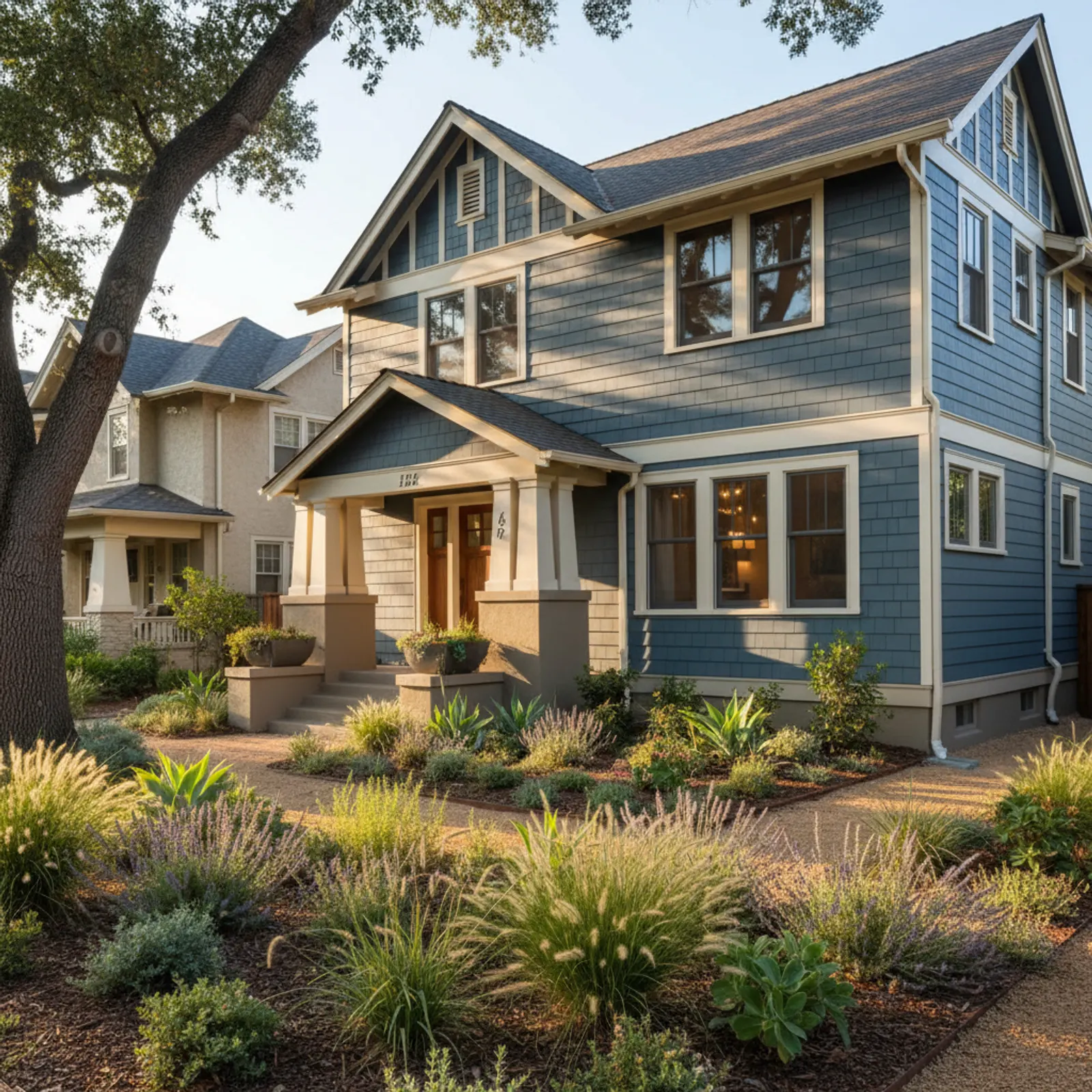
Siding in Sacramento
Sacramento is the most architecturally varied re-side market we work, and that variety drives the whole approach. The same city holds 1920s Land Park and East Sacramento Tudors and bungalows, postwar Arden and Pocket ranch homes, central-grid Victorians, and 2000s Natomas production tracts — each wears a different original cladding and each fails differently under the city's defining stressor: relentless valley sun.
So a Sacramento siding project is never one template. We scope it by neighborhood and home age: what's failing, what's behind it, and what profile and trim is period-correct for that street.
Period-correct vs. modern, block by block
On a Land Park or East Sac character home, the win is a period-sensitive lap and trim that respects the architecture; on a Natomas or North Sacramento tract, it's a modern lap-and-batten program that breaks builder uniformity. We choose the strategy from the home, not a citywide default — that's the difference between a re-side that looks intentional and one that looks applied.
The Pocket and river-corridor nuance
Most of Sacramento is low-moisture and the whole job is about heat. The exception is the Pocket, Little Pocket, and river-adjacent areas, where we give the drainage plane and flashing extra attention even though the cladding material itself doesn't change.
What relentless UV does to a wall, and the siding spec it forces
Sacramento siding fails from the top down because of sun, not storms. On south- and west-facing walls in Land Park, East Sac, and the Pocket, the original paint chalks, fiber-cement and old hardboard cup and check, and caulk joints turn brittle and split years before the same products would fail in a cooler coastal town. That is why we treat color, coating, and joint detailing as load-bearing decisions here, not afterthoughts. We lean toward factory-finished fiber-cement in fade-stable tones, oversize the expansion gaps at butt joints, and use a UV-rated sealant rather than a builder-grade tube that bakes out in two summers. Flashing above windows and at horizontal transitions gets extra attention, since heat-driven movement is what eventually opens those seams. On the older bungalows and ranches where the wall has been painted many times, we also check for trapped moisture under chalking film before we re-clad. The goal is a wall that still looks deliberate after a decade of valley heat, not one that needs a repaint by year three.
Access, tight lots, and permits across the city's older grids
How a Sacramento re-side actually goes depends heavily on where the house sits. The narrow lots and mature street trees of the central-city grid and East Sacramento mean staging is half the job: there is often no side-yard clearance to swing long fiber-cement planks, so material handling, dumpster placement, and protecting heritage landscaping get planned before a single board comes off. Natomas and North Sacramento production homes give us room to work but bring their own wrinkle, with HOA architectural-review steps that can dictate approved profiles and color families before we start. Older Land Park and bungalow blocks may also sit inside conservation or design-review overlays where exterior changes draw extra scrutiny, so confirming what the parcel allows is step one. We pull City of Sacramento permits where the scope requires them and coordinate inspection timing around the work rather than after it. None of this is generic paperwork; on these streets, getting access and approvals right is what keeps a project on schedule instead of stalled at the curb.
Why this matters in Sacramento
- Specified for Sacramento Valley conditions
- James Hardie fiber cement as the recommended system
- Correctly detailed weather-resistive barrier and flashing
- Installed by a crew with 20 years combined experience
Recommended systems for Sacramento
- James Hardie fiber cement
- factory ColorPlus finishes
- period-appropriate lap profiles
- durable trim packages
Fiber Cement Siding for Sacramento homes
The full fiber cement siding approach — materials, weather-resistive detailing, and the manufacturer standards we install to — is covered on the main service page, then specified for Sacramento's conditions on this one.
Our Sacramento process
- Step 1
Consultation
We listen to your goals and assess your home on site — exposure, substrate, and architecture.
- Step 2
Design & Proposal
A clear written proposal with the right system specified for your climate and a transparent scope.
- Step 3
Expert Installation
Trained crews install to manufacturer best practices with careful weather-management detailing.
- Step 4
Walkthrough & Support
A final walkthrough, full cleanup, and a clear written record of the scope completed — work we stand behind.
FAQ
Siding in Sacramento — FAQ
Yes — period-sensitive profile and trim selection is core to how we work Sacramento's character neighborhoods. The result modernizes durability while keeping the home true to its street.
Original hardboard, T1-11, and economy vinyl was never specified for Sacramento's sustained UV load. Chalking, cupping, swollen joints, and faded paint on south/west elevations is the normal end-of-life pattern.
Same cladding, but we detail the drainage plane and flashing more conservatively in those moister corridors.
Yes — in a competitive resale market a modern re-side is a strong curb-appeal investment and removes an inspection liability, on top of the protection it provides.
Keep Exploring
More for Sacramento homeowners
More in Sacramento
Other exterior services in Sacramento
Nearby Service Areas
Siding near Sacramento
Back to
Sacramento County & Sacramento
Helpful Exterior Guides