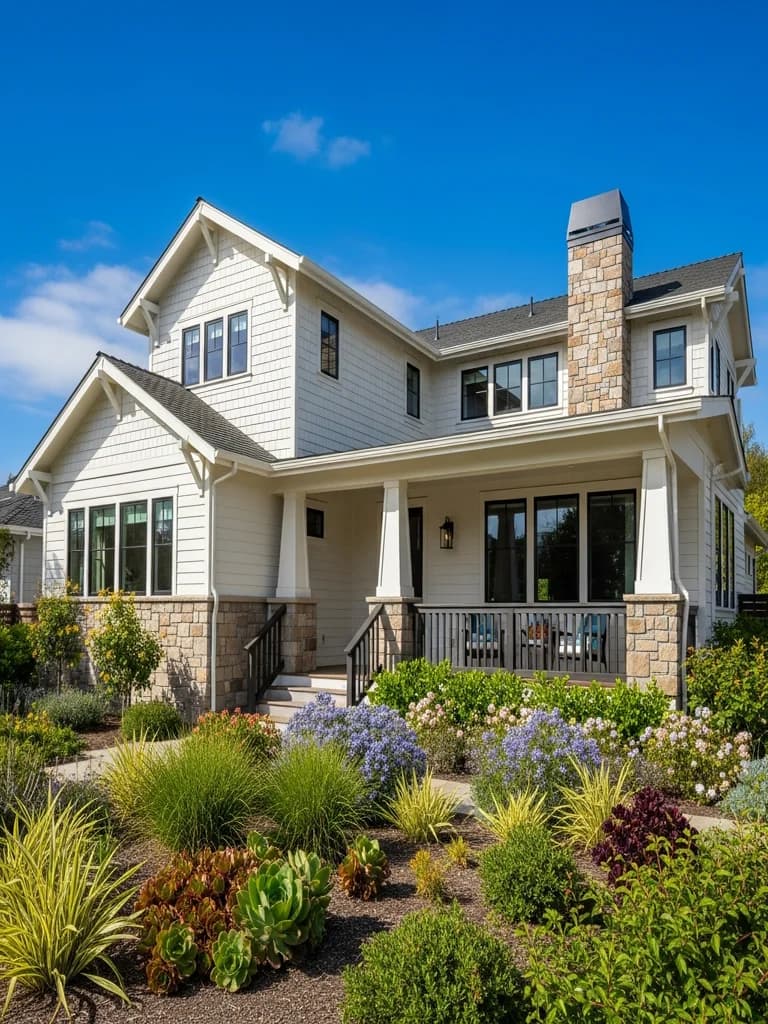
Fire-Resistant Siding in Stockton
Honest answer first: Stockton sits on the San Joaquin valley floor and is not a high wildfire-exposure area. There is no brush-covered slope or forested wildland-urban interface ringing the city the way there is in the Sierra foothill towns, so the Chapter 7A / WUI hardening conversation that drives this product up in the hills does not really apply to most Stockton addresses.
What non-combustible cladding still buys a Stockton owner is a board that won't feed a stray ember from a structure fire, a vehicle, or a neighbor's mishap, plus the heat and Delta-moisture durability the city's climate actually demands. We frame it that way rather than overstating a fire risk Stockton does not have.
Where Stockton's real exposure sits
On the valley floor, the honest wildfire picture for Stockton is low. The city is surrounded by farmland, the Delta, and other development, not the heavy fuels and steep terrain that drive serious wildfire behavior in the foothills. The exposure that does exist is the ordinary urban kind: an ember from a neighboring structure fire, a backyard or vehicle fire, or grass on a vacant lot or the dry Delta margins during a hot, windy spell. Non-combustible fiber cement addresses that low-grade ember risk as a low-regret default, and we are upfront that this is a sensible upgrade rather than a pressing wildfire defense the way it would be on a brush-backed mountain lot.
Ember and defensible-space basics that still apply
Even where the wildland risk is low, the cheap, durable fundamentals of ignition resistance are worth doing on a Stockton home, especially during a re-side when the wall is already open. Non-combustible cladding is the headline, but the weak points are usually the openings: open eave and gable vents that can draw an ember, wood fascia and trim that can catch, and the first few feet of the wall near fences, decks, and bark mulch where a ground fire would start. We can add ember-resistant vent screening, box out soffits cleanly, and use non-combustible trim at the rim while we're already re-cladding. None of this is fear-driven; it's just the low-cost, high-sense version of fire hardening that fits a valley-floor home.
Class A comes free with the right Stockton board
The practical reality in Stockton is that the fire rating arrives at no extra cost. The fiber cement we recommend for the city's heat, UV, and Delta-moisture durability is already non-combustible and carries a Class A rating when installed as part of a rated assembly. So a Stockton owner is not paying a fire premium to get non-combustibility; it rides along with the material chosen for the reasons that genuinely matter here. That is why we don't lead with fire when we scope a Stockton job. We lead with the heat and the damp, spec the board for those, and treat the Class A surface as a real but secondary bonus.
Heat and Delta moisture are the actual spec drivers
Across Stockton the binding climate factors are sustained summer heat and Delta humidity, not flame, and that is what genuinely shapes the cladding spec. Long stretches of triple-digit afternoons drive aggressive thermal expansion in any board, so on the south- and west-facing walls we plan for movement with correct joint gapping, fasteners set to tolerance rather than flush, and sealants rated for the wide swing between baking afternoons and humid Delta nights. On the west and north sides near the channel, the moisture detailing, a drying-capable drainage plane and sealed end-cuts, matters more than any fire concern. The same non-combustible fiber cement that earns the Class A rating also outlasts aged wood and vinyl through this heat and damp, which is the honest reason it pays for itself in Stockton.
Why this matters in Stockton
- Specified for Central Valley conditions
- James Hardie fiber cement as the recommended system
- Correctly detailed weather-resistive barrier and flashing
- Installed by a crew with 20 years combined experience
Recommended systems for Stockton
- James Hardie fiber cement
- factory finishes
- rigorous weather-management detailing near the Delta
- modern lap and board-and-batten profiles
Fire-Resistant Siding for Stockton homes
The full fire-resistant siding approach — materials, weather-resistive detailing, and the manufacturer standards we install to — is covered on the main service page, then specified for Stockton's conditions on this one.
Our Stockton process
- Step 1
Consultation
We listen to your goals and assess your home on site — exposure, substrate, and architecture.
- Step 2
Design & Proposal
A clear written proposal with the right system specified for your climate and a transparent scope.
- Step 3
Expert Installation
Trained crews install to manufacturer best practices with careful weather-management detailing.
- Step 4
Walkthrough & Support
A final walkthrough, full cleanup, and a clear written record of the scope completed — work we stand behind.
FAQ
Fire-Resistant Siding in Stockton — FAQ
Not for wildfire — Stockton sits on the valley floor and is not a high wildfire-exposure area. Non-combustible cladding is a low-regret default for ordinary ember risk from structure, vehicle, or grass fires, not a pressing defense like a foothill home needs.
Low. The city is ringed by farmland, the Delta, and development rather than brush-covered slopes or forested wildland, so it lacks the fuels and terrain that drive serious wildfire behavior in the Sierra foothills.
No — the fiber cement we recommend for Stockton's heat, UV, and Delta-moisture durability is already non-combustible and Class A in a rated assembly, so the fire performance comes included with the material we'd spec anyway.
Heat- and UV-stable cladding for the sun-struck walls and a drying-capable, well-flashed assembly for the humid Delta-facing side. Those are the failures that actually affect Stockton homes, with Class A riding along free.
Keep Exploring
More for Stockton homeowners
More in Stockton
Other exterior services in Stockton
Nearby Service Areas
Fire-Resistant Siding near Stockton
Back to
San Joaquin County & Stockton
Helpful Exterior Guides