James Hardie Siding in Stockton
James Hardie's value in Stockton comes down to two of its specific properties working against the city's two specific loads: the HZ10 product line engineered for hot, freeze-light climates handles the relentless Central Valley UV and thermal cycling, while the board's non-absorptive, non-combustible body shrugs off the Delta humidity that rots wood on the west and north sides. A Stockton spec starts with which of those loads dominates a given address, because a Spanos Park lot and a downtown-edge home near the channel are not the same job.
HZ10 for the heat, the body for the damp
The Hardie HZ10 line is formulated for hot, high-UV climates like Stockton's, which is the part of the spec that matters most on the sun-struck south and west elevations across the postwar tracts and the Brookside and Spanos Park subdivisions. Just as important here is what the board is made of: a cement composite that does not absorb and hold the humid Delta air the way the wood lap and hardboard on older homes do. So one product line answers both of Stockton's stressors. We install to the factory's gapping and fastening tolerances rather than driving board flush, because the wide daily temperature swing between baking afternoons and cool Delta nights demands room to move.
ColorPlus against Stockton UV
The intense interior-valley sun is what makes Hardie's factory ColorPlus finish more than a convenience in Stockton. Field paint on a hot wall here begins to chalk and fade within a few summers, forcing a repaint cycle that the baked-on finish eliminates. On the master-planned streets where architectural committees often dictate a tight palette, we get the ColorPlus color approved in writing before the first panel goes up, so a crew does not tear off a wall and then stall on a color the board rejects. On the older Magnolia and Victory Park homes, the conversation shifts to a finish that reads historic without faking it, matched to the narrower exposures those period facades carry.
Hardie profiles across Stockton's housing eras
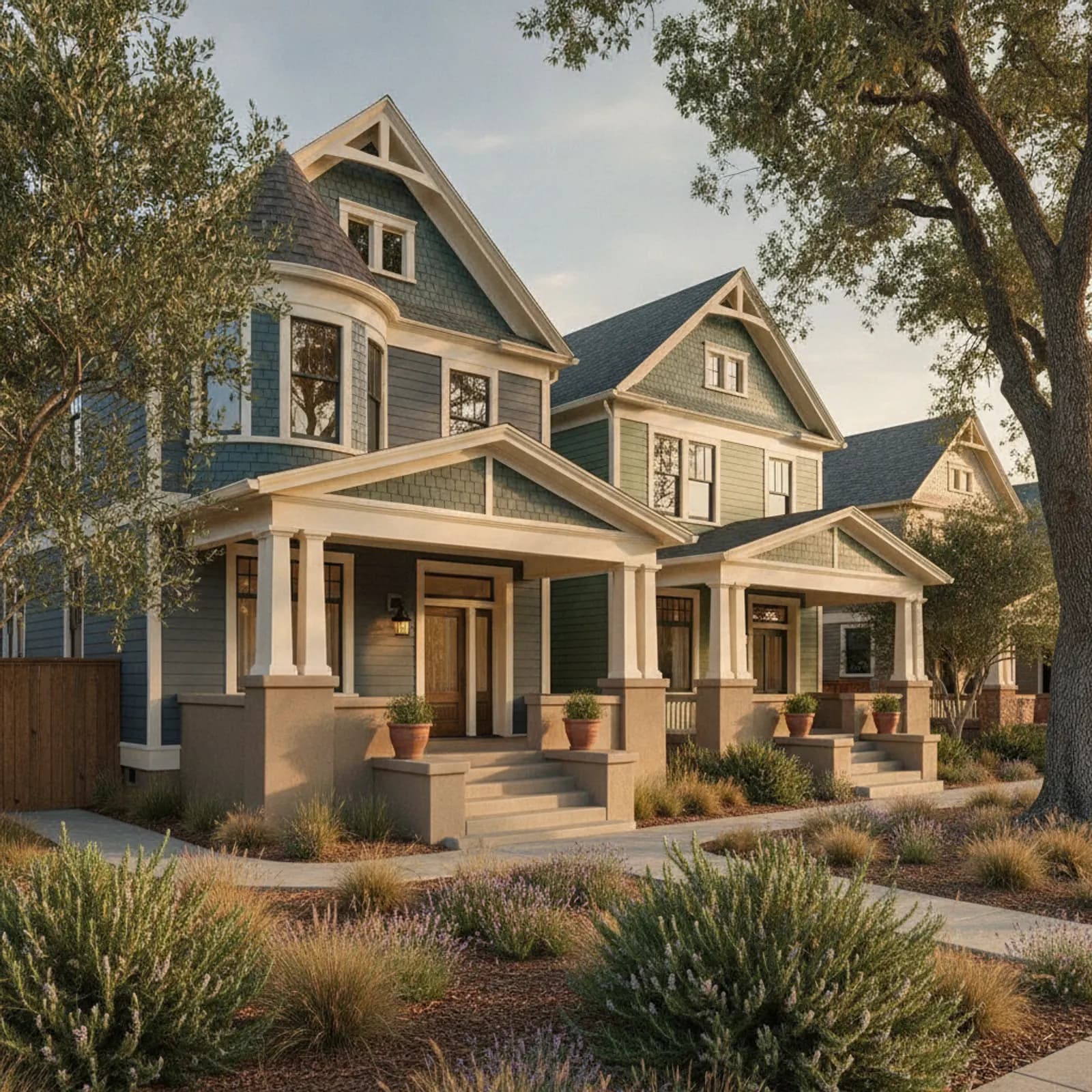
Stockton's range of housing eras means the Hardie profile decision changes block to block. The craftsman and period-revival homes around Magnolia, Victory Park, and the Miracle Mile want narrower lap exposures, deep trim, and shingle-look panels for gable accents, all of which Hardie's lineup can match so a 1920s elevation keeps its proportions. The postwar tracts and the newer master-planned communities read better with wider, cleaner lap and a modern trim package, sometimes mixed with panel-and-batten on gable ends for the updated look buyers in Brookside and Spanos Park expect. We pick the profile to the home's era and the neighborhood's rules, not off a single spec sheet, because the wrong reveal flattens an older home and dates a newer one.
Installing Hardie where Stockton stays damp
On the west and north sides of the city, near the Deep Water Channel and the slough network, a Hardie install is judged on the details that handle moisture, not just the board. The cement body is non-absorptive, but the system still has to be flashed and drained so the humid air and any wind-driven rain off the Delta have a path out rather than a path in. We seal and prime field-cut ends, set head and kickout flashing that actually sheds, and pay close attention to the lower courses near grade where damp and splashback concentrate. Done this way, a Hardie wall on Stockton's moist side delivers its full service life instead of trapping water behind a board that was never the problem.
Why this matters in Stockton
- Specified for Central Valley conditions
- James Hardie fiber cement as the recommended system
- Correctly detailed weather-resistive barrier and flashing
- Installed by a crew with 20 years combined experience
Recommended systems for Stockton
- James Hardie fiber cement
- factory finishes
- rigorous weather-management detailing near the Delta
- modern lap and board-and-batten profiles
James Hardie Siding for Stockton homes
The full james hardie siding approach — materials, weather-resistive detailing, and the manufacturer standards we install to — is covered on the main service page, then specified for Stockton's conditions on this one.
Our Stockton process
- Step 1
Consultation
We listen to your goals and assess your home on site — exposure, substrate, and architecture.
- Step 2
Design & Proposal
A clear written proposal with the right system specified for your climate and a transparent scope.
- Step 3
Expert Installation
Trained crews install to manufacturer best practices with careful weather-management detailing.
- Step 4
Walkthrough & Support
A final walkthrough, full cleanup, and a clear written record of the scope completed — work we stand behind.
FAQ
James Hardie Siding in Stockton — FAQ
The HZ10 product line, engineered for hot, high-UV, freeze-light climates like the Central Valley. It handles Stockton's heat and thermal cycling, and its cement body resists the Delta humidity on the city's west and north sides.
Because the intense valley UV chalks and fades field paint within a few summers. The factory-baked ColorPlus finish ends that early repaint cycle, which is real money over the life of the wall in this sun.
Yes — Hardie offers narrower lap exposures, shingle-look panels, and trim stock that can replicate the period reveals and proportions those craftsman and revival homes rely on, so the upgrade stays character-correct.
Yes, when the system is detailed for moisture — sealed end-cuts, proper flashing, and a drainage plane so the wall dries. The board itself does not absorb water, which is exactly why it suits the damp west side.
Keep Exploring
More for Stockton homeowners
More in Stockton
Other exterior services in Stockton
Nearby Service Areas
James Hardie Siding near Stockton
Back to
San Joaquin County & Stockton
Helpful Exterior Guides