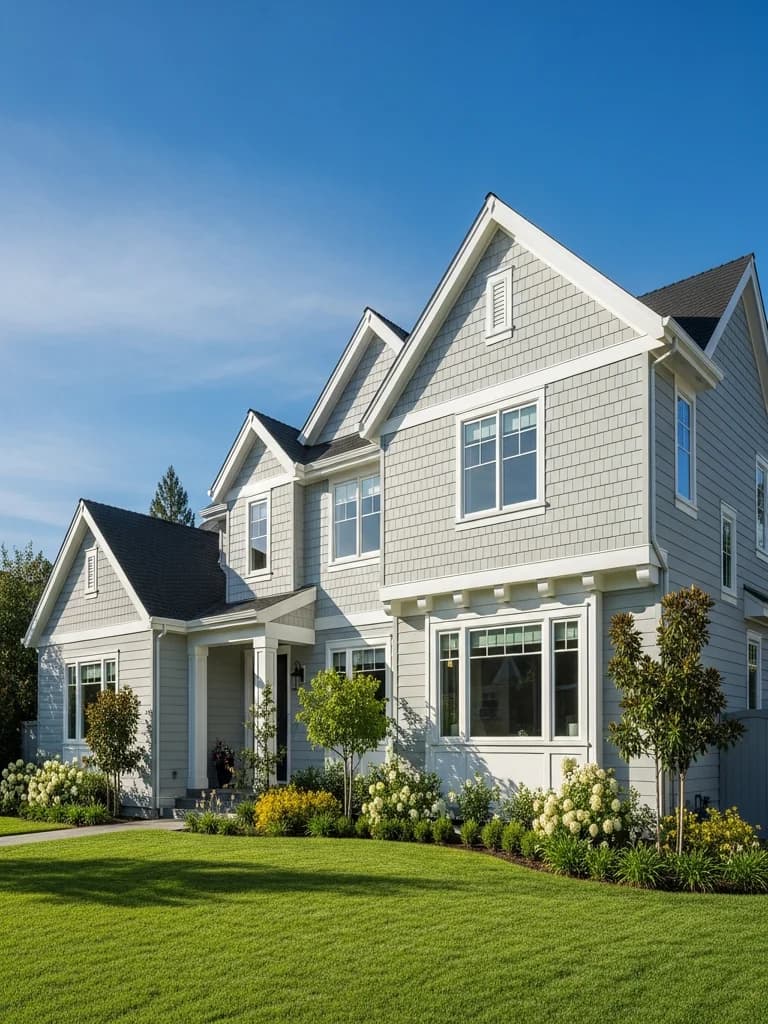
Siding in Lodi
Lodi's re-side work splits sharply by era, which makes it different from the tract-uniform suburbs nearby. The historic core around downtown and the streets off School and Church carry genuine Craftsman bungalows and Victorians with original wood lap, period trim, and detail that has to be respected on a re-side. Ring outward and you hit postwar ranch tracts, then the newer east-side subdivisions toward Highway 99, each with its own cladding story.
The common thread is heat. Lodi sits on the open valley floor in Zinfandel country, where long, dry summers and an unbroken UV load chalk paint, swell butt joints, and open seams faster than anyone expects. A Lodi re-side is rarely a single archetype done over and over — it's matching the right approach to a 1915 bungalow, a 1960s ranch, or a 1990s tract home on the same map.
Re-siding Lodi's historic Craftsman and Victorian core
The blocks around downtown Lodi and the older neighborhoods off Pine and Elm hold a real concentration of period homes — Craftsman bungalows with wide eaves and knee braces, plus a scattering of Queen Anne and folk Victorian wood. On these houses the siding is not just weather protection, it's the character of the street. We document existing exposure, butt-joint spacing, and trim profiles before tear-off so a re-clad reads as the same house, not a stripped-down replacement. Where original old-growth lap is failing only in patches, partial repair with profile-matched material often beats a full re-clad, and we'll say so honestly rather than upselling a whole house that doesn't need one.
Postwar ranch tracts and the 99-corridor east side
Most of Lodi's everyday re-side volume sits outside the historic core, in the postwar ranches north and west of downtown and the newer subdivisions pushing east toward Highway 99. The ranches often wear aging hardboard, T1-11, or field-painted wood that has cycled through too many valley summers; the newer east-side tracts carry builder-grade composite reaching the end of its finish life. These are simpler geometrically than the bungalows but punished harder by sun, since they sit on lots with little mature canopy. The job is usually a clean strip, a corrected weather barrier, and a modern profile that holds color through Lodi's exposure.
Why Lodi's valley sun controls material and color choice
Lodi's binding constraint is heat and UV, not coastal salt or foothill fire. Summers here run long and dry with daytime temperatures that bake the south and west walls of a house from late morning to sunset, and the delta breeze that reaches the city in the afternoons cools the air without sparing the cladding from direct sun. That's why original wood and early composite siding in Lodi shows chalking, fade, and open seams sooner than the same products would in a shaded coastal town. On a re-side we steer toward materials that hold a factory finish and stay dimensionally stable through that daily heat swing, and we counsel conservative color on the hardest-hit elevations. Get the material-and-color decision right for Lodi's exposure and the wall keeps its look for decades instead of needing a repaint within a few seasons.
Sequencing a re-side around Lodi's older, tight-lot homes
Many Lodi homes — especially in the historic core and the early postwar blocks — sit on narrow lots with mature trees, detached garages, and close neighbors, which shapes how a re-side actually runs. We strip and re-clad in controlled sections rather than opening the whole shell at once, keeping the existing weather barrier intact over unworked walls so a stray valley thunderstorm never reaches bare sheathing. On the period homes, dry rot hides behind old trim at the band board and under window sills, and we plan for finding it once cladding comes off. Staging material and a dumpster without blocking a one-lane historic street or a neighbor's drive matters here in a way it doesn't on a wide tract road, so access gets mapped before tear-off.
Why this matters in Lodi
- Specified for Central Valley conditions
- James Hardie fiber cement as the recommended system
- Correctly detailed weather-resistive barrier and flashing
- Installed by a crew with 20 years combined experience
Recommended systems for Lodi
- James Hardie fiber cement
- period-appropriate lap profiles
- factory finishes
- durable trim packages
Fiber Cement Siding for Lodi homes
The full fiber cement siding approach — materials, weather-resistive detailing, and the manufacturer standards we install to — is covered on the main service page, then specified for Lodi's conditions on this one.
Our Lodi process
- Step 1
Consultation
We listen to your goals and assess your home on site — exposure, substrate, and architecture.
- Step 2
Design & Proposal
A clear written proposal with the right system specified for your climate and a transparent scope.
- Step 3
Expert Installation
Trained crews install to manufacturer best practices with careful weather-management detailing.
- Step 4
Walkthrough & Support
A final walkthrough, full cleanup, and a clear written record of the scope completed — work we stand behind.
FAQ
Siding in Lodi — FAQ
Yes — that's a core part of our Lodi work. We match exposure, trim profiles, and detailing so a Craftsman or Victorian reads as the same house, and we'll recommend profile-matched repair over a full re-clad when that's the honest call.
Lodi's long, dry summers put an unbroken UV load on south and west walls, which chalks paint and fades finishes faster than in shaded or coastal areas. Material and color choice for that exposure is the fix.
Often, yes. Period and early postwar homes commonly have dry rot at band boards, sills, and around windows that only shows once cladding is off; we plan for that and confirm scope after the on-site assessment.
Most single-family Lodi homes run roughly 1.5 to 3 weeks, with historic homes often on the longer end due to trim detail and any dry rot found once siding is removed.
Keep Exploring
More for Lodi homeowners
More in Lodi
Other exterior services in Lodi
Nearby Service Areas
Siding near Lodi
Helpful Exterior Guides